For apparel brands, packaging is not just packaging. It is the last branded object the customer touches before the garment goes home, gets gifted, or lands in a shopping bag under someone’s arm. That makes Die Cut Handle Bags for apparel brands moq planning a real buying decision, not a design mood board exercise. A folded tee in a thin, awkward bag feels disposable. The same tee in a well-sized, reinforced carrier with clean print looks like a product people paid attention to.
There is also the practical side, which tends to matter more once the order hits the warehouse. The right bag format can improve presentation, reduce storage bulk, and keep fulfillment moving. That matters for launches, store replenishment, pop-up events, influencer kits, and the boring but unavoidable repeat stock orders that keep a packaging program alive.
Die Cut Handle Bags sit in a useful middle zone. They look more polished than a plain poly mailer and take up far less room than rigid retail shopping bags. For many apparel programs, that is the whole point.
Why die cut handle bags fit apparel packaging so well
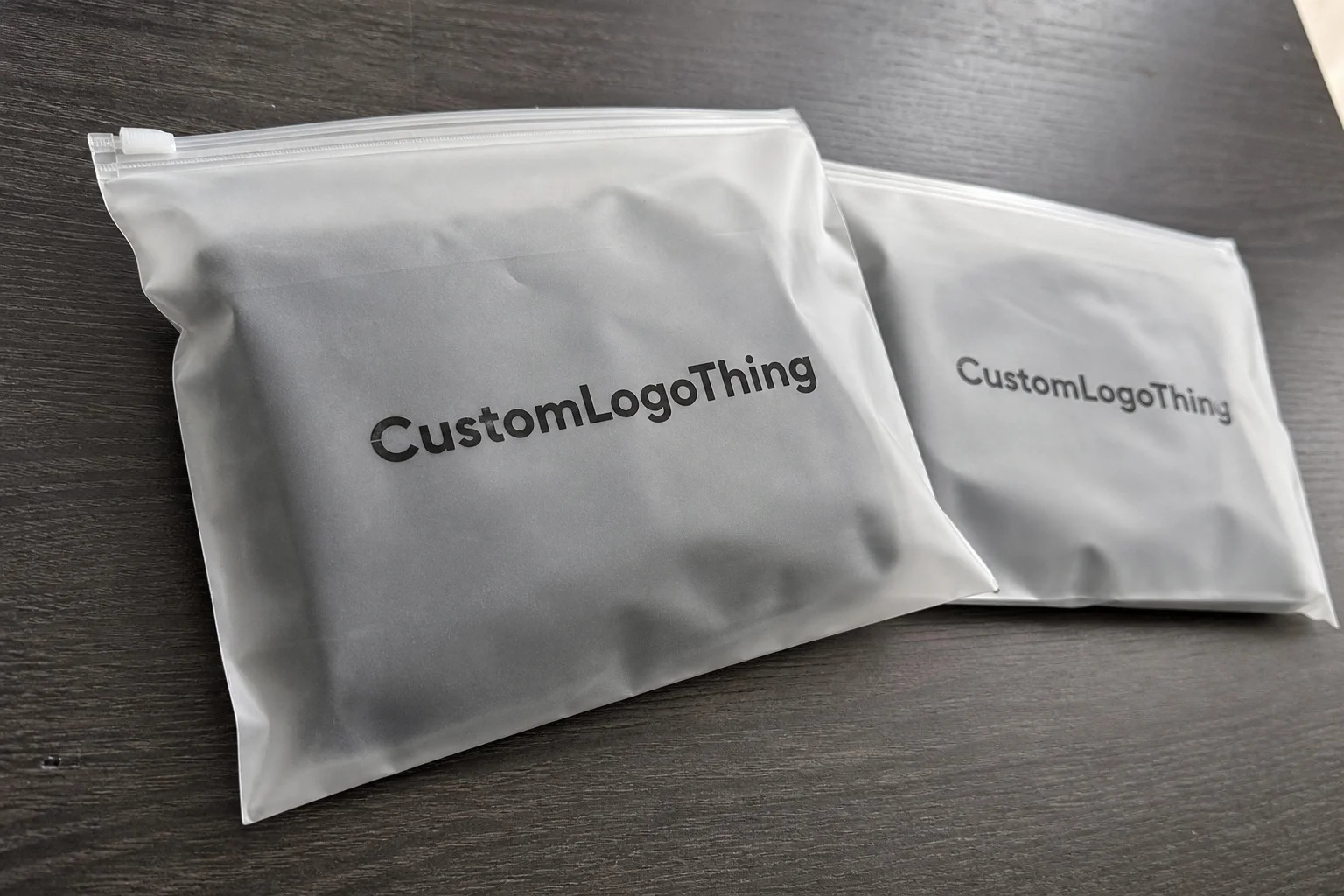
Apparel packaging has to do three things at once: protect the product, present the brand, and not slow down packing. Those three goals do not always play nicely together. Die Cut Handle Bags work because they solve the middle of that problem without asking the operation to absorb a lot of extra complexity.
For folded tees, hoodies, socks, loungewear, and boxed accessories, these bags create a tidy retail handoff without the weight and storage penalty of a more rigid format. They also pack flat, which is underrated until you are paying for freight, floor space, and carton volume. Flat-pack packaging means more units per case and fewer headaches when inventory is stacked in a back room for a month.
The value goes beyond warehouse convenience. Less cubic volume can mean more efficient palletization, cleaner inbound shipping, and lower storage pressure during seasonal spikes. If you buy packaging by the case, those small efficiency gains start to look like actual money.
Brands use Die Cut Handle Bags for store pickups, pop-ups, trade events, and retail handoff. They also show up in VIP mailers when the bag itself is part of the unboxing moment. The bag is not supposed to outshine the garment. It just needs to support the brand story and not sabotage the budget.
“The best bag choice is usually the one that fits the garment, the channel, and the order volume. Fancy is not the same thing as effective.”
That is where die cut handle bags for apparel brands moq planning becomes a procurement issue. Film thickness, handle reinforcement, print coverage, and bag size all affect unit cost and minimum order quantity. Spec too heavily and the price climbs fast. Spec too lightly and the bag can feel cheap or fail when a customer carries more than one folded item.
The product details that drive look, strength, and cost
Most die cut handle bags for apparel are made from LDPE, HDPE, or a blend of the two. LDPE usually feels softer and smoother, which suits premium retail presentation and bags that need a more flexible hand feel. HDPE is typically crisper and can achieve a thinner profile at similar strength, which helps when the priority is low bulk and cost control. Blends are common when buyers want something in the middle.
That material choice affects more than touch. It changes stiffness, noise, clarity, and how the bag behaves once folded. A softer LDPE bag can feel more upscale for apparel. A thinner HDPE version may be better for high-volume retail where the packaging has to look clean without pushing the budget into luxury territory.
Handle construction matters just as much. A standard die cut handle is fine for lightweight garments. A reinforced die cut handle is safer when the bag may carry heavier knits, multiple folded pieces, or a box of accessories. Reinforcement adds material and a bit of fabrication cost, but it improves confidence at the point of carry. That matters for store pickup and mall retail, where a bag gets lifted, swung, set down, and picked up again.
Print is another place where small decisions become large pricing differences. Flexographic printing is common for higher-volume orders because it handles spot colors efficiently. Full-coverage print, frosted effects, metallic inks, and high-opacity white all increase setup and press requirements. More coverage usually means more cost, and sometimes more lead time too. Convenient, right?
Size is where many buyers go wrong first. The bag should fit the folded garment with enough room for tissue, hang tags, or inserts if those are part of the pack-out. Too tight, and packing slows down. Too loose, and the product shifts around, which weakens the premium effect. The goal is a clean fit, not a bag you have to wrestle open like it owes you money.
Before you quote, confirm these functional details:
- Gauge or thickness for strength and feel
- Bag width, height, and gusset if the product is bulky or boxed
- Standard or reinforced handle
- Seal type and construction method
- Clearance for inserts, tissue, or tags
- Any venting requirement if trapped air affects pack-out
For brands comparing formats, a flat handle bag often beats a rigid shopping bag on storage and freight. But if the artwork is too dense or the print spec is too complicated, the cost advantage shrinks fast. That is usually where the most sensible apparel buyers stop chasing “premium” for its own sake and start asking what the order actually needs to do.
For sourcing teams that want a broader technical frame, organizations such as the Institute of Packaging Professionals and the ISTA publish useful guidance on packaging performance, transit testing, and material selection. They will not choose the bag for you. They will help you ask better questions.
Specs to confirm before you request a quote
If you want a useful quote, do not send only a logo and a rough guess at the size. That is how you end up with three follow-up emails, two different assumptions, and a price that changes halfway through the process. For die cut handle bags for apparel brands moq planning, the spec sheet is the difference between a clean quote and a mess.
Start with exact dimensions: width, height, and gusset if needed. Then confirm film thickness, color count, and whether printing is one-sided or two-sided. A one-color logo on one side is not remotely the same as a two-sided pattern with full coverage. The quote should show that difference clearly.
Next, deal with compliance and retail rules early. Depending on your market and use case, you may need suffocation warnings, recycling marks, barcode placement, or language-specific copy. If the bag is going into a retailer’s supply chain, ask for the retailer’s packaging requirements before the artwork is finalized. Rework is always more expensive than a few minutes of checking.
Artwork prep matters too. Send vector files when possible, plus Pantone references, bleed allowances, and any reverse-print or overprint instructions. If the design uses fine lines, gradients, or transparent effects, say so. Those elements affect print suitability and can shift what the press can reproduce cleanly.
Performance expectations should be stated plainly. Is the bag for retail handoff, e-commerce presentation, or light protective transport? A bag that only needs to hold one folded tee is a different build from one expected to carry a hoodie and a box of accessories. If the supplier cannot explain the expected load behavior, ask for a sample or a spec sheet before moving on.
Ask for a sample image or physical sample whenever possible. Even a basic pre-production sample can expose problems with bag clarity, handle size, print contrast, or general proportion. Catching that before the run is a lot cheaper than discovering it after several thousand units are already committed.
| Spec item | What to confirm | Why it changes cost |
|---|---|---|
| Dimensions | Width, height, gusset | Material usage and carton loading |
| Film thickness | Gauge or micron target | Strength, feel, and resin usage |
| Print setup | One side or two, number of colors | Plates, setup charges, press time |
| Handle | Standard or reinforced die cut | Extra material and fabrication steps |
| Compliance text | Warnings, marks, barcode placement | Artwork revisions and print complexity |
One practical buyer habit helps a lot: size the bag to the folded garment plus the actual pack-out items, not just the garment alone. Tissue, swing tags, inserts, and sticker seals all take space. If the bag barely fits the tee on paper, it will probably be annoying on the packing table.
MOQ planning, cost, and order-size tradeoffs
Cost starts with material, but it does not stop there. For die cut handle bags, the big pricing drivers are film grade, bag size, print colors, reinforcement, and total quantity. Larger runs usually bring the unit price down because setup charges and tooling costs are spread across more pieces. That part is simple. The part people skip is inventory risk.
That is why die cut handle bags for apparel brands moq planning should begin with actual demand, not a random number that looks efficient on a spreadsheet. If a capsule collection moves 3,000 units, ordering 10,000 bags because the unit price looks better can trap cash in packaging you are not using yet. Unit cost matters. Carrying cost matters too. Cash flow does not care how pretty the quote looks.
For smaller custom orders, unit price is usually higher. That is normal. A short run may absorb the same plate, setup, or proofing expense as a larger order, but over fewer pieces. Bigger production runs often create better economics because press time, prep, and inspection are spread out more efficiently.
Apparel buyers usually see pricing fall into a few broad buckets:
- Basic one-color bags: typically the lowest cost tier
- Reinforced handles: a modest premium for better carry strength
- Multi-color or full-coverage print: higher cost from extra setup and press time
- Special finishes such as frosted or metallic effects: usually the highest cost tier
To compare quotes properly, ask for a breakdown of the major components. A low-looking unit price can hide setup fees, sample charges, freight, carton packing, palletization, or proof costs. If the quote is “all in,” make sure “all in” actually means all in. A lot of people have discovered the opposite the hard way.
| Order type | Typical unit cost behavior | Best use case |
|---|---|---|
| Short run with simple print | Higher cost per piece | Launches, testing, limited drops |
| Mid-volume standard spec | Balanced cost and flexibility | Seasonal retail and repeat replenishment |
| Higher volume with standard size | Lower cost per piece | Core products, multi-store programs |
| Premium finish with custom print | Highest total spend | Flagship stores, gifting, VIP mailers |
There are three places apparel brands usually save without ruining presentation. First, standardize bag sizes across multiple SKUs when the fold dimensions are close. Second, reduce print complexity by trimming color count or coverage. Third, keep the first run modest until sell-through proves the packaging program deserves a larger roll-out.
Watch for hidden cost surprises. Setup charges, sample fees, pre-production proofs, freight, and the way bags are packed into cartons can all appear separately. Ask whether the price includes carton packing, palletization, and delivery terms. A slightly higher quote with clearer inclusions is often the smarter commercial decision.
For sustainability-minded brands, the EPA offers useful guidance on packaging waste and recovery at epa.gov. That does not replace supplier due diligence, but it does help teams align packaging choices with broader material goals.
The best MOQ is the one that matches your launch calendar, reorder cadence, and storage capacity. Not the smallest number you can get. Not the biggest discount tier either. Just the one that keeps inventory moving instead of sitting in a corner until someone asks why there are 12 cartons of bag stock from last season.
Production timeline and quality checks
Once the spec is locked, the production path is predictable: inquiry, spec review, artwork submission, quote approval, proofing, production, inspection, and shipment. The longest delay is usually not the actual run. It is the time lost on artwork revisions or waiting for proof approval.
For a straightforward order, lead time is often around 12 to 15 business days after proof approval. More complex jobs with custom colors, heavier print coverage, or new tooling can take longer. If plates or special setup are required, build extra time into the schedule. A calendar does not care that the launch date is already booked.
Most scheduling problems are self-inflicted. If the dimensions are still moving, the artwork is not print-ready, or shipping details are incomplete, the job slows before it ever reaches production. Finalize the garment fold size, target delivery date, and full ship-to details before requesting the final quote.
- Confirm garment fold size and bag dimensions.
- Submit final or near-final artwork with Pantone targets.
- Review the proof for copy, alignment, and compliance marks.
- Approve production only after all details are signed off.
- Ask for a milestone schedule tied to launch or warehouse intake.
Quality control on die cut handle bags is usually straightforward, but it should not be casual. Check print registration, handle alignment, seal integrity, edge finish, and any variation in thickness. If the bag is supposed to hold a specific load, ask how that load is verified. A good supplier can explain the inspection points without sounding like they are making it up as they go.
If the bags are moving through a distribution center, transit durability matters too. ISTA guidance is useful for brands that need packaging to survive storage, transfer, and repeated handling rather than a single handoff. The packaging may be lightweight, but the shipping environment still finds ways to be rude.
One more practical issue: packaging often arrives before the apparel line does. Die cut handle bags are efficient compared with rigid bags, but they still occupy real carton space. Late arrival is a problem. Early arrival with nowhere to put the cartons is also a problem. Operations loves that kind of irony.
How apparel buyers avoid expensive mistakes
Good packaging sourcing is not about piling on options. It is about narrowing the field to the specs that fit the business. A useful supplier translates brand goals into production-ready choices, then explains how each choice affects unit cost, MOQ, and Lead Time. That sounds basic. It is surprisingly rare.
For teams comparing die cut handle bags for apparel brands moq planning across seasonal launches, retail replenishment, and promotional packaging, the common mistake is overdesigning the first run. A smart first order usually uses a standard size, one or two colors, and a material that performs well without pushing cost into the weeds. If the program works, there is time to refine it later.
Support that actually reduces risk usually includes:
- Spec validation before quoting
- Artwork checks for print readiness
- Sample guidance for first-time buyers
- Advice on repeat-run consistency
- Clear explanation of setup charges and reorder economics
Consistency matters more than a lot of apparel teams expect. If packaging shifts between drops, customers notice. Sometimes they cannot explain why, but they notice. A repeatable format keeps stores, e-commerce, and event channels aligned without forcing every order to become a redesign project.
Communication matters just as much as the spec. Predictable production windows, honest feedback on artwork, and straightforward updates beat vague promises every time. You do not need a supplier who says yes to everything. You need one who can say what will work, what will cost more, and what will delay the order.
For brands evaluating recycled content, paper inserts, or forest certification on secondary packaging, the FSC site is the right place to verify certification principles when paper components are part of the pack-out. That does not apply to every poly bag spec, but it matters whenever the packaging system includes paper-based elements.
FAQ
What MOQ should apparel brands expect for die cut handle bags?
MOQ usually depends on size, print colors, and film type rather than one universal number. Smaller custom runs are often possible, but the unit cost is usually higher than larger production orders. The best MOQ is the one that matches your launch volume, reorder cadence, and storage capacity.
How do I lower unit cost without losing a premium look?
Standardize bag dimensions across multiple garment styles when possible. Reduce print complexity by limiting color count or coverage. Choose materials and finishes that balance appearance with volume instead of specifying every premium feature at once.
What artwork do I need before requesting a quote?
Provide vector artwork in a final or near-final format with clear logo placement. Include Pantone references, print sides, and any required copy or compliance marks. If dimensions are not final, share your garment fold size so the bag can be sized accurately.
How long is the usual lead time for custom die cut handle bags?
Lead time varies by order size, print method, and proof approval speed. Simple orders move faster than jobs requiring custom colors, tooling, or multiple revisions. The fastest way to avoid delay is to approve specs and artwork early and keep shipping details ready.
Can die cut handle bags work for both retail and e-commerce apparel orders?
Yes, if the bag is specified for the intended use case. Retail handoff bags may prioritize carry strength and appearance, while e-commerce inserts may prioritize flat packing and protective presentation. Sizing and film thickness should be matched to the product and distribution method.


