Buyer Fit Snapshot
| Best fit | Die Cut vs Scored Boxes projects where brand print, material claims, artwork control, MOQ, and repeat-order consistency need to be specified before quoting. |
|---|---|
| Quote inputs | Share finished size, material target, print colors, finish, packing count, annual reorder estimate, ship-to region, and any compliance wording. |
| Proofing check | Approve dieline scale, logo placement, barcode or warning zones, color tolerance, closure strength, and carton packing before bulk production. |
| Main risk | Vague material claims, crowded artwork, missing packing details, or unclear freight terms can make a low unit price expensive after revisions. |
Fast answer: Die Cut vs Scored Boxes: Board, Finish, Dieline, and Unit Cost should be specified like a repeatable production item. The safest quote records material, print method, finish, artwork proof, packing count, and reorder notes in one written spec.
Production checks before approval
Compare the actual filled-product size with the drawing, then confirm tolerance on folds, seals, hang holes, label areas, and retail display edges. Reserve space for logos, QR codes, warning copy, and material claims before decorative graphics fill the panel.
Quote comparison points
Review material grade, print process, finish, sampling route, tooling charges, carton quantity, and freight assumptions side by side. A quote is only useful when the supplier can repeat the same color, closure quality, and packing count on the next order.
Die Cut vs Scored Boxes: The Costly Difference Most Brands Miss
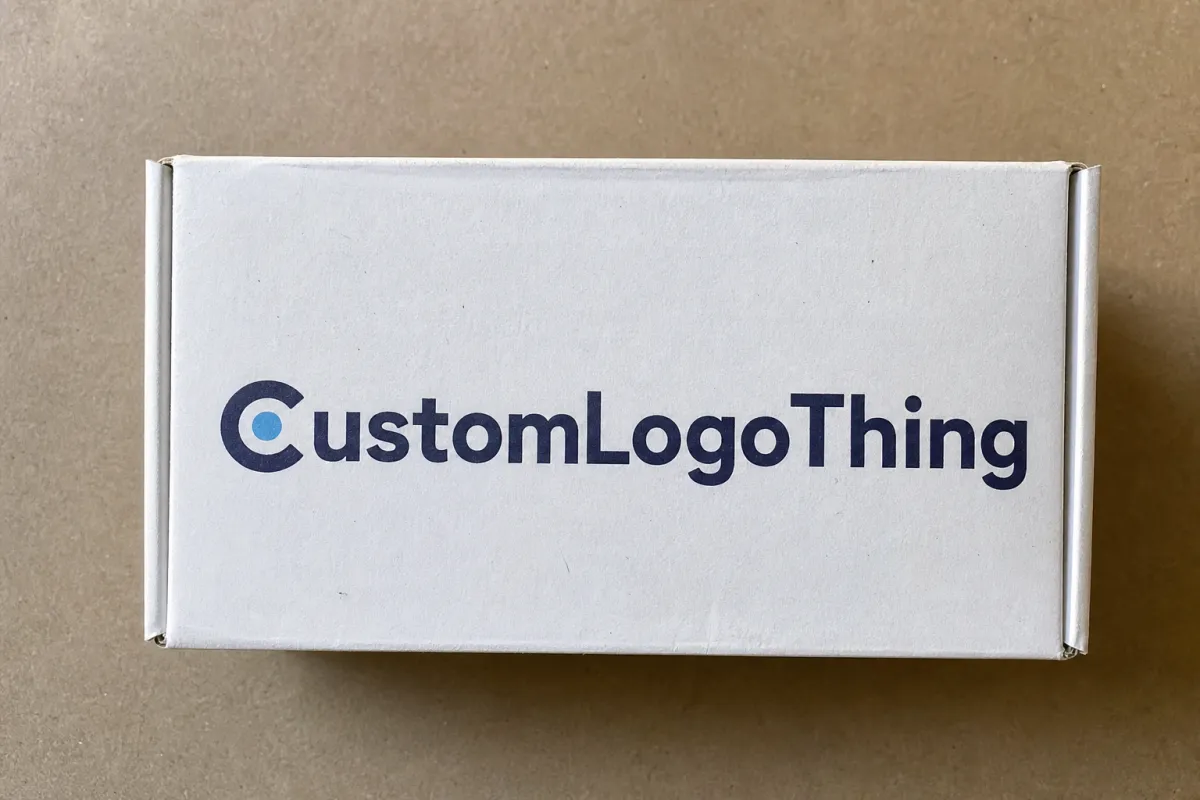
Die cut vs scored boxes is not a style contest. It is a production decision with margin consequences. A carton can look elegant on a render, photograph beautifully in a launch deck, and still become the wrong choice if it slows packing, increases freight cube, or fails a drop test.
That is the mistake many brands make. A die cut presentation box can create instant shelf appeal, while a scored box can quietly outperform it on storage density, assembly speed, and reorder consistency. The sharper question is not which one looks better. It is which one protects the business while still doing the job the product needs.
The practical answer is usually this: Die Cut Boxes tend to win when presentation, structural precision, and a custom reveal matter most. Scored boxes tend to win when speed, flat storage, and repeatable assembly matter most. Neither format is universally better. They solve different problems, and the wrong choice usually shows up later as labor waste, damaged corners, or a quote that looked manageable until production began.
If you are planning packaging for ecommerce, gifting, or retail, start with the operating reality. Count the units, measure the warehouse space, ask whether the team packs by hand or by machine, and decide whether the box has to sell on shelf. If you need a wider set of custom formats to compare, the team at Custom Packaging Products can help you evaluate the structural options before you lock in tooling.
A low board price can still lose once labor, freight cube, and replacement cost enter the picture. The cheapest line item is not always the cheapest box.
Top Options Compared: Presentation, Speed, and Protection
Most buyers compare box formats by instinct, then discover the hidden costs after launch. A clearer way to evaluate die cut vs scored boxes is to place them side by side across the factors that actually affect budget and customer experience: structure, assembly, freight footprint, protection, and brand impact. The differences are concrete, not abstract.
Die cut structures usually start with a custom dieline that allows for more complex folds, windows, locking tabs, or reveal panels. Scored boxes depend on clean crease lines and a simpler folding path. In retail packaging, that can mean a striking shelf presence versus a carton that gets the job done without drawing attention. In ecommerce, it can mean a premium unboxing moment versus a box that packs faster and stores flatter.
| Comparison Point | Die Cut Boxes | Scored Boxes |
|---|---|---|
| Presentation | Higher impact; supports windows, reveals, inserts, and custom shapes | Cleaner and simpler; usually less dramatic visually |
| Assembly speed | Often slower if the structure has multiple locks or folds | Usually faster and easier for hand packing |
| Storage and freight density | Can take more room if pre-formed or partly assembled | Commonly ships flatter and stores more efficiently |
| Product fit | Excellent for custom fit, inserts, and tight tolerances | Good for standard shapes and repeatable pack lines |
| Protection | Strong when paired with the right board and inserts | Strong when the fold geometry is simple and accurate |
| Brand impact | Usually stronger for premium launches and gifting | Better for scale, consistency, and speed-first operations |
Channel matters as much as the structure itself. Retail shelves reward boxes that hold a face, keep graphics aligned, and frame the product. Ecommerce rewards cartons that survive parcel distribution, stack efficiently, and do not punish the packer. Subscription kits sit between those two worlds. They need a clean reveal, but they also need a format the fulfillment team can repeat 2,000 times without building a pile of rejects.
Visual shorthand matters too. Die cut formats can support more dramatic openings, integrated windows, and built-in inserts, which can raise perceived value without changing the product. Scored formats usually look more restrained, but restraint can work in their favor. For some SKUs, simple feels trustworthy. For others, simple just feels plain.
Here is a practical scorecard you can use internally before asking for quotes:
- Unboxing impact: Die cut wins most often.
- Product fit: Die cut often wins for custom geometry; scored wins for standard footprints.
- Production speed: Scored usually wins.
- Storage efficiency: Scored usually wins.
- Retail theater: Die cut usually wins.
- Repeatability at scale: Scored usually wins unless the die cut design is very simple.
If you are sourcing a Custom Folding Carton, a retail-ready mailer, or a branded kit, the comparison should not stop at the mockup. Review the mockup and the pack-out test together. That is where many packaging programs separate visual appeal from operating cost.
Detailed Reviews: How Each Format Performs in Real Packaging
Die Cut Boxes work best as a presentation tool with structural benefits. They shine when a product needs a custom cavity, a precise reveal, or a stronger shelf presence than a basic folding carton can deliver. A die cut tray with an insert can hold cosmetics, electronics accessories, premium food items, or gift sets with a tight fit that reduces movement and makes the product feel intentional.
That precision can turn into a problem if the tolerances are too tight. A box may look beautiful on a sample table and still slow the line if the packer has to force the product into place. Clever closures can create the same issue. What looks elegant in a render may frustrate the operator who has to repeat the motion hundreds of times. A custom structure should feel engineered, not fussy.
Scored boxes take a different path. They are usually easier to fold, easier to train on, and easier to repeat across shifts. That makes them a sensible choice for teams handling steady volume, seasonal reorders, or products with predictable dimensions. A good scored box does not need drama to prove itself. It should disappear into the workflow and keep the line moving.
The product category changes the answer. Fragile items often need custom inserts, inner supports, or board selection that absorbs shock. Heavy products need stronger board grade and careful attention to ECT ratings and flute direction. SKUs with awkward geometry may need a die cut structure to eliminate dead space, while a standard product can perform well in a scored carton with a solid closure design.
Where Die Cut Boxes Earn Their Keep
Die Cut Boxes tend to justify themselves in three situations. The first is brand story, where the carton is part of the product’s identity. The second is exact internal fit, especially when the product or insert has unusual dimensions. The third is shelf appeal or reveal quality, where the visual opening has a measurable effect on conversion. That includes premium beauty, specialty food, collector items, and gift packaging where the opening moment carries weight.
They also earn their keep when inserts are doing real work. A die cut insert can stabilize a bottle, accessory set, or sample kit with less movement than loose fill. That can reduce abrasion and improve presentation at the same time. For shipping-sensitive programs, that can matter a lot, especially if the pack is tested against a distribution profile such as ISTA procedures or another drop-and-vibration standard.
There is a practical limit, though. If a box requires the packer to line up every fold perfectly or apply too much force to close it, the design is too delicate for real production. A prettier sample is not a better system if it creates friction on the line.
Where Scored Boxes Win Operationally
Scored boxes usually win in production-first environments. They are easier on staff, simpler to stack, and more predictable during pack-out. If your team is assembling 1,000 to 10,000 units per month by hand, shaving even 6 to 12 seconds from each pack adds up quickly. That is one reason many ecommerce brands move toward simpler folding cartons as volume grows.
They also tend to be more forgiving on reorders. Once the structure is dialed in, a scored carton often repeats with fewer surprises. That matters for product lines that expand through seasonal demand, influencer spikes, or wholesale replenishment. You do not want a fancy structure turning into a bottleneck every time demand jumps.
Scored boxes can be especially useful when a brand needs consistent pack quality across different shifts or different facilities. A structure that folds the same way every time lowers training time and cuts down on human error. That kind of reliability rarely makes a marketing deck, but it matters a great deal after launch.
Common failure points deserve a blunt mention:
- Weak closures: Tabs that spring open or tuck flaps that do not hold after repeated handling.
- Crushed corners: Often caused by board that is too light for the product weight or carton geometry.
- Over-tight tolerances: Great in a CAD drawing, miserable on a packing line.
- Awkward hand assembly: Any design that needs two hands and a pause can slow a high-volume line.
- Insert mismatch: A polished exterior does not fix a loose or over-compressed interior.
Board choice matters as much as the cut style. SBS paperboard, CCNB, E-flute corrugated, and B-flute corrugated all behave differently under load and humidity. The same is true for finishes. A soft-touch laminate, aqueous coating, or matte varnish may improve feel, but it can also affect scuff resistance and fold memory. The cut style is only one variable.
For brands comparing custom printed packaging across multiple channels, it often helps to request two prototypes with the same artwork system and different structures. One can be a die cut version focused on the reveal. The other can be a scored version focused on line speed. That comparison is more honest than reviewing a flat art proof alone.
Production Process and Lead Time: What Changes the Clock
Lead time changes because of the structure, not just the print. The production path starts with dieline approval, then sample proofing, then cutting or scoring setup, then print, finish, folding, and quality checks. If any one of those steps is unstable, the schedule slips. A strong graphic file does not fix a structure that was approved too early.
Die cut jobs often require more setup coordination because the tool has to match the finished geometry. If there is a window cutout, locking insert, or specialty closure, the sample stage becomes more important. Scored boxes can move faster once the structure is finalized, especially if the layout is simple and the material is already familiar to the converter. Still, “simple” is relative. A scored carton with a complicated print wrap or high-gloss finish can take time.
Artwork revisions create another hidden delay. Buyers often underestimate how long it takes to move from a good concept to a production-safe file. Safe zones, fold lines, closure areas, and barcode placement all need review. If you are building a custom printed box, the final art should be checked against the dieline, not a mockup screenshot. One wrong panel can delay the whole run.
Special finishes can stretch the timeline more than expected. Foil stamping, embossing, spot UV, soft-touch coatings, inside printing, and custom inserts all add coordination points. That does not make them bad choices. It just means the schedule should reflect the actual finishing stack instead of a best-case assumption. A launch date is not a manufacturing plan.
What to Ask Your Supplier Before You Approve
Good suppliers should be able to answer several questions clearly. If they cannot, the schedule is not ready.
- Sample timing: How long for a physical prototype or pre-production proof?
- Setup timing: How much lead time is needed for cutting tools or scoring setup?
- Pack tests: Will they test fit with the real product and insert?
- Reorder speed: Is the second run faster, and by how much?
- Quality checkpoints: What gets inspected before the boxes ship?
For sustainability-sensitive programs, it is reasonable to ask about material certification. If you want FSC-certified board, verify that the chain-of-custody paperwork is in place before you place the order. The Forest Stewardship Council has clear guidance on certified materials, and that documentation can matter for retail compliance and brand claims.
For teams comparing packaging timelines with broader industry benchmarks, resources from packaging.org can help frame expectations around materials, transport, and sustainability discussions. The value is not theoretical. It is in understanding how a packaging spec behaves once it leaves the design screen.
Cost and Pricing: Unit Cost, MOQ, and Quote Traps
Price is where the die cut vs scored boxes decision becomes real. The headline unit cost rarely tells the full story. Board grade, print coverage, die or score setup, finishing, insert complexity, and whether the box ships flat or assembled all affect the quote. If you only compare print price, you are comparing a slice of the project, not the project itself.
For moderate runs, typical pricing can vary widely. As a rough planning range, a simple scored folding carton at 5,000 to 10,000 units might land around $0.18-$0.45 per unit before freight, depending on material and print coverage. A more complex die cut carton or mailer with custom inserts, multiple panels, or premium finishing may fall around $0.32-$1.10 per unit or more. Those numbers can move up or down quickly with board choice, finish count, and order size. They are useful for budgeting, not for final approval.
Minimum order quantity matters because setup costs get divided across the run. A die cut project with tooling and a custom insert may look expensive on a small order, yet become competitive once volumes rise. A scored box may look cheaper at first, but if it creates extra labor or a higher damage rate, the apparent savings can disappear. For small brands especially, the first quote is often the wrong quote to optimize around.
| Cost Driver | How It Affects Die Cut Boxes | How It Affects Scored Boxes |
|---|---|---|
| Setup and tooling | Usually higher if the shape is custom or includes inserts | Usually lower for simple folds and standard closures |
| Assembly labor | Can rise if the structure has more steps | Usually lower because folding is more predictable |
| Freight and storage | May increase if the format ships partially assembled | Often better because the cartons ship flatter |
| Damage risk | Can be lower with a precise fit, but only if the design is tested | Can be stable if the carton and insert are well matched |
| Rework risk | Higher if tolerances are too tight | Lower if the structure is simple and repeatable |
Quote traps can distort the comparison. One is the omission of assembly assumptions. Another is freight based on guessed carton dimensions. A third is quoting the outer carton without the insert, when the insert is the part doing the real protective work. Ask vendors to state whether the price includes pre-gluing, hand assembly, special finish charges, and carton packing configuration.
Dimensional weight can be a silent budget thief. A box that is only slightly larger in outer dimensions may raise parcel charges across thousands of orders. If the product ships by parcel carrier, the outer cube matters almost as much as the board spec. A tighter scored format may outperform a flashier die cut option if it removes air from the shipping carton.
To read a quote properly, separate these buckets:
- Manufacturing cost: board, print, cut, fold, glue, finish.
- Setup cost: tooling, plates, die or score preparation, sampling.
- Operational cost: labor, packing time, warehousing, line efficiency.
- Logistics cost: freight, dimensional weight, damage replacement.
If a supplier cannot break those out clearly, the quote may be too vague to support a serious buying decision.
How to Choose the Right Box for Your Product and Channel
The right box depends on the product, the channel, and the team that has to live with the choice after launch. That sounds simple. It rarely is. A carton that supports luxury retail may be wrong for high-volume ecommerce, and a box that works well in a warehouse may undersell a premium product on a boutique shelf.
Start with product weight and fragility. Heavy items need stronger board and a structure that resists buckling. Fragile items need better internal fit, insert support, and transit testing. Then look at the shipping method. Parcel shipping rewards low cube and strong crush resistance. Pallet shipping gives you more room to focus on display impact and stacking stability. Finally, look at labor. If your team has five seconds to spare, a fancy structure may be manageable. If they do not, simplicity becomes a real advantage.
Retail and gifting usually favor die cut structures because the box becomes part of the selling story. Ecommerce usually favors scored cartons because they are faster to fold, easier to store, and less likely to create workflow friction. Subscription packs sit in the middle. They need the reveal, but they also need a format that can survive repeated assembly without burning out the pack line.
Internal Scorecard for Teams
Use a simple six-point scorecard before choosing between die cut and scored formats. Rate each category from 1 to 5 and compare totals only after the pack-out test.
- Fit: Does the product sit securely without forcing the carton?
- Protection: Does the structure survive handling and transit?
- Labor: How many seconds does each unit take to assemble?
- Budget: What is the true landed cost per order?
- Brand lift: Does the box raise perceived value enough to matter?
- Reorder predictability: Will the same structure repeat cleanly next month?
That scorecard tends to expose bad fits quickly. A highly styled die cut box can score high on brand lift but weak on labor and reorder stability. A plain scored box can do the opposite: modest on aesthetics, excellent on operations. Neither result is wrong. The product and channel decide the winner.
There are also failure modes that should stop the process early. Choosing a luxury launch box for a low-margin SKU can crush contribution profit. Choosing a plain scored carton for a giftable product can undercut perceived value and hurt conversion. The best packaging decision supports both margin and brand story without pretending those two goals are identical.
One more practical point: do not let the design team, sourcing team, and warehouse team evaluate the format in separate lanes. The best outcome usually appears when they review the same sample together. Packaging decisions become clearer when the people paying the bill and the people packing the orders are looking at the same thing.
Our Recommendation and Next Steps
Here is the rule I would use. If the packaging must sell the experience, prototype die cut boxes. If the packaging must move efficiently through operations, prototype scored boxes. That will not solve every case, but it points most teams in the right direction quickly.
The next step should be practical, not theoretical. Request two quotes. Order one physical sample of each format. Then run a real pack-out test with the final product, insert, and closure method. Time the assembly. Check the damage rate after handling and transit. Look at the finished carton under the same lighting your customers will see. Those three checks will tell you more than a polished render ever will.
Before you choose, document these numbers:
- Assembly time per unit: Seconds matter at scale.
- Damage rate after transit: Even small failure rates can eat margin.
- Total landed cost per order: Include freight, labor, spoilage, and reorders.
If you are still undecided, compare the same artwork on both structures and ask your supplier to adjust the dieline to fit each format correctly. That lets you see whether the visual advantage of the die cut version is worth the operational simplicity of the scored version. For many brands, the answer changes once the real samples are on the table.
Packaging decisions should serve the product, not the other way around. In a program built on margins, speed, and repeatability, the quieter carton often wins. In a launch built on story and shelf presence, the more expressive format earns its place. Either way, the smartest choice in die cut vs scored boxes is the one that performs in production, survives transit, and still makes sense after the invoices arrive.
FAQ
Are die cut vs scored boxes better for shipping fragile products?
The better choice depends on the insert and board spec, not the cut style alone. Die cut boxes often support a tighter custom fit, while scored boxes can be easier to assemble consistently. For fragile items, test the full system with the real product, not just the empty carton.
Which is cheaper for small runs: die cut vs scored boxes?
Scored boxes often carry a lower setup burden for smaller quantities, but the final quote depends on board grade, print coverage, and finishing. Ask for unit cost plus assembly assumptions so you compare the full landed cost, not just the print price.
How long is the turnaround for die cut vs scored boxes?
Scored boxes can move faster when the structure is simple and the dieline is already approved. Die cut jobs may need more lead time if tooling, samples, or complex structural features are involved. The most reliable schedule comes from a supplier who can confirm proofing and production milestones in writing.
Which format is better for ecommerce unboxing?
Die cut boxes usually create a more premium reveal and a stronger visual impression. Scored boxes usually win when the team needs fast packing and efficient storage. For ecommerce brands, the right answer often depends on whether the box is part of the experience or just the carrier for the experience.
Can I use the same artwork on die cut vs scored boxes?
You can often keep the same brand system, but the dieline, folds, and safe zones must be adjusted. Always review fold lines, cutouts, and closure areas before sending final art to production. A layout that works on one structure can fail on the other if the panel spacing is not updated.