Buyer Fit Snapshot
| Best fit | Recycled Die Cut Boxes Bulk projects where brand print, material claims, artwork control, MOQ, and repeat-order consistency need to be specified before quoting. |
|---|---|
| Quote inputs | Share finished size, material target, print colors, finish, packing count, annual reorder estimate, ship-to region, and any compliance wording. |
| Proofing check | Approve dieline scale, logo placement, barcode or warning zones, color tolerance, closure strength, and carton packing before bulk production. |
| Main risk | Vague material claims, crowded artwork, missing packing details, or unclear freight terms can make a low unit price expensive after revisions. |
Fast answer: Recycled Die Cut Boxes Bulk: Specs, Pricing, Lead Time should be specified like a repeatable production item. The safest quote records material, print method, finish, artwork proof, packing count, and reorder notes in one written spec.
Production checks before approval
Compare the actual filled-product size with the drawing, then confirm tolerance on folds, seals, hang holes, label areas, and retail display edges. Reserve space for logos, QR codes, warning copy, and material claims before decorative graphics fill the panel.
Quote comparison points
Review material grade, print process, finish, sampling route, tooling charges, carton quantity, and freight assumptions side by side. A quote is only useful when the supplier can repeat the same color, closure quality, and packing count on the next order.
If your team buys recycled Die Cut Boxes bulk, the carton is only the visible part of the decision. The real cost sits in the waste around it: boxes that are too large, filler that exists only because the carton was wrong, corners that collapse in transit, and pack-out steps that slow down every shift. A recycled die-cut format reduces that spillover and gives procurement a spec that can be repeated without improvising each time a reorder comes due.
Packaging buyers keep moving toward custom-fit recycled corrugated for practical reasons, not branding slogans. The board matters, but the larger gain usually comes from control. Fewer SKUs in the warehouse. Less dunnage at the station. Better pallet patterns. Fewer claims after delivery. For a business shipping the same item over and over, the box is part of the operating system, not a decorative layer sitting on top of it.
Custom Logo Things supports that kind of sourcing with custom packaging built for repeat production. If your team is comparing packaging families, our Custom Packaging Products page is a practical place to scan formats side by side, and our Wholesale Programs page explains how recurring orders can be structured for consistency.
Recycled die cut boxes bulk: where waste costs more than board
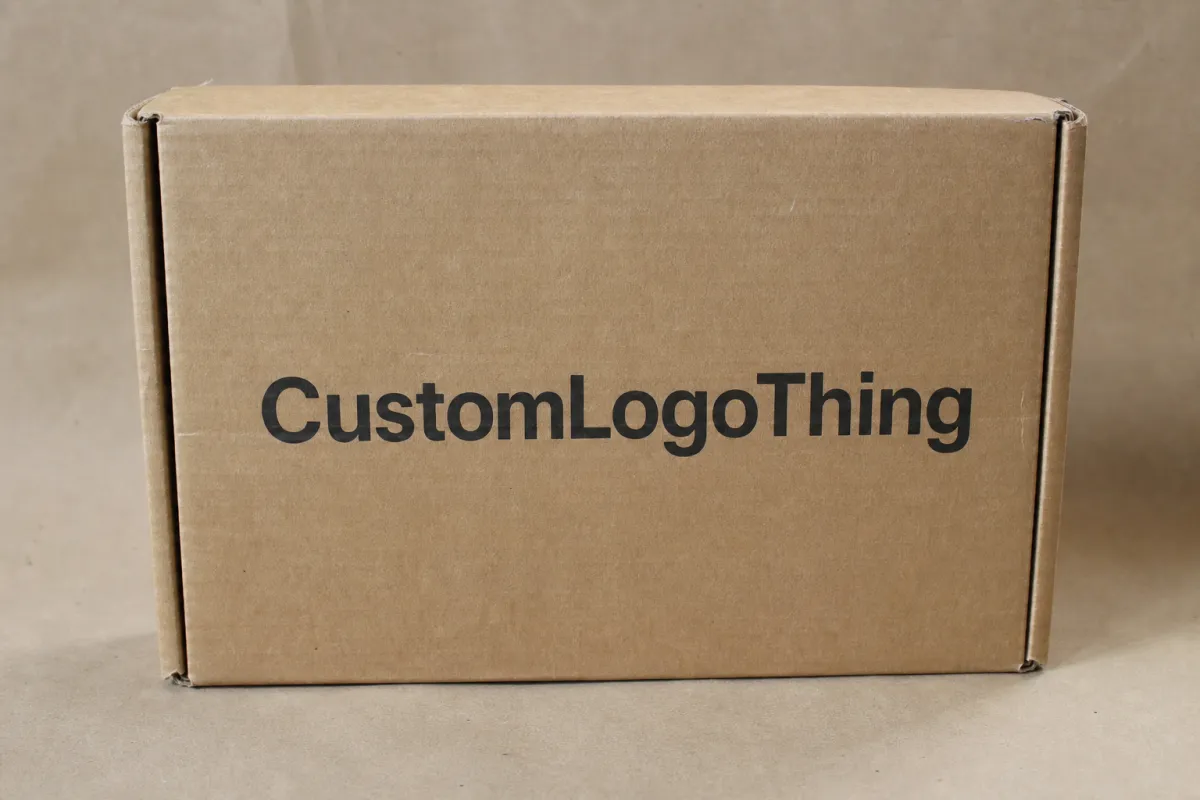
The expensive part of shipping is often not the box itself. It is everything the wrong box creates. Oversized cartons demand filler. Weak cartons create damage claims. Awkward cartons slow the line. Add those costs across a bulk run and a low-cost package starts looking expensive very quickly.
From a packaging buyer’s view, recycled Die Cut Boxes bulk solve several problems at once. Recycled fiber content supports sustainability goals. Die-cut construction creates a tighter fit around the product. That tighter fit can reduce dunnage, improve stackability, and limit movement in transit. For brands watching both cost and environmental performance, the combination is practical rather than promotional.
Those savings show up where finance teams can see them. Less void fill means lower material spend. Better fit means less labor during pack-out. Cleaner geometry means fewer crushed returns. On high-volume runs, even a few seconds saved per unit matter. A 10-second reduction on a 10,000-piece order is not a rounding error. It is labor multiplied by volume.
Freight adds another layer. Carriers charge for space as well as weight, and oversized cartons burn through cube fast. A custom-fit recycled die-cut box can reduce dimensional waste and improve pallet density. That matters more now than it did a few years ago, especially for teams shipping mixed freight or working inside tight warehouse footprints where every inch has a cost attached.
“We stopped paying twice: once for oversized boxes, and again for the filler needed to make them work.”
That line could come from almost any fulfillment manager who has spent time cleaning up a packaging program. It captures the economics neatly. The carton is one line item. The full packaging system includes product protection, packing speed, freight cube, claims, and returns. Miss one of those, and the cheap option becomes expensive in ways that are hard to spot in a spreadsheet.
Recycled corrugated is no longer the fallback choice many buyers assumed it was a decade ago. Plenty of teams specify recycled board because it meets the job. The trick is matching the board grade to the shipping profile. A light e-commerce shipper, a shelf-ready retail tray, and a bulk transit carton each ask different things of the material. The box should reflect those demands instead of pretending they are the same.
For procurement teams, the sharper question is not “Can we find a cheaper carton?” It is “Can we reduce total packaging cost per shipped unit?” Recycled die-cut formats earn their place by shrinking the hidden waste that usually slips through the cracks.
Product details: recycled board, die-cut construction, and fit
What separates a recycled die-cut box from a standard RSC carton is precision. A regular slotted container is familiar and efficient, but it is not built for a tight product-specific profile. Die-cut tooling creates scored folds, locking tabs, interior partitions, display openings, and insert structures that can match the item far more closely. That is why these boxes show up so often in cosmetics, subscription kits, electronics accessories, specialty foods, and industrial parts.
Recycled board can be specified in several ways. Single-wall recycled corrugated usually works for lighter products or lower-risk routes. Heavier grades make sense when stacking strength matters, when the box will sit in a warehouse before shipping, or when the product has uneven weight distribution. Post-consumer and post-industrial fiber blends are both common. The right choice depends on the supply chain, not just the sustainability target.
Buyer decisions should connect board selection to use case. A folded mailer for apparel does not need the same compression resistance as a carton for ceramic components. A shipper moving through a short regional network may tolerate different specs than one crossing multiple distribution points. Packaging vocabulary matters here: burst strength, edge crush test, and stacking performance are not abstract terms. They tell you whether a carton is likely to survive real handling.
Customization is another reason buyers move to die-cut packaging. Print area can be tuned to the brand. Window cutouts can show the product without opening the pack. Interior partitions can keep components separated. Tamper-evident closures add confidence for retail and fulfillment. Coated finishes sharpen appearance, while uncoated finishes often sit better with recycled-content goals and recyclability expectations.
No single version is best in every case. A plain one-color recycled die cut box can be the strongest commercial choice if the product already protects itself. A more complex design may make sense if the box is part of a premium unboxing moment or if damage rates are pulling margin down. The right answer usually sits in the overlap between protection, presentation, and throughput.
That balance matters because packaging buyers are not choosing an object to admire. They are choosing a production item. A good recycled die-cut design fits the product cleanly, stacks well on the pallet, and runs smoothly at packing stations. If one of those three fails, the system usually gets more expensive, not less.
It also helps to place recycled die cut boxes bulk within the wider packaging family. Compared with stock mailers or generic cartons, they are more specialized. Compared with fully rigid setup boxes, they are usually far more economical. For repeat orders with the same dimensions, they often sit in the middle ground buyers actually need: controlled, functional, and easier to standardize.
For sustainability verification, some buyers ask for FSC-certified board or related chain-of-custody documentation. That depends on the supply route and the grade used, but it is a real procurement lever. If your team needs a clearer read on forestry and fiber claims, the FSC organization explains certification principles at fsc.org. For shipping performance testing, ISTA’s standard library is also a solid reference: ista.org.
One practical detail often gets overlooked: recycled content does not automatically make a carton suitable for every use. If the box will handle grease, humidity, or long warehouse dwell times, the board caliper, coatings, and storage conditions need to be evaluated together. A carton that performs on a sample table can behave very differently after three weeks in a hot dock door area.
Specifications to lock before you order
Most packaging delays start with missing information. If you want an accurate quote for recycled die cut boxes bulk, the spec set has to be complete before the project moves into art, sampling, or production. The minimum data points are straightforward: product length, width, and depth; whether dimensions are internal or external; insert clearance; board thickness; and any special closure or display requirement.
That internal-versus-external distinction causes more mistakes than many buyers expect. A carton that looks correct on paper can be too tight once the board thickness, flap geometry, and product tolerances are included. If an insert is part of the design, the tolerance stack gets even more important. A few millimeters can decide whether the product ships snugly or rattles inside the box.
Performance specs matter just as much as size. Ask whether the box needs to survive short courier routes, long-distance freight, warehouse stacking, or humid storage conditions. A carton that lives on a retail shelf has different demands than one moving through an e-commerce fulfillment center. For heavier items, edge crush and compression targets should be discussed early. If the shipment is tested under a recognized distribution method, ask whether the supplier can align with ASTM or ISTA expectations. That keeps the conversation tied to measurable performance instead of guesswork.
Printing and compliance details should be locked at the same time. Artwork file format, number of ink colors, barcode placement, recycling icons, and product claims all affect setup. If the box is used for food-contact applications, state that clearly, and confirm whether the structure is intended for direct contact or only secondary packaging. If the carton must comply with a retailer or marketplace standard, that requirement belongs on the spec sheet from day one.
Here is the practical version: one clean document usually beats ten email threads. A useful spec sheet records product dimensions, board grade, print method, quantity, destination, target ship date, and any packaging standard the box must meet. That document becomes the working contract for quoting and cuts down revisions later.
Buyers often underestimate how much time gets lost when the artwork and the dieline are not aligned. If the logo safe area is wrong, the packaging team has to revise. If the SKU barcode lands in the wrong spot, the box may still function but fail in operations. A sharper spec sheet reduces that churn and keeps everyone working from the same geometry.
For teams that also need broader regulatory or recycling context, the U.S. EPA’s recycling guidance is a useful reference point at epa.gov/recycle. It does not replace packaging engineering, but it does help procurement teams speak the same language as sustainability reviewers.
- Finalize dimensions: internal size, insert clearance, and product tolerances.
- Define performance: stacking load, transit distance, humidity exposure, and handling style.
- Confirm branding: color count, barcode location, logo placement, and any compliance marks.
- Document the timeline: target approval date, production start, and destination receiving window.
For first-time buyers, it also helps to note what the box will not do. If the product is fragile, the carton may need inserts but still need separate cushioning. If the product is heavy, the box may need stronger board but not necessarily more print. Clear limits prevent overbuilding, which is just another form of waste.
Pricing, MOQ, and quote details for bulk orders
Pricing for recycled die cut boxes bulk depends on more variables than many buyers expect, though the main drivers are consistent: box size, board grade, print complexity, tooling, quantity, and finishing steps. The more a design departs from a standard carton, the more setup is involved. Bulk volume helps because those setup costs are spread across more units.
That is why per-unit pricing can fall sharply as order volume rises. A small run often carries a higher price because the same tooling, proofing, and press setup are divided over fewer cartons. Once the quantity climbs, the economics improve. The box does not become cheaper because production turns magical. Fixed costs are simply spread more efficiently.
MOQ behavior deserves the same clarity. Minimum order quantities can vary by dieline complexity, print method, and whether the project uses a standard board or a more specialized recycled grade. Buyers should always ask whether the MOQ applies to one size, one artwork version, or one production run. Those are not interchangeable, and the answer changes how the quote should be compared.
Below is a planning range for bulk buying. These are not universal prices, but they are realistic enough to support internal budgeting before final spec confirmation. Treat them as planning numbers, not promises.
| Option | Typical MOQ | Indicative unit price at 5,000 units | Best fit | Typical lead time |
|---|---|---|---|---|
| Simple unprinted recycled die-cut mailer | 1,000-3,000 | $0.28-$0.65 | Light e-commerce goods, subscription kits, accessories | 10-18 business days after approval |
| Printed recycled die-cut box | 2,000-5,000 | $0.45-$0.95 | Retail branding, recurring SKUs, moderate protection needs | 12-22 business days after approval |
| Printed box with insert or partition | 3,000-10,000 | $0.70-$1.40 | Fragile products, multi-component kits, premium presentation | 15-28 business days after approval |
| Heavier recycled transit box | 2,000-8,000 | $0.60-$1.20 | Industrial, food-service, or higher-weight shipping applications | 12-24 business days after approval |
Those ranges shift with board weight, print coverage, and the number of processes involved. A one-color mark is usually faster and less expensive than full-coverage print. A box with inserts or complex die cutting will carry more setup cost than a simple folding style. Freight deserves attention too. A quote that looks attractive at the factory gate can lose its edge once delivery, pallets, and import handling are added.
That is why buyers should compare total landed cost, not only unit price. The real question is: what does each box cost once it reaches your warehouse and passes inspection? If a quote does not clearly state tooling, proofing, sample charges, and freight terms, the comparison is incomplete.
There is also a negotiation angle that many procurement teams miss. If you can forecast repeat demand, ask for tiered pricing or a phased order structure. That can protect cash flow while preserving price discipline. You may not need to buy twelve months of inventory on day one if the supplier can commit to repeat pricing across a scheduled run.
For brands that want a broader sourcing conversation, our Custom Packaging Products catalog can help compare recycled die-cut formats with other packaging options before you lock the spec. If your business buys packaging at scale, the conversation should be about system cost, not isolated carton cost.
One more point matters in bulk buying: storage. A lower unit price can still be the wrong choice if the cartons occupy more cube than your warehouse can comfortably hold. In other words, the cheapest carton on paper is not always the cheapest carton in operation. Inventory space has a cost, even if it is not listed on the quote.
Process and lead time: from quote to dock delivery
A well-run packaging order follows a predictable path. First comes the quote request. Then the supplier confirms the dimensions, board grade, and print requirements. After that, the dieline is reviewed, artwork is checked, a sample or pre-production proof is approved, the bulk order is manufactured, and the cartons ship to the destination. The sequence sounds simple, but most delays happen in the handoffs.
Missing dimensions can stall quoting. Late artwork approvals can stall production. Unclear compliance requirements can force rework. Changes after sampling are especially costly because they often reset the schedule. In practice, the manufacturing itself is only one part of lead time. The rest is coordination.
For first-time buyers, a realistic schedule should include buffer time for approvals, transit, and warehouse intake. Tooling and sampling often take longer than repeat reorders, especially if the box has inserts, nonstandard folds, or print that must align to a precise die line. Once the spec is locked, repeat production moves faster because the setup is already proven.
Typical lead times for recycled die cut boxes bulk vary by complexity, but many programs land in the following range:
- Simple repeat reorder: often 8-15 business days after final approval.
- First-time custom box: often 12-25 business days after approval, excluding transit.
- Complex printed box with insert: often 15-30 business days after approval.
- International transit: add time for freight, customs, and receiving, depending on the lane.
Those estimates depend on factory capacity, seasonal demand, and whether the artwork is ready at the start. If the team is launching a product, a two-week delay in sign-off can become a four-week delay in shipment. One internal owner should manage the process end to end. Sales, operations, and procurement all have a stake, but the order moves best when one person can approve specs and proofs quickly.
A buyer with repeat demand should also think about reordering discipline. If the spec is written clearly, reorders can move much faster because the supplier does not need to re-interpret the dieline or re-check the print intent. That is one of the hidden benefits of good documentation: future friction drops.
Useful rule: if the box is tied to a SKU that ships every week, treat the packaging like a production part. Put it on a schedule. Give it an owner. Approve it with the same seriousness you would use for any line item that can disrupt fulfillment.
There is a second operational benefit here. A repeatable box spec also makes warehouse training easier. Pickers, packers, and supervisors do not have to relearn the same carton every few months. That sounds minor until a peak season hits and every extra decision slows the line.
Why choose us for recycled die cut boxes bulk
Buyers usually do not switch suppliers because of a single minor issue. They switch because the same friction keeps returning: inconsistent print, unclear quotes, weak communication, or cartons that drift away from the approved spec on the second or third run. A packaging supplier earns repeat business by making the process cleaner, not louder.
That is where Custom Logo Things aims to stand out. We focus on custom packaging that is ready for production: stable dimensions, repeatable print quality, and clear order handling from sample to shipment. For recycled die cut boxes bulk, the real value is consistency. If the approved carton fits the product on the first run, it should still fit on the next run.
Documentation matters here. Procurement teams need recycled content statements, proof control, and a quote that separates tooling from unit cost. Sustainability teams need enough detail to understand the material basis of the claim. Operations teams need a box that performs under real warehouse conditions. Those groups often pull in different directions. A good packaging partner reduces that tension by putting the facts on the table.
That means talking plainly about tradeoffs. A heavier board can improve stacking strength, but it may add cost and change folding behavior. A coated surface can sharpen the brand impression, but it may affect recycling expectations depending on the structure. A window cutout can make the box more attractive, but it changes the board area and may reduce strength slightly. None of that is a problem on its own. It just needs to be discussed with numbers, not slogans.
Operationally, the supplier should also understand shipping conditions. A carton going into warehouse storage for three weeks is not the same as one that ships the day after packing. A box used for regional parcel delivery is not the same as one that goes through multiple handling points. Good recommendations come from understanding that difference. The right packaging advice can save more than a small unit-price discount from a vendor working off a template.
If you are reviewing a broader sourcing program, the packaging mix should be considered together. Some buyers use recycled die-cut cartons for premium or sensitive SKUs, then standardize simpler formats for low-risk products. That is often a smarter way to control cost while keeping the brand experience intact. It also makes reordering easier because the high-spec cartons are reserved for the items that justify them.
For buyers who want a recurring supply structure, our Wholesale Programs are built for repeat ordering. The goal is not just volume. It is predictability, which matters every time a warehouse team opens a new pallet and expects the same result it got last month.
We also pay attention to the small points that create expensive problems later: flap orientation, print registration on the dieline, and how the carton behaves once it is folded a few hundred times in a busy pack area. Those details rarely show up in a sales pitch, but they are exactly what buyers notice when the boxes arrive.
Next steps for ordering recycled die cut boxes bulk
The fastest way to get an accurate quote is also the simplest: send complete information in one message. Measure the product. Confirm whether you need an insert or divider. Decide how much branding goes on the box. State the estimated quantity. Include the destination. If the box must meet a retailer rule, a food-contact requirement, or a specific shipping test, say that up front.
For most buyers, the review sequence should stay tight. Start with the dieline. Confirm the dimensions and tolerances. Approve the sample or proof. Lock the production date. Align inbound receiving so the shipment arrives when the warehouse can handle it. That sequence reduces surprises and keeps the packaging project from becoming a bottleneck in operations.
If your team is still narrowing the design, three practical questions tend to point in the right direction: Does the product need more protection, more presentation, or more pack-out speed? Which of those three matters most? Which one can the box improve most efficiently? The answers usually point toward the right board grade and structure.
Here is a simple action list that works well for bulk orders:
- Measure the product precisely and record internal fit requirements.
- Choose the recycled board grade based on shipping risk and presentation needs.
- Decide whether print, windows, inserts, or partitions are required.
- Send quantity, destination, and target delivery date with the first request.
- Approve the proof quickly so production can start without avoidable delay.
For teams buying repeatedly, the bigger win is consistency. A good packaging spec turns a one-off order into a repeatable supply item. That reduces rework, protects the brand, and gives operations a box they can count on. In that sense, recycled die cut boxes bulk are not just a purchase; they are part of a controlled packaging program.
One practical habit makes this easier: keep a master file for every carton that is approved. Include the dieline, the approved artwork, the board callout, and the date of sign-off. That archive saves time later, especially when a new buyer, designer, or warehouse manager steps into the process and needs the history in one place.
Ready to move forward? Send the dimensions, artwork, quantity, and shipping destination, and the quote process becomes much faster. Recycled die cut Boxes Bulk Orders work best when the buyer treats them like a production plan, not an impulse buy.
FAQ
What is the minimum order for recycled die cut boxes bulk?
MOQ depends on the box size, tooling complexity, and print setup, so there is no single universal minimum. Simple unprinted styles usually allow lower quantities than highly custom printed or multi-part designs. Ask whether the MOQ applies to one size, one artwork version, or one production run so you can compare quotes correctly.
How do recycled die cut boxes bulk prices compare with standard cartons?
Custom die-cut boxes usually cost more upfront than stock cartons because they require setup and tooling. At bulk volume, the unit cost often becomes more competitive, especially when the tighter fit reduces filler and damage losses. The real comparison should include freight, packing labor, and product protection, not just the box price.
Can recycled die cut boxes bulk be printed with my logo and SKU?
Yes, most recycled die cut boxes bulk orders can include logo printing, product names, barcodes, and other branding elements. Print complexity affects cost and lead time, so simple one-color marks are usually faster and more economical than full coverage. Send vector artwork and a clear placement plan to avoid revision cycles.
How long does production take for recycled die cut boxes bulk orders?
Lead time usually depends on whether the order is a first run or a repeat reorder. First-time jobs take longer because dielines, proofs, samples, and approvals must be completed before bulk production starts. Once the spec is locked, repeat orders move faster because the setup and quality expectations are already established.
What information should I send to get an accurate quote for recycled die cut boxes bulk?
Provide product dimensions, estimated quantity, board preference, print requirements, and destination zip code or delivery region. Include any special needs such as inserts, retail display features, moisture resistance, or compliance requirements. The more complete the spec sheet, the faster the quote and the fewer surprises during production.
Final takeaway: The strongest recycled die cut boxes bulk programs start with clear dimensions, honest performance requirements, and disciplined approvals. Build the spec once, keep the record clean, and every reorder becomes easier to price, produce, and receive.


