Choosing a Bakery Paper Bags wholesale supplier for corporate gifting buyers is not really about buying a bag. It is about controlling the handoff. The pastry may disappear in minutes, but the bag can stay on a desk, in a lobby photo, or under an office chair all afternoon, which means the package itself becomes part of the brand memory.
That is why corporate buyers should judge these bags on structure, print clarity, and presentation consistency first. Decoration matters, but a nice logo on a weak bag still looks weak. In practice, the right format reduces repacking, protects delicate items during courier drops, and keeps a gift from reading like a generic takeaway order. If your team is building a repeatable gifting program, the buying outcome should be simple: faster approval, fewer handling issues, and a cleaner recipient experience. That is the standard I would use when comparing any Wholesale Programs offer.
Bakery paper bags wholesale supplier for corporate gifting buyers: what matters first
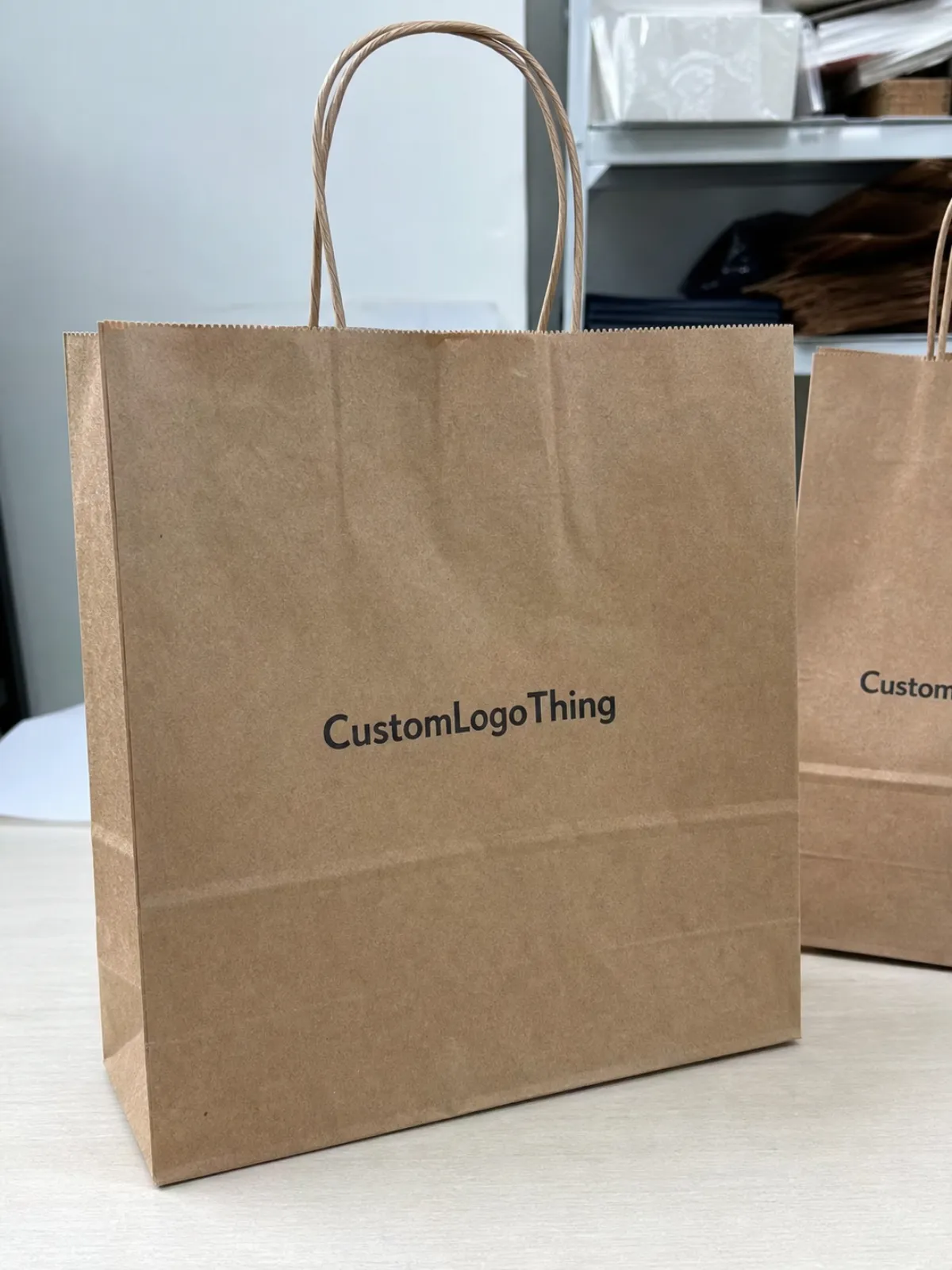
Corporate gifting buyers usually make the same mistake: they start with print ideas and end with structural problems. The better sequence is the opposite. First check whether the bag stands up, folds neatly, and keeps its shape once a pastry box or dessert set is inside. Then judge how the logo sits on the front panel, whether the color reads cleanly against kraft or white stock, and whether the handle or top edge looks composed in hand.
The best bag does not just carry a product. It reduces the amount of work around the product. A handoff at reception should not require a second bag, extra tissue, or a repack because the original package collapsed during transport. That is a small detail, but small details decide whether a corporate gift feels intentional or improvised.
From a buyer's point of view, the supplier search should focus on operational results. Can they turn a brief into a proof quickly? Can they hold color across repeat runs? Can they ship to one address or many without breaking the spec? A Bakery Paper Bags wholesale supplier for corporate gifting buyers should answer those questions before anyone starts debating foil accents or seasonal artwork.
"If the package cannot survive the handoff, it is not premium. It is just printed paper."
That sentence is blunt, but it reflects how recipients actually experience the gift. The bag is seen once, handled once, and judged fast. If it feels stiff, upright, and coherent, the whole gift earns more credibility.
Bag formats that work for pastries, gift sets, and event handouts
Flat bags, gusseted bags, and pinch-bottom bags each solve a different packing problem. Flat bags are best for lighter items or single wrapped pastries. Gusseted bags open wider, which makes them better for small pastry boxes, mixed dessert sets, and thicker inserts such as greeting cards or branded tissue. Pinch-bottom styles give a neater base and can hold their shape well when the package is standing on a reception counter.
Handles matter just as much. Twisted paper handles usually feel more substantial and work well for corporate handouts where the recipient may carry the gift to a train, taxi, or office lift. Flat handles are simpler and often lower cost. Die-cut handles can look crisp for event tables, but they are less forgiving if the contents are heavy or the bag will be carried for more than a short distance.
Surface finish changes the tone immediately. Natural kraft signals earthy and practical. Matte white reads cleaner and more formal. A window panel can hint at the product inside, which is useful for pastry-led gifts, but it also lowers the sense of mystery. For executive gifting, many buyers prefer opacity and a calmer front panel so the bag feels like a deliberate branded item rather than a display carton.
One practical rule helps a lot: match the bag to the delivery context. Lobby pickup, courier drop, and event handout are not the same use case. If your team is working through formats for a recurring program, it helps to compare options inside the same bulk bakery packaging program rather than ordering whatever looks attractive on screen.
Material, print, and finish specifications that affect perceived value
A bakery paper Bags Wholesale Supplier for corporate gifting buyers should be able to explain paper weight in plain terms. For lighter handouts, 120gsm to 160gsm kraft can be enough. For premium gift sets or heavier pastry boxes, 200gsm to 250gsm board or reinforced paper stock usually feels more reassuring in the hand. The difference is not cosmetic. Heavier stock changes how the bag stands, how it folds, and whether the print sits flat or waves across the surface.
Print choice is equally important. One-color logo placement can look elegant when the design is restrained. Two-color or full-color branding gives more flexibility for seasonal campaigns, but it also raises proofing complexity and the chance of color drift between runs. If the bag is for a recurring corporate program, I would usually favor one clear logo position, one secondary message, and enough white space for the package to breathe.
Functional specs deserve the same attention as branding. If pastries are not fully boxed, ask about grease resistance. If the bags may be touched by food-contact items, confirm food-safe inks and coatings. If the program has sustainability requirements, ask for FSC-certified paper and chain-of-custody documentation from FSC. Recyclable content is useful, but only if the print system and finish do not undermine the actual recovery path.
Buyers should also request samples or at least a digital mockup on the exact stock. That is where problems show up fast: a logo that disappears into kraft tone, a matte finish that makes the bag look dull, or a paper weight that appears premium on a screen but feels thin when loaded. A bakery Paper Bags Wholesale supplier for corporate gifting buyers earns trust when they show those trade-offs before production starts.
Size, gusset, and load-capacity specifications for repeat orders
Size is not just width and height. The useful dimensions are internal width, height, gusset depth, and the amount of panel area available for artwork. Those numbers decide whether a dessert box fits without bulging, whether the handle sits upright after filling, and whether the logo remains visible when the bag is carried by a receptionist or courier.
For repeat orders, standardization pays off. Most corporate programs work better with one or two approved sizes than with a new size every quarter. That keeps warehouse storage simpler, cuts rework in pack-out instructions, and makes reordering faster when a campaign moves from a test group to a wider rollout. It also reduces the risk of a buyer accidentally selecting a bag that looks generous but cannot safely carry the actual contents.
Load capacity testing matters more than most people expect. If the gift includes layered pastry boxes, jars, candles, or a mixed hamper, reinforce the bottom and check whether the side seams can tolerate the weight without splitting. When the supplier can reference actual handling tests, even informally, that is better than a vague promise that the bag is "strong."
For presentation-heavy programs, a few extras can improve the reveal without adding much complexity: tissue paper, a branded insert card, a sticker seal, or a short sleeve around the contents. Used well, those details make the package feel staged, not stuffed. Used badly, they just add labor. That is why the wholesale packaging options discussion should always include how the bag will be packed, not only what it looks like empty.
Pricing, MOQ, and unit cost by run size
Pricing for custom paper bags usually moves in predictable bands. Paper grade, print colors, finish, custom sizing, freight, packing method, and setup charges all shape the final unit cost. If a supplier quotes only the bag price and leaves out plates, proofs, or split shipping, the invoice can drift far from the original number.
MOQ affects more than volume. It affects the buyer's freedom to test. A lower minimum order quantity is useful for pilot programs, especially when the artwork is new or the gift format is still changing. Larger runs usually lower the unit cost, but they also raise exposure if the sizing or messaging is off. The smart move is to ask for tiered pricing across several quantity levels, then compare the pilot run against the full rollout.
| Run size | Typical unit cost | Common MOQ profile | Best fit |
|---|---|---|---|
| 1,000-2,000 pcs | $0.34-$0.58 | Lower MOQ, often stock-based or light customization | Testing, small executive drops, internal events |
| 5,000 pcs | $0.18-$0.28 | Typical custom run with one-color to two-color print | Quarterly gifting, recurring receptions, multi-site use |
| 10,000+ pcs | $0.11-$0.21 | Best pricing efficiency, but requires firmer forecast | Nationwide programs, seasonal campaigns, annual planning |
Hidden costs are where procurement teams get surprised. Rush fees, proof revisions, special packing, and split shipments can all move the total. A well-run bakery paper bags wholesale supplier for corporate gifting buyers should disclose these early, not after approval. Honestly, that transparency is often a better sign than a slightly lower headline price.
If you are comparing options inside a wholesale sourcing request, ask each supplier to quote the same size, same stock, same print count, and same delivery point. Otherwise the comparison is noise. One supplier may look cheap because they excluded freight or used a lighter paper weight that would not pass a real gift handoff.
Production steps, lead time, and delivery checkpoints
The production path should be easy to map. Brief intake comes first, followed by dimensions, artwork review, proof approval, production, quality check, packing, and freight booking. If a supplier cannot describe that chain in a few clear steps, they will probably struggle to manage changes once the order is live.
Lead time starts after proof approval, not after the first inquiry. That distinction matters. A buyer can spend a week refining logo placement or adjusting copy, and the calendar still has to absorb production time after the proof is signed off. For stock bags, lead times are usually shorter. For custom sizes, special finishes, or multi-color artwork, 12-15 business days from proof approval is a reasonable planning range, with freight added on top.
Seasonal gifting changes the math. Holiday windows, event dates, and launch campaigns always compress scheduling. If the order needs to go to multiple offices, add time for receiving, sorting, and local distribution. I would rather see a buyer build a buffer into the plan than ask for a near-impossible rush and then accept a weaker print result.
Milestone dates help procurement teams keep control. Ask for an artwork due date, proof release date, production start date, packing completion date, and ship date. If the supplier can send those checkpoints in writing, it becomes much easier to align internal approvals and receiving windows. For larger rollouts, a transit check against handling expectations like ISTA testing logic can be a useful sanity check, especially when the gift includes fragile content.
How to judge supplier reliability beyond the quote
The quote is only one signal. Response speed, sample quality, color consistency, and the quality of the documentation all tell you more. A bakery paper bags wholesale supplier for corporate gifting buyers should be able to answer technical questions without turning every answer into sales language. If they document quality control, even briefly, that is a stronger sign than a polished promise.
Reliability shows up in repeat work. Corporate gifting programs often need the same spec delivered more than once, sometimes to several addresses, sometimes with modest artwork changes. Good suppliers handle those changes without forcing the buyer to restart the process. They also understand that a reprint is not a new product; it is a consistency test.
Look for how they handle mixed SKUs, partial shipments, and artwork revisions. If the supplier can keep a campaign stable across a gift bag, tissue insert, and outer carton, the buyer spends less time chasing details. If they cannot, the program becomes fragile, and every reorder feels like a new project.
"The real cost of a bad supplier is not the first invoice. It is the time spent fixing what should have been right the first time."
That is why I value risk reduction over headline savings. A slightly higher quote can still be the better buy if it avoids delays, avoids reprints, and protects the recipient experience. In corporate gifting, the bag is a visible part of the brand promise. If the bag arrives bent, faded, or inconsistent, the gift has already lost some of its value.
Next steps: send specs, approve proof, and lock delivery
Before you Request a Quote, gather the basics: bag dimensions, quantity, print files, handle preference, finish, and delivery destination. Then add the use case. Is this for lobby handouts, event gifting, or executive hampers? That context changes the right stock, the right strength, and the right presentation.
Once the supplier responds, ask for a sample or a digital proof before sign-off. That one step catches most avoidable problems. It shows whether the logo sits in the right place, whether the paper tone supports the artwork, and whether the bag still looks polished after it is filled. In a repeatable gifting program, that proof is worth more than a long sales pitch.
It also helps to use a short internal checklist: contents, packing order, storage space, backup inventory, final delivery date, and who approves changes if the schedule moves. If your team is comparing suppliers or starting a new program, the safest route is to work with a bakery paper bags wholesale supplier for corporate gifting buyers that can simplify approvals, production, and shipping in one clean workflow. That is the standard worth paying for.
What MOQ should I expect from a bakery paper bags wholesale supplier for corporate gifting buyers?
MOQ usually depends on paper grade, print complexity, and whether the bag is stock or fully custom. Lower quantities are more common for unprinted or lightly customized stock bags. Ask for tiered pricing so you can compare a pilot order with a larger corporate rollout.
Can bakery paper bags be printed with our logo and a seasonal message?
Yes, most wholesale programs support logo printing plus a short campaign line or seasonal note. One-color branding is usually faster and easier to approve; multi-color work adds cost and lead time. Request front, back, and side-panel proofs so the artwork stays clear after folding and filling.
Which material is best for premium corporate gift bakery bags?
Heavier kraft or coated paper works well when the buyer wants structure and a more polished appearance. Grease-resistant finishes help if pastries are not fully boxed or wrapped. Sustainable content can be specified without losing presentation quality if the finish and weight are balanced correctly.
How long does wholesale production usually take after proof approval?
Lead time starts after artwork is approved, not when the first quote is requested. Stock formats usually move faster than custom sizes, finishes, or multi-color printing. Add buffer for holiday gifting, launch events, and shipments to multiple office locations.
What should I send to get an accurate wholesale quote?
Send final dimensions, order quantity, artwork files, handle preference, finish, and the delivery address. Include the intended use, such as lobby handouts, event gifting, or executive hampers. The more specific the brief, the closer the quote will be to the final invoice.

