Retail launch Frosted Zipper Plastic Bags wholesale order planning sounds narrow until the calendar starts shrinking. Then the packaging choices that looked minor begin to shape everything: shelf appearance, packing speed, freight weight, and whether the first shipment can actually be sold on day one. A Frosted Zipper Bag can carry a new product line with a cleaner look than a plain poly bag, but only if the dimensions, zipper, artwork, and replenishment plan are settled before the order turns urgent.
A good bag order is almost invisible in the best possible way: the spec is clear, the price makes sense, and nothing surprises the warehouse.
Why retail launch frosted zipper plastic bags wholesale order planning matters
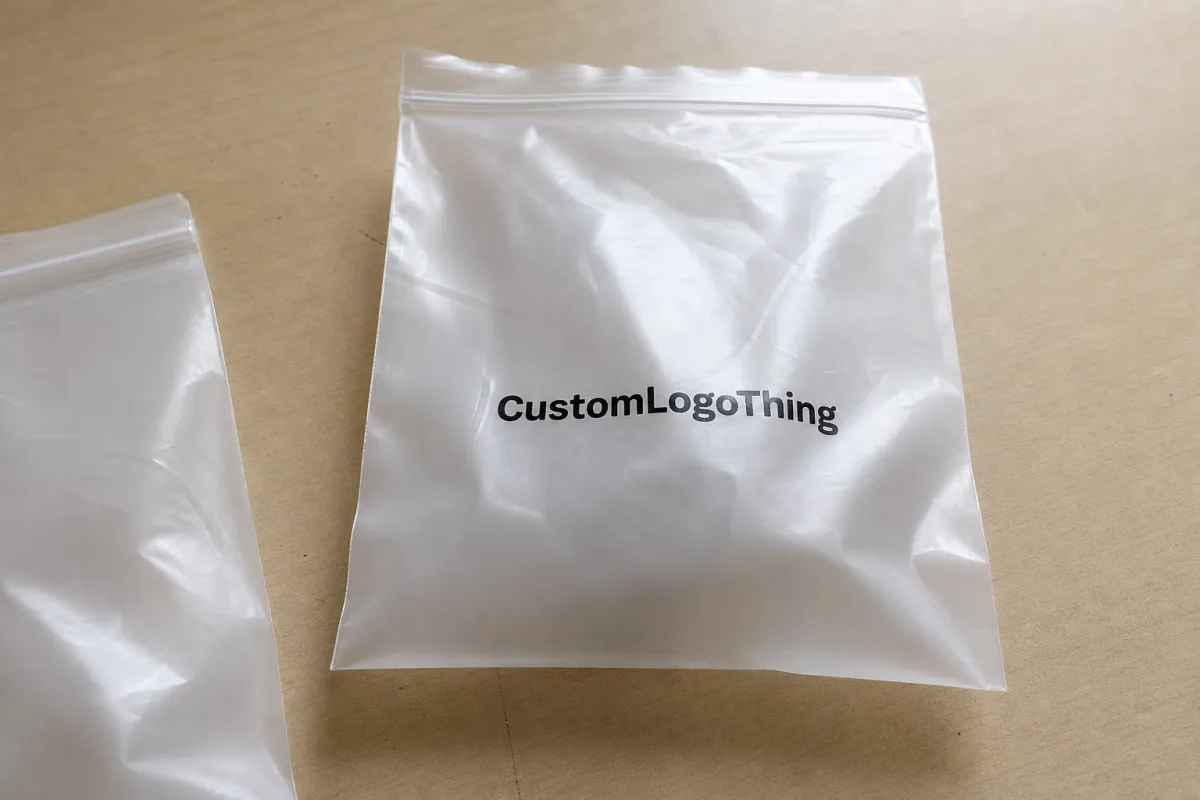
The biggest packaging mistakes usually happen before production starts. A buyer leaves the bag spec vague, assumes the product will fit, and only discovers the problem after the artwork is approved and the launch date is already spoken for. Then the size is off, the zipper feels weak, or the print area cuts into the seal. That is how a simple packaging purchase becomes a chain of delays.
For new retail lines, Frosted Zipper Bags do more than hold a product. They organize inventory, create a more controlled shelf look, and help items move through packing and receiving with less damage than loose packaging. The frosted finish reduces the harshness of clear film. It hides scuffs better than glossy plastic and gives a more deliberate presentation for apparel, accessories, beauty kits, and small gift sets.
Planning matters because launch inventory is rarely forgiving. If the first run is 5,000 bags and the second is 3,000, buyers need the same film feel, same zipper action, same frost level, and the same carton count. A one-off approach makes that harder than it sounds. Packaging is not just a container; it is part of the launch math. If it slows packing, increases damage, or looks inconsistent between batches, the real cost is larger than the unit price.
The strongest launch plans lock the spec early, approve a sample quickly, and leave enough slack for a correction or a small rerun. That buffer can be the difference between a controlled opening and a messy scramble for overnight replacements.
Choose the right frosted zipper bag format for the shelf
Start with the shape. It affects shelf presence, fill behavior, and carton efficiency, and those three things usually matter more than the packaging sales sheet admits. Flat bags work well for slim products that need a clean face and easy stacking. Stand-up versions add height and visual weight. Gusseted bags create more room for bulkier items or folded textiles without turning the package into a soft pouch that slumps on the shelf.
The frosted finish is useful because it sits between clear and opaque. It still lets the product show through, but it softens the look and makes minor handling marks less obvious. That matters for retail launches where the package needs to look tidy under store lighting. Fully clear bags can feel busy. Fully opaque bags can hide too much. Frosted film often lands in the middle, which is why buyers keep coming back to it for new assortments.
Function should decide the extras. Tear notches help customers open the pack cleanly. Hang holes make sense for peg displays. A press-to-close zipper is usually enough for lighter products, while a double-track zipper or slide closure may be worth the higher cost if the pack will be opened and closed repeatedly. If the bag is handled by store staff during replenishment, closure strength matters more than a decorative print effect.
| Format | Best use | Shelf look | Typical MOQ | Typical unit cost |
|---|---|---|---|---|
| Flat frosted zipper bag | Apparel, accessories, slim inserts | Clean, minimal, easy to stack | 1,000-3,000 pcs | $0.08-$0.18 |
| Stand-up frosted zipper bag | Beauty kits, small retail sets, display-focused items | Stronger shelf presence | 2,000-5,000 pcs | $0.14-$0.32 |
| Gusseted frosted zipper bag | Bulkier merchandise, gift sets, folded textiles | More volume, less flatness | 2,000-5,000 pcs | $0.12-$0.30 |
Shape choice should follow the product, not the other way around. If the item folds flat and needs a neat face, flat bags usually make the most sense. If the package needs to stand up or carry more visual weight, the other two formats are worth the higher unit cost. The cheapest option is not always the smartest. A bag that fits badly costs more in labor, presentation, and rejected samples than a slightly better spec ever will.
Size, thickness, zipper style, and print specs to lock first
The first spec sheet should be short and complete. Finished dimensions, film thickness, zipper style, frost level, and any hang or seal requirements need to be fixed before artwork starts. If the bag is even slightly undersized, insertion slows down and the product may wrinkle. If the film is too thin, the bag can feel flimsy and split under handling. If the zipper is weak, the package will fail in the one place customers notice immediately.
Thickness is one of the easiest places to overspend or underspec. For lightweight apparel and flat accessories, 2.5 to 3 mil may be enough. Heavier retail items or higher-value products often need 4 to 5 mil for better hand feel and durability. That does not mean thicker is always better. It means the film should match the product weight, how often the bag will be handled, and how long it needs to survive in store.
Print spec deserves the same attention. A one-color logo on frosted film can look sharp and restrained. Full-color printing is possible, but it needs cleaner artwork and usually costs more. A lot of launches do better with a simple logo, product name, and barcode or SKU label rather than a packed design that crowds the seal. Under retail lighting, restraint often reads as more premium than busy artwork.
- Dimensions: confirm width, height, and gusset depth before artwork is drawn.
- Film thickness: choose based on fill weight and handling, not guesswork.
- Zipper style: press-to-close, double-track, or slide closure depending on use.
- Finish: keep the frost level consistent across the first run and reorder.
- Print area: leave safe space around seams, seals, and barcode placement.
One practical warning: stop changing specs once sampling starts. Every revision can reset approvals, trigger another proof, and push the schedule. A buyer usually saves more by making one solid decision early than by chasing a slightly cheaper quote on a moving target. The packaging industry rewards specificity.
Pricing, MOQ, and unit cost for frosted zipper bag wholesale orders
Quote comparison only works when the quotes are actually comparable. Material, bag size, print method, zipper type, packing format, and shipping method all move the price. For retail launch Frosted Zipper Plastic Bags wholesale order planning, the key is landed cost, not the headline unit price. A bag that looks cheaper on paper can become the expensive option once setup fees, freight, and sample charges are added.
MOQ follows the same logic. Smaller runs usually carry a higher per-unit cost because setup is spread across fewer pieces. Standard sizes and simpler print builds tend to give better pricing than fully custom dimensions with heavy artwork. If the launch is likely to need a quick replenishment, it can be smarter to order a little more at the start than to pay a rush premium later. Five cents per bag may sound small until it is multiplied by 20,000 units. That is $1,000 before freight even enters the picture.
For rough planning, simpler Frosted Zipper Bags often land around $0.08-$0.18 per unit at 1,000-3,000 pieces. More customized retail-ready builds can move into the $0.14-$0.32 range or higher, depending on print coverage, zipper construction, and bag style. A full-coverage print usually costs more than a logo-only version, often by 10%-25%, though the exact difference depends on the design and size. Freight can add another layer, especially if the timing forces a faster mode.
There is also a hidden cost that buyers sometimes forget: rework. If the first sample is wrong because the dimensions were guessed, or the artwork was prepared without enough quiet space, the real cost is not just the second sample. It is the lost time. A quote with a slightly higher unit price can still be the better deal if it avoids those delays.
Use the quote to compare the same spec on every line. If one supplier includes stronger film, cleaner printing, and lower freight, that is the stronger offer even if the sticker price is a little higher. Cheap packaging is only cheap if it arrives usable.
Process and lead time: from quote to sample to shipment
Packaging orders move best when the steps are treated as a sequence instead of a single request. The usual flow is inquiry, spec confirmation, quote, proof, sample approval, production, inspection, and shipping. Each step depends on the one before it. If the buyer sends incomplete details, the rest of the schedule slows down.
The delays are predictable. Missing dimensions cause back-and-forth. Loose artwork files need cleanup. A slow sample review can hold the production slot. Freight booking left too late can turn an on-time production run into a late delivery. The bag may be finished, but the launch still misses its date because shipping was treated as an afterthought.
A practical timeline for many custom wholesale jobs looks like this:
- Quote and spec review: 1-3 business days if the request is complete.
- Artwork proofing: 1-2 rounds when the file is clean and the layout is simple.
- Sample production: about 5-7 business days for many custom builds.
- Mass production: often 12-15 business days after sample approval for standard wholesale orders.
- Inspection and packing: usually folded into production, but confirm it.
- Freight: domestic transit may take 2-5 business days; ocean freight can add several weeks.
For buyers who need a packaging standard that survives warehouse handling, third-party test references can help frame the discussion. The ISTA testing framework is useful for transit durability, and packaging.org is a practical reference for packaging terminology and industry context. Those standards matter more than they first appear, especially when the first shipment will be opened, reboxed, and moved again before it reaches the shelf.
The most reliable timeline includes room for one correction. Not a redesign, just enough space to fix a proof or reroute freight if needed. That small margin prevents the launch from turning into a packaging emergency.
Artwork, labeling, and retail compliance checks before approval
Before sample approval, check the artwork as if the wrong version has to be sold anyway. Logo placement should stay inside the safe zone and away from the zipper seam or edge seal. Barcode placement needs contrast and enough quiet space around it to scan cleanly. If the package carries product claims, warning text, or material notes, the lines need to stay legible under store lighting and not vanish when the bag is folded or filled.
Frosted film changes color behavior. Black tends to hold well. Thin lines and pale colors can fade visually once the bag is handled or creased. Mid-tone shades may look softer than the screen proof suggests. That is why the proof stage matters. A design that looks polished on a monitor can look muddy on matte film. Fixing that before production is routine. Fixing it afterward is expensive and annoying.
Retail compliance can include retailer-specific rules, recycling marks, warning statements, country-of-origin labeling, and category claims. If the packaging uses a sustainability claim, it should be supportable in the way it is written. “Recyclable,” “recycled content,” and “compostable” are not interchangeable. Packaging that overstates a claim creates more risk than benefit.
- Check logo spacing from the zipper and side seals.
- Verify barcode contrast and scan direction.
- Confirm warning text and product claims with the sales or compliance team.
- Review store lighting conditions, because frosted film softens certain colors.
That review can feel tedious. It is still cheaper than reprinting thousands of bags because one line of text landed under a seal or the barcode lost scan quality after the proof stage.
What makes a wholesale setup practical for retail rollouts
Retail rollouts need repeatability more than theatrics. The useful wholesale setup is the one that keeps the dimensions, print placement, zipper style, and carton count consistent from the first order to the reorder. Buyers feel the difference immediately when a supplier saves the spec properly instead of rebuilding it from scratch every time.
That matters because retail launch packaging rarely stops at one batch. A launch might start with a test order, then move into a replenishment run if sell-through is strong. If the second order arrives with a slightly different frost level or a shifted print panel, the shelf loses consistency and the packing line loses time. The cost of variation is not dramatic in one bag, but it adds up fast across thousands of units.
Practical wholesale support usually means a few concrete things: clear dielines, saved artwork versions, documented bag specs, sample retention, and confirmation of carton pack counts. It also means saying no to needless complexity. If a buyer only needs a logo and SKU label, there is no reason to turn the job into a multi-step design exercise. Simpler orders tend to move faster and hold quality better.
For launch planning, the best supplier-side behavior is boring. It keeps the same materials in play, flags a spec change before it becomes a problem, and gives realistic lead times instead of optimistic ones. That is the kind of consistency a retail team can build around.
The strongest wholesale arrangement is the one where the reorder looks and feels like the first shipment, down to the zipper action and carton count.
Next steps for a retail launch order that lands on time
Send the important details together: product dimensions, target quantity, expected fill weight, artwork file, closure preference, and in-hand date. A complete request gets a cleaner quote and cuts down the back-and-forth that often eats up the calendar. If there are two acceptable bag builds, ask for both. Comparing a lower-cost option against a sturdier one is more useful than asking a supplier to guess which path is safer.
After sampling, move quickly. Approve the sample or mark the correction, reserve production time, and confirm shipping method before the launch window tightens. Packaging orders do not improve with indecision. They improve when someone makes the call while there is still room to act on it.
For apparel, accessories, beauty kits, and gift sets, frosted zipper bags can do a lot of quiet work. They organize inventory, sharpen shelf presentation, and protect the retail line from looking improvised. But none of that happens by accident. The order has to be planned early enough to survive reality.
Retail launch frosted zipper plastic bags wholesale order planning works best when it starts before inventory gets tight. That gives room to choose the right format, lock the specs, compare landed cost, and keep the rollout moving without a last-minute packaging detour.
What is the best MOQ for retail launch frosted zipper plastic bags wholesale orders?
The best MOQ is usually the lowest quantity that still produces a workable unit cost and enough inventory for the launch window. Standard sizes and simple printing usually support better MOQ terms than fully custom builds. If a replenishment run is likely, ordering a little more upfront is often cheaper than paying a rush rate later.
How do I compare frosted zipper bag quotes without missing hidden costs?
Compare the same spec on every quote: size, thickness, print method, zipper type, and packing format. Then add sample charges, freight, and any artwork setup fees before deciding which quote is actually lower. A quote can look attractive until a weaker film, a slower schedule, or a more expensive shipping method changes the total.
How long does the process usually take for a wholesale frosted zipper bag order?
Lead time depends on whether the bag is standard or custom and how fast the sample is approved. A clean request can move quickly, while artwork changes and late feedback can add days or weeks. Freight should always be counted separately from production so the launch date is based on real timing rather than an optimistic estimate.
Can frosted zipper plastic bags be customized for retail branding?
Yes. They can usually be customized with logos, product information, labels, and other retail-ready details. The cleaner the artwork file and the fewer the spec changes, the easier it is to control cost and timing. Many buyers get better shelf impact from a simple logo and product message than from a crowded full-coverage design.
What should I prepare before requesting a wholesale quote?
Send the product dimensions, expected fill weight, target quantity, delivery date, and printing needs in one request. Include whether the bag needs a hanging feature, a matte frosted look, or a specific zipper style. A complete request gets a cleaner quote and avoids the back-and-forth that tends to slow launch planning.


