Good beanie programs fail for ordinary reasons. The yarn pills faster than expected. The cuff relaxes after two stretches. The logo sits cleanly in the mockup and then wanders once it lands on a ribbed knit surface. None of that shows up in a product render, which is why a physical sample still matters more than a polished presentation deck.
An ecommerce Cuffed Knit Beanies Material Sample guide should do one thing well: tell you whether the beanie you are approving can survive the reality of online selling. That means checking handfeel, stitch definition, cuff recovery, color consistency, and decoration quality under actual handling. A sample is not a souvenir. It is a decision tool.
For ecommerce teams, the cost of being wrong is visible fast. A beanie that looks full in studio light can read thin on a phone screen. A softer yarn may photograph beautifully, then disappoint in wear. A tighter knit may feel less luxurious in hand but hold shape better after shipping, folding, and customer try-on. Those tradeoffs are where margin is won or lost.
Ecommerce cuffed knit beanies material sample guide: what the swatch reveals
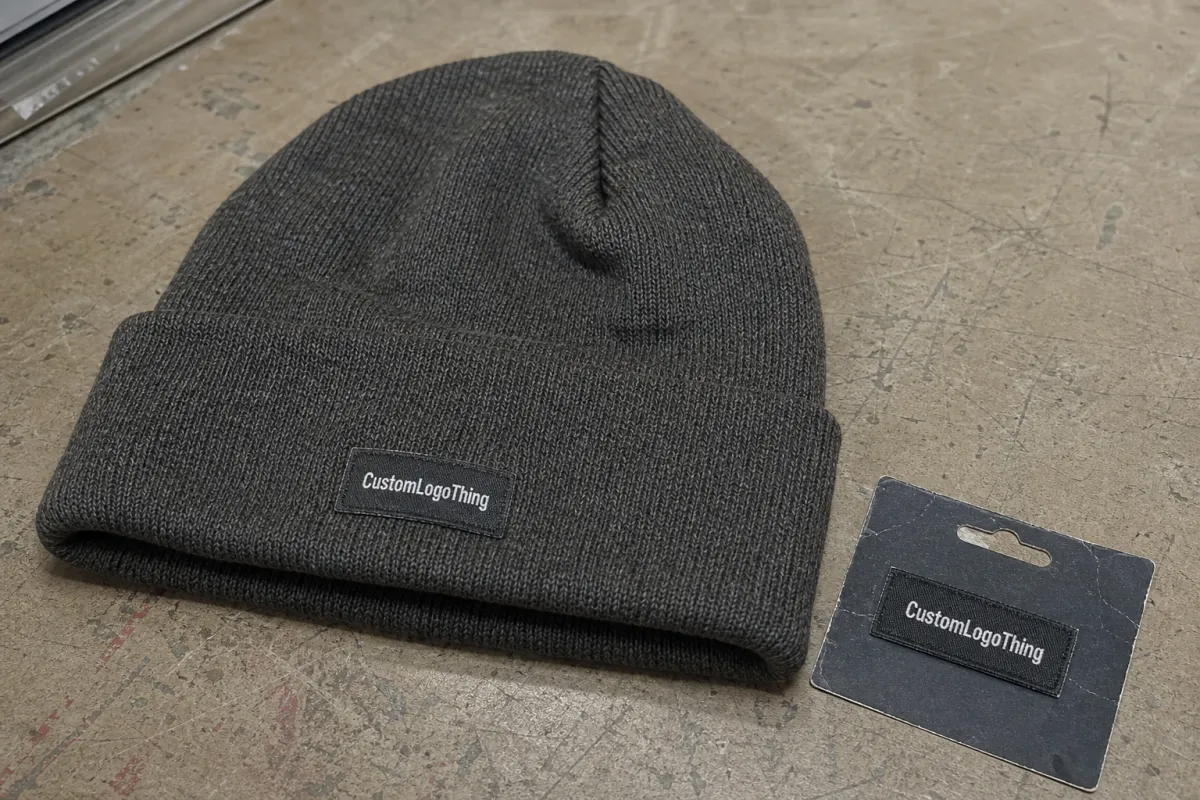
A swatch reveals more than fabric. It reveals process discipline. Even before you inspect the decoration, the knit itself tells you whether the supplier is controlling tension, maintaining uniform rib spacing, and finishing the cuff cleanly. If the stitch density looks uneven or the fold line warps easily, the production run will probably carry that same instability.
One of the quickest ways to judge a cuffed beanie is to stretch the rib and watch what happens next. A good sample rebounds without losing its outline. A weaker one grows a little wider and never fully returns. That is not a cosmetic issue. It changes fit, changes shelf appearance, and changes how customers describe the item after one week of wear.
Texture also matters more than many buyers expect. Acrylic can feel smooth and consistent, but low-grade versions can read plasticky or dry. Wool adds warmth and a more premium touch, though it can itch if the blend or finish is off. Recycled blends can support sustainability claims, but the actual feel depends on fiber source and spinning quality, not the label alone. The sample is where those differences become obvious.
For ecommerce, the visual side is just as unforgiving. A loose gauge can make the beanie look airy in the photo, even if the measurements are correct. A denser knit may look richer, but it can also reduce drape and make the cuff sit higher than planned. Online buyers make fast decisions from small cues, so a sample should be judged under the same light and camera conditions the final listing will use.
"The mockup looked right. The sample told a different story: the cuff sagged after the first stretch and the decoration sat lower than the art file suggested. That changed the approval path immediately."
A useful sample review compares the beanie against the actual use case. A promotional winter item does not need the same construction as a premium retail hat. A structured rib knit with stronger recovery usually supports embroidery better. A softer recycled yarn may feel better on skin, but it may trade away some crispness. The right answer depends on the buyer, not the supplier brochure.
Packaging deserves a quick check too. Samples that arrive compressed in a thin mailer can mislead the review process before the beanie is even opened. A small corrugated cardboard box, tissue, or kraft paper wrap helps preserve shape during transit and gives internal reviewers a clearer first impression. If sustainability claims matter, ask for FSC certified cartons or paper made from recycled materials or post-consumer waste. That does not improve the knit itself, but it does affect how the sample is perceived and documented.
Sampling process and lead time: from request to approved swatch
A clean sampling process starts with a brief that is specific enough to prevent guessing. Include fiber content, gauge preference, cuff depth, logo method, target head circumference, and whether the fit should be snug, standard, or relaxed. If the beanie has to match a brand color, attach a reference code and a physical standard when possible. A one-paragraph brief can save a week of back-and-forth.
After that, the supplier usually confirms yarn availability, sets the knitting spec, and runs the sample through finishing and packing. Stock yarn moves faster than custom-dyed work, and simple constructions move faster than designs with multiple decoration steps. Business-day lead times often run around 7-10 days for stock-yarn samples, 12-18 days for custom-dyed or more complex samples, and 15-25 days when revisions, special blends, or extra finishing are involved. Freight is separate, and customs can stretch the calendar further.
The review should happen in layers. Photos can catch obvious color issues, but they cannot confirm handfeel or recovery. The physical swatch should then be checked by hand, tried on different head sizes, and compared against the spec sheet. If the first version misses the mark on stretch, logo clarity, or cuff height, a second sample is usually cheaper than correcting a full production lot.
One small habit improves decisions across the board: use the same checklist every time. Without that, teams end up arguing from memory. One person remembers softness. Another remembers the logo. A third remembers price and assumes everything else is fine. A fixed scorecard keeps the conversation from drifting.
- Handfeel: soft, neutral, or scratchy against skin
- Shape retention: does the cuff rebound after repeated stretching?
- Stitch clarity: are the ribs even and well defined?
- Logo readability: does the decoration stay clean on the knit surface?
- Color accuracy: does the sample match the target under daylight and indoor light?
For internal circulation, ask how the sample will be packed. A knit beanie compressed inside an overfilled mailer often arrives with a distorted cuff or flattened crown. A rigid corrugated cardboard shipper, with tissue or kraft paper support, protects the shape better. That is especially useful when samples pass between merchandising, sourcing, and marketing teams before a final sign-off.
Two external standards can help with documentation. ISTA publishes transport test methods that are useful for package integrity, and FSC certification helps verify paper sourcing. Neither replaces product review, but both reduce avoidable damage and strengthen supplier records.
Cost, pricing, and MOQ: what sample requests really cost
Sample pricing is small compared with a production order, but it is not trivial. A sample fee usually includes yarn, knitting time, finishing, and handling. Some suppliers credit the fee back if the production order goes ahead. Others treat it as a standalone cost. The difference matters, because a low sample quote can hide a higher setup charge later.
Typical sample fees for Cuffed Knit Beanies often fall around $25-$75 for stock-yarn work, $60-$120 for custom-dyed or color-critical samples, and $80-$150 or more when the build involves special fibers, extra revisions, or stricter finishing requirements. Shipping can add another $12-$40, sometimes more if the route is fast or international. If the factory has to pause a production run to make your sample, rush costs can appear without much warning.
MOQ changes the economics quickly. A 100-piece run and a 5,000-piece run do not share the same cost structure. Smaller orders usually mean higher unit price, fewer color options, and less room for custom finishing. That does not make low MOQ bad. It just means the buyer should expect fewer efficiencies.
| Sample path | Typical fee | Lead time | Best for |
|---|---|---|---|
| Stock yarn, single sample | $25-$75 | 7-10 business days | Quick handfeel, fit, and structure checks |
| Custom-dyed yarn sample | $60-$120 | 12-18 business days | Brand color validation and art approval |
| Specialty blend or revised sample | $80-$150+ | 15-25 business days | Premium retail programs and tighter spec control |
Read the quote line by line. Separate sample fee, production unit price, shipping, setup charges, and any refund or credit policy tied to the future order. Ask whether the sample fee applies only if the order reaches a specific MOQ. That clause is easy to miss and often changes the real cost picture more than the headline price does.
Production pricing also deserves context. Depending on fiber, gauge, decoration, and finishing, a basic cuffed knit beanie can land around $3.50-$8.00 per unit in larger runs, while premium blends or more complex decoration can climb higher. The sample should help you decide whether a higher price is buying tangible improvements in feel, fit, or durability, not just a nicer sales description.
If the first swatch misses the mark, a second sample is usually the cheaper mistake. Correcting a 20-minute approval problem at the sample stage is far less expensive than absorbing a 2,000-piece order that ships with the wrong texture or logo behavior.
Fiber content, gauge, and cuff structure: the specs that matter most
Fiber content is where many buyers get misled by broad labels. Acrylic, wool, recycled blends, and performance fibers can all work, but they do not behave the same way in use. Acrylic is generally predictable and cost-efficient. Wool feels warmer and more elevated, but it can irritate sensitive skin if the blend is too coarse. Recycled content can support sustainability claims, though consistency depends on the feedstock and spinning quality. Performance fibers can improve durability, but they do not automatically improve comfort.
Gauge is the next variable that changes the whole read of the product. Tighter knits usually hold shape better and look cleaner in product photography. Looser knits can feel softer and more casual, but they often show more of the head shape underneath and may lose structure earlier. If the supplier only says “premium knit,” ask for the actual stitch count, gauge, or construction method. Vague language does not help a buying decision.
Cuff structure affects both style and branding space. A deeper cuff gives more room for a logo patch or embroidery and tends to make the hat feel more substantial. Rib type changes elasticity. Seam finishing changes comfort. Inside seams should be checked as carefully as the outside, because a rough finish can irritate the wearer and signal rushed production.
These questions belong on the spec sheet:
- What is the fiber content by percentage?
- What gauge or stitch count is being used?
- How deep is the cuff fold?
- How does the rib recover after repeated stretching?
- Does the fabric pill after wear testing?
Wash behavior is another practical check. Not every yarn survives repeated cleaning the same way, and not every beanie should be treated as machine washable without qualification. A beanie sold through ecommerce needs care instructions that match the actual performance of the yarn and knit, not the most optimistic version of the spec.
There is a production reality here that spec sheets rarely explain. Tight gauges can take longer to knit and may cost more in labor. Softer yarns can hide edge detail, which makes embroidery less crisp. Recycled fibers can vary from lot to lot if the source stream is inconsistent. The sample is where those tradeoffs stop being abstract.
Color matching and logo clarity in ecommerce photography
Screen color is only a starting point. Display settings, studio lights, and camera white balance can all change how the beanie reads. A charcoal yarn can look deeper in soft light and flatter outdoors. Navy can drift toward black on one monitor and blue-gray on another. That is why physical color references matter more than a digital thumbnail.
Pantone targets help with communication. Lab dips help when yarn is being dyed to match. A swatch viewed in daylight helps identify whether the color still holds up outside the studio. Buyers who skip that step often discover the mismatch only after the listing is live, which is the most expensive time to learn it.
Decoration clarity is just as sensitive. Embroidery can look sharp on a stable knit, but it may distort on looser gauges or stretch-heavy fabrics. Woven labels keep edges crisp and work well when the brand wants a clean, retail look. Patches add presence. Heat-applied details can work in some cases, though they are not always the best choice for highly flexible knits. The sample should be inspected from a few angles, because thread tension and stitch pull can be invisible head-on but obvious from the side.
Ask for macro photos, inside-out photos, and front-facing shots under neutral light. If the supplier cannot provide clear decoration images before shipping, that is a warning sign. A logo that looks centered on screen can land off-center once the knit relaxes. Ribbing can also pull a design slightly upward or downward after application, so placement should be checked on the actual swatch, not just on the layout file.
"The artwork was approved quickly. The sample showed a different problem: the knit tension pulled the logo a few millimeters off the intended position. That was enough to change the decoration method."
For ecommerce photography, ask how the sample behaves both folded and worn. A cuffed beanie can look balanced on a flat surface and awkward on a head. If the marketing team plans to shoot it on models, a wearer test matters. A product that sits well on the table but collapses on the head will create a mismatch between listing imagery and customer expectation.
Common sample mistakes that distort fit, feel, and approval
The first common mistake is judging fit on one person only. Head size, hair volume, and personal comfort all change the verdict. A beanie that feels perfect on one reviewer can feel tight or loose on another. Fit testing should include more than one wearer whenever the order size and timeline allow it.
The second mistake is skipping wear testing. Stretch the cuff several times. Wear the sample for a few minutes. If the product is meant for regular use, check rebound after a short rest. When possible, do a damp handling test or a gentle wash test and see how the knit recovers. A yarn that feels soft in hand can lose shape faster than expected.
There is also a habit of over-trusting the fiber label. Buyers see wool and assume quality. They see recycled content and assume a lower-tier product. Neither assumption holds by itself. A well-constructed acrylic blend can outperform a poorly finished natural fiber piece in durability, consistency, and appearance. Construction and finishing matter as much as the raw material.
Photo approval causes its own trouble. Renders and edited mockups hide uneven ribbing, loose edge finishing, or a logo that sits too high on the cuff. Once production starts, those flaws become expensive. Physical review is slower, but it is cheaper than fixing a finished lot.
Three habits reduce bad approvals:
- Review the sample in daylight and indoor light.
- Test it on multiple heads and after a stretch cycle.
- Compare the sample, spec sheet, and quote together instead of separately.
Packaging can distort judgment too. A beanie crushed in transit may appear poor-quality when the problem is actually the mailer. For internal sample circulation, a small structured box usually works better than a soft envelope. Add tissue or kraft paper to hold the shape. If packaging standards matter to your brand, ask for FSC certified paper or materials made from recycled materials or post-consumer waste. The packaging does not make the beanie, but it can change the approval meeting.
Expert tips and next steps before you place the order
Build a simple scorecard before the sample lands. Rate softness, rebound, cuff shape, color accuracy, logo visibility, and value on the same scale. A 1-to-5 system is enough. The point is not to turn a tactile product into a spreadsheet; the point is to keep different reviewers anchored to the same standard.
If budget allows, compare two builds side by side. A 100 percent acrylic version can be set against a recycled blend. A tighter gauge can be compared with a slightly looser one. The goal is not to collect options forever. The goal is to see which version fits the customer, the margin target, and the return risk more honestly.
Ask for a final spec sheet, a pre-production photo, and written tolerance notes. If the cuff height can vary by 0.5 cm, document it. If the logo has a narrow placement window, record it. The approved sample should become the production reference, not a loose example sitting on a shelf somewhere.
Quality control should keep a short list of checks near the approval stage: stitch count, seam finish, edge tension, color-to-reference match, decoration placement, and recovery after stretch. If a supplier cannot answer basic questions about those points, the sample is doing its job by exposing the gap before the order is placed.
Price, timing, and construction all need to line up. A low-cost beanie with a loose gauge may be fine for a promotion. A premium retail piece usually needs better stitch control, cleaner finishing, and a more consistent handfeel. The sample is where that distinction becomes visible. It should tell you whether the product belongs in a discount box, a gift program, or a higher-touch retail assortment.
For teams using this ecommerce Cuffed Knit Beanies Material Sample guide as a buying filter, the last question is practical: does the sample prove the beanie will photograph well, wear well, and ship well? If the answer is yes, you are close to production-ready. If the answer is mixed, another round of sampling is usually cheaper than hoping the problem disappears.
What should be included in an ecommerce cuffed knit beanies sample request?
Include fiber content, target cuff height, fit preference, logo method, and expected order quantity. Add color references, desired handfeel, packaging requirements, and any care instructions you plan to print. A clearer brief usually reduces revision rounds and makes the quote more reliable.
How long does a cuffed knit beanie material sample usually take?
Stock yarn samples often arrive faster than custom-dyed or specialty blend versions. In many cases, 7-10 business days is realistic for a basic sample once materials are confirmed, while more involved samples can take 12-18 business days or longer. Revisions, freight, and customs can extend the calendar.
What drives pricing after a sample is approved?
Fiber choice, stitch density, decoration complexity, and finishing steps are common cost drivers. MOQ also affects unit price, so small orders usually cost more per piece than larger runs. Freight, packaging, and any custom labeling can shift the landed cost more than buyers expect.
Can I judge fit from one material sample alone?
One sample is useful, but it should not be the only fit reference. Test the beanie on different head sizes and check how it behaves after stretching. If fit is critical, ask for a second version with a revised cuff, a different gauge, or an alternate yarn blend.
How do I compare ecommerce cuffed knit beanies material samples fairly?
Use the same lighting, the same wear test, and the same scorecard for every sample. Compare softness, rebound, color accuracy, and logo clarity side by side instead of relying on memory. Keep the spec sheet next to each sample so subjective impressions do not override measurable details.


