Candle cuffed knit beanies Bulk Order Planning works best when the starting point is actual demand, not a round number chosen because it “feels” efficient. Knit headwear is forgiving in fit and broad in appeal, which is why it shows up in retail assortments, employee kits, charity drives, winter promotions, and school programs. That same flexibility can hide weak planning. Buyers often underestimate how quickly a simple beanie order turns complicated once material, decoration, packing, and freight are all moving at once.
The safest approach is practical: define the use case, decide how much variation you can tolerate, then build the order around those limits. A cheap unit price matters less if the product lands late, arrives in the wrong shade, or sits in storage for two extra seasons. Good bulk planning on Cuffed Knit Beanies is less about hunting the lowest quote and more about keeping the landed cost, timing, and reordering path predictable.
Candle Cuffed Knit Beanies Bulk Order Planning Starts With Demand, Not Guesswork
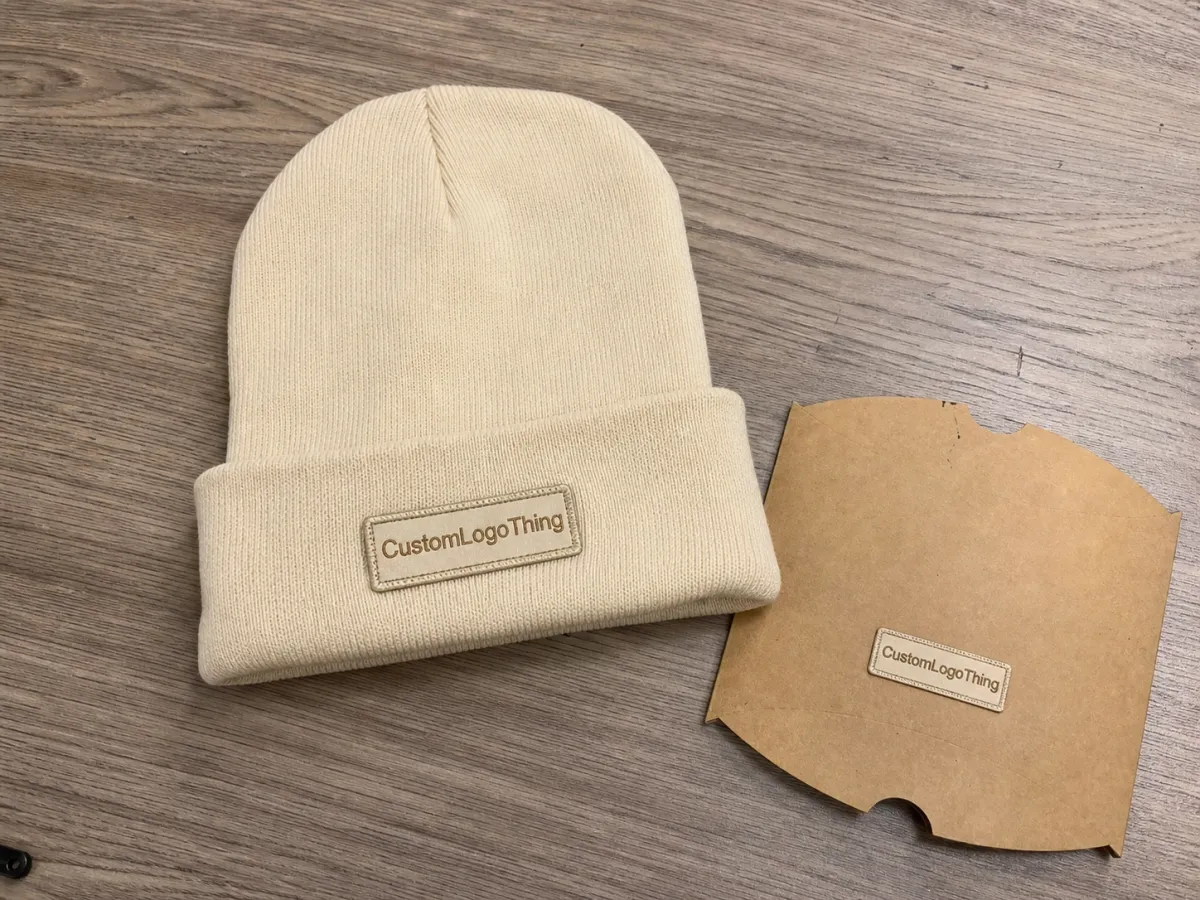
The first question is not what the beanie looks like. It is how it will be used. Retail replenishment, event giveaways, staff gifting, and school merchandise all point to different quantity ranges and different spec priorities. A retailer may care about shelf appeal and repeat ordering. An event buyer may care more about visibility and fast turnaround. A school or nonprofit may need broad fit tolerance and simple branding because the end user is less controlled.
Order size should track real movement, not hoped-for movement. If the seasonal sell-through estimate is 400 units, ordering 1,200 because the per-unit price drops by a few cents usually creates more risk than savings. Extra stock ties up cash, takes space, and can force markdowns later. The reverse problem happens too: a campaign that needs 2,500 units should not be split into a tiny initial buy just to feel cautious, because the second run may face different yarn availability or longer lead times.
The cleanest planning frame is simple:
- Retail assortments: favor colors that sit naturally beside the rest of the seasonal line.
- Promotional programs: keep decoration bold enough to read at a distance and simple enough to reproduce cleanly.
- Employee or donor gifts: prioritize comfort, stretch, and soft interior feel over novelty details.
- Uniform or school programs: standardize the spec so replacements match later reorders.
For candle cuffed knit Beanies Bulk Order Planning, it also helps to separate one-time buys from repeat programs. A one-time buy can tolerate a bit more flexibility in packaging or yarn source. A repeat program cannot. If the beanie needs to come back next year with the same look, you need a stable color reference, the same cuff depth, and a decoration method that can be duplicated without guesswork.
That is where many buyers lose time. They start with broad intent, then discover too late that their “simple” beanie has become a moving target. Locking the intended use early removes most of the friction before it reaches production.
Material, Fit, and Cuff Details Buyers Should Lock Down
Most bulk Cuffed Knit Beanies are built from 100% acrylic, acrylic blends, recycled acrylic blends, or wool/acrylic mixes. Acrylic is usually the most economical and the easiest to source in consistent colors. It also stretches predictably and is generally easy to care for. Wool blends feel warmer and more substantial, but they cost more and can feel less forgiving if the knit is tight. Recycled blends make sense for buyers who need a sustainability claim without moving into a premium price tier.
Fit is controlled by three things buyers should not treat as minor: knit density, crown depth, and cuff height. A common cuff width falls around 2.5 to 3.5 inches, while crown depth often lands around 7.5 to 8.5 inches. Those numbers vary by pattern, but they are useful reference points. A cuff that is too short leaves nowhere clean for decoration. A crown that is too shallow can pull awkwardly on larger heads. A loose knit may feel soft in hand yet collapse after repeated wear, which is exactly when embroidery starts to look tired.
Stretch recovery matters more than buyers expect. A beanie should return to shape after being worn, folded, and packed. If it loses structure too quickly, the logo area can distort and the product stops looking intentional. That problem is especially visible on reorders, where the second run should match the first. Buyers who care about reorderability should treat recovery as part of the spec, not as an afterthought.
Audience matters too. A retail buyer may want a more structured silhouette that displays well on a hook or shelf. A staff-gift order may do better with a softer, more relaxed fit. School and community programs usually need the broadest tolerance because the end user is unknown. A single “one size fits most” label does not solve the issue; the underlying knit has to support that promise.
It also helps to describe hand-feel in practical terms. “Soft” is too vague to be useful. Ask whether the yarn is tightly twisted or brushed, whether the inner seam feels smooth, and whether the cuff can support stitching without buckling. A denser acrylic knit can look more premium than a looser, softer one, which is one reason sample review matters so much. Buyers often learn that after the first reorder, not before it.
Color, Decoration, and Spec Choices That Control the Final Look
Color decisions can save or waste time. Stock yarn shades are faster to source and usually easier on budget. Custom-dyed yarn improves brand matching but raises minimums and adds lead time. The split is straightforward: if speed matters, use stock colors. If the beanie is part of a branded retail system and color accuracy affects sell-through, custom yarn may be worth the extra wait.
Decoration is where knit headwear either looks finished or looks improvised. Embroidery is still the standard because it is durable and clean. Woven labels handle detail better at small sizes. Patches add texture and can make the piece feel more substantial. Hang tags matter when the beanie is selling through retail or needs care instructions. The right choice depends on where the product will live: folded in a box, hung on a display, handed out at an event, or shipped in a mailer.
Artwork complexity should be kept in check. Thin lines tend to fill in. Tiny lettering disappears. Gradients and fine detail can look better on screen than in knit form. A good supplier will usually flag stitch count limits, recommend placement, and tell you when a logo needs to be simplified. That is not resistance; it is a warning that the finished item may not carry the artwork well otherwise.
A spec sheet should include the following before production starts:
- Color reference: PMS target or clear yarn match standard.
- Decoration map: exact placement and approximate size.
- Approval stage: digital proof, sample, or pre-production sample.
- Packaging standard: polybag, insert card, fold method, or retail tag.
If packaging claims matter, verify them early. Paper inserts, recycled labels, and carton claims should be backed by documentation rather than a sales line. For carton handling references, buyers can check ISTA guidance. For fiber-based printed material claims, FSC is the familiar benchmark. Those checks do not add glamour, but they prevent later disputes.
Decoration can also change the feel of the cuff. Dense patches or heavy embroidery make the front panel stiffer. Some buyers like that because it reads as more substantial. Others want the beanie to stay soft and casual. That choice should be made deliberately, not discovered after production is done.
If the beanie is meant to feel premium without a large cost jump, knit density usually matters more than fancy materials. A tighter acrylic knit with a well-balanced cuff often looks more polished than a looser blend with a louder logo. The opposite is also true: a weak decoration on a strong knit can still look unfinished. Quality is the interaction between both pieces.
Pricing, MOQ, and Unit Cost Breakpoints to Watch
One all-in number hides more than it reveals. A useful quote separates the unit price, decoration, setup, packaging, freight, and any special finishing. Once those lines are broken out, the buyer can see where the money is going. Without that split, the “best” quote often becomes the most expensive one after extras are added.
For standard cuffed knit beanies, rough bulk pricing often lands around $2.10 to $3.80 per blank unit for stock acrylic at 300 to 1,000 pieces, with $0.75 to $1.80 added for basic embroidery. Woven labels or simple patch work may add another $0.30 to $0.85. Custom yarn color can increase the base cost by 10% to 30%, and more complex decoration can move higher if stitch count or placement requires extra handling. Freight is its own variable and may add $0.25 to $1.20 per unit depending on destination, carton size, and shipping mode.
MOQ usually moves with customization. A stock color with one decoration location may work at 100 to 300 pieces per colorway. A custom-dyed yarn order or a multi-color knit often needs 300 to 1,000 pieces or more. That is not arbitrary. Yarn sourcing, machine setup, and finishing time all push the threshold upward. If a supplier offers a tiny MOQ on a highly custom build, ask what was simplified to make that possible.
| Option | Typical MOQ | Typical Cost Impact | Best Use |
|---|---|---|---|
| Stock acrylic blank | 100-300 pcs/color | Lowest base price | Fast promo buys and tighter budgets |
| Stock acrylic + embroidery | 150-500 pcs/design | Moderate setup + decoration fee | Retail add-ons, staff gifts, branded merch |
| Custom yarn color | 300-1,000 pcs/color | Higher base price and longer lead time | Brand-matched programs and premium retail |
| Patch + retail packaging | 200-500 pcs | Added packaging and finishing cost | Shelf-ready presentation and gift sets |
The more useful breakpoint is not the MOQ itself but the point where inventory stops being efficient. A lower unit price means little if the order leaves you with excess stock, storage charges, or cash tied up past the selling season. Good candle cuffed knit Beanies Bulk Order Planning compares the quote against expected use, not against an abstract desire to maximize the discount.
Carton efficiency matters as well. Sometimes moving from 400 pieces to 600 pieces changes the unit price only slightly, while increasing storage and freight in a way that erases the savings. Ask for landed cost at the quantity you can actually move. That is the number that tells the truth.
Production Steps, Proofing, and Lead Time Expectations
A clean order usually follows the same chain: spec confirmation, artwork review, proof or sample, production, finishing, packing, and shipment. The process is basic. The failures happen when buyers skip a step and hope the factory “understands” what was meant. Proofing is not decoration; it is the point where the order becomes real.
Lead time depends on how custom the build is. A stock beanie with simple embroidery may ship in 10 to 15 business days after proof approval. A more customized run with specialty patches, custom yarn, or branded packaging often falls in the 18 to 30 business day range, and longer if yarn procurement is slow. Shipping time should be treated separately because route, season, and mode can change it significantly.
Samples deserve careful review. If the first sample feels too tight, too shallow, or too stiff, that feedback should be specific. “Looks off” is not actionable. “Cuff is too narrow and the logo sits too close to the seam” is. The supplier can correct crown depth, cuff size, stitch density, and placement only if the issue is clear enough to fix.
For larger orders, a pre-production sample or a color confirmation can save a lot of frustration. Screen mockups hide texture and tension. Once yarn is knitted, the actual hand-feel, contrast, and logo readability become visible in a way a digital file cannot show. If color match is critical, ask for a lab dip or a physical reference before production starts.
Testing may be relevant depending on the channel. Retail and corporate buyers often ask about pilling, colorfastness, or dimensional stability using common ASTM references. Not every beanie order needs formal lab work, but some do. A supplier should be able to explain what was tested and what was not, instead of hiding behind vague quality language.
Packaging adds time too. Polybags, barcode stickers, insert cards, folding standards, and retail hang tags each create a small delay. None of them are dramatic on their own. Combined, they can move the schedule enough to matter. If the order has a fixed event date, a week of buffer is safer than trying to land everything at the last minute.
How to Compare Suppliers Without Getting Buried in Sales Language
Supplier comparison gets noisy because many quotes sound similar at first glance. The real differences usually sit in the details: yarn composition, knit gauge, decoration method, proof turnaround, packaging options, and reorder consistency. If a supplier cannot describe the spec clearly, that is already a sign to slow down.
Use the same questions with every vendor:
- What is the exact yarn composition and knit gauge?
- What cuff width and crown depth are standard for this build?
- Which decoration method holds up best on this knit?
- What is the real MOQ for stock color versus custom color?
- What is included in the unit price, and what is billed separately?
Then compare the responses line by line. If one quote leaves out packaging, setup, or domestic freight, it is not cheaper; it is incomplete. A clean quote makes comparison easier. A weak one hides extra charges until the order is already moving.
Sample speed is another useful signal. Fast proofing usually suggests a process that is organized and repeatable. Slow proofing can mean the supplier is overbooked, waiting on internal approval, or handling requests manually in a way that will keep slowing the job later. If two bids are close, the clearer communicator is usually the safer choice.
For buyers focused on candle cuffed knit beanies bulk order planning, the right supplier is not the one with the loudest pitch. It is the one that can state the limitations plainly. A good partner will tell you what can be made cleanly, what will affect cost, and where the risks sit. That clarity is worth more than a polished promise.
Next Steps to Turn a Quote Into a Clean Purchase Order
Once the quote makes sense, the purchase order should remove every possible ambiguity. Lock the product name, yarn blend, color reference, cuff dimensions, decoration type, logo placement, packaging method, quantity, and ship date. If anything is still open, mark it clearly. Unclear terms are how orders drift.
It also helps to attach the approved mockup and sample notes to the PO. That gives both sides a record of what was agreed and cuts down on disputes later. If a deposit is required, confirm the payment milestone, balance timing, and release terms before production begins. None of that is exciting, but it prevents unnecessary delays.
For multi-location buyers or seasonal programs, split shipments can be smarter than a single release. One batch can cover near-term use while another sits as reserve stock. That protects cash flow and reduces storage pressure. It is a plain tactic, yet it solves a lot of avoidable problems.
The strongest orders look almost boring on paper. The spec is tight, the pricing is transparent, and the supplier understands exactly what has to be made. That is the real value of candle cuffed knit beanies bulk order planning: fewer surprises, fewer revisions, and a product that arrives ready to do its job instead of creating new work.
FAQ
What is the safest starting quantity for a first order?
For a first-time buy, 150 to 300 pieces is a reasonable starting point if you are using stock colors and one decoration method. That range is usually large enough to get a meaningful price break without overcommitting cash or storage. If the order is highly customized, the minimum may need to be higher.
How much should embroidery add to the cost?
Basic embroidery often adds about $0.75 to $1.80 per unit, depending on stitch count, logo size, and placement. Small, simple marks tend to stay near the low end. Dense artwork, extra thread colors, or tricky positioning can push the number up. If the price sounds unusually low, ask how many stitches are included.
What matters more: material or decoration?
Material controls comfort, fit, and how the beanie wears over time. Decoration controls the first impression. For retail and gifting, both matter, but material usually determines whether the item gets used. A polished logo on a poor-feeling hat still reads as cheap. A well-made beanie with restrained decoration usually performs better.
Can I use the same spec for reorders?
Yes, and that is usually the best way to keep production consistent. Reorders work far better when the yarn blend, cuff size, artwork placement, and packaging are already fixed. That is the practical benefit of disciplined candle cuffed knit beanies bulk order planning: the first order becomes a usable template for the next one.


