Vitamin Cuffed Knit Beanies Material Sample Guide for Buyers
The first mistake with a beanie sample is treating softness as proof. Soft hand-feel can come from fiber choice, finishing, or even a light wash that flatters the surface. It does not tell you whether the cuff will hold, whether the crown will relax, or whether the beanie will still look intentional after shipping and wear.
A practical vitamin cuffed knit Beanies Material Sample guide starts with a harder question: what does the sample reveal that a spec sheet cannot? The answer usually includes stretch recovery, stitch density, weight, shrinkage, pilling, and the way the cuff changes the structure of the cap once it is folded and worn. Those details decide whether a beanie feels premium or merely warm.
Buyers often focus on color because it is the fastest thing to judge. That is understandable, but color accuracy is only one layer of approval. Structure is where most surprises hide, especially in branded merchandise, retail assortments, and event programs where a single bad batch can turn into a visible quality issue.
What Material Samples Actually Prove
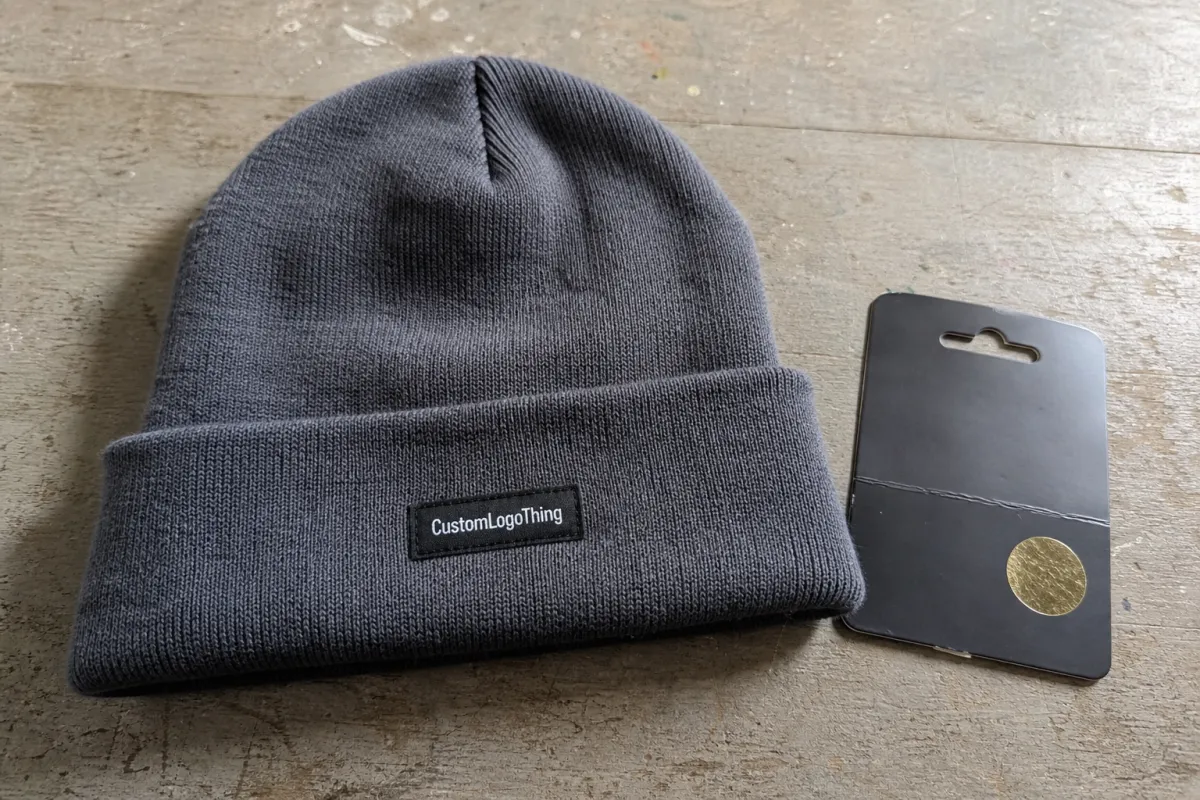
A sample is not a souvenir. It is a stress test in miniature. For Cuffed Knit Beanies, the sample should show how the yarn behaves under tension, whether the cuff stays flat, and how the knit looks after it has been pulled, released, and worn more than once. If those things are not visible in the sample, they will not become better in bulk production.
There are three common formats: flat swatches, mini beanies, and fully finished samples. Flat swatches are useful for yarn texture and color, but they tell you almost nothing about cuff behavior. Mini beanies are better because they capture crown depth, brim tension, and the effect of a folded cuff. Fully finished samples are the closest to production, especially when labels, patches, or embroidery are involved.
In buying terms, the sample is a checkpoint for drift. It shows whether the factory can stay close to the intended spec while still delivering something that feels wearable. That matters because a beanie can be technically correct and still sell poorly if it feels limp, looks shallow on the head, or loses shape after one wash.
Samples are most valuable when they reveal tradeoffs. A sample that looks perfect but hides no weakness is usually not a very useful sample.
The same logic applies to branding. A clean logo placement means little if the fabric buckles around it, the cuff twists, or the knit reads thin under retail lighting. Real approval decisions depend on how the beanie behaves as a finished object, not on how the yarn looks on a table.
Fiber Blend, Gauge, and Finish
Material language can sound simple, but it is where many purchasing mistakes begin. Buyers often ask for “soft,” “premium,” or “thick” beanies. Those words describe the feeling, not the construction. A useful sample review translates those adjectives into measurable details.
Acrylic remains common for cuffed knit beanies because it is cost-stable, holds color well, and can be spun to feel surprisingly soft. Lower grades can feel dry or fuzzy, so the quality of the yarn matters more than the fiber name alone. Cotton breathes better and has a more natural touch, but it tends to lose bounce faster and may show shape fatigue sooner. Polyester improves durability and wash performance, especially in blends. Wool adds warmth and a more elevated hand, but it raises cost and can introduce care concerns. Blends often make the most sense because they balance comfort, stability, and price.
Gauge is where samples become informative. A tighter gauge usually produces a denser, more structured beanie. A looser gauge can feel lighter and less expensive, but it may open under strain and flatten the cuff. The difference between 7-gauge and 12-gauge knit construction can be dramatic even when the yarn content is identical. Buyers who ignore gauge often end up comparing the wrong things.
Finish changes the result again. Brushing can soften the surface, but it may blur stitch definition. Anti-pilling treatments can help a sample survive abrasion, though they are not a cure for weak yarn. Washing or steaming can settle the shape and improve drape, but it can also expose shrinkage or torque. A sample should represent the final finish, not an earlier stage that looks better than the bulk run will.
Color should be checked in context. Lab dips and production yarns do not always match perfectly. Even when the shade is close, texture and sheen can change the way a color reads. A dark heather that looks rich under bright light may flatten in warehouse conditions. A pale tone may show knit irregularity faster than expected. That is why written color references matter more than casual labels like “near navy” or “soft charcoal.”
Packaging deserves the same specificity. If the sample is shipped in corrugated cardboard with kraft paper inserts, ask whether the board is FSC certified or made with post-consumer waste content. If a supplier says the packaging is biodegradable, ask what component is actually biodegradable and under what conditions. “Eco-friendly” is not a spec. It is a promise that needs definition.
How to Test a Cuffed Knit Beanie Sample
A sample should be tested the way the product will be used, not the way it photographs. Start with stretch and recovery. Pull the cuff, release it, and repeat the motion several times. A beanie that stays open or ripples after repeated handling is signaling a structure problem. Softness alone does not make up for poor recovery.
Next, check the cuff specifically. Fold it, wear it, and let it relax. The cuff changes the geometry of the beanie more than many buyers expect. It adds bulk at the brim, shifts tension, and affects how the cap sits on the head. If the cuff rolls, sags, or feels uneven, the product may still be wearable, but it will not look controlled.
Then inspect the stitch face. Look for gaps, irregular loops, seam interruptions, and spots where the knitting looks less even under tension. A dense, even knit usually signals better process control. Loose areas can happen even in acceptable samples, but they should be visible and explainable, not random.
Wear the sample for at least a short period rather than judging it only in hand. The head shape matters. A beanie can feel fine when held and look awkward once worn. Crown depth, cuff height, and overall fit determine whether it sits low, rides up, or collapses at the brim. Those are not cosmetic details; they shape the perceived quality of the product.
Washing is a separate test. If the beanie will be worn casually and cleaned by the end user, a wash test matters more than a polished first impression. Shrinkage, twisting, pilling, and seam puckering often show up here. Even a gentle wash can expose differences between samples that looked identical before laundering. If there is no care guidance yet, that absence should be treated as a warning sign rather than a gap to ignore.
Transit testing is easy to overlook, but sample condition on arrival matters. A beanie that arrives crushed or compressed in an undersized mailer can reveal poor packaging choices that may affect bulk shipments too. Industry transit standards such as those published by ISTA are more common in packaging than apparel, but the logic still applies: if the sample cannot survive the journey in presentable condition, the buying team is already dealing with a hidden failure.
Cost, MOQ, and Timeline Realities
Sample quotes often look simple on paper and messy in practice. The price is rarely just the knit item. It can include yarn sourcing, knitting labor, label setup, trim attachment, packaging, and freight. A minor revision can change the total more than the initial quote suggests.
Typical sample pricing breaks down roughly like this:
| Sample type | Typical fee | Lead time | Best for | Main limitation |
|---|---|---|---|---|
| Stock swatch | $8-$18 | 2-4 business days | Hand-feel and yarn review | Does not show cuff behavior |
| Mini knit beanie | $25-$60 | 7-12 business days | Fit, structure, recovery | May not match final branding package |
| Fully finished branded sample | $45-$110 | 10-18 business days | Retail or merchandising approval | Higher setup and revision cost |
| Revision sample | $20-$50 | 5-10 business days | Correcting fit, color, or trim | Timeline restarts after each change |
MOQ affects the economics more than many teams expect. If the order is likely to move into production, some suppliers will credit sample costs toward the bulk run. That is helpful, but only if the terms are written clearly. A vague promise of “sample credit” means very little unless it states what qualifies, when the credit applies, and whether it survives revisions.
Lead times also need to be treated carefully. A stock sample can sometimes ship in a few business days. A custom cuffed knit beanie with special yarn, a revised brim, or branded trim is slower. Seven to fifteen business days for the first serious sample is normal, and custom dyed yarn or extra revision rounds can push that longer. The largest delays usually come from unclear specs, not knitting itself.
Before approving a quote, ask five things: whether the fee is refundable or credited, whether freight is included, whether revisions trigger new setup charges, whether the sample is a swatch or a finished piece, and what the turnaround is after proof approval. Those answers will tell you more than a polished price line ever will.
Packaging can also swing the total. A simple kraft mailer with corrugated cardboard inserts is usually cheaper than a rigid custom box. A presentation box may be worth it for retail, but it should be a conscious choice. For internal review or sourcing approval, the practical option often makes more sense than the prettier one.
Common Buyer Mistakes
The most common mistake is approving on appearance alone. A beanie can look clean on a desk and still fail once stretched over a head, stuffed into packaging, or washed. Visual approval should be one part of the process, not the whole process.
- Skipping measurements: Crown depth, cuff height, and finished circumference should be checked against spec, not estimated by eye.
- Testing only one light source: Office light, daylight, and warehouse light can make the same color read differently.
- Ignoring wash behavior: Shrinkage and pilling often show up after laundering, not before.
- Comparing only one unit: Knit variation exists, so checking two samples can reveal whether the process is stable.
- Forgetting the end use: Event giveaways, retail goods, and staff uniforms do not need the same softness, warmth, or finish.
Another mistake is treating packaging as an afterthought. The sample may be excellent, but if it arrives in weak packaging, the buyer sees damage before quality. Corrugated cardboard with kraft paper inserts is not glamorous, yet it protects shape and keeps the sample readable. If the supplier uses FSC certified board or recycled content, ask for the percentage rather than accepting the label at face value.
Green claims need the same discipline. Biodegradable packaging sounds appealing, but not every part of a mailer is biodegradable, and some materials only break down under specific industrial conditions. A buyer who asks those questions is not being difficult. They are reducing ambiguity.
Packaging and Presentation
For many programs, the beanie is judged before it is touched. That makes presentation part of the sample itself. A neatly folded cuff, a protected knit face, and a labeled insert can help the review team understand the product faster. The opposite is also true: a crushed sample can make a good beanie look careless.
Packaging should match the decision the sample is meant to support. Internal sourcing teams usually need clarity, not luxury. Retail buyers may need better presentation because the sample is standing in for shelf-ready inventory. Event teams often care about speed and transit durability more than premium unboxing. Those use cases do not require identical packaging.
Materials should be chosen with restraint. Corrugated cardboard gives structure. Kraft paper reduces scuffing and keeps the sample from shifting. If a supplier wants to use recycled materials, that can be a plus, but the better question is whether the packaging still protects the knit shape. A damaged sample is not a sustainable win.
Packaging can also signal process discipline. When a supplier can explain why a mailer, insert, or wrap was chosen, it usually means they understand more than decoration. That tends to correlate with better control on the knit side as well, though it is never a guarantee. Good packaging is a sign, not proof.
A Practical Decision Framework
The easiest way to compare samples is to score them against the actual buying goal. For most cuffed knit beanies, the relevant categories are warmth, comfort, stretch recovery, stitch quality, color accuracy, and price. A simple 1-to-5 score on each category is usually enough to clarify the tradeoffs.
Side-by-side comparison works even better. Ask for a preferred sample and one lower-cost alternative. The cheaper version often reveals the savings directly: a looser gauge, a thinner cuff, a simpler finish, or a less expensive yarn blend. Sometimes that is acceptable. Sometimes it is the exact reason the sample should be rejected.
Written specs should travel with the physical sample. Keep yarn content, gauge, finished weight, cuff height, label type, and tolerance ranges in one place. If the supplier can provide a clean spec sheet, that is usually a better sign than a persuasive sales note. Reorders go smoother when the team can reference the original approval without guessing what changed.
Ask for proof, not adjectives. If a beanie feels premium, identify why: gauge, finish, recovery, or fiber blend. Then record it while the sample is still in front of you.
That approach helps the review stay practical. The right sample is not always the softest or the most expensive. It is the one that fits the intended use, stays within budget, and behaves predictably enough to move into production without a lot of hidden repair work.
FAQ
What should a cuffed knit beanie sample kit include?
A useful kit should include yarn content, gauge, finished weight, cuff measurements, care notes, and at least one physical sample or swatch. If branding is involved, ask for the label method or patch method used on the sample.
How do I compare two beanie samples objectively?
Use the same lighting, the same stretch test, and the same wear test for both samples. Score softness, recovery, shape retention, and price side by side instead of relying on first impressions.
What affects sample cost the most?
Yarn choice, knitting complexity, labeling, packaging, and shipping are the main cost drivers. Custom dyed yarn and branded finishes usually add the most because they introduce setup work and revision risk.
How long does the sample process usually take?
Stock samples can move quickly, while custom knit development usually takes longer. A first custom sample often lands in the 7-15 business day range, with revisions adding time if the spec changes.
What is the biggest mistake buyers make?
They approve based on appearance and skip stretch recovery, fit, and wash behavior. A sample should prove that the final beanie can hold shape, feel comfortable, and stay inside the target cost structure.
Why does packaging matter for a knit sample?
Packaging protects the sample shape and affects first impression. Corrugated cardboard, kraft paper, and fit-for-purpose inserts can prevent a good beanie from arriving crushed or distorted.
A well-run vitamin Cuffed Knit Beanies Material Sample guide is less about collecting swatches and more about stripping out avoidable risk before bulk production starts. That is the difference between a sample that looks nice and one that actually protects a buying decision.


