If you are building a private-label beanie line, the ecommerce Logo Patch Beanies Material Sample guide is where expensive surprises usually surface. A mockup can look clean while hiding a knit that feels thin, a patch that flashes under studio lights, or a cuff that sits higher than the product page suggests. None of that reads as a problem in a proof. It becomes a problem when the cartons arrive.
A sample is not just a design approval. It is a physical test of the fabric, the patch, the attachment method, the fold, and the way the finished piece behaves in ecommerce photography. Shoppers do not buy a render; they buy the object that lands in a mailer, gets opened in bad lighting, and still has to feel worth the price.
Done properly, sampling protects margin, launch timing, and the trust behind the listing. It also turns vague comments like "soft" or "premium" into measurable details such as yarn weight, patch finish, and stitch density.
Why a material sample guide stops expensive beanie mistakes
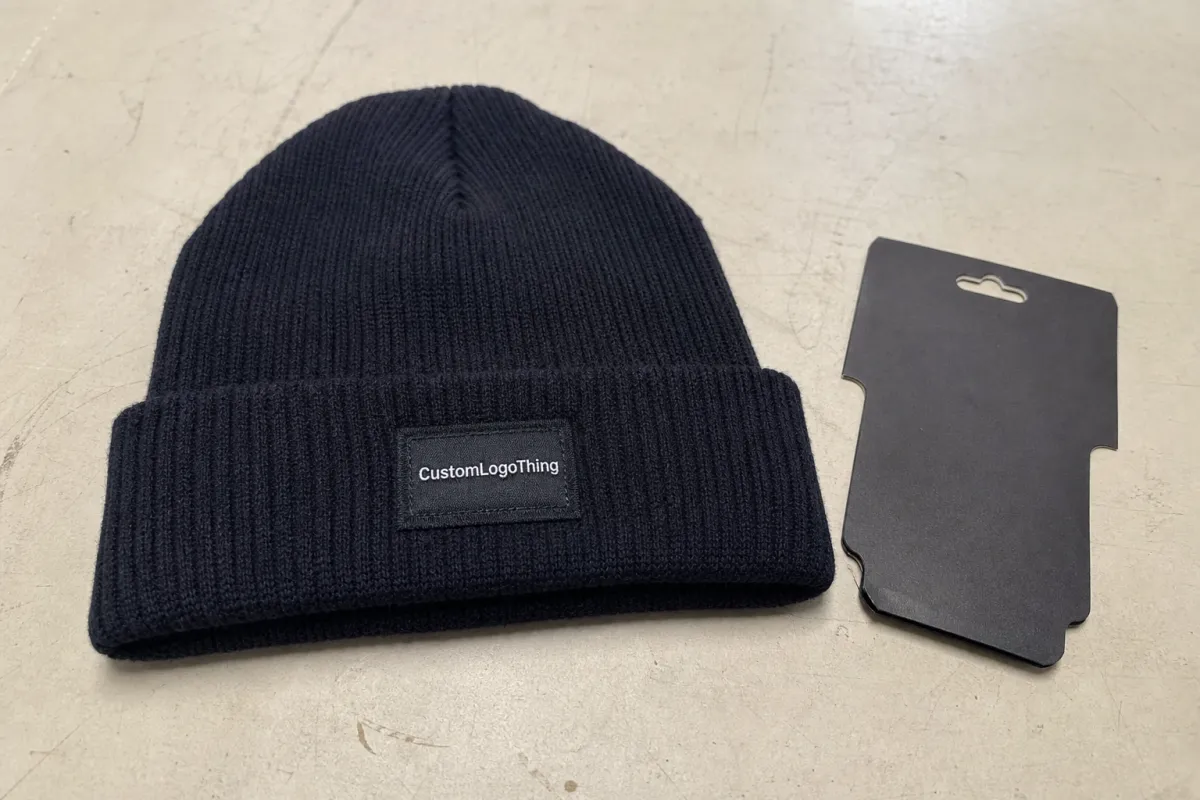
A beanie can pass a digital review and still fail in real life. The yarn may have more sheen than expected. The patch may sit slightly off-center once the cuff is folded. The crown may be too shallow, which makes the whole shape look cheap on a mannequin or model. That is why an ecommerce Logo Patch Beanies Material Sample guide matters before bulk production starts.
The biggest risk is not one dramatic defect. It is the stack of small mismatches that hurt conversion and drive returns. A product page promises a certain texture and silhouette. The real item needs to match that promise closely enough that customers do not feel misled. If the first shipment is off, the issue is usually fit, finish, packaging, and photo consistency combined.
For cold-weather accessories, small changes matter more than most teams expect. A thicker yarn changes drape. A wider cuff changes the visual balance of the logo. A glossy patch can look promotional instead of retail. Once the sample is in hand, you can judge texture, structure, and camera read instead of guessing from a PDF.
In plain terms: the sample is cheaper than a bad first run, and usually much cheaper.
How the sample process should work
The cleanest sample process starts with a complete spec, not just a logo file. Send vector artwork, patch dimensions, placement notes, color references, and the intended beanie body construction. If you have Pantone targets, a prior season sample, or a yarn swatch, include that too. Fewer assumptions usually means fewer revisions.
The normal flow is straightforward: request quote, build sample, review photos or receive the physical piece, send revisions if needed, then lock approval before production. Some suppliers can send a pre-production photo first. That helps with logo placement and patch shape, but it does not replace a physical sample when texture, stretch recovery, or patch backing matters.
Split feedback into two buckets: aesthetic preference and technical requirement. "Move the logo 5 mm higher" is technical. "Make it feel richer" is not, unless you translate it into patch thickness, knit density, or cuff depth. If both get mixed together, the next round gets slower and less precise.
Lock the details that are hard to fix later: yarn content, gauge, patch construction, backing method, stitch count, and packout. If the final order ships with branded polybags, tissue, or inserts, review that at the sample stage too. Folded presentation changes the perceived size and finish more than many teams expect.
A practical rule: do not approve a beanie until it looks right both in hand and in a listing photo. If it passes only one test, it is not finished.
Sample cost, MOQ, and quote factors
Sample pricing depends on how custom the build is. A basic knit beanie sample with a standard patch may run about $35 to $75 before shipping. Add specialty patch work, multiple revisions, or custom labels, and the price can move into the $80 to $150 range or higher. Shipping often adds another $18 to $65 depending on courier speed, destination, and whether the sample ships alone or with other items. Some suppliers credit sample fees back against the bulk order. Some do not.
MOQ changes the math. A small ecommerce launch may only need a few hundred units to test demand, but a low quantity can raise per-unit cost because setup, patch tooling, or yarn allocation is spread across fewer pieces. That is not a reason to skip samples. It is a reason to understand the economics early and decide whether the margin still works once packaging and freight are included.
| Sample type | Best use | Typical cost | What to confirm |
|---|---|---|---|
| Fit sample | Checking crown depth, cuff width, and stretch recovery | $35-$70 | Silhouette, comfort, head fit |
| Logo approval sample | Verifying patch shape, artwork, and placement | $50-$110 | Color, legibility, attachment quality |
| Pre-production sample | Final sign-off before bulk run | $75-$150+ | All specs, packaging, and finish details |
The largest price drivers are patch style, number of colors, embroidery versus woven construction, backing choice, and packaging. A leather patch with debossing does not behave like a woven twill patch. A heat-applied backing is not the same as a sewn edge. If the supplier is also sourcing FSC-certified paper inserts or recycled packaging components, that can move the landed sample cost too.
There is no magic number that makes a sample "worth it." Compare the sample cost against the cost of one bad bulk approval. That is a cleaner way to judge the spend, and it usually ends the debate quickly.
Materials, patch construction, and fit details
The body fabric drives the feel of the beanie. Acrylic is common because it is predictable, economical, and easy to reproduce across colorways. Wool blends usually feel warmer and more natural, with better drape and a bit more surface character. Recycled fibers can support sustainability claims, but they need real testing. Recycled yarns sometimes change stretch, loft, and color depth in ways that do not show up well in a render.
Weight matters too. Many ecommerce beanies land somewhere in the 80 g to 150 g range depending on construction and size, but that number alone is not enough. A 120 g beanie can still feel flimsy if the knit is open. A slightly lighter one can feel substantial if the gauge is tight and the yarn is dense. Touch beats theory every time.
Patch choice changes the whole personality of the product. Leather and faux leather patches can look premium, but they reflect light differently and can shift from understated to shiny depending on the finish. PVC patches are bold and dimensional, though they often read more casual or athletic. Woven twill patches are strong for small lettering because they hold detail without getting bulky. Fully embroidered patches add texture, but fine text can close up if the stitch count is too tight or the artwork is too ambitious.
Backing is just as important as face material. Sew-on is usually the safest choice for durability. Heat-applied can be efficient, but it needs proper bonding and stress testing. Adhesive-backed patches are fine for temporary decoration and usually a poor choice for retail headwear. If the patch looks good but starts to lift after a few folds, it fails.
Do not ignore fit details because they are not glamorous. Crown depth, cuff width, body circumference, and stretch recovery all affect how the beanie reads. A shallow crown can feel tight and awkward in photos. A cuff that is too tall can swallow the patch. Even the closure path - whether the crown is neatly linked or more visibly seamed - changes the retail impression.
For ecommerce, the sample has to tell the truth about the silhouette, not just the logo.
A practical review method for ecommerce teams
The fastest approvals come from structure, not enthusiasm. Start with a checklist that covers fit, color accuracy, logo legibility, texture, packaging presentation, and hand-feel. If you are reviewing for a storefront launch, compare the sample against the approved mockup and any physical swatches. That makes it easier to separate acceptable variation from a real mismatch.
Then test the sample under different lights. Daylight shows true color better than almost anything else. Indoor LED light can add a sheen you do not want. A phone flash will expose whether the patch catches light too aggressively for product photography. If the beanie only looks right in one lighting setup, it is not ready.
Also check how it behaves when folded and refolded. That sounds boring because it is boring, and it is where plenty of problems show up. A cuff that springs back unevenly, a patch that creases, or a knit that bags out after handling will matter more in ecommerce than a perfect flat lay ever will.
For packaging, think beyond the beanie. The sample should show whether the folded size fits the shipper, whether a kraft belly band sits flat, and whether the insert or hangtag feels balanced rather than crowded. If shipping durability matters, ask whether the outer pack should be tested against an ISTA method. The standards from ISTA are a useful reference for transit stress and handling.
If the sample feels right in hand but reads wrong on camera, it is not approved yet.
Keep revision notes clean. One note for yarn. One for the patch. One for packaging. One for silhouette. Vague bundles of feedback make the next round slower and the final spec harder to trust.
A solid review process does not need drama. It just needs discipline.
Mistakes that cause bad approvals and reorders
The most common mistake is approving from photos alone. That can work for a basic soft good, but it breaks down when sheen, embossing, patch edge quality, or knit density matters. A digital image can hide loose stitches and flatten depth. It can also make a matte finish look glossier than it really is. If the item will be sold online, a physical sample should be non-negotiable for anything that affects touch or camera read.
Another mistake is skipping wear testing. A patch can look tight on day one and then curl, wrinkle, or shift after the beanie is folded into a bag, pulled on, or worn for a few hours. Even a simple stretch test can tell you whether the opening recovers properly or relaxes too much. If corners start lifting or the patch edge starts to crease, that is data you need before production, not after customer complaints start.
Teams also create avoidable problems by changing too many variables at once. If you alter the yarn, the patch style, the cuff width, and the packaging in the same round, it becomes harder to identify what caused the improvement or failure. Unless the schedule is brutal, keep revisions to one major change at a time.
Packaging can quietly change the perceived value of the same beanie. A plain polybag feels very different from one wrapped in FSC-certified paper, protected with recycled materials, or packed inside a tidy mailer with a printed insert. If your brand story depends on sustainability, those details need to be part of the approval. The same goes for corrugated cardboard shippers and recycled stock inserts.
Do not accept "eco" as a blanket label. Ask what is actually certified, what is recycled content, and what can be documented. The FSC system is a sensible place to start for paper-based components because it gives you a clearer way to talk about sourcing instead of guessing at a supplier claim.
Final checks before production
If the line will launch in several colors, sample the hero color first. That is the version most likely to drive photography, ads, and the initial impression on the product page. Once that one is close, you can test a second color if the palette is sensitive to knit structure or patch contrast.
Keep a revision record. A simple sheet with date, requested change, supplier response, and final outcome is enough. It sounds basic because it is basic, and basic records are exactly what save time later when a buyer returns to the style mid-season or wants to repeat it with new artwork.
Before release, check these items one more time:
- Beanie body - fiber content, gauge, weight, cuff depth, and stretch recovery
- Patch - material, size, finish, attachment method, and logo legibility
- Packaging - fold, band, insert, shipper, and any FSC-certified or recycled materials required
- Logistics - sample fee credit, shipping method, lead time, and any customs or duty charges
- Quality standard - acceptable variation for color, stitch count, and placement
Typical sample lead time runs about 5 to 14 business days, depending on whether the artwork is ready and whether the patch or yarn needs to be sourced separately. Bulk production can take longer, especially if the factory has to reserve a specific yarn lot or build custom patch tooling. Those timelines are normal. What is not normal is approving a sample before you know where the schedule can break.
Used well, the ecommerce Logo Patch Beanies material sample guide is not paperwork. It is the cheapest insurance before a full run. It helps you match the mockup to the real product, protect margin, and avoid the kind of launch-day disappointment that can be seen from across the room.
FAQ
How do logo patch beanie samples help lower return risk?
They catch fit, patch finish, and hand-feel issues before bulk production starts. That matters because returns rise fast when the product looks better in the mockup than it does in person, or when the customer experience does not match the listing.
What should I compare in a custom logo patch beanie material sample?
Check knit weight, stretch recovery, patch placement, logo clarity, and the attachment method. Compare color against your approved swatch and product page image too, because a good sample should match the brand presentation, not just the proof.
How much do logo patch beanie samples usually cost for ecommerce brands?
Most custom samples fall somewhere between $35 and $150 before shipping, depending on patch type, construction, and revision count. Freight, customs, and whether the fee is credited back can change the true landed cost more than the sample itself.
How long does the sample process take for logo patch beanies?
Lead time usually ranges from 5 to 14 business days if the spec is clear and materials are available. Custom yarns, special patch finishes, or multiple revision rounds can add more time, so the schedule should always be checked before launch planning gets locked.
What if my beanie sample looks good but photographs poorly?
Test it under the same lighting used for product images, because sheen and contrast can change a lot on camera. If needed, ask for a revision focused on camera performance, not just hand-feel, so the patch color and placement work in ecommerce photos.


