Ordering branded knitwear looks straightforward until the sample shows up and the patch is off-center, the knit feels rough, or the crown loses shape after one stretch test. That is why the pet treat Logo Patch Beanies material sample guide matters. It turns a design idea into a buying decision you can actually defend. For pet treat brands using beanies for staff wear, giveaways, retail bundles, or seasonal promotions, one weak approval can turn into returns, complaints, and a lot of explaining.
A beanie can look polished in renderings and still fail in hand. The yarn may pill too fast, the patch may curl at the edges, or the fit may feel fine on a flat lay and awkward on a real head. A material sample is the checkpoint that catches those problems before the bulk order locks them in. It also gives you a concrete reference for the tech pack, the quote, and the final shipment. No guessing. No crossing fingers and calling it process.
The practical point is simple: a sample should answer whether the product fits the brand, the use case, and the budget. A pet treat company might want something durable, friendly, and easy to pack with inserts or recycled packaging. A retail item may justify a heavier knit and a better patch finish. The sample is where those tradeoffs stop being abstract.
Why sample before placing a full order?
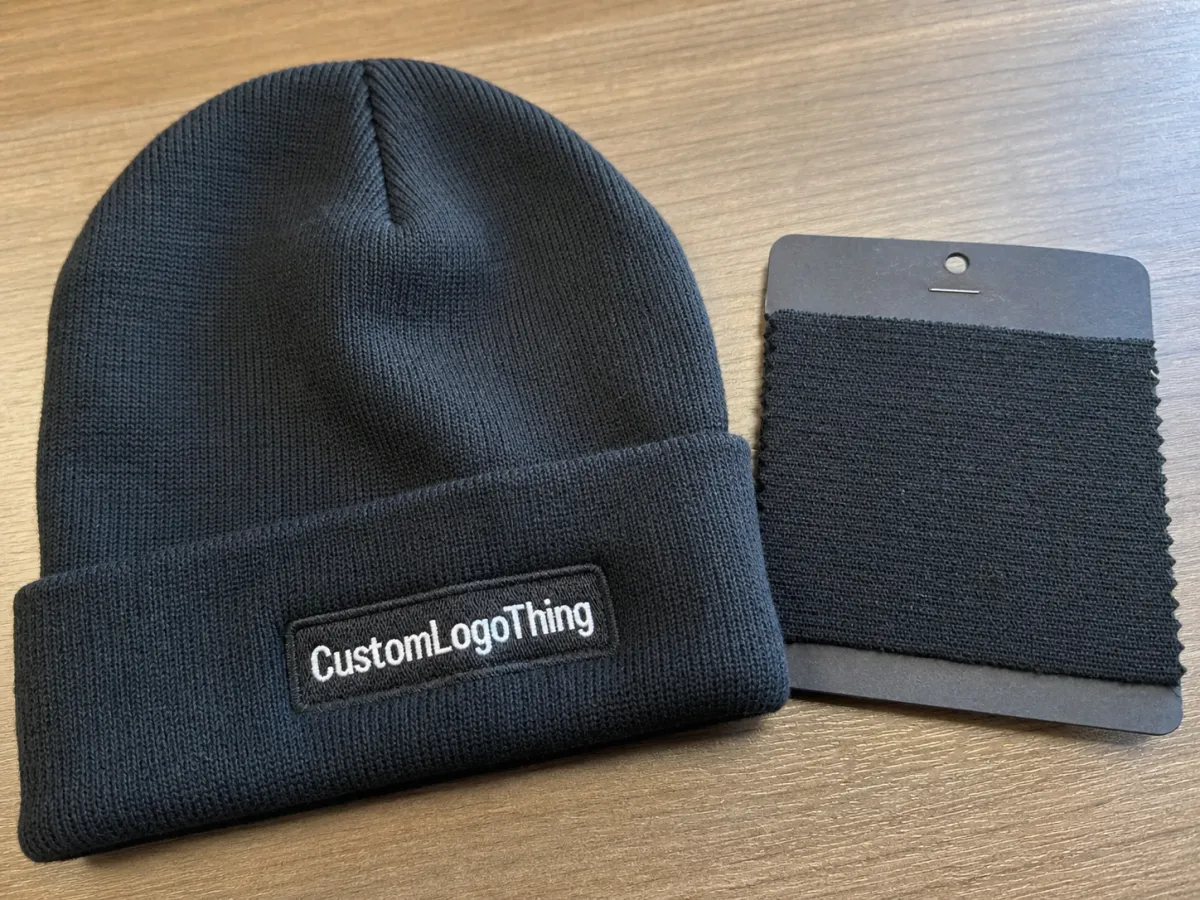
A sample is not a formality. It is the first real proof that the beanie can be made the way the spec sheet says it can. That matters even more with logo patch styles, because small differences in placement, stitching, or patch thickness are obvious once the hat is on a person. A patch that sits a few millimeters high may look harmless on screen, then read crooked in person. A stitch line that feels secure on day one may loosen after a few wears.
The biggest mistake is assuming “close enough” is acceptable. It rarely is. Knit density, stretch recovery, patch edge finish, and crown height all influence how the product feels. If one of those is off, the whole piece can look cheaper than the quote suggests. The customer usually cannot name the problem, but they notice it immediately.
Sample approval also protects your budget. Reworking 50 samples is annoying. Reworking 5,000 units is expensive. The sample gives you a chance to compare fabric weight, fit, patch method, and color accuracy before production starts. It also lets you verify whether the order should be judged by retail standards or by promo-item standards. Those are not the same thing, and pretending otherwise usually ends badly.
Practical rule: compare the sample against the intended wearer and use case, not just the artwork. A beanie for a pet treat giveaway can accept a lighter knit and simpler patch. A product sold at retail usually needs better recovery, cleaner finishing, and a more consistent handfeel. The sample should make that difference obvious.
How a logo patch beanie sample is made and reviewed
The process usually starts with artwork, patch specs, and yarn selection. A competent supplier will confirm knit gauge, yarn count, cuff construction, patch dimensions, and attachment method before anything is stitched. Then the beanie body is knitted, the patch is produced, and the patch is attached by sewing, heat application, or another agreed method. After finishing, the sample is checked, photographed, packed, and shipped for review.
That sequence sounds neat on paper. In reality, every step can expose a different problem. A patch file might be too detailed for the chosen size. A yarn color can shift under daylight. A soft knit can stretch too much at the cuff. The sample is supposed to reveal those issues while the order is still cheap to fix.
Patch types that change the result
Not all patch styles behave the same. Woven patches are good for fine detail and usually sit flatter. Embroidered patches bring more texture and a more traditional feel, but very small text can blur if the thread build is too heavy. Chenille patches look bold and tactile, though they are not ideal for tiny logos or delicate edges. Faux leather patches are clean and easy to brand. PVC and rubber patches give a dimensional look and can hold up well, but they add stiffness and weight.
For pet treat branding, the patch should match the product tone. A natural, earthy brand may fit better with a matte faux leather patch or a restrained woven label. A playful campaign can use brighter color blocking or a rubber patch with stronger contrast. The wrong patch style can make the hat feel disconnected from the rest of the line. That is not a design win. It is a mismatch wearing a logo.
What a serious review should include
Start with the overall shape in daylight. Then stretch the cuff and body to see whether the knit recovers cleanly or stays warped. Check the seam consistency, the patch edge finish, and how the patch sits after bending. A quick rub test can show whether the thread tension is weak or the surface finish scratches too easily. If the piece will be washed, even by hand, that should be part of the check.
One sample is never enough proof by itself. The real question is repeatability. Can the factory make the same beanie 500 times without drifting on patch placement or knit density? That is the number that matters. If the answer is unclear, the issue is not the sample. It is the production process behind it.
A sample is cheap until the bulk run is wrong. Then it becomes the most expensive piece in the order.
Cost, MOQ, and unit cost for sample approval
Sample pricing depends on patch type, yarn choice, setup, and shipping. There is no single standard number. For a basic knit beanie with a simple woven patch, sample costs often land around $35-$60. Embroidered or chenille patch samples can run $45-$85. Faux leather, PVC, or rubber patch samples usually sit higher, often $55-$120, because the setup is more involved. Shipping is separate and can add another $12-$35, depending on speed and route.
| Sample type | Typical cost | What it usually includes | Best for |
|---|---|---|---|
| Basic knit sample with woven patch | $35-$60 | Standard yarn, patch setup, one revision pass | Fast approval and lower-risk programs |
| Embroidered or chenille patch sample | $45-$85 | Higher-detail patch build, stitch testing | More branded, textured looks |
| Faux leather, PVC, or rubber patch sample | $55-$120 | Tooling, specialty finish, attachment review | Bold logos and stronger shelf presence |
MOQ changes the math too. Many knit suppliers want 100-300 pieces for a simple run and 300-1,000+ if the beanie uses custom yarn, a specialty patch, or an unusual color. Smaller orders usually carry a higher unit cost because the setup is spread across fewer pieces. That is normal. What is not normal is a quote that hides setup fees until the invoice stage.
Some suppliers deduct the sample fee from the bulk order if you approve production. Others charge it separately. Ask before you pay. Also ask whether revisions are included, whether shipping is covered, and whether the sample price changes if the patch method changes after approval. A clean quote should name the exact sample stage and the exact cost bucket. Anything vague will become expensive later.
For budgeting, the sample cost should be treated as risk control, not dead money. The real comparison is not “sample fee versus zero.” It is “sample fee versus the cost of fixing a flawed bulk order.” On that scale, a paid sample usually looks very reasonable.
Process, timeline, and turnaround from request to approval
The standard flow is usually inquiry, artwork review, material sourcing, sample construction, photo proofing, shipment, and final sign-off. That sounds orderly. It rarely feels orderly once actual production starts. A missing patch file can delay the sample by a day. A special yarn color can add a week. A sewing line backed up with other orders can add more time than anyone planned for. That is not unusual. It is the schedule.
For timing, a simple sample often takes 5-10 business days after artwork and materials are confirmed. Revised samples may take 3-7 business days if only the patch placement, thread color, or knit detail changes. A pre-production sample, which mirrors the bulk order more closely, can take 7-15 business days depending on complexity. International freight can add several days on top of that.
There is a real difference between a standard sample, a revised sample, and a pre-production sample. A standard sample checks the basic concept. A revised sample fixes a specific issue, like patch size or fit. A pre-production sample is the closest thing to the bulk run and should be the last checkpoint before mass production. Skip that step and you often pay for it later in delays, rework, or cartons of product nobody wants to sign off on.
Shipping and pack-out deserve attention too. A beanie that gets folded too tightly can arrive with a false crease or flattened patch edge. A thin mailer can make the sample look worse than it really is. Better suppliers use a simple protective pack-out, often with kraft paper wrapping inside a corrugated cardboard mailer or carton. If the order includes hang tags or inserts, check whether the paper stock is FSC certified or made with post-consumer waste. For transit and pack-out references, the guidelines from ISTA are worth using as a baseline.
Key fabric, patch, and fit factors to compare
Fabric comes first. Most custom beanies use acrylic, recycled yarn blends, cotton blends, or a synthetic mix with a knit structure chosen for stretch and warmth. Acrylic is common because it is affordable, warm, and easy to color match. Recycled materials help with the sustainability story, but the handfeel and color consistency can vary more from batch to batch. Cotton blends feel softer in mild weather, though they usually do not hold heat as well. The spec sheet should list yarn composition, knit gauge, and recovery expectations. If it does not, that needs to be fixed before approval.
Softness alone is not enough. A beanie can feel pleasant for 10 seconds and still fail after two hours of wear. Check rib density, stretch recovery, and whether the knit holds shape around the cuff. Low-cost knits often look fine until they start bagging out. That is one of the few ways a product can become both cheap and disappointing at the same time.
Then check the patch. Inspect the edge finish. Is it laser-cut cleanly, sewn evenly, or fraying at the corners? Is the color accurate in daylight, or only under warm indoor lighting? Does the surface texture look consistent across the whole patch, or is one side thicker than the other? Bending matters too. A patch that looks good flat but curls when stretched is not a strong choice. If it is sewn down, the stitch line should sit far enough from the edge to stay secure without crowding the design.
Fit matters more than most buyers admit. A beanie that is too shallow feels cheap no matter how good the logo is. A crown that is too tall can look sloppy. Measure the crown height, cuff depth, and head opening stretch. If possible, test the sample on a couple of different head sizes. A balanced beanie should sit cleanly without crushing the forehead or riding up at the back.
The right comparison also depends on how the item will be used. A promo beanie for pet treat events may need a lower price point, lighter knit, and simpler finishing. A retail piece may justify a denser rib, a softer yarn, and a more premium patch. That is the real use of the pet treat logo patch Beanies Material Sample guide: it helps you match product quality to business reality instead of trying to max out every spec at once.
If sustainability claims are part of the brand, check the supporting details, not just the language on the mockup. A tag printed on FSC-certified paper is easy to verify. Biodegradable packaging claims should be tied to actual material specs, not marketing phrasing. Some suppliers also use post-consumer waste paper for inserts or pack notes, which is fine if the paperwork is clear. The packaging does not make the beanie itself sustainable. It just keeps the story honest.
Common sample mistakes that waste time and money
The fastest way to waste money is approving from photos only. A phone image will not tell you whether the knit rebounds properly, whether the patch edge lifts, or whether the color shifts under daylight. Photos are useful for documenting, not for replacing an actual sample check. If the piece will be mass-produced, touching the sample is not optional.
Vague feedback is another common problem. “Make it better” is not a production note. It is a shrug. Say exactly what needs to change: patch width, patch placement, thread color, knit gauge, crown height, cuff depth, or yarn weight. If you change three things at once, you will not know which one fixed the issue. That turns a simple revision into a guessing game.
Skipping size checks is also a classic error. A beanie can pass a visual review and still sit badly on different heads. One sample on one person is not a fit strategy. If the cuff feels tight or the crown feels shallow, do not talk yourself into it because the logo looks good. The logo is not wearing the hat. People are.
Most expensive mistake: approving the “close enough” sample and assuming bulk production will somehow improve it. It will not. Bulk usually repeats the same weakness, only now the mistake has a truckload behind it.
There is one more trap worth calling out: changing the fabric, patch method, and packaging at the same time. If the result gets better, you still do not know why. If it gets worse, you cannot isolate the problem. Keep each revision focused. One variable per round is slower on paper and much cleaner in practice.
Expert tips and next steps after the sample arrives
When the sample arrives, photograph it in daylight before making a final call. Compare it against the tech pack, the artwork, and the approved color references. Write down every mismatch, even the minor ones. Minor issues are usually the ones that become production disputes later. A simple pass-fail checklist helps: fabric, fit, patch placement, color, and finish. If a sample fails two of those, it usually needs revision, not optimism.
Request one correction cycle if the piece is close but not right. That is usually cheaper than correcting a full run after the fact. If the supplier sends back a revised sample, compare it side by side with the first version. You want to see the actual fix, not just hear that the fix happened. A good factory will label revisions clearly, note the changed measurements, and keep the approved reference visible in the next round.
Before bulk approval, lock the final spec sheet, save the sample photos, and confirm the quote again. This is the moment to verify that the patch method, yarn blend, and packing details match the approved version. If the order includes retail packaging, check the paper stock and carton spec too. The garment and the pack should look like they belong to the same product line, not like two teams worked in different time zones and never spoke.
The most useful mindset is simple: treat the sample as the final gate, not a polite suggestion. A good pet treat Logo Patch Beanies Material Sample guide should make the approval process feel less emotional and more measurable. Approve only what you can defend, then move to bulk with the approved spec, the approved photos, and the approved price. That is the clean way to buy.
What should I check first in a pet treat logo patch beanies material sample?
Start with fabric feel, stretch recovery, and patch placement, because those are the first things people notice. Then check seam quality, color match, and whether the patch stays flat when the beanie is stretched.
How much should a sample for logo patch beanies usually cost?
Expect the price to vary by patch type, fabric, setup fees, and shipping rather than one fixed number. Ask whether the sample fee is refundable on bulk orders and whether revisions are included or billed separately.
How long does the sample process usually take?
Simple samples can move in about 5-10 business days, while custom fabrics, special patches, or revisions add days or weeks. The timeline depends on artwork approval, material sourcing, production queue, and transit time.
What patch material works best for pet treat branded beanies?
Woven and embroidered patches usually hold detail well and feel familiar, while faux leather and rubber styles create a stronger branded look. Choose based on brand style, target price point, and the level of durability needed after wear and washing.
When should I approve the sample and move to bulk order?
Approve only after the sample matches the spec sheet, passes stretch and finish checks, and looks right on the intended wearer. If anything is unclear, request one revision now instead of gambling on a full production run.

