The package usually fails long before the garment does. The PVC sleeve looks fine on a sample board, then the insert arrives too wide, too glossy, too thin, or too soft, and the whole pack-out starts looking improvised. Clear plastic is unforgiving. It shows every edge crush, every warp line, every fingerprint someone touched with a coffee hand.
That is why the ecommerce PVC Garment Bags packaging insert checklist matters. It keeps the insert from becoming the weak link in a packaging system that is supposed to protect product, support branding, and survive fulfillment without drama. If the insert is wrong, the bag does not save it. The bag just makes the mistake easier to see.
The cost of getting this wrong is rarely just the part price. It is the extra sample, the delayed launch, the rework, the second freight booking, and the warehouse time wasted on a spec that should have been locked before production started. Packaging buyers know this pattern. It is boring, predictable, and expensive.
Why inserts fail before the bag does
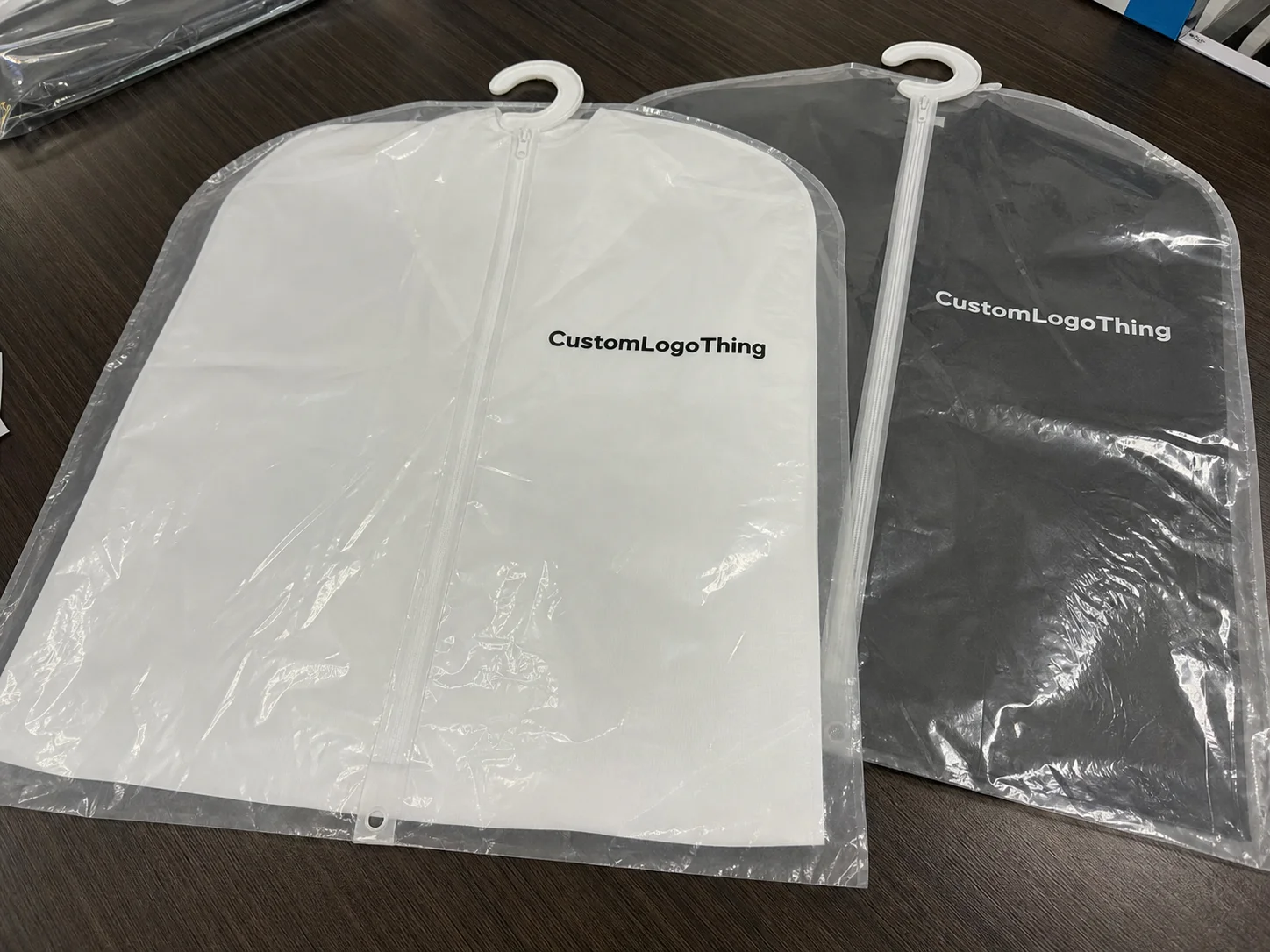
PVC sleeves are simple. Inserts are not. The sleeve can be a clean, standardized shape with a known thickness and closure. The insert has to carry the visual job, the structural job, and sometimes the size code or brand message too. That means it has more ways to fail.
A common failure starts with folding. A garment that looks compact in flat measurements can take up more room once the cuffs, collar, hanger point, or hem are accounted for. If the insert is drawn to the flat size instead of the folded size, it bows in the bag. Once that happens, the package looks crowded and cheap, even if the print is perfect.
Humidity and heat also matter more than many buyers expect. Light board can curl after sitting in a warm warehouse. Coated stock can block and stick if the finish is wrong. Glossy surfaces pick up scuffs faster. A bag that looks crystal clear in a sample photo can expose every one of those defects once it is packed and stacked.
The fix is not “make it premium.” That is lazy procurement language. The fix is to define the job the insert has to do, then match the material and fold to that job. If the insert only needs to sit behind a folded shirt, one spec is enough. If it has to support a jacket shoulder and hold a printed brand panel flat, that is a different structure entirely.
If the insert shifts, the package stops looking deliberate. Customers do not inspect your spec sheet. They just see whether the pack-out feels finished or not.
That is the part teams miss when they rush approvals. They approve the artwork, not the assembly. They measure the insert, not the actual folded product inside the actual bag. Then the first bulk run reveals the issue, and the factory gets blamed for following the wrong instructions.
How the ecommerce pvc garment bags packaging insert checklist works
Think of the checklist as a translation tool. It turns a packaging idea into something a supplier can quote without guessing. Four things need to line up: the garment, the insert, the bag, and the shipping plan. If any one of those is vague, the quote becomes a rough estimate instead of an order-ready spec.
The checklist is built around four control points. First is dimensions: folded garment size, insert size, sleeve size, and final pack-out thickness. Second is materials: PVC gauge, paperboard weight, coating, lamination, or any anti-scuff treatment. Third is artwork: print area, color count, barcode placement, and finish. Fourth is logistics: MOQ, sample lead time, carton count, master carton size, and freight method.
Each point affects the others. A heavier board can hold shape better, but it can also make the sleeve bulge. A glossy insert may improve shelf appeal, but it can show scratches fast and reflect badly under warehouse lighting. A tighter bag fit may look neat on paper and fail once the product is folded in real life. Packaging is rarely one-dimensional. It is a pile of trade-offs wearing a nice label.
The clean workflow is brief, quote, sample, approval, production, inspection, ship. The failure points are always the same. Missing measurements. Artwork that is “almost final.” No one confirming how the insert sits inside the actual bag. If a supplier has to interpret too much, the result will drift toward their default process, not your brand standard.
If the insert order sits inside a larger packaging program, keep the documents aligned. A supplier handling Custom Packaging Products may also be able to quote custom printed boxes or a broader branded packaging order, but only if the specs are clean. Split instructions create split outcomes.
Cost, MOQ, and unit cost drivers
Most buyers start with price and work backward. That is normal, but the unit price alone is not the number that matters. The actual cost depends on the insert size, board grade, PVC thickness, print coverage, finish, fold complexity, setup, sample count, freight, and duties. Leave out any one of those, and the quote looks better than it really is.
MOQ changes the whole equation. At 5,000 pieces, setup and tooling get spread across a decent run. At 500 pieces, those same fixed costs sit on a much smaller base. The supplier is not being difficult. Low-volume work is simply less efficient. That is the reality of custom packaging, whether the product is a sleeve insert or a more complex packaging system.
For buyer planning, landed cost matters more than the first unit price. A line that is $0.05 cheaper on paper can end up more expensive once freight, duties, and a second sample are added. A clean quote should list unit cost, setup charge, sample fee, carton configuration, freight terms, and any special handling. If it only lists one number, it is not a full quote. It is a headline.
| Spec level | Typical use | Approx. unit cost at 5,000 pcs | What pushes the price up |
|---|---|---|---|
| Basic clear PVC sleeve + simple paperboard insert | Entry-level ecommerce packaging | $0.22-$0.38 | Thicker PVC, tighter tolerances, extra folding labor |
| Heavier PVC + coated insert + 1-2 color print | Mid-tier branded packaging | $0.34-$0.58 | Higher print coverage, coating, improved scratch resistance |
| Heavy-gauge PVC + laminated insert + premium print finish | Retail packaging for premium apparel | $0.62-$1.05 | Foil, soft-touch lamination, special seals, more QC |
That range is useful, but only if the spec is fixed. Change the board weight, move from matte to gloss, or add a complex fold line and the numbers move quickly. Buyers often ask why the price jumped when the product “looks the same.” It does not. The production steps are different, and factories charge for actual work, not visual similarity.
If the project needs sustainability language, ask whether the insert can be FSC-certified paperboard. If the product will ship through normal parcel networks, ask for drop and compression testing or an ISTA-style method. The tests are not decorative. They reveal whether the package survives distribution or only survives a table-top review. For reference, see ISTA testing guidance and FSC certification information.
Size, material, and print specs that protect the insert
This is where a lot of orders go sideways. “Fits the bag” is not a specification. “Close enough to A4” is not a specification either. The insert needs exact dimensions, fold direction, board grade, coating choice, and a clear note on what it is meant to hold in place. If the garment needs room for shoulders, seams, or folded sleeves, that space needs to be drawn into the dieline, not left to chance.
Material choice should follow function, not habit. A light board can keep costs down, but it will feel flimsy if the insert has to present premium apparel. A heavy board can hold shape well, but if it is too rigid, the fold gets bulky and the finished bag looks overstuffed. There is a middle ground, and it is usually better than both extremes.
Print is another place where buyers overspend on the wrong thing. A full-coverage design sounds attractive until the piece is packed under a clear sleeve and every dust mark becomes visible. A simple, high-contrast panel often reads better than a busy layout. The goal is not to cram the insert with brand graphics. The goal is to make the package feel intentional from six feet away and still look clean when the customer opens it.
Use the lightest build that still protects the garment and holds the presentation. If the insert needs to carry a size code, barcode, or warehouse identifier, say that upfront. If it must support a collar or keep a blouse flat, state the point of support. The factory cannot read between the lines. It will default to whatever is fastest to produce unless the spec says otherwise.
| Spec item | Practical range | Why it matters | Common mistake |
|---|---|---|---|
| Board weight | 300gsm to 450gsm | Controls stiffness and fold memory | Choosing the heaviest option by default |
| PVC thickness | 0.12 mm to 0.25 mm | Affects durability, clarity, and hand feel | Using a thin sleeve that wrinkles in transit |
| Finish | Matte, gloss, or soft-touch | Changes glare, scratch visibility, and presentation | Picking gloss for everything because it looks shiny in a sample |
| Print coverage | One color to full coverage | Drives cost and defect visibility | Overdesigning a surface that will live inside a clear sleeve |
Process, timeline, and production steps from proof to ship
A good checklist cuts time because it reduces questions. The supplier should not have to chase the buyer for basic measurements or guess what the insert is meant to do. The more complete the spec, the faster the process moves, and the fewer revisions show up later.
The usual sequence is brief, quote, proof, sample, approval, production, inspection, freight booking. Delays tend to appear in the same places every time. Artwork arrives unfinished. The insert dimensions are “estimated.” Someone decides to change the fold after the proof is signed off. None of that is mysterious. It is just poor handoff discipline.
Practical timing helps keep the order realistic. A proof often takes 1 to 2 business days once the specs are locked. Sampling usually takes 5 to 10 business days, depending on the complexity of the insert and whether revisions are needed. Bulk production commonly runs 12 to 20 business days after approval. Freight and customs add their own time, and they rarely care about your launch date.
That timing can stretch further if the order includes multiple packaging components. A bundle with inserts, sleeves, and outer cartons is only as fast as the slowest item. Buyers who want one delivery date across several components need to plan for that from day one. Otherwise, the packaging program ends up waiting on its own weakest link.
- Measure the folded garment and lock the finished insert size.
- Send artwork in editable vector or high-resolution PDF format.
- Approve the sample only after checking the insert inside the actual PVC bag.
- Confirm carton counts, master carton size, and freight method before bulk production starts.
Inspection is not optional on higher-volume runs. At minimum, check print registration, sleeve clarity, cut quality, fold accuracy, carton count, and the fit between insert and garment. A bulk order can look fine in photos and still fail on pack-out efficiency. That is why a pre-shipment check costs less than a correction shipment by a wide margin.
Common mistakes that trigger rework and wasted freight
The first mistake is measuring the garment flat and assuming that is enough. It never is. Fold allowance matters, and it changes by garment type. A shirt, a sweater, and a structured jacket all behave differently inside a bag. If the insert does not reflect the folded volume, the final package will bulge or shift.
The second mistake is choosing a board weight that sounds premium but works poorly in production. Too light, and the insert bends. Too heavy, and the sleeve gets bulky and the freight cost rises because the package occupies more volume. That is not “better.” That is just heavier packaging with worse economics.
The third mistake is approving artwork on a backlit screen and never testing it under real warehouse conditions. Transparent PVC changes the way colors read. White edges can show dirt. Dark solids can look flat if the print quality is weak. Small defects become obvious because the sleeve acts like a lens, and not a forgiving one.
Shipping errors are quieter but more expensive. Cartons are oversized because pack-out was never tested. Master carton counts are off because no one confirmed the final nesting pattern. A supplier can make a perfectly good insert and still ship an inefficient order if the cartons are packed badly. Freight costs do not care why the box is empty. They only care that it is taking up space.
None of this is exotic. These are basic control failures. The ecommerce PVC Garment Bags packaging insert checklist exists because most problems happen at the handoff between design, procurement, and production. If the handoff is sloppy, the factory simply reproduces the sloppiness at scale.
- Measure the folded product, not just the flat garment.
- Test the insert inside the actual sleeve before bulk approval.
- Confirm carton quantities and master carton dimensions early.
- Check how the finish looks under bright warehouse lighting.
Next steps to turn the checklist into a clean quote
Start with five inputs: exact dimensions, target quantity, insert material, print files, and delivery deadline. That is the minimum. If those are clear, most suppliers can return something useful without a week of back-and-forth. If they are not clear, the quote will be vague and the sample will become the real quotation.
Ask for two versions of the job. One should be the base spec. The other should be the upgraded version with a heavier board, better finish, or improved print treatment. That comparison makes the cost jump obvious and prevents the conversation from getting stuck on a single low number that only works because half the requirements were ignored.
If the fold, closure, or insert position is not obvious from the drawing, request a pre-production sample or a mockup before approval. That matters more on premium product packaging, where a few millimeters can change the whole presentation. A sample is cheaper than correcting a bulk run after freight has already moved.
Use the ecommerce PVC Garment Bags Packaging Insert checklist as a vendor-ready RFQ. Put the dimensions, materials, artwork, packing requirements, and inspection notes into one document. Then approve only after the sample matches the actual product inside the bag, not the imagined version that looked good in the first presentation deck. That is how the order becomes predictable.
For buyers managing broader packaging programs, the same discipline helps the rest of the stack. If the bag, insert, and any related branded packaging items follow the same standards, the final presentation reads as one system instead of a pile of disconnected parts.
What should be on an ecommerce pvc garment bags packaging insert checklist?
Include bag size, insert size, thickness, closure style, print placement, artwork file requirements, carton pack-out, sample approval, and shipping details. If the checklist leaves out folded product measurements or final pack-out dimensions, the quote will drift.
How do I estimate cost for custom PVC garment bag inserts?
Start with size, thickness, print coverage, and finish. Then add MOQ, setup, sample, freight, and duties to reach landed unit cost. Ask for a base spec and an upgraded spec so the price spread is visible before you approve anything.
What is a normal timeline for PVC garment bag packaging orders?
Sampling often takes 5 to 10 business days, depending on artwork and revisions. Bulk production commonly runs 12 to 20 business days after proof approval. Freight and customs can add more time, so the launch plan needs a buffer.
Should the insert be rigid or flexible inside the PVC garment bag?
Use the lightest structure that still protects the garment and holds shape. Go rigid only when presentation or support matters more than weight and cost. Avoid any build that scratches the sleeve, traps moisture, or makes the pack-out hard to close.
What details should I send to get an accurate quote?
Send exact dimensions, quantity, target material, print instructions, and a clear delivery window. A dieline or reference sample helps if the insert needs a precise fit. The cleaner the brief, the less guesswork the supplier has to do.
The practical version is simple: fit the insert correctly, spec the material honestly, test the sample with the actual garment inside the actual sleeve, and compare landed cost instead of chasing the cheapest line item. That is what the ecommerce PVC Garment Bags packaging insert checklist is for. Not decoration. Not busywork. Control.


