PVC Garment Bags are often treated as a simple packaging item, but in gift shops they do more than store apparel. They protect seasonal bundles, robes, scarves, and gift sets while making the product look finished on the shelf. Buyers searching for pvc garment Bags for Gift shops factory quote checklist details usually want one thing: a quote that reflects the real build, not a vague estimate that breaks later.
Gift retail moves quickly. Shoppers glance, compare, and decide. Clear or frosted PVC lets the product stay visible, which can reduce hesitation and improve the perceived value of the item inside. The bag is not just protection; it is part of the presentation.
That is why this is not a generic plastic bag purchase. It is a specification exercise. A useful quote should cover size, finish, closure, branding, packing, and inspection expectations. If those details are missing, the factory has to guess, and guessing usually shows up later as price changes, sample mismatches, or production delays.
Why PVC garment bags fit gift shop packaging better than you think
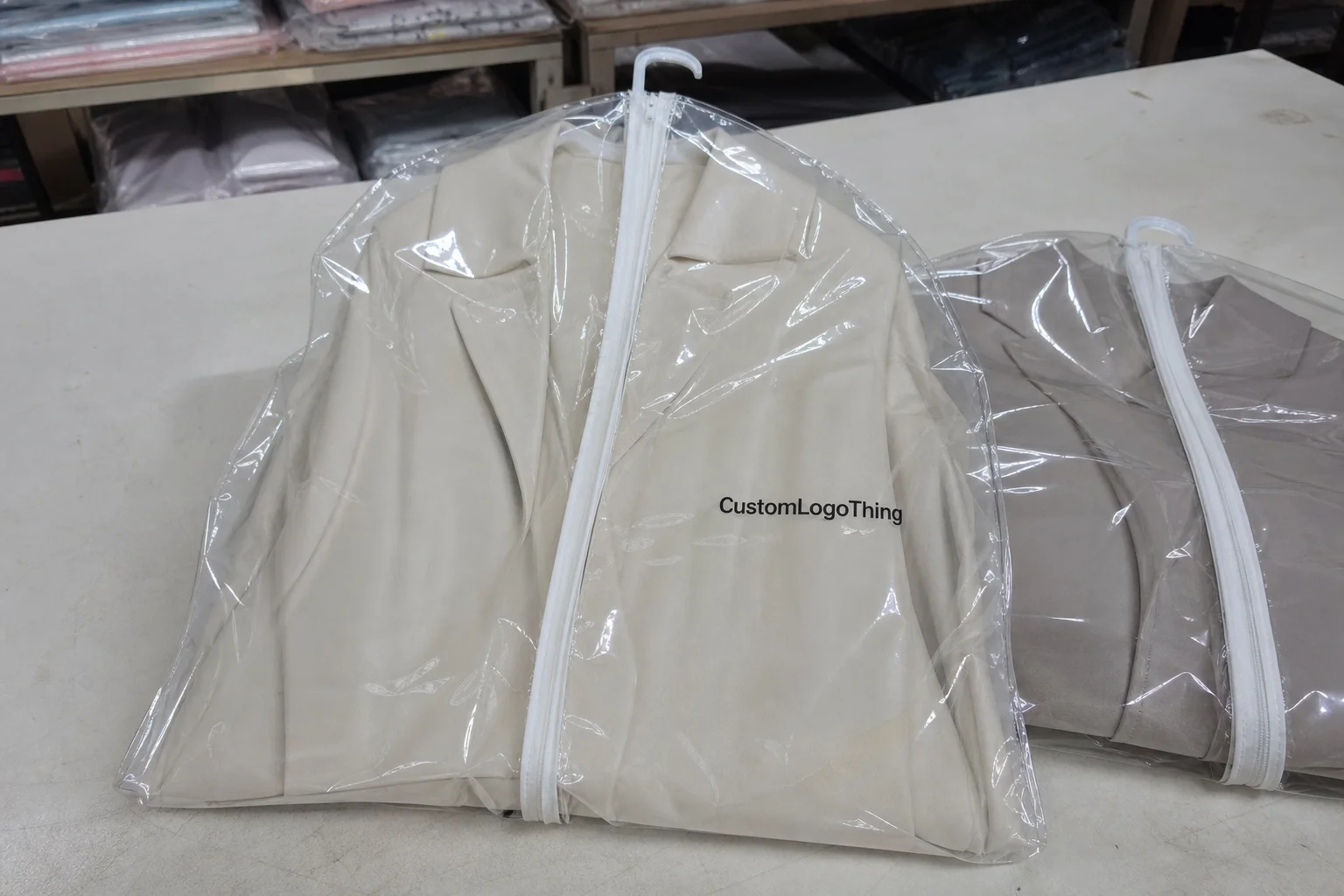
Most buyers first think of garment bags as dry-cleaning or storage items. In gift retail, though, they can be used for folded apparel, holiday bundles, spa sets, robes, scarves, and mixed-item gifts where the customer should see the product without handling it. The bag acts as a visual frame.
That matters because gift-shop packaging competes with itself. A clear, structured bag can lift the perceived value of the same item without changing the item. Frosted PVC gives a softer boutique look. Clear PVC gives direct visibility. The right choice depends on the product, the store lighting, and how premium the display should feel.
These bags also help reduce visible handling damage. Dust, fingerprints, and scuff marks can make a good product look tired quickly. A consistent bag size keeps shelves orderly when items are hung, stacked, or restocked. Uniformity is not decoration; it is merchandising control.
“The cheapest bag usually looks like the cheapest bag.”
If the goal is a premium gift-shop display, the outer package has to support the price point. A wrinkled or flimsy bag can drag down presentation even when the product inside is strong. The right thickness and finish can make a modest item feel more deliberate, which is the commercial purpose of the package.
What to specify in your PVC garment bag build before you request a quote
The quickest way to get a usable quote is to specify the build before asking for pricing. Factories quote more accurately when they know exactly what they are making. The key variables are PVC thickness, transparency level, closure style, opening or hanger cutout, bag shape, and whether the design needs a gusset or bottom expansion.
Closure choice affects both function and cost. A zipper usually gives better dust protection and a more finished retail appearance. Snap closures can be easier for frequent access, but they often look less refined. Some gift shops prefer an open top with a hanger opening because it speeds up merchandising. That is fine if it is stated clearly. Ambiguity here leads to wrong assumptions.
Size is another common source of quote errors. The product dimensions matter, but so does fold style. A robe folded once does not need the same bag size as a long coat or a bundled gift set with tissue and inserts. If the bag is too loose, the product shifts and looks careless. Too tight, and the zipper bows or the item becomes difficult to insert.
Branding should also be clear. A gift shop that wants a premium look may prefer a subtle one-color logo, a clear-on-clear print, or a small label pocket. A seasonal run may need a larger print area or a card insert window. Each choice changes setup time, print complexity, and unit cost.
- PVC thickness: usually quoted in microns or mils
- Closure: zipper, snap, open-top, or hanger opening
- Dimensions: width, height, depth, and usable opening length
- Finish: crystal-clear, frosted, matte, or tinted
- Branding: logo print, label pocket, or insert card window
- Performance needs: dust resistance, water resistance, anti-yellowing material
These details determine whether a factory can quote responsibly. Leave them out and the first number is often only a placeholder.
Size, material, and finish specs buyers should lock first
Start with dimensions. Width, height, depth, opening length, and hanger clearance are the numbers that keep a quote honest. If the item is already folded, measure the folded size first and then add room for insertion and presentation. For gift-shop use, buyers often work in rough bands such as 12 x 16 inches for small apparel items, 16 x 24 inches for medium pieces, and 20 x 30 inches or larger for coats, robes, or bundled gifts. These are only starting points; the real answer depends on the product shape and how neatly it needs to sit inside the bag.
Material choice changes both look and handling. Soft PVC is more flexible and easier to fold. Thicker PVC adds structure and usually looks more substantial, but it can be less forgiving around corners and may increase cost. The tradeoff is not cosmetic. Thicker film can also affect shipping weight and carton volume, which matters when freight is part of the landed cost.
Finish matters as much as thickness. Crystal-clear PVC gives maximum visibility, which helps when the product itself is attractive and you want it to sell visually. Frosted PVC softens glare and hides fingerprints better under bright retail lighting. Matte finishes reduce reflection and can feel more restrained. Tinted film can support branding, though too much tint can hide the product and weaken the bag’s purpose.
| Option | Presentation | Typical Use | Cost Impact |
|---|---|---|---|
| Clear PVC | Highest visibility | Display-heavy gift shops, apparel sets | Usually moderate |
| Frosted PVC | Soft, premium, less glare | Boutique packaging, upscale gifts | Often slightly higher |
| Matte PVC | Controlled look, less reflection | Lighting-sensitive displays | Varies by finish process |
| Tinted PVC | Branded, stylized appearance | Seasonal or promotional packaging | Can increase film or print cost |
Ask whether the material has anti-yellowing treatment or UV sensitivity limits if the bags will stay on display for long periods. Clear PVC can look excellent in a sample and still age badly under bright lighting if the formula is weak.
If the order may repeat, make sure the spec sheet is written so it can be reused without interpretation. Reorders often drift by a few millimeters or by a small finish change, and that is enough to create a visible difference in retail display.
Cost, pricing, MOQ, and unit cost drivers
Pricing for PVC Garment Bags is driven by a few recurring variables: material thickness, bag size, print complexity, closure quality, and carton packing. Bigger bags consume more film. Thicker film costs more. More color coverage increases setup and production time. Zippers add cost compared with an open-top or basic snap construction. A quote that ignores one of these inputs is not really comparable.
MOQ affects unit price directly. Lower quantities spread cutting, setup, and print preparation across fewer pieces, so the unit cost rises. A run of 500 pieces may be useful for a test program, but it will almost always have a higher per-unit price than 5,000 pieces. A good quote should show quantity breaks so the pricing slope is visible.
For gift-shop buyers, the better question is not “What is the cheapest bag?” but “What is the landed cost of the presentation I actually need?” That includes the bag, the print, the cartons, the freight method, and the cost of fixing mistakes. A lower unit price can still be the wrong decision if it causes extra sample rounds, awkward packing, or a bag that looks too flimsy on the shelf.
Ask whether the factory quotes per piece, by carton, or by set. Packaging suppliers do not always normalize pricing the same way, and a quote can look cheaper only because it excludes insert cards, internal packing, or secondary packaging. This is where a clean request format saves time.
Simple clear bags with basic construction usually sit at a lower price point than printed frosted versions with a zipper and custom details. The exact number moves with order size, resin cost, and factory load, but the direction is consistent: more structure and more finishing steps raise cost.
Watch for hidden charges such as artwork revision fees, sample charges, special insert costs, carton changes, and extra labor for nonstandard folding or packing. If the supplier says the sample is free, ask whether shipping is included. If the proof changes after approval, ask where the extra cost starts.
Process, timeline, and production steps from quote to shipment
A clean production sequence makes the quote easier to trust. The usual flow is inquiry, spec confirmation, artwork review, sample approval, mass production, inspection, and shipment. If any stage is vague, the timeline becomes unstable. Delay usually starts with missing information, not with the factory becoming slow.
Sample time and production time are different. A simple sample may take several days. A custom build with print, zipper, or special finish can take one to two weeks before the first approved sample is ready. Mass production commonly runs about 12 to 20 business days after sample approval, though larger or more customized orders can take longer. Shipping adds its own schedule, especially for international orders or consolidation-based freight.
Most delays are avoidable. Incomplete artwork is one. Unclear size requirements are another. Late sample approval slows everything down because the factory cannot lock production until someone signs off. Material changes after quoting are especially disruptive because the supplier may need to recalculate price, machine settings, yield, and packing.
Ask when the lead time actually starts. Some factories begin counting after deposit. Others start after artwork approval or sample sign-off. Those are not the same milestone. If the supplier cannot explain the sequence, the schedule is already less dependable than it should be.
Inspection should be part of the discussion, even for packaging. Buyers should ask about dimensional tolerance, print placement, seal strength, zipper function, and visual defects such as haze, scratching, or uneven sealing. If a supplier references familiar packaging tests or standards from sources such as ISTA or material guidance from ASTM, that usually signals a more disciplined operation.
The best timeline is the one with fewer surprises. Speed comes from clarity at the quote stage.
How to compare factory quotes without paying for missing details
This is where the PVC Garment Bags for gift shops factory quote checklist really matters. Compare quotes line by line: same dimensions, same thickness, same finish, same closure, same print method, same packing count. If one quote is much lower, check which variable changed. The difference is often hidden in a detail that was not stated clearly enough.
Common red flags include:
- Vague material description such as “PVC bag” with no thickness stated
- No MOQ, which usually means the quote is incomplete
- No sample terms, so approval conditions are unclear
- No carton or packing detail, which affects freight and handling
- No shipping term, so landed cost is still unknown
Ask each supplier to state what is included and what is excluded. Does the price include printing setup? Are cartons included? Is freight quoted to the destination, the port, or only ex-factory? These details are the difference between a usable comparison and a misleading one.
Rank quotes by total landed value, not by unit price alone. A quote that looks low can become expensive once you add sampling, proof changes, packing corrections, and freight. A slightly higher quote with clean terms often carries less risk.
If a factory keeps changing the spec, dodging direct questions, or revising the quote without explaining why, that is a signal to slow down. Packaging procurement works best when the numbers match the product.
Next steps to send a clean quote request and get faster factory answers
If faster answers matter, send one finished spec sheet instead of a thread of partial messages. Include dimensions, thickness, closure type, finish, print requirements, quantity, target delivery date, and destination. That is enough for the factory to respond with something useful.
Ask for two or three quantity tiers so the MOQ breakpoints are visible. Include a usable logo file if branding is required and confirm the print position in the request. If artwork approval is still unsettled, finish that first so the supplier is not quoting against an unfinished design.
If you want the response to be easier to compare, ask every supplier for the same quote format. That reduces translation errors, makes omissions obvious, and saves time during review.
Keep material claims accurate. If sustainability is part of sourcing, specify it precisely. Secondary packaging can sometimes use recycled content or paper-based components where appropriate, but the PVC itself is still PVC. Accurate language is more credible than decorative language.
The most useful checklist is the one that gets reused. Confirm the dimensions, finish, closure, printing, quantity, packing, lead time, and shipping term before you send the inquiry. Then compare the answers on the same sheet. That is how a buyer avoids missing details, vague pricing, and sample mismatches.
What should I include in a pvc garment bags for gift shops factory quote request?
Include exact bag dimensions, PVC thickness, closure type, finish, print details, quantity, delivery timeline, and packing requirements. If you need samples before mass production, say so upfront. A clean spec sheet cuts down on revisions and makes the quote easier to trust.
What PVC thickness is best for gift shop garment bags?
A mid-range thickness is usually the safest starting point for display and light retail use because it balances clarity, flexibility, and cost. Heavier garments or premium presentation programs may need a thicker build for better structure. Asking the factory to quote two thickness options is often the simplest way to compare feel against price.
How does MOQ affect the price of PVC garment bags?
Lower MOQ usually means higher unit cost because setup, cutting, and printing are spread across fewer bags. Higher quantities usually reduce the unit price, but only if the specification stays unchanged. A proper quote should show multiple quantity breaks so the price slope is visible.
Can gift shops add logos or custom printing to PVC garment bags?
Yes. Most factories can print simple logos or more complex artwork, depending on the material and the print method. Logo placement, color count, and print area all affect price and lead time, so those details should be confirmed before production starts.
What is the usual lead time for custom PVC garment bag orders?
Sample and mass production lead times are not the same. A straightforward sample may take days, while custom samples and printed runs take longer. Mass production often runs about 12 to 20 business days after approval, but the factory should state the actual timing in the quote.


