Buyer Fit Snapshot
| Best fit | Ecommerce Retail Packaging Mailers projects where brand print, material claims, artwork control, MOQ, and repeat-order consistency need to be specified before quoting. |
|---|---|
| Quote inputs | Share finished size, material target, print colors, finish, packing count, annual reorder estimate, ship-to region, and any compliance wording. |
| Proofing check | Approve dieline scale, logo placement, barcode or warning zones, color tolerance, closure strength, and carton packing before bulk production. |
| Main risk | Vague material claims, crowded artwork, missing packing details, or unclear freight terms can make a low unit price expensive after revisions. |
Fast answer: Ecommerce Retail Packaging Mailers: Film, Print, MOQ, and Carton Packing should be specified like a repeatable production item. The safest quote records material, print method, finish, artwork proof, packing count, and reorder notes in one written spec.
Production checks before approval
Compare the actual filled-product size with the drawing, then confirm tolerance on folds, seals, hang holes, label areas, and retail display edges. Reserve space for logos, QR codes, warning copy, and material claims before decorative graphics fill the panel.
Quote comparison points
Review material grade, print process, finish, sampling route, tooling charges, carton quantity, and freight assumptions side by side. A quote is only useful when the supplier can repeat the same color, closure quality, and packing count on the next order.
Ecommerce Retail Packaging Mailers: What to Know First starts with a practical truth: ecommerce retail packaging mailers can reduce shipping cost, speed up packing, and shape the first physical impression a customer gets, but only when the spec fits the product and the fulfillment process. A two-ounce apparel order in the right poly mailer can ship for less than the same item in a box, yet one weak seam or a poor size choice can erase that savings fast. For brands that care about product packaging, retail packaging, and package branding, this is not a tiny detail. It is one of those decisions that quietly affects the whole operation.
That is why ecommerce retail packaging mailers deserve more attention than they usually get. Buyers often compare print quality and unit price first, then discover the real cost shows up later in damage claims, slower pack times, and avoidable returns. Custom Logo Things sees this pattern often in Custom Packaging Products: the strongest mailer is rarely the flashiest one, but it is also rarely the cheapest one on paper.
Why ecommerce retail packaging mailers matter more than you think
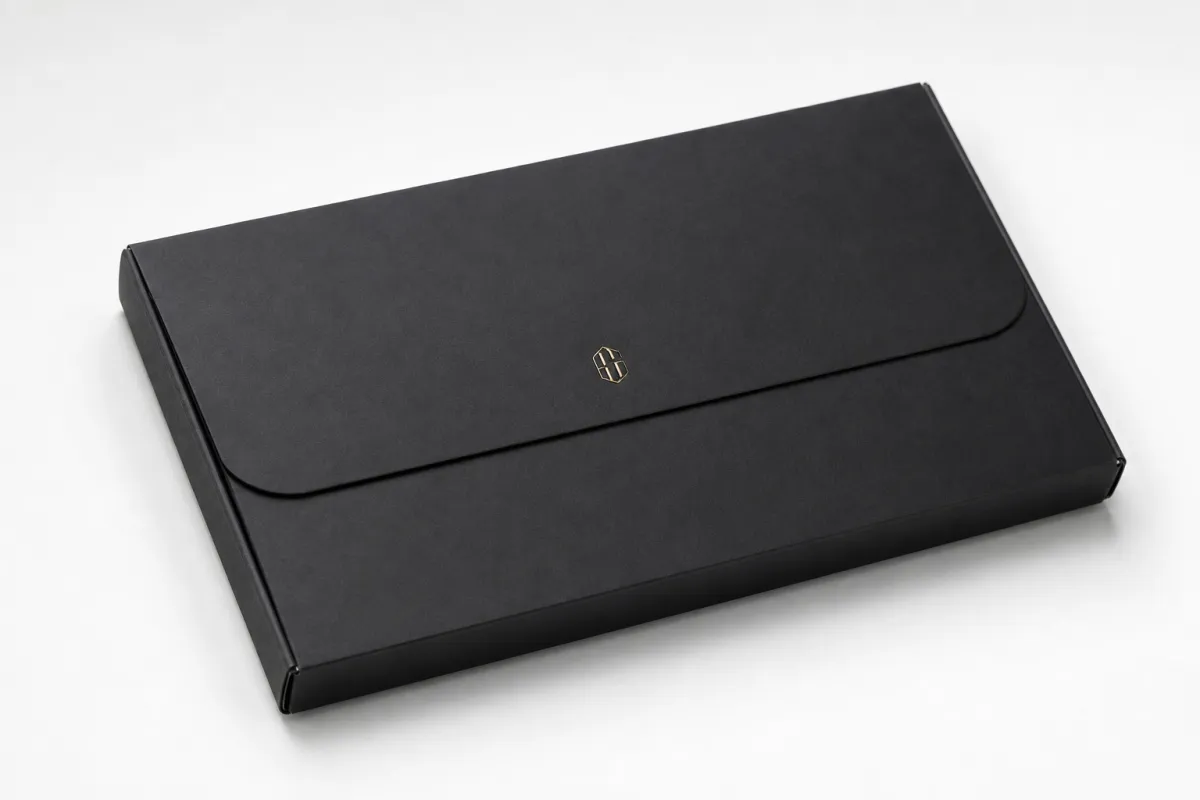
Ecommerce retail packaging mailers are lightweight shipping formats designed for soft goods, flat goods, and low-fragility products that do not need the protection of corrugate. Think apparel, accessories, books, supplements, thin beauty items, and certain promotional kits. In that lane, ecommerce retail packaging mailers do more than hold a product. They affect dimensional weight, packing speed, return handling, and the customer’s tactile first impression.
Here is the part many buyers miss: the mailer itself is a performance tool. If a shipper saves $0.35 per order by using ecommerce retail packaging mailers instead of a box, that advantage can disappear with one replacement shipment, one refund, or one poor review tied to a torn seam. Low unit cost is not the same thing as low total cost. Not even close.
From a packaging buyer’s point of view, this is a classic tradeoff. Cheaper film can pass a quick visual inspection and still fail under real-world abuse at the carrier hub. Better ecommerce retail packaging mailers usually cost more up front because they use stronger seams, more consistent gauge control, or a smarter closure, but those details often reduce the hidden costs that make finance teams skeptical later.
There is also a brand layer. Good ecommerce retail packaging mailers can carry branded packaging color, a printed message, or a clean custom logo without the overhead of full custom printed boxes. That means the mailer becomes part of the unboxing moment, even if the order is tiny. For a customer opening a $28 top or a $12 accessory, that tactile cue matters. It says the brand thought about the journey, not just the sale.
The biggest mistake is treating ecommerce retail packaging mailers like a commodity. They are closer to a shipping system choice. The question is not “Which mailer is cheapest?” The question is “Which one reduces damage, keeps the line moving, and supports the brand without creating new problems?”
A mailer only looks inexpensive until the first replacement order lands on the support team’s desk.
If you want a useful benchmark, look at the distribution standards used by more disciplined packaging teams. ISTA testing methods help simulate transit abuse, while material claims and fiber sourcing should be checked against real documentation rather than marketing language. The ISTA site is a helpful reference point, and the FSC system matters when recycled paper or fiber sourcing enters the conversation.
That is the backdrop for choosing ecommerce retail packaging mailers well: not decoration, not guesswork, but a measurable decision with operational consequences.
How ecommerce retail packaging mailers work in fulfillment
At a basic level, ecommerce retail packaging mailers are built from one or more film layers, then finished with a closure and seam structure that determines how well they hold up in transit. A simple poly mailer may use a single exterior film with a pressure-sensitive adhesive strip. A more advanced version may add a second adhesive strip for returns, an opaque layer for privacy, or a tear notch for easier opening. The difference sounds small. In a fulfillment line, it is not small at all.
The packing flow matters. A picker brings the item. A packer inserts it into the mailer. The label gets applied. The parcel moves to scan and sort. If the mailer is too stiff, too tight, or awkward to close, every order slows down a little. Multiply that by thousands of orders and ecommerce retail packaging mailers become a labor issue as much as a packaging issue.
That is why custom Printed Poly Mailers are popular in apparel and accessories. They are quick to fill, light to ship, and easy to stack at a pack station. If the business wants stronger brand presence, a printed mailer gives package branding without the weight penalty of a rigid box. For some brands, that is exactly the right middle ground between a plain mailer and custom printed boxes.
Still, ecommerce retail packaging mailers are not universal. Soft tees, socks, and flat accessories do well. A brittle candle, a bottle with a loose cap, or a product with sharp corners may need a rigid insert, a padded mailer, or a different format entirely. I have seen buyers push mailers too far simply because the first sample looked fine. The first sample is not the same thing as a season of real shipments.
There are also customer-experience details hiding in the construction. Easy-open tear strips reduce knife damage and frustration. Dual adhesive strips make returns less painful. Opaque films protect privacy for products that should not be visible through the package. These are small features, but they shape whether ecommerce retail packaging mailers feel thoughtful or generic.
For brands with a retail packaging mindset, that experience matters twice. The mailer must protect the order on the way out, then avoid becoming an annoyance on the way back. If the return path is clumsy, the product packaging strategy is incomplete.
One useful way to think about ecommerce retail packaging mailers is this: they are the bridge between your warehouse and your customer’s front door. If the bridge is too weak, too heavy, or too expensive to build, the whole route gets worse.
Key factors that shape the right mailer
Size comes first. A mailer should fit the item stack, not the other way around. If you start with the carrier carton mindset, you usually end up with excess dead space, unnecessary material, and a package that looks bulky for no good reason. Ecommerce retail packaging mailers work best when the product sits flat and secure with just enough room to load it efficiently.
Next is gauge, or film thickness. Thicker is not automatically better. Under-specifying gauge can lead to punctures, seam splits, and crushed corners. Over-specifying gauge can make the mailer harder to seal, heavier to ship, and more expensive than the product needs. For many apparel and low-fragility categories, the sweet spot is chosen by testing, not by intuition. Ecommerce retail packaging mailers should be matched to the actual abuse profile, not a generic “stronger is safer” assumption.
Branding is the other big decision. Some companies want the mailer to disappear so the product can speak for itself. Others want the package to act like a mobile ad. That is where custom printed mailers, color choices, and simple logo placement matter. For a lean startup, a clean one-color mailer may be enough. For a more established brand, package branding can be a meaningful part of product packaging strategy, especially if the customer will see the parcel before they open it.
Operational speed should not be overlooked. A mailer that looks great but takes longer to load, align, and seal can quietly slow the line. If your team handles a high order count, even a few extra seconds per parcel can add up to real labor cost. Ecommerce retail packaging mailers should support the warehouse workflow, not fight it.
Sustainability and compliance also belong in the spec conversation. Ask whether the mailer contains recycled content, whether the recycling claim is valid in the markets you ship to, and whether your retail partners or marketplaces have packaging rules. Many companies talk about being greener, but the real question is whether the material choice can be documented and defended. The EPA has practical resources on waste reduction and material use if your team is trying to compare options with less guesswork. And yes, the fine print matters here more than the sales sheet does.
If you are choosing between ecommerce retail packaging mailers and another format, use a quick checklist:
- Product shape: Flat, soft, or compressible items favor mailers.
- Damage profile: Fragile or sharp products may need inserts or a different package.
- Brand goal: Quiet shipping or visible branded packaging?
- Labor cost: Can the team pack the order quickly without extra handling?
- Claims: Can you document any recycled content or recyclability statement?
For buyers who are still building the packaging system, browsing Custom Poly Mailers is often the quickest way to see how size, color, thickness, and print all interact. That is also where ecommerce retail packaging mailers stop being abstract and become a line item you can compare.
Cost, pricing, and MOQ for ecommerce retail packaging mailers
Price is usually the first number people ask for, but the quote is only the beginning. The cost of ecommerce retail packaging mailers is driven by material type, gauge, print coverage, closure style, and order quantity. Stock mailers are cheaper because the setup is already done. Custom runs cost more because the press, artwork, and production details are specific to your brand. Hybrid programs can sit between those two poles.
Typical pricing can look like this at mid-sized quantities, though the exact number depends on the supplier, print method, and freight lane:
| Option | Typical unit price | Best fit | Main watch-out |
|---|---|---|---|
| Stock poly mailers | $0.06-$0.14 | Basic apparel, low-fragility items, high-volume shipping | Limited branding and fewer feature options |
| Custom printed poly mailers | $0.18-$0.42 | Branded apparel, subscription programs, retail packaging with logo visibility | Artwork setup, higher MOQ, more lead time |
| Paper mailers | $0.22-$0.55 | Flat goods, sustainability-led brands, light accessories | Moisture and tear resistance vary by grade |
| Padded mailers | $0.20-$0.60 | Small fragile products, cosmetics, accessories with edges | More bulk and higher postage than slim mailers |
| Small custom printed boxes | $0.45-$1.20 | Premium unboxing, products that need structure, mixed-SKU kits | Heavier shipping and more storage space |
MOQ matters just as much as unit cost. A lower minimum order quantity lets you test ecommerce retail packaging mailers without tying up too much cash. A larger buy usually reduces the price per unit, but it also increases storage needs and the risk of sitting on the wrong spec. If your assortment changes often, a smaller MOQ can be smarter than chasing the cheapest quote. That sounds conservative, but it usually saves a headache later.
That is why landed cost matters more than unit price. Landed cost includes freight, storage, spoilage, and the labor impact of the package. A mailer that saves two cents on paper and adds ten seconds of handling time is not a bargain. The same goes for a mailer that ships cheaply but raises damage rates. Ecommerce retail packaging mailers are a system cost, not a single input cost.
There is also a design effect on pricing. Full-bleed print, metallic ink, special finishes, or dual closures can push the quote up faster than people expect. A simple one-color run may be practical for a first launch, while a more elaborate design may belong in a later phase once volume is proven. That is a useful distinction in packaging design: not every brand needs to do everything at once, and honestly, many brands should not.
For teams comparing multiple options, ask for side-by-side pricing at different quantities. For example, compare 2,500, 5,000, and 10,000 units. The curve often reveals where ecommerce retail packaging mailers become meaningfully cheaper at scale and where the extra volume stops making sense. That comparison is usually more honest than any single quote.
One practical rule: if the quote looks unusually low, check what is missing. Freight, proofing, specialty adhesive, and color matching can all move the final number. Custom packaging products can look inexpensive until the hidden line items appear.
Production steps, timeline, and lead time: what happens after approval
After approval, the process usually follows a predictable path. First comes spec confirmation. Then artwork setup. Then proofing. Then sampling if the job calls for it. After that, production begins, followed by inspection and outbound freight. Ecommerce retail packaging mailers do not appear because a PO was sent; they move through a chain of steps, and every step can add time if something is unclear.
Artwork revisions are one of the most common delays. So is color matching, especially if the brand expects a precise logo color on a film substrate that behaves differently from paper or corrugate. Material sourcing can also shift the timeline, particularly when a certain gauge, opacity level, or recycled content target is requested. If your product packaging depends on a very specific look, give that detail enough lead time.
Standard lead times are often more forgiving than rush jobs. A simple custom run may move in roughly 12-15 business days after proof approval, while more complex work can take longer if sampling or special print effects are involved. Rush production exists, but it usually narrows your material and print options. That is a tradeoff worth understanding early, not on the eve of a launch.
For ecommerce retail packaging mailers, lead time affects more than production planning. It affects inventory safety. If your warehouse burns through packaging faster than expected, the packaging program can become the bottleneck before sales do. I have seen brands handle demand spikes well on the demand side and still stumble because the mailers arrived late. That kind of failure is avoidable with a buffer stock plan.
It helps to align packaging replenishment with sales seasonality. If you know promotional volume rises at certain points, build in extra time for sample approval and freight. The best ecommerce retail packaging mailers program is not the one with the shortest theoretical timeline; it is the one that arrives before the need becomes urgent.
There is also a quality-control angle. Ask for clear inspection standards before production starts. A quote should not be the only agreement. Confirm acceptable print tolerance, seam tolerance, and carton count so everyone knows what “done” means. That reduces surprises later, and it is especially useful when multiple stakeholders are involved in branded packaging decisions.
Step-by-step guide to spec the right mailer
Step 1 is data. Audit your top-selling SKUs by size, weight, fragility, and return rate. Do not rely on memory or gut feel. The actual order mix tells you whether ecommerce retail packaging mailers are a fit for 70 percent of your volume, 90 percent of it, or only a small slice. That one decision changes the entire spec.
Step 2 is fit. Measure the folded garment, insert, or product stack, then choose a target mailer size with minimal dead space. You want enough room for easy loading, but not so much space that the package balloons or shifts in transit. The wrong size can make even good ecommerce retail packaging mailers look sloppy and cost more to ship.
Step 3 is feature selection. Decide whether you need tamper evidence, dual adhesive strips, tear resistance, opacity, or a more premium print finish. If returns are frequent, a resealable or dual-strip option can save friction later. If privacy matters, an opaque film makes sense. If the brand relies on visual recognition, custom printed mailers are worth a closer look. This is where ecommerce retail packaging mailers become part of the customer experience, not just the shipping lane.
Step 4 is testing. Request samples and run them through your own warehouse process. Test puncture resistance, seal strength, print clarity, and pack speed. The team that will actually use the mailers should be the team that judges them. Samples are useful, but only if they are tested under the same conditions as live orders.
Step 5 is total cost. Compare unit price, freight, storage, labor, and replacement risk before placing a pilot order. That is the point where ecommerce retail packaging mailers move from concept to business decision. If the numbers hold up, you can scale. If they do not, you can adjust before inventory piles up.
A practical pilot might look like this:
- Choose one product family.
- Order two or three mailer specs.
- Run them for a fixed period, such as a few hundred shipments.
- Track damage, packing time, customer feedback, and return reuse.
- Keep the winner and refine the details.
That approach is slower than buying the first sample you like, but it produces better answers. In packaging, better answers usually save more money than a faster guess.
Common mistakes that raise damage rates and waste
The first mistake is buying by price alone. It is tempting because ecommerce retail packaging mailers often look similar from a distance. Yet the cheap option can cost more once you include replacements, support tickets, and customer frustration. A budget mailer that fails twice as often is not budget-friendly at all.
The second mistake is forcing every SKU into one mailer size. A brand may have lightweight accessories, thick apparel bundles, and odd-shaped products, but still try to standardize everything into a single format. That sounds efficient, and sometimes it is for warehousing. But if the package fit is poor, efficiency gets erased by waste and damage.
The third mistake is overprinting before testing. Strong package branding can lift perception, but it also locks in a design. If scuffing, color shift, or handling wear appears after production, you are stuck with a large inventory of merchandise that no longer looks as intended. I would rather see a small, controlled first run than an overconfident launch with too many bells and whistles.
The fourth mistake is forgetting the return journey. A mailer That Ships Well but cannot be reused easily on the way back creates friction for both the buyer and the support team. Ecommerce retail packaging mailers should be evaluated as outbound-and-return systems if the brand’s return rate is material. That is especially true for apparel.
The fifth mistake is skipping internal trials and carrier testing. This is the one that stings because it is so avoidable. A sample can look perfect on a desk and fail in a live process where labels, stacking pressure, drops, and abrasion all come into play. If your ecommerce retail packaging mailers have not been stressed by the people and processes that will actually use them, the spec is not ready.
Three other traps show up often:
- Ignoring opacity: If the contents should not be visible, clarify that before buying.
- Underestimating storage: Large mailer quantities can consume more space than teams expect.
- Overlooking color shift: Film printing does not always behave like paper print.
These are not dramatic failures. They are quiet ones. That is what makes them expensive. Ecommerce retail packaging mailers usually fail through small mismatches, not huge disasters.
For brands also weighing custom printed boxes, the lesson is similar: the best format is the one that fits the product, the line, and the customer experience. Not the one with the flashiest sample.
Expert tips and next steps for your first order
Start small and measure. A pilot order on one SKU or one product family gives you better data than a broad rollout based on assumptions. Track damage rate, packing time, customer comments, and return reuse. Ecommerce retail packaging mailers improve faster when the feedback loop is short.
Ask suppliers for a sample pack that includes different gauges, closures, and print options. If the options are only discussed verbally, you are guessing. If you can compare them side by side, the decision gets easier. I like to see one version optimized for cost, one for branding, and one for durability. That comparison tells you where the real tradeoff lives.
Build a simple scorecard. Give each spec a score for unit cost, landed cost, seal reliability, visual quality, and warehouse speed. That keeps the discussion grounded. It also helps non-packaging stakeholders understand why the cheapest option is not always the best option for ecommerce retail packaging mailers.
Set a reorder trigger based on actual usage rather than hope. If inventory falls too low, emergency buying often forces a weaker choice. A reorder point with a small safety buffer is a quieter, smarter habit. It keeps ecommerce retail packaging mailers from becoming a crisis item.
When the first pilot works, use the data to refine the spec. Maybe the size needs to change. Maybe the gauge can be reduced slightly. Maybe the branding needs to be stronger. Maybe a return strip is worth the extra cost. That is the real value of testing: it turns a general idea into a repeatable packaging system.
If you are building out a broader program, browse the rest of Custom Packaging Products to compare related formats, then narrow the shortlist to the pieces that fit your order profile. If your business lives mostly in apparel and accessories, a set of well-designed ecommerce retail packaging mailers may do more for cost control and presentation than a more complex package ever could. And if you still need a backup for heavier items, keeping a small inventory of Custom Poly Mailers can bridge the gap without redesigning the whole system.
The bigger lesson is simple. Ecommerce retail packaging mailers are not just shipping envelopes. They are a decision about protection, labor, cost, and brand perception all at once. Choose them with real data, real samples, and a clear view of the full journey, and they will do exactly what good packaging should do: make the product arrive intact, make the process efficient, and make the brand look intentional from the first touch to the final mile.
FAQ
What size ecommerce retail packaging mailers should I choose for apparel orders?
Measure the folded garment plus any insert, hanger card, or polybag before you choose the mailer. Leave enough room for easy loading, but avoid excess space that makes the parcel bulky. In practice, it helps to test one size up and one size down so you can compare fit, pack speed, and protection before committing to a full run of ecommerce retail packaging mailers.
Are ecommerce retail packaging mailers strong enough for returns?
Yes, if the closure is reliable and the material has enough tear resistance for a second trip. Dual-adhesive or resealable styles are better when return rates are high. For heavier or sharper products, ecommerce retail packaging mailers may still need an insert or a different format altogether.
How do ecommerce retail packaging mailers affect shipping costs?
They usually reduce dimensional weight compared with boxes, which can lower postage on soft goods and flat items. That savings can disappear if the mailer is too large, too heavy, or causes damage and replacements. The cleanest way to judge ecommerce retail packaging mailers is to compare shipping, labor, and spoilage together.
What is a realistic MOQ for custom ecommerce retail packaging mailers?
MOQ varies by material, print method, and supplier, but custom runs usually require more units than stock mailers. Lower MOQs are useful for testing, while larger orders typically improve unit economics. Ask for pricing at multiple quantities so you can see where the cost curve improves for ecommerce retail packaging mailers.
How long does it take to produce ecommerce retail packaging mailers after artwork approval?
Simple custom orders often move in about 12-15 business days after proof approval, while more detailed projects can take longer if sampling, special finishes, or material sourcing are involved. Freight time comes after production, so the full timeline depends on where your facility is located and how quickly the artwork is finalized.
Can ecommerce retail packaging mailers be recycled?
Some can, but the answer depends on the film type, recycled content, and the recycling system in the markets you ship to. A claim on the spec sheet is not enough on its own. Ask for documentation and make sure the material choice matches the regions where the parcels will actually be handled.
Do ecommerce retail packaging mailers work for subscription boxes?
They can work well when the contents are flat, light, or soft and the brand wants a lower-cost shipping format with strong branding. Heavier kits or fragile assortments may still call for a box or a padded structure. The best test is to pack a live sample and run it through your real fulfillment process.
How should I compare ecommerce retail packaging mailers against custom printed boxes?
Compare landed cost, shipping weight, labor time, protection, and customer experience together. Boxes usually offer more structure and a larger print surface, while mailers reduce weight and speed up packing. For apparel and many accessories, ecommerce retail packaging mailers often win on cost and speed, while custom printed boxes are better for fragile products or premium kits that need more structure.


