Home fragrance Unstructured Dad Hats Bulk Order planning only looks narrow until you map how branded products move through a launch. Candles get opened, diffusers fade into the background, but a soft dad hat keeps showing up in photos, staff wear, retail bundles, and customer use. That makes the cap more than an add-on; it becomes part of the brand system.
For fragrance brands, the hat has to do three things well: sit comfortably next to the product line, decorate cleanly, and survive bulk production without a lot of back-and-forth. If it looks cheap, the bundle feels cheaper. If it feels intentional, it supports the line without stealing focus from it.
Why dad hats beat standard promo merch for fragrance brands
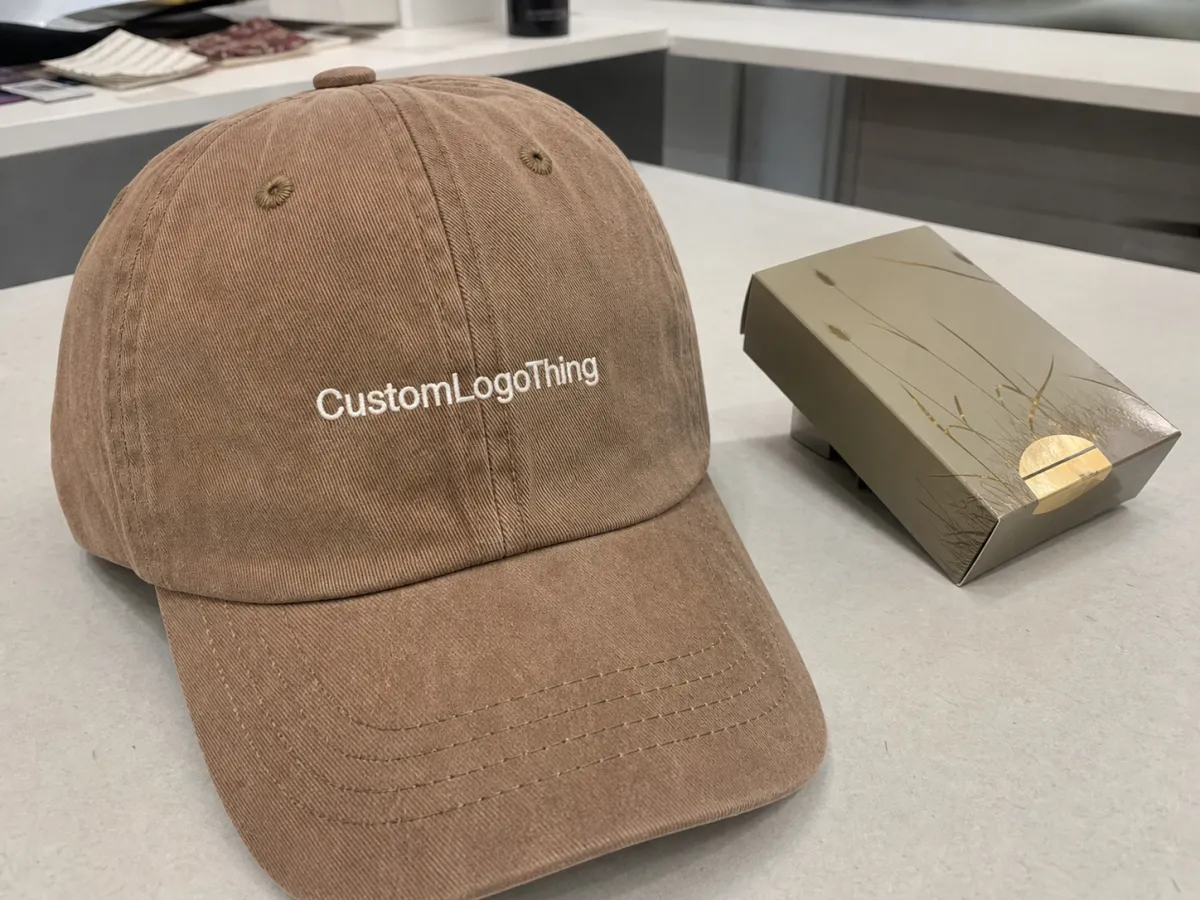
Most fragrance brands do not need loud promo gear. They need something wearable, neutral, and polished enough to live beside soft packaging, restrained typography, and tactile materials. Unstructured Dad Hats fit that brief better than stiff promotional caps because the low-profile crown reads relaxed rather than sporty.
The practical case is just as strong. A candle or spray disappears after use; a decent hat can stay in rotation for years. That gives the logo more repeat exposure than a lot of inserts or packaging ever will. For PR kits, seasonal bundles, retail add-ons, and staff uniforms, the cap often carries more brand visibility than expected.
The best use cases are straightforward:
- Retail bundles that need a wearable item without starting a full apparel program.
- Influencer mailers that should feel curated instead of assembled.
- Staff wear for pop-ups, showroom days, and markets.
- Gift sets that need a premium feel while staying inside margin.
- Loyalty rewards that customers will actually keep using.
A hat that feels like an afterthought gets treated like one. A hat that matches the line gets worn, photographed, and remembered.
The main decision is not whether the hat is "nice enough." It is whether the cap fits the rest of the brand language. If the packaging is soft, tonal, and minimal, the hat should support that tone instead of fighting it with a hard-edged sports look.
Decoration choices that keep the logo readable on soft crowns
Decoration on an unstructured hat is mostly about shape control. The front panel does not sit rigidly flat, so artwork that looks fine in a mockup can distort once the cap is sewn, packed, and worn. That is why overly fine detail creates problems fast.
Embroidery is still the most reliable choice for a simple front logo. It feels durable and tactile, and it works best with wordmarks, short phrases, or icons. A typical front design often lands around 6,000 to 10,000 stitches, but the real number depends on size, line weight, and fill density. Thin text and delicate line art are the main risk; they can break apart or fill in.
Patches are useful when the art needs more detail or a softer lifestyle look. Woven, faux leather, and embroidered patches can carry more visual complexity than direct embroidery, and they can make the cap feel more fashion-oriented without making the crown itself stiff.
Small woven labels, side hits, and back placements are better when the brand wants restraint. A fragrance line does not always need a front-and-center logo. Sometimes a small hit on the side seam or strap keeps the cap premium and quiet.
Placement affects the whole read of the piece:
- Front center is easiest to read and most brand-forward.
- Side placement feels understated and editorial.
- Back embroidery works well for staff wear and event use.
- Closure or strap details suit minimal branding and premium capsules.
A few production choices help the design survive on a soft crown:
- Keep text short and legible after the crown softens.
- Use thicker line weights for embroidery.
- Ask for digitizing before sampling if the logo is detailed.
- Request a physical sample when patch size or placement is doing heavy visual work.
Tonal combinations often suit home fragrance better than high-contrast logos. Cream thread on olive, black thread on washed black, or sand thread on brown usually feels calmer and more expensive than bright branding competing with the package.
Specs to lock before sampling: fabric, fit, and color
Sampling moves faster when the core specs are fixed first. If fabric, crown shape, closure, and color target are still open, the sample round turns into a design workshop instead of a production step.
Cotton twill is the safest starting point because it is easy to source, predictable, and usually priced well. A standard twill blank often sits around 260 to 320 gsm, which gives enough body without making the cap stiff. Washed cotton creates a softer, more lived-in look. Pigment-dyed cotton gives muted, worn-in color that works well with earthy scent families. Brushed chino feels a little cleaner and more polished.
Fit details matter more than many buyers expect. Confirm that the hat is truly unstructured and six-panel if that is the target. Check crown depth, brim curve, eyelet count, sweatband material, and closure style. A fabric strap with a buckle feels different from a metal clasp, and a Velcro closure is faster and cheaper but usually less refined.
Color approval is another common delay point. A soft-finished cap will never behave exactly like a carton or printed label. If the brand uses strict standards, ask for the cap color against a Pantone reference and confirm whether the supplier is matching the blank itself or only the decoration thread.
A simple spec sheet should cover the essentials:
- Blank color and fabric type.
- Panel count, crown depth, brim shape, and closure style.
- Logo size, placement, and decoration method.
- Thread colors, patch material, or label construction.
- Packaging details, including polybag, tissue, or insert card.
Do not overcomplicate the build. A fragrance brand usually does not need custom seam taping, unusual brim construction, or multiple branding placements. Those extras increase cost and the chance of inconsistency without adding much value.
Cost, MOQ, and quote drivers you can control
Pricing is easier to compare when the quote is broken into parts. Look for separate numbers for the blank hat, decoration, sampling, packing, and shipping. If a supplier folds everything into one figure, it is harder to judge where the money is going.
Decoration method drives a lot of the cost. For moderate runs, front embroidery often lands around $2.10 to $4.50 per unit, depending on stitch count and logo size. Woven or faux leather patches usually run a bit higher, especially if the patch construction is more involved. Small woven labels or side hits can stay lower because the artwork is smaller and the application is simpler.
MOQ changes with complexity. One blank color and one decoration method is easier than three colors with custom labeling and specialty wrapping. A run of 50 to 100 units usually carries higher setup cost per piece. A run of 300 to 1,000 units spreads that setup across more hats and usually improves unit pricing.
| Option | Typical cost range | Best for | Tradeoff |
|---|---|---|---|
| Front embroidery | $2.10-$4.50 per unit | Simple logos, repeat wear, premium feel | Limited detail in small text |
| Woven or faux leather patch | $2.60-$5.20 per unit | Bolder artwork, lifestyle branding | Can look heavy if oversized |
| Side hit or woven label | $1.90-$3.80 per unit | Minimal branding, staff wear, understated retail | Lower shelf visibility |
The lowest quote is not always the best order. Freight, setup, digitizing, packing, and rework can erase a small per-unit savings quickly. A quote that leaves out sample fees or rush charges is incomplete, even if the headline number looks good.
There are easy ways to keep cost in check without weakening the product. Stay with one or two blank colors. Use a standard closure. Keep one placement instead of three. Avoid custom inserts unless they add clear value to the bundle or shipping protection. For transit testing benchmarks, the International Safe Transit Association has useful guidance at ISTA. For paper insert or label options, FSC-certified material standards are documented at FSC.
Process and lead time from artwork approval to delivery
The cleanest production flow is simple: brief, mockup, sample, approval, production, quality check, packing, shipment. Once the process starts getting improvised, delays usually multiply.
The biggest delays happen before production begins. Late color changes, low-resolution artwork, unclear placement notes, or feedback from too many people can slow an order more than the factory work itself. For home fragrance unstructured dad hats Bulk Order Planning, the approval stage matters almost as much as the manufacturing stage.
Your first brief should include the artwork file, quantity split, delivery address, target ship date, blank color references, and one person who can approve changes. Vector artwork is a must. If the logo will be embroidered, the digitized file becomes part of the production chain, so clarity up front saves time later.
A realistic timeline often looks like this:
- Mockup and proof: 1-3 business days if the brief is complete.
- Sample production: 5-10 business days, depending on decoration complexity.
- Bulk production: usually 12-18 business days after final approval.
- Shipping: depends on lane, with extra time for customs, peak season, and repacking if needed.
A rush air shipment can shorten transit, but it cannot fix a sample that was approved too quickly. If the hat will be packed with a scent product, ask about box strength, inner wrapping, and how the supplier prevents crushed brims or scuffed patches. Shipping damage is often a packing issue, not a carrier issue.
One rule is worth keeping: approve the sample as if it is the whole order. A thread color that feels slightly off or a patch that sits a few millimeters too high does not disappear in bulk. It gets repeated.
How to judge a supplier before you send the deposit
A supplier that understands caps will talk in specifics. Before you send a deposit, ask for close-up photos of similar unstructured hats, ideally using the same decoration method. Flat product shots are not enough if you need to judge stitch density, panel shape, patch edges, or how the front sits when handled.
Ask how the supplier handles defects, overages, under-runs, and shade variation. The answer matters more than the first quote. A serious partner can explain what happens if a run comes up short or if a dye lot shifts slightly. That tells you whether they run a controlled process or just hope for the best.
Consistency matters even more if the hat will be reordered. A supplier should be able to repeat the spec without rebuilding it from scratch each time. For a recurring fragrance program, that stability is a real advantage because it keeps the look consistent across seasonal launches.
A quick pre-deposit check helps narrow the field:
- Can they show close-up examples of similar unstructured hats?
- Do they separate sample, setup, and freight charges?
- Do they explain defect handling in plain language?
- Will they confirm packaging and repeat-order consistency?
- Do they give a real timing estimate instead of vague assurances?
Weak answers before payment usually become expensive answers after payment. If you need a general reference point for common questions, the FAQ page can help, but the real test is whether the supplier answers product questions directly and clearly.
Next steps for a clean bulk launch without rework
Before placing the order, settle the decisions that affect production rather than the ones that just sound creative. Confirm decoration method, logo file format, Pantone references, quantity split, target ship date, and intended use. Retail bundles, staff uniforms, and influencer mailers do not need the same finish or packing approach.
Pick one strong reference image that shows the crown shape, softness, and overall tone you want. Too many references create noise, and the quote starts drifting toward whatever the supplier thinks is easiest instead of what the brand actually needs. If the sample does not match the reference in fit or mood, stop and correct it before bulk production starts.
Ask for a line-item quote and a sample schedule. Those two documents make comparison much easier. One supplier may look cheaper until freight and setup appear later. Another may start higher but include clearer packaging and fewer surprises. The lowest number on the page is not very useful if the final product needs a second pass.
A final approval packet should show logo size, placement, thread or patch color, closure style, blank color, and packing method. That is where the planning stops being abstract and becomes a controlled production decision. Lock the spec, confirm the cost, and move while the timeline is still intact.
FAQ
How many home fragrance unstructured dad hats should I order for a first bulk run?
A pilot run usually makes sense at 50 to 100 units if you are testing a new design, audience, or retail bundle. If the cap is going into a channel you already know, 100 to 300 units is often a better start. Keep a buffer for defects, photography, replacements, or last-minute adds.
What decoration method works best for branded dad hats in the fragrance category?
Embroidery is the most durable and usually the cleanest for a simple logo. A patch works better when the artwork needs more detail or a more lifestyle-oriented finish. A woven label or side hit makes sense when the brand wants restraint instead of a large front logo.
Can I mix colors in one bulk order without wrecking the price?
Yes, but each additional blank color adds sourcing work and can reduce efficiency. Keeping the color count tight usually protects unit pricing. Most buyers find that one to three colors is manageable.
What usually changes the quote on a home fragrance hat order?
Blank cap choice, stitch count, patch size, and custom labeling are the biggest drivers. Sample fees, digitizing, packing, freight, and rush requests should be listed separately. If those items are buried in the quote, the number is harder to trust.
How do I avoid delays before production starts?
Send vector artwork, final quantity, color references, and a single approval contact from the start. Confirm logo placement and sample timing before paying the deposit. Avoid changing the design, color direction, or cap style after the mockup stage unless you are ready to reset the schedule.