Chocolate Twisted Handle Paper Bags Unit Cost Review
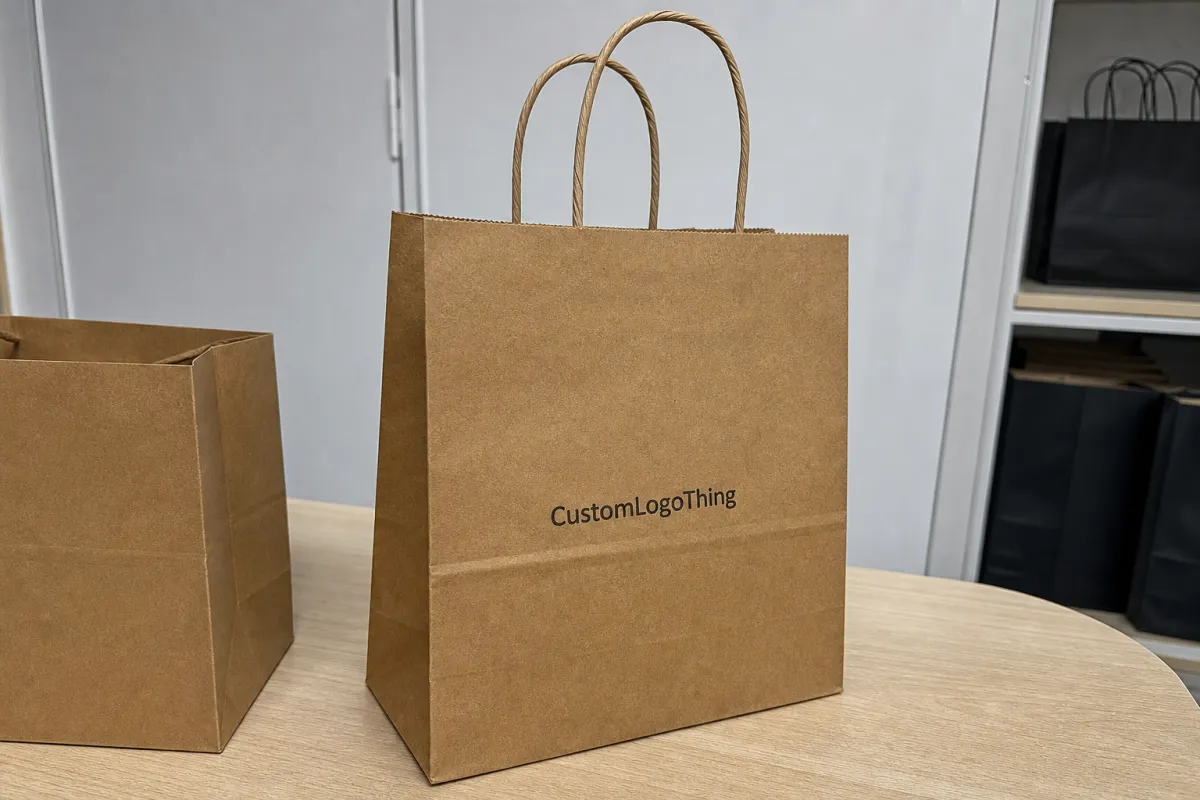
The chocolate Twisted Handle Paper Bags Unit Cost Review starts with the parts that actually move price: paper grade, handle build, print coverage, and order quantity. Buyers often focus on artwork first, but the bag structure usually changes the quote more than the logo does.
Chocolate-toned paper bags can look more finished on a bakery counter, gift table, or retail shelf because the base color already carries visual weight. That can raise perceived value without pushing the package into a premium laminate or box format.
The useful question is not simply what the bag costs at the factory gate. It is what the bag costs once it is printed, packed, shipped, stored, and used in the channel it was bought for. A spec that looks cheap at quote stage can become expensive if it tears, scuffs, or needs replacement.
Value Drivers Buyers Notice First
Start with structure, not artwork. A chocolate Twisted Handle Paper bag can be made in lighter kraft for takeaway use or heavier retail stock for boxed gifts, apparel, and premium bakery items. Moving from 120gsm to 170gsm often changes stiffness and carry confidence more than a design change does.
Handle construction is the next cost driver most buyers notice late. Twisted handles glued into the top fold are usually stronger and cleaner than lighter loop alternatives, but they add material and labor. A reinforced top edge matters if the bag will carry pastry boxes, candles, or small gift sets.
Chocolate color helps, but it is not magic. It hides scuffs better than pale stock and reads as warmer on shelf. That visual advantage should still be weighed against the actual use case. For short takeaway use, a simpler build may be enough. For retail presentation, the darker base can do more of the branding work.
When comparing quotes, line up the same variables:
- Stock grade and paper gsm
- Gusset depth and bag dimensions
- Handle reinforcement and adhesion method
- Print coverage and number of colors
- Carton pack-out and master carton count
- Freight allocation and delivery destination
That list is where budget drift begins. A quote for 5,000 bags can look attractive until freight is excluded, the carton pack is inefficient, or the supplier priced a lighter build than the buyer actually needs.
Chocolate Twisted Handle Paper Bags Unit Cost Breakdown
The cleanest way to review chocolate Twisted Handle Paper Bags unit cost is to separate the parts that can change. Paper gsm, handle material, print colors, coating, assembly labor, setup charges, and shipping method all influence the final number. In many cases, the first quote covers only production; the landed cost is more useful.
MOQ has a direct effect on unit cost. At 1,000 units, setup is spread across fewer bags, so the per-piece price is higher. At 3,000 or 5,000 units, the same setup is diluted more efficiently, and bulk pricing becomes easier to justify. The right quantity still depends on storage space, sell-through speed, and reorder frequency.
The chocolate base can change the economics too. Standard brown kraft may be cheaper, while a darker pre-colored stock often costs more because the base material already includes more finish and consistency. If the supplier is printing a chocolate look onto a natural bag, the cost may shift toward ink coverage instead.
Common add-ons move the quote quickly: Pantone matching, white underlays, coated finishes, sample pulls, and rush scheduling all add work or waste. A buyer may approve the design and then discover that a precise PMS match requires another setup step. That is normal; the risk is learning it after the budget is fixed.
| Order tier | Typical unit cost | Best use case | Notes |
|---|---|---|---|
| 1,000 units | $0.34-$0.58 | Test launches, smaller stores, seasonal trials | Higher setup share, less favorable bulk pricing |
| 3,000 units | $0.24-$0.41 | Regular retail replenishment, bakery programs | Often the practical middle point for MOQ |
| 5,000 units | $0.18-$0.32 | Multi-location rollouts, repeat orders | Better cost per piece, but freight and storage matter more |
Those ranges are not universal. A simple one-color print on a standard size bag will sit lower than a multi-color design with matte coating and reinforced handles. The table is still useful because it helps buyers compare offers on the same basis instead of reacting to one headline number.
A low quote is not always the best quote. If it trims handle reinforcement, skips carton protection, or uses paper that dents in transit, the real unit cost rises later through replacements, complaints, and rush reorders.
Material, Handle, and Finish Options
Chocolate twisted handle bags are usually built from kraft paper, recycled kraft, or a smoother retail-grade liner. Recycled content can support sustainability targets, but the exact hand feel depends on the fiber mix and caliper. Buyers who want a warmer, more finished look often prefer a denser brown stock with an even surface.
Handle choice matters just as much. Twisted handles glued into the top fold offer a cleaner profile and better everyday carry performance than light ribbon-style substitutes. They also photograph better, which matters if the bag appears in customer photos or digital merchandising. For heavier loads, ask for reinforcement at the handle anchor and top fold.
Finish affects both appearance and durability. Matte aqueous coating usually gives a softer retail look and better rub resistance. Gloss can deepen color density, but on a chocolate-toned bag it may look too reflective unless the brand wants that effect. Varnish sits between the two.
Use cases are not identical. Bakery items need strength plus food-adjacent cleanliness. Apparel bags need a flatter front panel and sharper print clarity. Event kits may need a stronger gusset and tighter carton packing. Gift purchases often justify a richer finish because the bag becomes part of the product experience.
Compliance should come up early. FSC sourcing can support responsible forest claims, and some programs ask for recycled-content targets or food-safe coating details. For general packaging and waste context, the EPA maintains useful references: EPA sustainable packaging guidance. For chain-of-custody and certification details, the FSC site is the proper source: FSC.
Sizing, Strength, and Print Specifications
Size is where many orders go wrong. Buyers should confirm width, gusset, and height first, then map the usable print area on the front and back panels. A bag that is technically large enough can still perform badly if the gusset is too shallow for the product footprint.
Strength is a mix of paper weight, handle adhesion, and load geometry. If the load sits high and stiff inside the bag, the handle force behaves differently than if the product settles into the gusset and spreads across the base. That is why a 150gsm bag with a strong handle can outperform a heavier but poorly assembled version.
Print specifications should be written plainly. One-color branding is usually the most efficient. Two-color work adds ink and registration checks. Full coverage art increases labor and waste. Inside printing is possible on some runs, though it usually adds complexity and tighter inspection. If color accuracy matters, ask for a physical reference, not only a screen proof.
There is also a tolerance issue that gets overlooked. If a bag is meant to fit a retail box or bakery carton, the supplier needs the actual product dimensions, not only the bag size target. A difference of a few millimeters can change whether the item sits straight or leans during carry.
"The cheapest bag is the one that fits, holds, and arrives unchanged. Everything else is a false economy."
Sample approval should be done against the real product or a close physical mock-up. Screen color can mislead under store lighting, and the chocolate tone may look deeper or warmer once printed on the chosen stock. A sample saved against the spec sheet gives the next reorder a cleaner starting point.
Order Process and Production Timeline
The order flow should stay predictable: quote request, artwork check, proof approval, sample sign-off, production, quality control, packing, and freight booking. If a step is skipped, the schedule becomes fragile. A supplier can move quickly on the factory floor, but late artwork files or revision loops usually slow the job more than production itself.
Standard timelines depend on quantity and finish. Smaller runs may ship in about 12-15 business days after approval if the spec is simple and materials are already available. Larger orders, special coatings, or more complex print coverage can push that toward 18-25 business days. Rush orders are possible in some cases, but faster scheduling usually carries higher setup charges.
The most common delay points are familiar: low-resolution artwork causes proof back-and-forth, missing bleed forces layout corrections, and late color revisions reset the approval process. Unclear delivery instructions can hold freight even after the bags are packed.
One useful habit saves time: lock the specification sheet before artwork moves forward. If quantity, color, size, or finish changes midstream, the supplier may need to re-price the order. The cleaner the input, the steadier the unit cost.
Seasonal demand deserves realistic planning. Bakery launches, holiday promotions, and store openings can tighten capacity quickly. A buyer who waits until the last week often pays more for faster handling because the production window is crowded.
Supplier Controls That Protect Repeat Orders
Repeat orders are where suppliers prove their value. The first shipment may look fine, but the real test is whether the next run matches caliper, handle adhesion, and print registration without constant re-explaining. A supplier with strong control systems can reproduce the same chocolate shade and bag feel months later.
The QC checks that matter most are straightforward: dimensional checks, adhesion testing, carton count verification, and visual inspection for color drift. If the handles are attached inconsistently or the fold lines shift, the bag can still pass a casual glance and fail in use. Buyers should ask how defects are recorded, whether retained samples are kept, and what tolerance range the plant uses for each dimension.
Direct manufacturer sourcing and brokered supply behave differently. Direct sourcing often gives clearer control over spec changes and quality records. Brokered supply can be easier for one-off requests, but it may add communication layers and margin layers that make pricing harder to interpret. The better path is the one that gives the buyer clear visibility into the quote and the spec archive.
Stored spec sheets are a practical asset. They protect reorders better than memory does. If the original order used a specific chocolate shade, a 140gsm stock, and a certain handle glue pattern, those details should be saved in one place.
Operational support matters too. Buyers should expect consistent pallet labeling, multi-location shipping options, and scheduled replenishment if the order will be repeated. Those details are what keep a packaging program from turning into a series of one-off emergencies.
What to Send for the Fastest Accurate Quote
Send the exact bag size, quantity, stock preference, handle color, print coverage, deadline, and delivery ZIP or postal code. That gives the supplier enough information to calculate production and freight with less guesswork. A vague request usually comes back with a vague answer.
Add the artwork files early, even if the design is not final. A vector file with editable text saves proof time. If you have a reference photo or retained sample showing the chocolate tone you want, include that too. Color descriptions such as "dark brown" are not enough when the finish is part of the brand impression.
Ask for tiered pricing at 1,000, 3,000, and 5,000 units so the bulk pricing curve is visible. That makes it easier to compare suppliers on an apples-to-apples basis instead of mixing one MOQ with another. Also confirm whether sample charges, proof turnaround, and approval windows are refundable or credited against production.
A practical quote request should also mention whether the bags are for bakery boxes, apparel, takeaway, or gift use. Each use case changes the priority. Carry strength matters more for boxed goods. Print clarity may matter more for retail. Moisture resistance can matter more for bakery counters.
FAQ
What changes the chocolate twisted handle paper bag unit cost the most?
Paper weight, quantity tier, and print coverage usually move the price fastest. Handle reinforcement, coating, and freight can change the landed cost more than the headline quote. A useful quote separates setup fees from per-bag pricing so the buyer can see where the real spend sits.
What MOQ should I expect for custom chocolate twisted handle paper bags?
Many suppliers quote from 1,000 to 3,000 units, but the best tier depends on the plant and print method. Lower MOQ usually raises unit cost because setup is spread across fewer bags. Ask for pricing at several quantities so you can see where the break point lands.
How do I keep the chocolate color consistent on reorders?
Approve a physical sample or matched color reference before production starts. Save the exact stock, coating, and print notes on the spec sheet for every reorder. If color matters, request a retained master sample and a recorded PMS target.
How long does production usually take after approval?
Standard production starts after artwork and sample approval, so the approval stage matters as much as the factory schedule. Short runs may move faster, while larger orders or special finishes extend the timeline. Freight is separate from production, so confirm both the factory lead time and the shipping window.
Can these bags be sized for bakery boxes or retail merchandise?
Yes, but the bag should be matched to the box footprint, height, and weight before quoting. Gusset depth and handle strength matter as much as width when the product is heavy or awkward. A physical sample is the safest way to confirm fit before mass production.

