Wedding Cuffed Knit Beanies Material Sample Buying Guide
Buying favors, bridal party gifts, or welcome-basket pieces usually looks straightforward until the order arrives and the details start disagreeing with the mockup. A wedding Cuffed Knit Beanies Material Sample guide helps prevent that gap. Two beanies can share the same photo, same palette, and same product name, then feel completely different in hand. One holds its shape, the cuff springs back, and the yarn feels soft without looking fuzzy. The other stretches out, pills early, and loses its polish before the reception is over.
That difference matters even more for weddings because the color story is tight. Ivory, cream, oatmeal, soft beige, and warm white can look nearly identical on a screen, then shift under venue lighting or next to a dress fabric with a stronger undertone. A physical sample shows what a product gallery cannot: the real handfeel, rib density, cuff recovery, embroidery balance, and how the beanie behaves once folded into packaging.
The sample also gives a realistic read on presentation. A knit piece that looks premium loose on a table may look ordinary once it is tucked into a carton, tied with tissue, or stacked in a gift display. For wedding orders, that last mile matters as much as the yarn itself.
Why Samples Matter More Than Photos for Wedding Beanies
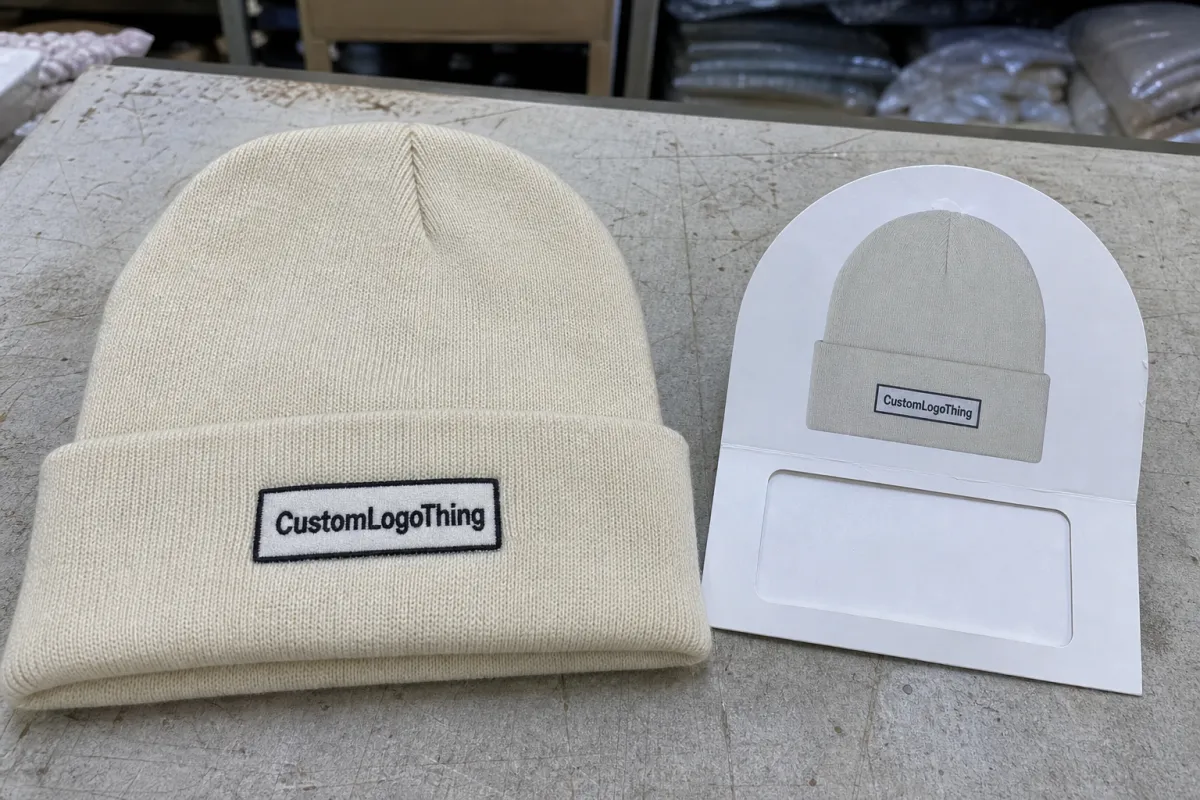
Photos sell the mood. Samples tell the truth. That is the simplest way to think about it, and it holds up every time. A beanie can appear thick, polished, and luxury-adjacent in a product gallery, then arrive with a looser knit, a thinner yarn than expected, or a cuff that relaxes after one wear. For guest favors and bridal party gifts, the item is handled, worn, folded, and photographed. It has to work outside the staged shot.
The cuff is the first place quality shows. A clean cuff frames embroidery and keeps the silhouette tidy in photos. A weak cuff collapses, especially if the knit is light or the yarn twist is soft. That creates a sloppy shape in gift boxes and on display tables, and it is hard to fix once the bulk order is packed. For wedding presentation, a neat cuff often does more visual work than the rest of the beanie combined.
Lighting is another trap. White-adjacent neutrals are notorious for changing personality under warm bulbs. A cream that looks understated in daylight can lean yellow in a reception hall. A soft beige can read elegant online and muddy in person. The safest way to choose is to inspect the sample under daylight, warm indoor light, and, if possible, light similar to the venue itself.
A beanie that looks finished in a vendor photo can still fail once it is folded, boxed, and worn for several hours. The sample is there to test the real version.
Packaging plays a larger role than many buyers expect. Knit goods compress easily. If the cartons are packed too tightly, the cuff can flatten, embroidery can distort, and fold marks can linger. If the bulk order will use corrugated cardboard, kraft paper inserts, tissue, or a more decorative presentation box, the sample should be checked in that exact setup. The goal is not simply to approve a fabric. It is to approve the finished experience.
Wedding Cuffed Knit Beanies Material Sample Guide: What to Request
A proper wedding Cuffed Knit Beanies material sample guide starts with asking for the actual product, not just a swatch card. A flat knit sample can be useful, but it will never tell the full story. Handfeel changes once yarn becomes a ribbed body, the cuff gets turned, and decoration is added. If the order matters, request a finished beanie whenever possible.
At minimum, ask for the following:
- Fiber content - acrylic, cotton blend, wool blend, or a mixed yarn blend.
- Knit gauge - fine, medium, or chunky, since this affects both feel and appearance.
- Cuff height - enough space for decoration without crowding the front.
- Color swatch - ideally two near-matching neutrals for wedding palette comparison.
- Logo proof - embroidery, patch, woven label, or print placement.
- Finished packaging sample - so you can judge folding, protection, and presentation.
Swatches are helpful, but they are not enough for cuffed knit beanies. A small flat sample cannot show cuff recovery, stitch density, or the way the edge behaves under tension. It also hides how the knit sits under a logo. A simple color chip may tell you which ivory is warmer, but it will not tell you which one still looks clean after being folded in a box.
Decoration proofing belongs in the sample request too. Embroidery thread color, stitch count, patch size, and logo placement all change the final balance of the piece. A logo that looks restrained on a mockup can suddenly feel oversized on a short cuff, especially if the knit is thick. Ask for clear measurements, including the distance from the cuff edge and the width of the decoration area.
Ask how the sample was handled before it arrived. Was it steamed, washed, folded flat, or stuffed into a carton? Was it an actual production sample or a hand-prepared display piece? Those details matter because you want a sample that reflects bulk-order reality, not a polished version that exists only for approval photos.
Fiber, Yarn, and Rib Structure: The Specs That Change the Handfeel
Fiber content sets the baseline, but it does not finish the job. Acrylic is usually the budget-friendly choice. It is stable, common, and useful when the goal is predictable warmth at a lower unit cost. Cotton blends feel softer and breathe better, which makes them more comfortable for mild weather or indoor events. Wool blends feel more premium and typically hold warmth better, though they raise cost and can be less forgiving for sensitive skin. None of those options is universally best. The right one depends on the season, the venue, and the budget.
Yarn twist changes the handfeel more than many first-time buyers expect. A softer twist can feel plush straight away, but it tends to pill more easily and can lose polish faster. A tighter twist usually keeps its shape better and takes embroidery more cleanly. That matters on a cuffed beanie, where the front panel needs to stay flat enough for decoration to read clearly in photos.
Rib structure is just as important. A tight rib gives a cleaner outline and supports the cuff better. A looser rib feels relaxed, but it can sag once worn or compressed in packaging. For wedding use, the sweet spot is a knit that looks polished in photos and still has enough give for different head sizes. You want a gift that feels intentional, not promotional and not flimsy.
Weight and gauge affect the perceived value of the piece. Heavier knits usually look richer on a table and photograph better because they keep a stronger silhouette. They also cost more and can feel warmer than expected indoors. Lighter knits may be more comfortable at a mild-weather event, but if the yarn is too thin, the beanie can read plain instead of premium. Sample testing should include the actual use setting, not just a desk review.
Durability checks should cover pilling, snag resistance, and color fastness. If a supplier can reference standard lab methods such as ASTM pilling testing, that is helpful. If not, ask how the yarn behaves after friction and light washing. Wedding gifts still have to survive shipping, storage, and guests who toss them into a tote with keys, perfume, and a phone charger. A good sample should survive ordinary handling without looking tired.
Cost, Pricing, MOQ, and Unit Cost: What the Sample Really Reveals
Sample pricing is rarely arbitrary. A low-cost sample often points to stock yarn, standard decoration, and basic packing. A higher sample price usually signals custom yarn matching, embroidery setup, label work, or presentation packaging. A wedding Cuffed Knit Beanies Material Sample guide should treat the sample as a preview of the full order’s cost structure, not as a separate purchase with no broader meaning.
The lowest quote is often incomplete. Maybe embroidery setup is excluded. Maybe packaging is plain when you expected a gift-ready presentation. Maybe the carton spec is bare-bones instead of the corrugated cardboard and kraft paper arrangement you need for a polished wedding delivery. Compare line by line or the quote comparison becomes misleading very quickly.
| Sample Type | Typical Sample Price | Best For | What to Watch |
|---|---|---|---|
| Stock-color knit sample | $10-$25 | Quick color and handfeel checks | May not reflect the final decoration or custom color tone |
| Custom-decorated sample | $25-$60 | Logo placement, stitch count, and cuff fit | Setup fees are often separate and may not be credited back |
| Fully packaged sample | $35-$85 | Wedding presentation and gift-ready approval | Only useful if the bulk order uses the same packout |
MOQ breakpoints matter as much as sample fees. A quote can look fair at 100 pieces, then improve at 250 or 500 if the supplier already has the same yarn and decoration method in place. Custom color matching is where both timelines and pricing tend to tighten. If the wedding palette needs a specific off-white or muted taupe, ask whether the yarn is a stock shade or a new dye lot. That one answer can change both lead time and unit price.
Ask whether the sample fee is credited against the bulk order. Sometimes it is. Sometimes it is not. The difference affects the real cost of approval, especially if you are comparing several vendors. Also ask what is excluded: freight, custom labels, rush production, inserts, or packaging made from FSC certified paperboard. Those items should be visible in the quote, not buried in the last invoice note.
For packaging, practical materials usually win. Recycled materials where appropriate, kraft paper inserts, and biodegradable packaging can all work well if they do not weaken the presentation. If the supplier can ship in a way that respects common transit-testing logic, such as the expectations behind [ISTA](https://www.ista.org/), that is a strong sign they understand how goods move, not just how they photograph.
Process and Timeline: From First Swatch to Production Approval
The approval path should be orderly. Request the sample, confirm written specs, inspect the physical piece, gather revisions, and then release production. If the supplier cannot describe that sequence clearly, the order is already harder than it should be. Wedding timelines leave little room for improvisation.
Simple stock-color samples can turn around quickly, often in a few business days if the yarn is already on hand. Custom yarn matching, embroidery tests, and label changes take longer. A realistic sample-to-production window is often 12-15 business days for straightforward orders, then longer if the order involves new decoration or custom packaging. If the event date is near, build in a cushion. Rush shipping is expensive, and rushed approvals are where mistakes survive.
Lead time tends to stretch when suppliers need to source a specific yarn or match a delicate bridal tone. That is not necessarily a problem. It is the normal cost of precision. If the supplier offers a production calendar, ask for milestones in writing: sample approval, pre-production proof, bulk knit run, decoration, packing, and ship date. Once those checkpoints are fixed, the order becomes much easier to manage.
Revision rounds need limits. One correction is normal. Two is manageable. More than that can push the order into rush territory and add cost without adding much value. If the first sample is close but not quite right, send one consolidated note covering material, decoration, and packaging together. Split feedback into too many messages and details start slipping.
Packaging deserves the same attention as the knit. A supplier that understands corrugated cardboard, kraft paper, and controlled packout can save the order from avoidable damage. The beanie may be the hero item, but the box shapes the first impression. If the carton crushes the cuff or the insert sheds dust, the presentation loses polish fast.
Common Mistakes That Make Wedding Orders Look Cheap
The fastest mistake is approving a sample in ideal studio light and then discovering it looks flat under warm reception lighting. Knit color is sensitive. A cream beanie can feel refined in daylight and suddenly yellow beside amber bulbs. Always check the sample in at least two lighting conditions, and compare it next to the actual wedding palette if possible.
Stretch and recovery are another weak point. A beanie may look perfect when it comes out of the box, then relax after an hour of wear. That is a poor result for a wedding favor. Guests should be able to put it on, fold it, and pack it away without the shape collapsing into something limp and forgettable.
Logo size creates trouble too. Too large, and the beanie reads promotional instead of gift-worthy. Too small, and the decoration disappears in photos. The right size depends on cuff height, stitch density, and the visual weight of the yarn. The best samples show the logo clearly from normal photo distance without turning the entire front panel into a billboard.
Fit gets judged too narrowly. If the sample is only tried on one head shape, it tells you very little. Cuffed knit beanies need enough stretch for a range of guests, but they should not look overworked on larger heads or floppy on smaller ones. A useful sample should be worn, stretched, folded, and packed before approval. That is not overthinking. That is quality control.
If the sample looks right loose but wrong in a box, the sample failed. Wedding presentation is a system, not a single object.
Packaging can rescue or sink the whole order. If the sample arrives beautifully displayed but the bulk order ships flat-packed, test the packed version before you approve production. A modest knit can look refined with clean folds, measured carton sizing, and tidy kraft paper. A nicer knit can look disappointing if the carton is packed too tightly or the insert leaves dust on the fabric. Small choices can make the difference between polished and cheap.
Next Steps After the Sample Arrives
Once the sample arrives, use a pass-fail checklist. Keep it direct: color, softness, stretch, cuff shape, logo placement, and packaging. Pure instinct is too vague for an order that has multiple variables and a fixed event date. A single checklist used across vendors makes comparisons clearer and less emotional.
- Check color under daylight, warm indoor light, and venue-like lighting.
- Feel the knit for softness, scratchiness, body, and surface finish.
- Stretch the cuff and see whether it returns to shape cleanly.
- Inspect decoration for placement, stitch density, and edge finish.
- Test packaging for fold marks, crush risk, and presentation quality.
If the sample is close but not perfect, send one revision list that covers material, decoration, and packaging together. Scattered feedback slows the process and makes missed details more likely. A strong wedding cuffed knit Beanies Material Sample guide keeps all the specs tied to the order instead of scattered across email threads and screenshots.
Before approving production, confirm the final quote, MOQ, lead time, and shipping method in writing. If the order needs outer cartons made from corrugated cardboard, ask for the carton spec. If the presentation uses kraft paper inserts, ask for the exact paper weight. If recycled materials or biodegradable packaging are part of the plan, make that part of the approval record. Once production starts, those details become much harder to adjust.
Keep one approved sample as the control piece. It becomes the reference for yarn color, cuff height, and logo placement when bulk cartons arrive. That single piece often prevents later arguments because everyone is comparing the same approved standard. Attach the approved spec sheet to the PO so the production team is working from the same version you signed off on.
The cleanest process is also the least glamorous: sample, compare, revise once, then lock the order with written specs. For wedding beanies, that discipline is usually the difference between a polished gift and a bulk run that feels cheaper than it should.
What should a wedding cuffed knit beanies material sample include?
Ask for the actual knit piece, not just a color chip, so you can judge softness, stretch, thickness, and cuff recovery. If the final order will use embroidery, patching, or woven labels, request a decorated sample too. Packaging matters as well, because a beanie that looks strong loose can change once it is folded for gift presentation.
How many sample beanies should I order before a wedding bulk run?
One finished sample is enough for basic approval, but two or three makes sense if you need to compare colors, logo sizes, or packaging styles. If the couple, planner, and bridal party all need to review it, set a firm deadline so the sample does not sit untouched for a week. For larger events, keep one control sample and one wear-and-test sample.
Which yarn works best for wedding favors: acrylic, cotton, or wool blend?
Acrylic is usually the budget-friendly option and works well when consistency and lower unit cost matter most. Cotton blends feel softer and breathe better, which can suit mild weather or indoor events. Wool blends feel more premium and winter-ready, but they usually cost more and need a careful comfort check for guests with sensitive skin.
Do sample fees usually get credited toward the final order?
Sometimes yes, sometimes no, so ask before you approve anything. Credits are more common when the sample is tied directly to a bulk purchase and the spec stays mostly unchanged. If the supplier charges separately for custom yarn, embroidery setup, or express shipping, those costs may not be credited back.
How long does the sample-to-production timeline usually take?
A simple stock-color sample may be ready quickly, while custom yarn matching or decorated proofs can take longer. Allow extra time for revisions, approvals, and packaging changes, since those are the steps where wedding orders usually slow down. Build in a buffer before the event date so the order does not depend on rush production and expensive expedited shipping.


