Electronics Unstructured Dad hats Bulk Order Planning usually fails at the artwork stage, not the cap stage. A soft crown seems simple until a logo lands too close to a seam, a thin line disappears in embroidery, or the design is built for a flat mockup instead of a relaxed hat.
The fix is practical: choose a cap that can hold the mark, keep the decoration method realistic, and make the spec sheet specific enough that approvals do not drag. For buying teams that already work with quantities and deadlines, that discipline is the same one that keeps Wholesale Programs efficient.
Why soft-crown merch fails when logos are planned too late
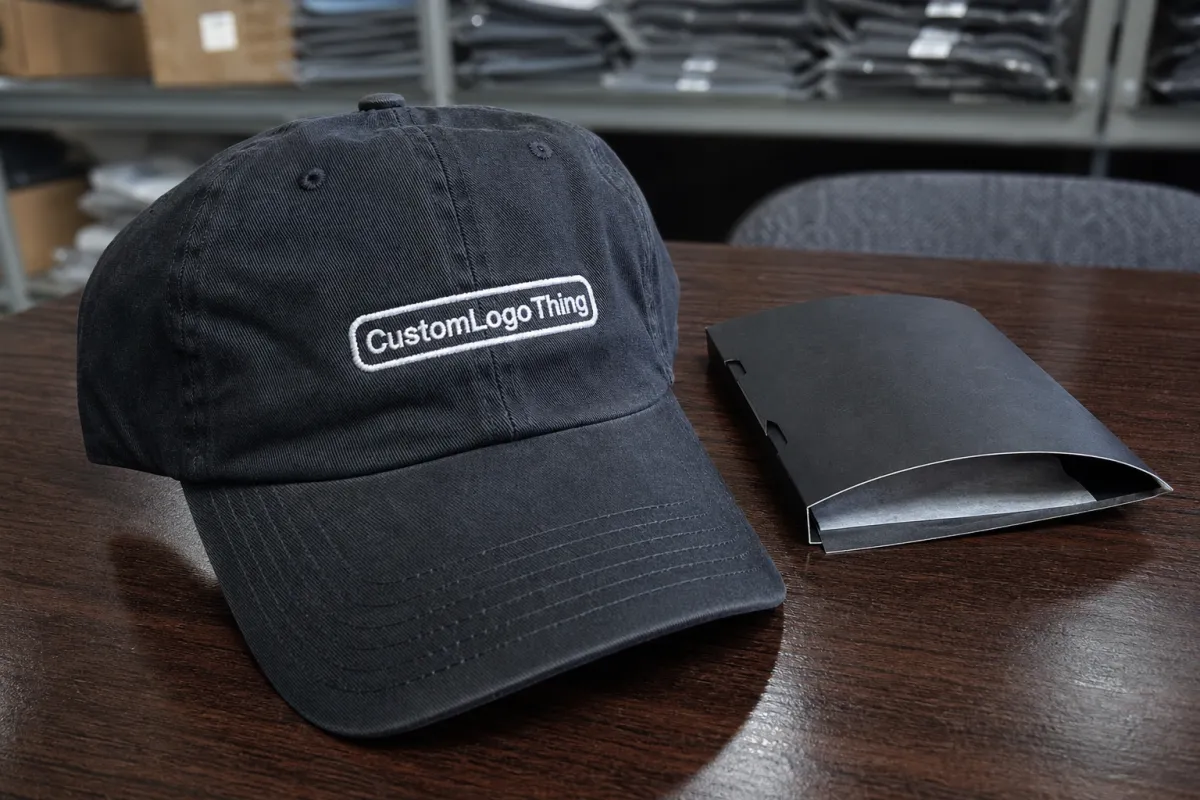
An unstructured dad hat is not a blank billboard. The front panel has give, the crown sits lower, and the fabric settles around the head instead of standing rigidly. That relaxed shape is the appeal, but it also means logos behave differently than they do on structured caps. A wide mark can buckle near the seam, fine letters can break up, and a centered design can shift once the crown settles.
For electronics brands, the hat usually has to do two jobs: look calm enough for staff wear and still read clearly at a glance. If the artwork is oversized, the cap starts looking forced. If it is too small, the logo disappears into the fabric texture. Neither result helps a giveaway, client kit, or launch package.
The real cost is often rework, not the blank hat. A placement change after the quote can mean a new proof, a new stitch file, and more approval time. On a small run, that can erase the savings from the lowest quote. On a larger run, the delay becomes the bigger problem.
A cap is not a poster. If the logo needs too much explanation to work on a soft crown, the logo is the problem.
Strong planning starts with the likely fail points: seam placement, artwork scale, stitch count, and whether the design can survive a soft front panel. Get those right and the rest gets boring, which is usually what a buyer wants.
Choosing the right unstructured dad hat for tech-brand giveaways
The base cap decides half the result. A low-profile, unstructured dad hat gives you a relaxed fit, a curved brim, an adjustable strap, and a front panel that sits naturally instead of rigidly. That works well for internal teams, event staff, onboarding kits, and client gifts where the goal is repeated wear.
Fabric choice matters more than people admit. Cotton twill is the safest general-purpose option because it takes embroidery well and keeps color predictable. Washed cotton has a softer, lived-in look, which fits casual brand systems but can soften small detail. Chino twill sits in the middle with a cleaner surface and solid durability. Brushed fabrics feel more premium, though they can mute fine stitches unless the artwork is sized correctly.
Construction details also affect price and wear. A self-fabric strap with a metal buckle looks more polished than a plastic snap, but it can raise cost and extend sourcing time. Six-panel construction is standard; five-panel styles give a broader decoration area, but they do not always match the softer, casual look most buyers expect from a dad hat.
For color, electronics brands usually do better with black, navy, charcoal, stone, and muted olive than with bright novelty shades. Those neutrals make logos easier to read and reduce the chance that the hat looks like throwaway promo stock. If the team wants a premium feel, choose the hat color first and let the logo adapt.
Use case should drive the base style. Trade-show crews need a hat that photographs well under harsh light. Internal teams usually want comfort and repeat wear. Executive gifts need cleaner materials and less contrast noise. If the hat is going into a launch kit, it should match the tone of the product line, not the mood of the merch request.
Decoration specs that keep logos readable on soft crowns
Flat embroidery is the default for a reason. It handles most logos, keeps the surface tidy, and does not fight the curve of a dad hat. For smaller text or cleaner tech logos, flat stitch usually wins. Puff embroidery can look strong, but only when the artwork is bold enough to support depth.
Front-panel space is tighter than it looks
Most front placements on an unstructured dad hat live in a window roughly 4.5 to 5.25 inches wide. That is enough for a short wordmark or icon, but not a long slogan or a tiny app-style glyph with too much detail. Once the logo stretches too far, the crown shape starts bending the design.
Side logos and back strap marks are useful, but they should be treated as secondary branding. A small side hit can make the hat feel custom without crowding the front panel. Back strap branding works best when the logo is tiny and clear, because the adjustment hardware limits both space and visibility.
Proofs should answer four questions
Before production, ask for the thread colors, exact placement, expected stitch count, and repeat-order consistency. Those four details solve most disputes before they start. If the vendor cannot explain how the logo will sit on the soft crown, keep pushing. A vague proof is just a polished guess.
The proof should also show what is being left out. Tiny detail, gradients, and thin outlines often need simplification before the hat can be produced cleanly. That is not a failure; it is the difference between a digital file and a wearable object.
Small artwork needs extra care on textured fabric. Thin strokes can close up, light thread on a mid-tone cap can disappear, and dark thread on a dark cap can flatten into the background. The safer move is stronger contrast and slightly thicker strokes.
For buyers comparing methods, this is the fast read:
| Decoration method | Typical bulk add-on | Best use | Main tradeoff |
|---|---|---|---|
| Flat embroidery | $0.70-$1.60 per cap | Clean logos, text, 1-3 colors | Fine detail can close up on textured fabric |
| Woven or embroidered patch | $1.10-$2.50 per cap | Small detail, premium look, multi-color art | Extra component adds cost and production steps |
| Puff embroidery | $1.25-$2.75 per cap | Bold marks with strong outlines | Not friendly to thin type or tiny icons |
For electronics Unstructured Dad Hats bulk order planning, flat embroidery is usually the safest first quote. Patch work is the better premium option when the logo has too much detail for stitches alone. Puff should be reserved for marks that can handle volume without looking squashed.
Very small copy, circuit-like lines, and complex gradients often look better as a patch or a simplified mark than as embroidery. The smartest buyers do not try to rescue a weak file with a more expensive decoration method.
Cost, pricing, MOQ, and quote variables that move your unit price
Pricing for Custom Dad Hats moves with the blank, decoration method, logo size, and any extras attached to the order. A plain embroidered run at 100 to 250 pieces often lands around $4.25 to $6.50 per unit for a simple design. Once you add patch work, multi-location decoration, or premium fabric, the range can climb to $6.75 to $11.00 per unit.
The MOQ story is straightforward. Lower quantities almost always raise the price per piece because setup costs have fewer units to absorb them. Many suppliers treat 48, 72, 100, or 144 pieces as bulk-friendly thresholds, but the exact floor depends on the decoration method and blank stock.
Digitizing is another line item buyers overlook. A logo has to be converted into a stitch file, and the quality of that file affects how the final hat looks. Some vendors include digitizing for simple jobs, while others charge separately, often in the $20 to $60 range for standard artwork. If the design needs multiple versions or special sizing, that fee can increase.
Compare quotes carefully. Some vendors show a low headline price and hide setup, digitizing, shipping, or proof revisions. Others bundle more into the first number. If you do not compare the same inclusions, the cheapest quote becomes the most annoying one.
Extras can move totals fast:
- Woven labels for a cleaner retail feel.
- Custom sweatbands for internal branding or premium kits.
- Hang tags for presentation and resale value.
- Individual polybags if the hats must ship clean to multiple addresses.
- Rush handling when the event date is non-negotiable.
Use a pricing frame, not wishful thinking. If the budget is tight, keep the blank simple, limit stitch colors, and avoid optional packaging. If the budget allows it, spend on decoration quality before you spend on gimmicks.
Process and timeline from artwork approval to delivery
The cleanest orders follow the same path every time: request, mockup, quote, art approval, sampling if needed, production, inspection, and shipment. Skip steps and the order gets messy. Keep the steps tight and the timeline gets shorter.
- Send the request with quantity, hat color, logo file, and deadline.
- Review the mockup and confirm placement before price is locked.
- Approve the art after thread colors, sizes, and decoration method are set.
- Request a sample only when the logo is detailed, the order is large, or the buyer needs sign-off from multiple people.
- Run production once the proof is final.
- Inspect and ship before the cartons leave the facility.
Timeline depends on how clean the artwork is. A straightforward order with vector art can often move from quote to proof in 1-3 business days. Production for standard bulk runs often takes 12-18 business days after approval. Rush orders can cut that down if blank stock and decoration slots already exist, but rush work usually costs more and narrows your options.
Sampling is worth the extra time when the logo has fine detail, the cap color is unusual, or the hats are tied to a launch that cannot be repeated. A physical sample exposes issues that a PDF proof hides: stitch density, thread sheen, panel tension, and how the logo looks when the hat bends in hand.
Do not forget shipping. A hat that leaves production on time can still miss the event if freight is slow or cartons are packed badly. For orders crossing multiple hubs or headed to trade shows, ask how the goods are packed and whether the vendor follows transit-testing logic like ISTA.
What makes a reliable bulk hat supplier worth the extra few cents
The best supplier is the one that catches problems before production, not the one that apologizes after. Consistent blanks matter. Clear proofs matter. Responsive communication matters. If a vendor keeps flagging bad art, odd sizing, or placement problems before the run starts, that is service, not friction.
For electronics teams that reorder often, consistency is everything. The same navy should look like the same navy on the next run. The logo should sit in the same place. Stitch density should not drift because a different operator handled the file.
Good suppliers also talk about tolerance. Placement on soft goods is not exact to the millimeter, and anyone selling decorated hats as if they were machined parts is overselling the process. The better answer is a believable tolerance range, a clear sample standard, and a QC pass that checks embroidery alignment, trim quality, and packaging before shipment.
If your hats include insert cards, hang tags, or folded presentation sleeves, ask for paper stock that can be documented. FSC certification is a sensible option for paper components, and you can read more at FSC.
Paying a little more for a supplier who communicates well is usually cheaper than fixing one bad run. One missed event or one ugly batch costs far more than a few cents on the unit price.
What to send for a fast quote and cleaner approval
Fast quotes come from specific inputs, not vague enthusiasm. Send the logo file, target quantity, hat color, decoration method, and deadline in the first message. If you have vector art, send AI, EPS, or PDF with outlined fonts. If you only have a JPG, say so.
Context helps too. Tell the supplier whether the hats are for an electronics launch, an employee kit, a reseller program, or a trade-show giveaway. The right answer for a staff hat is not always the right answer for a client gift.
Good file prep can shave time off the proof cycle. Clean vector art with limited colors is faster to digitize and easier to approve. If the logo has gradients, very small type, or a thin outline, mention that upfront so the vendor can flag risk before the order is locked.
Here is the quickest approval path:
- Confirm a budget range before asking for three different looks.
- Choose one backup hat color in case stock changes.
- Approve one placement option instead of five.
- Ask for a proof before production if the logo is detailed or the run is large.
- Build in shipping time, not just production time.
If the order needs a wider buying process, our FAQ covers the common file and turnaround questions buyers ask before they commit. Keep the spec sheet tight and reusable, and the next reorder becomes a repeat rather than a fresh debate.
What quantity counts as a bulk order for unstructured dad hats?
Most suppliers treat 48, 72, 100, or 144 units as bulk-friendly thresholds, but the real MOQ depends on the decoration method and blank stock. Higher quantities usually lower the unit price. Smaller runs usually raise setup pressure and narrow your decoration options.
Which decoration method works best for electronics team dad hats?
Flat embroidery is the safest choice for clean logos and text on soft crowns. Patch decoration works better when the artwork has small detail, multiple colors, or a more premium feel. Puff embroidery only works when the logo is bold enough to hold depth without distortion.
How much should I budget for a custom unstructured dad hat order?
Budget depends on the blank quality, stitch count, logo size, and extras like labels or packaging. A simple one-color embroidery order usually costs less than patch work or multi-location decoration. Always ask whether the quote includes setup, shipping, and proof revisions before you compare suppliers.
What files do you need before quoting a hat order?
Send vector art if possible, ideally AI, EPS, or PDF with outlined fonts. Include the target quantity, hat color, logo placement, and any deadline tied to an event or launch. If you only have a JPG, expect extra prep time before the quote is final.
How long does production usually take after approval?
Standard production often takes a few weeks after art approval, but the exact timing depends on order size and decoration method. Rush service is possible in some cases, but it usually raises cost and narrows material choices. Shipping time is separate, so confirm the delivery date, not just the production finish date.
Send the art, quantity, color, and deadline together, and the order gets easier fast. The quote is cleaner, the proof is faster, and the finished hat is more likely to look like it was planned on purpose.

