Retail Embroidered Beanies Bulk Order Planning Tips
Retail embroidered beanies Bulk Order Planning gets expensive fast when the beanie shape is wrong. A clean logo on a sloppy crown still looks like a sloppy product, and retail buyers usually notice that before they notice the stitch count. If you want the order to protect margin and still look sharp on shelf, start with fit, then decoration, then packaging.
That order matters because beanies behave differently once they are folded, packed, and displayed. A sample can look fine on a flat card, then slump, stretch, or wrinkle in a polybag, which changes how the embroidery reads in photos and on the shelf. For most buyers, the smartest move is simple: choose the target retail price, the fit you want, and the display format before you lock the embroidery size.
Retail Beanie Planning Starts With Fit
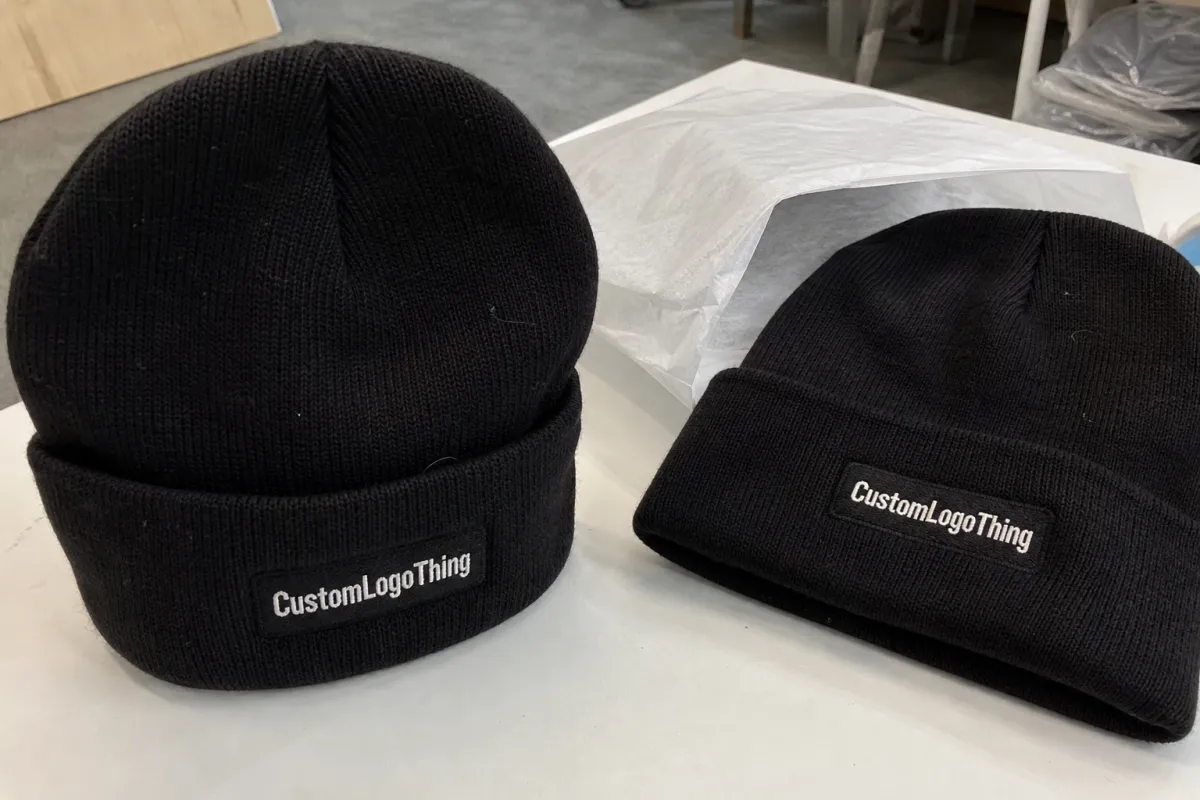
From a packaging buyer’s point of view, the first mistake is treating all beanies like the same product. They are not. A cuffed beanie with a tight rib knit holds embroidery differently than a slouch style with more drape, and that difference shows up in photos, on hangers, and on shelf. In retail embroidered beanies Bulk Order Planning, the shape of the beanie often decides whether the logo looks premium or just acceptable.
Here’s the practical part most people miss: a beanie that feels good in hand can still sell poorly if it packs badly. If the crown collapses, the cuff twists, or the knit stretches after folding, the logo can distort just enough to look off. That is why you should define the retail display method early. Are these going to ship flat in cartons, hang on hooks, or sit in a folded shelf tray? Each display format changes the final presentation and sometimes the embroidery placement.
A good logo on the wrong beanie still looks like a bad product. The reverse is less true.
The decision order should be boring and disciplined: target price first, fit second, decoration third. If you start with the logo and work backward, you often end up paying extra for a style that does not support the shelf look you wanted. For retail embroidered beanies Bulk Order Planning, that is how margins disappear in small increments.
One more thing: stock-ready styles usually give you more control than a fully custom build. If you need repeatable colors, predictable sizing, and less risk, start with a proven cuffed or ribbed style from a Wholesale Programs page rather than chasing a one-off knit that only looks good in a mockup.
Choose the Right Beanie Style Before You Price It
Beanie style is not just a design choice. It is a pricing choice, a comfort choice, and a shelf-readability choice. Cuffed, uncuffed, slouch, waffle knit, ribbed knit, and recycled yarn options all behave differently once you add embroidery. The right call depends on your audience. A fashion retailer may want a looser slouch profile. A corporate or sports buyer may prefer a cuffed beanie because it gives the logo a cleaner landing zone.
Cuffed beanies are usually the safest retail bet. The cuff gives you a built-in embroidery zone and better logo visibility, and it keeps the product feeling structured in packaging. Uncuffed beanies can look cleaner for a minimalist brand, but they are less forgiving if the knit relaxes after washing or handling. Slouch styles offer a more casual silhouette, though the logo can disappear visually if you choose a spot that sits too low. Waffle knit brings texture, but texture can fight with fine lettering. Recycled yarn can be a strong selling point, but recycled content does not automatically mean the same hand feel or color consistency as standard yarn.
Cuff height and crown depth matter more than most buyers expect. A tall cuff gives more embroidery room and can make a small logo look deliberate instead of tiny. A shallow crown often fits tighter under the cuff, which changes stretch and shape retention. Knit gauge matters too. A finer gauge usually gives a cleaner embroidery result, while a looser knit can pucker or show the backing more easily. None of this is glamorous. It is just what happens when thread meets knit fabric.
Color selection deserves real planning as well. Standard stock colors are easier to repeat across seasons, easier to reorder, and usually less expensive than custom dye lots. Specialty yarns and custom colors can add friction in both cost and timeline, especially if you need a particular shade match for a retail launch. If you are building a seasonal program, pick one or two core colors and use thread color as the variable. That gives you more control over the line without forcing a new fabric decision every time.
Embroidery Specs That Keep Logos Clean in Retail
Embroidery should support the product, not dominate it. Small, clean artwork usually looks better on a beanie than oversized, dense stitching that turns the knit into a stiff patch. For Retail Embroidered Beanies bulk order planning, the real question is not how large the logo can be. It is how much detail the knit can hold without losing legibility or comfort.
Thread count and stitch count drive the result. A compact logo with 6,000 to 12,000 stitches often produces a cleaner retail look than a large design with too much fill. Fine text under about 0.20 inches usually becomes a headache on knitwear. Thin lines can blur, and tiny gaps close up faster than people think. If your logo has multiple colors, keep the palette tight. Three thread colors is often enough. More than that can increase cost and slow approvals without improving the shelf impact very much.
Placement also changes how the product reads. Center-front embroidery is the most obvious and easiest to explain to a buyer. Side-cuff embroidery looks more fashion-led, but it can be harder to see from a distance. Wraparound decoration sounds clever until production consistency becomes an issue, because the same placement has to land correctly on every single piece. If the order needs clean repeatability, center-front or cuff embroidery is usually the safer answer.
Do not ignore the finish details. Backing type matters because it affects comfort and structure. A softer backing can feel better against the skin, while a firmer backing may hold the logo shape more reliably. Fold consistency matters too, especially if the beanies ship in individual bags or display cartons. If half the order is folded one way and half another, the shelf presentation looks sloppy before anyone even opens the package.
Packaging needs should be defined early. Some retail programs need individual polybags. Others want a simple folded pack with a barcode sticker and no extra waste. If your line needs retail-ready labeling, confirm the label size, placement, and barcode format before sample approval. It is easier to get the packaging right on paper than to fix a rework pile later.
For production and packing standards, I like to check whether the supplier understands the same practical discipline you see in standards-driven organizations like ISTA shipping test standards. Not every beanie needs full transit testing, but the thinking helps. If the order is making claims about recycled content or responsibly sourced materials, then FSC certification guidance is worth referencing for any paper-based packaging inserts or hang tags.
Cost, Pricing, MOQ, and Unit Cost Triggers
Pricing on embroidered beanies is driven by a handful of levers, and none of them are mysterious. Quantity, yarn choice, embroidery complexity, number of thread colors, packaging, and any custom labeling all affect the final unit cost. The tricky part is that these costs do not move in a straight line. A 100-piece order can look dramatically more expensive per unit than a 500-piece order because the setup work gets spread across fewer pieces.
For retail embroidered beanies bulk order planning, the most honest way to think about MOQ is by variant, not by total order. A supplier may accept 100 total pieces, but if you split them across three colors and two logo placements, you may effectively be dealing with several smaller runs. That usually raises the per-unit cost and can create separate setup charges. So yes, you can mix colors. Just do not pretend that six different SKUs behave like one simple order.
| Beanie Type | Typical MOQ | Approx. Unit Cost Range | Notes |
|---|---|---|---|
| Cuffed rib knit | 50-100 pcs per style/color | $4.20-$7.80 | Clean embroidery zone, best for repeat retail programs |
| Slouch knit | 100-150 pcs per style/color | $4.80-$8.90 | More fabric, more drape, slightly higher sewing and folding sensitivity |
| Waffle knit | 100-200 pcs per style/color | $5.10-$9.50 | Texture can affect stitch clarity, especially on small lettering |
| Recycled yarn | 150-300 pcs per style/color | $5.30-$10.20 | Good story for retail, but color matching and sourcing can be slower |
Those ranges are not a promise. They move with yarn market pricing, decoration area, and packaging requirements. A simple one-color logo on a stock cuffed beanie will sit at the lower end. A multi-color, heavily stitched design with hang tags, individual polybags, and custom folding will push upward quickly. If a buyer wants retail-ready finishing, that is usually worth paying for. If not, do not buy extras you do not need just because they sound polished in a quote.
Here are the hidden budget items that catch people off guard:
- Sample or prototype fees, especially if multiple artwork revisions are needed.
- Shipping charges for pre-production samples and final cartons.
- Rush fees when approval slips and the ship date does not.
- Polybagging, insert cards, barcode labels, and carton marking.
- Rework caused by late art changes after proof approval.
Honestly, the cheapest quote is often the one that forgot something important. That is not a bargain. That is a future invoice with bad timing.
Production Steps and Lead Time From Quote to Shipment
A clean order moves through a predictable sequence: spec review, quote, digital proof, sample or pre-production approval, bulk knitting or sourcing, embroidery, inspection, packing, and ship date confirmation. If the supplier cannot explain that sequence clearly, the order is already at risk. The process does not need drama. It needs discipline.
Timeline depends on complexity. Stock beanies with a straightforward logo can move faster because the fabric is already available and the decoration step is the main variable. Custom yarn, specialty trimming, or a nonstandard label format adds time. In many cases, the approval stage becomes the bottleneck rather than production itself. That is why good buyers do not sit on proofs. They review them with the same urgency they expect from the factory.
Typical timing looks like this:
- Quote and spec review: 1-3 business days if the artwork and quantity are clear.
- Digital proof and revision: 1-4 business days depending on logo complexity.
- Sample or pre-production approval: 3-7 business days for stock styles, longer for custom yarn.
- Bulk production: often 10-20 business days after approval for standard runs.
- Inspection, packing, and shipment prep: 2-5 business days.
Delays usually come from the same boring problems: incomplete artwork, vague measurements, missing Pantone references, slow approvals, or last-minute changes to packing and carton labeling. That is why the best retail embroidered beanies bulk order planning starts before the PO. The order is easier when the buyer sends a vector logo, exact embroidery size, quantity by color, target delivery date, and packaging instructions in one clean message.
If you want a quick way to avoid rework, ask the supplier to confirm not just the item, but the full production path. Which knit style? Which thread colors? Which fold? Which packaging? Which ship method? A supplier that can answer those questions in plain language is usually more reliable than one who answers with vague reassurance.
What a Reliable Beanie Supplier Handles Without Drama
A strong supplier saves you time by preventing mistakes before they become visible. Clear proofs matter. Stable color matching matters. Straight answers matter. If the sample does not reflect the bulk order, you do not have a prototype. You have a guess. Retail buyers should not pay for guesses.
The best partners catch spec conflicts early. They will tell you if the logo is too large for the cuff, if the embroidery will sit awkwardly on a slouch style, or if the artwork needs simplification to hold up in knit. That kind of pushback is useful. It protects the order from looking overdesigned and overpriced. If you want more general sourcing support, the FAQ page is a good place to check the basic questions before you send artwork.
Reliable support also shows up in the boring operational details. Carton labeling. Barcode-friendly packaging. Mixed-color pack planning. Clear ship-window updates when the schedule gets tight. None of that is glamorous, but retail buyers care because stores care, and stores care because missing cartons create noise nobody wants to explain.
A decent supplier will also tell you where not to spend money. Maybe the side logo is too small to justify a second thread color. Maybe the custom woven label adds cost without changing the shelf result. Maybe individual hang tags make sense for one account and not another. That kind of honesty is valuable. It keeps the product aligned with the margin instead of the mood board.
For buyers building repeat programs, ask whether the factory can hold specs across reorders. That matters more than a nice first sample. If the shape shifts from batch to batch, you do not really have a line. You have a one-off.
How to Place the Order Without Delays or Rework
Start with a short, complete spec packet. Finalize the beanie style, send vector art, confirm embroidery size and placement, share quantity by color, and define the target delivery date. Add packaging needs if the product is going retail-ready. If the buyer leaves out the fold, the label, or the barcode placement, the order will probably circle back for clarification. That wastes time for everyone.
The cleanest decision sequence is simple. Approve the fabric and fit first. Lock the embroidery proof second. Finalize packaging and shipping details last, right before production starts. That order reduces revisions because you are not reworking the decoration after the product structure has already been accepted. It also makes it easier to compare quotes because each supplier is working from the same baseline.
Before you release the PO, ask these practical questions:
- What is the MOQ by style and by colorway?
- What is the embroidery area in inches, not just “small” or “medium”?
- How many thread colors are included in the quote?
- Is individual polybagging included or extra?
- What happens if the approval is delayed by a week?
If you get clear answers, you are probably dealing with a supplier who understands retail. If the answers are vague, expect vague results. That may sound blunt, but it is better than pretending an unclear spec will somehow produce a clean shelf-ready product.
For retail embroidered beanies bulk order planning, the finish line is not just shipment. It is product that lands on shelf looking like it matched the mockup, the quote, and the retail price from the start. If you handle the fit, style, embroidery, cost, and timing in that order, the order is much easier to approve and much easier to reorder later.
What MOQ should I expect for retail embroidered beanie bulk orders?
Most orders start around 50 to 100 pieces per style, but the best unit cost usually shows up at 300 units and above. Separate colors or different logo placements can create separate minimums, so confirm the MOQ by variant, not just by the total order size.
How much embroidery is too much on a retail beanie?
Dense, oversized logos can stiffen the knit and reduce comfort, especially on softer cuffed or slouch styles. Compact artwork with a controlled stitch count usually looks cleaner, wears better, and keeps pricing more predictable.
How long does a bulk embroidered beanie order usually take?
Simple stock styles can move quickly after proof approval, while custom yarn or specialty finishing adds more time. Expect sampling and approval to be the main gate, then plan extra time for production, inspection, and shipping.
Can I mix colors in one retail beanie bulk order?
Yes, but each colorway may have its own minimum and setup needs, so the order should be planned by variant. Confirm thread matches and packaging rules early if the colors need to ship together for a retail rollout.
What should I send before asking for a quote?
Send the beanie style, quantity by color, logo file in vector format, embroidery size, placement, and target delivery date. If you want an accurate quote, include packaging needs and whether you need retail-ready labeling or individual polybags.

