Buy Vitamin Embroidered Baseball Caps Unit Cost Review
A Unit Cost Review for embroidered baseball caps starts with a simple idea: the least expensive cap is usually the one that is easiest to produce well. For vitamin brands, that means a clear logo, a standard cap body, and one decoration placement that does not fight the fabric. Once the artwork, cap spec, and packing method are defined, the quote becomes much easier to evaluate.
The buyer's job is to separate the true cost drivers from the noise. Blank cap price, digitizing, stitch count, quantity, packaging, and freight all matter. If those inputs are understood early, it is easier to judge whether the order is priced fairly, whether the MOQ makes sense, and whether the lead time fits the launch plan.
Why Clean Designs Often Cost Less
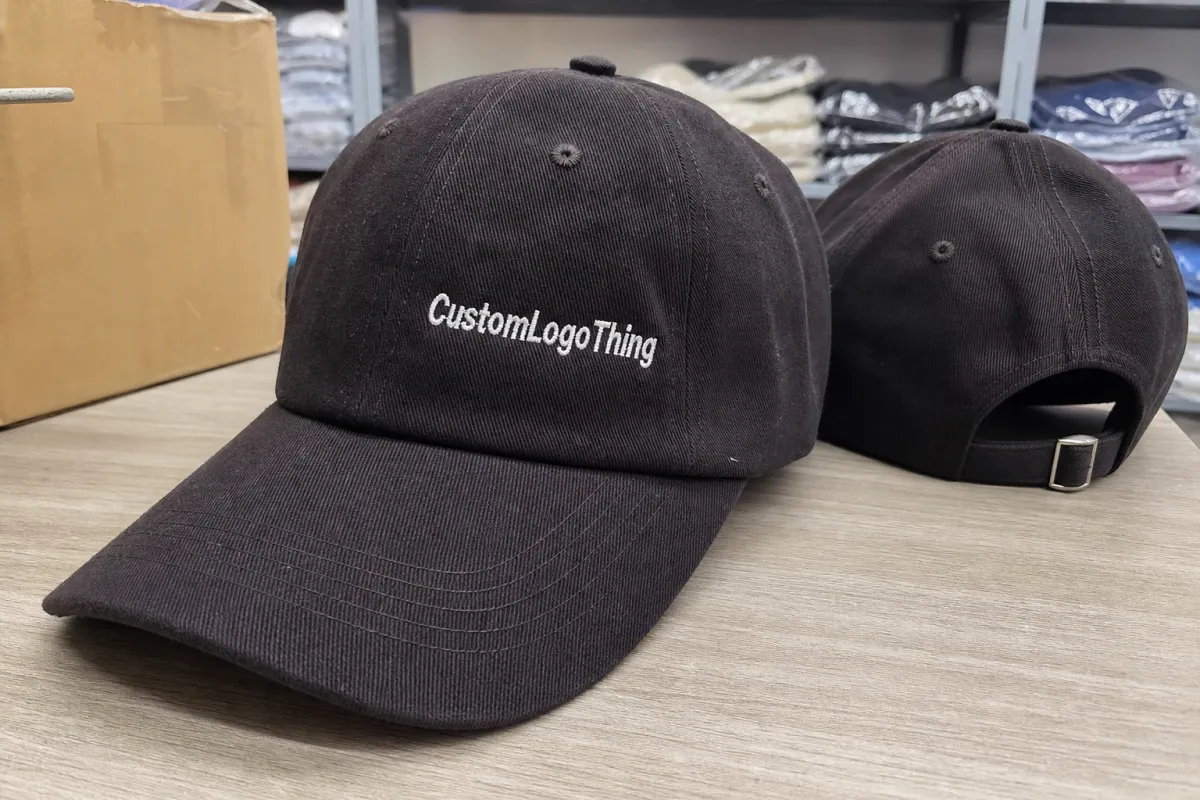
Embroidery pricing is driven by stitches and handling, not by how important a logo feels to the brand team. A smaller, well-digitized mark with moderate density can be cheaper than a large, crowded design because the machine spends less time running and the cap is less likely to need corrections. That is why a simple front logo often gives the best balance of cost and presentation.
For most vitamin promotional caps, the goal is recognition rather than decoration. A front mark around 3 to 4 inches wide is enough for visibility on a baseball cap and usually keeps stitch count under control. Bigger artwork can look impressive in a proof, but it can also increase puckering risk, especially on softer crowns or lighter fabrics. Side and back embroidery add another layer of setup and labor, so they should be used only when they support the buyer's goal.
A cleaner stitch file usually means fewer production surprises, fewer rejects at inspection, and a more dependable unit cost.
Simple embroidery also tends to wear better over time. A restrained logo is less likely to feel dated, and it works across more settings, from field staff uniforms to retail add-ons and event giveaways. That matters for vitamin brands that need a cap to look credible without becoming loud advertising.
Cap Build Details That Change the Quote
The cap itself affects both price and result. A structured six-panel cap gives the embroidery a firm base and usually produces cleaner edges. An unstructured cap feels softer, but the front panel can shift more under dense stitching. Mid-profile styles sit between those two and are often the safest starting point when the buyer wants a standard promotional look.
Brim shape and closure also matter. A pre-curved bill usually broadens appeal because it looks ready to wear. A flat bill is more style-led and can narrow the audience. Snapback, hook-and-loop, buckle, and self-fabric strap closures all change fit and packing behavior. For mixed audiences, adjustable closures are usually the least risky choice.
A standard structured cotton twill cap with one front embroidery placement is often the most cost-stable option. It gives the digitizer a predictable surface and keeps production simple. If the goal is to control unit cost without making the cap look generic, that combination is usually the best place to start.
- Crown profile: structured for crisp embroidery, unstructured for a softer casual feel.
- Panel count: six-panel caps are easiest to standardize across runs.
- Closure: adjustable styles reduce fit issues across different wearers.
- Brim shape: pre-curved bills are broader in appeal; flat bills are more style-led.
- Placement: front-center remains the most cost-efficient embroidery location.
Thread and backing are smaller details, but they affect the result more than many buyers expect. Polyester thread is common because it holds color well and gives the shine most customers associate with embroidery. Good underlay and backing stabilize the panel, reduce puckering, and keep the logo from sinking into the fabric. On lighter crowns, that support can make the difference between a cap that looks clean and one that looks overworked.
Specs That Affect Wear, Stitch Quality, and Color Match
Before a quote is meaningful, the basic specs need to be locked. Fabric, weight, sweatband, eyelets, crown structure, and size range all influence cost and wearability. Cotton twill in the 260 to 330 gsm range is common because it balances shape retention with comfort. Lighter fabrics can feel better in warm weather, while heavier twills hold structure more reliably under embroidery.
Structure has a direct effect on stitch quality. A structured front panel supports denser embroidery and usually keeps edges cleaner. An unstructured cap can still work, but the same design may need lighter fill or a smaller footprint to avoid distortion. That is not a defect in the cap; it is simply how fabric reacts to repeated needle passes.
Color matching should be planned early, but it should also stay practical. PMS references are useful, yet thread charts are not paint chips and dye lots can move slightly from batch to batch. A close match is often enough unless the brand palette is very strict. The best approval sample is the one viewed under normal light, not a perfect studio setup that buyers will never use again.
Comfort matters because a cap that wears badly does not stay in circulation. A soft sweatband, clean seam finishing, and breathable venting all help determine whether the cap gets worn weekly or left in a drawer. For staff, field, or event use, those details often matter as much as the logo.
- Fabric: cotton twill, brushed twill, or poly-cotton blend are common choices.
- Weight: roughly 260 to 330 gsm suits most promotional and retail-adjacent orders.
- Sweatband: soft banding improves comfort during long wear.
- Eyelets: stitched or embroidered vents can help breathability, depending on style.
- Fit: adjustable styles simplify ordering for mixed audiences.
Packaging is part of the spec too. Loose bulk packing is cheaper than individual polybags with hang tags and carton labels, but retail-ready presentation may justify the extra handling. Those choices should be included in the quote brief before pricing is finalized, because packaging can change both labor and freight.
Vitamin Embroidered Baseball Caps Unit Cost: Pricing, MOQ, and Quote Inputs
A useful cost review separates the visible number from the real one. The blank cap price is only part of the picture. Digitizing, embroidery labor, sample approval, packaging, and freight all affect the final landed cost. On lower-volume orders, those smaller charges can matter as much as the decoration line.
For a straightforward one-placement embroidered cap, the blank base often lands around $2.50 to $6.00 depending on fabric, profile, and closure. Standard embroidery can add roughly $1.25 to $3.50 per unit at moderate quantity, while lower runs usually carry a higher per-piece cost because setup is spread over fewer caps. Digitizing or file preparation often falls in the $25 to $75 range for simple artwork, with more complex logos or extra placements costing more.
MOQ depends on the cap body and the decoration plan. A single-color front logo on a standard cap usually supports a lower minimum than a multi-color design with side or back placements. If the same logo is repeated across several cap colors, each colorway adds production decisions and may raise the floor. The simplest formula is still the most efficient: one cap style, one embroidery area, one thread plan.
| Order size | Typical cost per piece | Setup impact | Best fit |
|---|---|---|---|
| 100-250 pcs | $6.50-$10.50 | High per unit because setup is spread thin | Launch tests, limited events, sample programs |
| 250-500 pcs | $4.75-$8.25 | More balanced for a first branded run | Promo tables, sales teams, regional campaigns |
| 500-1,000 pcs | $3.75-$6.50 | Setup becomes less visible in the unit cost | Retail add-ons, field kits, repeat promotions |
| 1,000+ pcs | $3.00-$5.75 | Best chance to reduce cost per piece | Broader rollouts and reorder programs |
Three inputs usually determine whether two quotes are actually comparable: quantity, decoration method, and destination. Add logo dimensions, thread count, and placement notes, and the estimate gets much tighter. That is where buyers protect margin. A quote based on vague artwork and loose wording may look attractive at first, then expand once the production team has to fill in the missing details.
Freight should be treated separately from product cost. Air shipping can make sense for urgent launches, but it can erase the savings from a carefully controlled cap spec. Ocean or ground shipping usually protects margin on larger runs. If the order is time-sensitive, the landed number can still be justified; if not, the buyer should compare the total delivered cost rather than the decoration line alone.
Stitch density and cap structure also affect rejection risk. A dense logo on a soft cap can lead to more corrections, which adds labor even if the headline unit price looks low. A slightly simpler embroidery file on a sturdier cap often produces a better finished piece and a lower effective cost per usable cap.
Process, Timeline, and Production Steps From Art to Ship
The production path is straightforward on paper: artwork review, digitizing, proof approval, bulk production, inspection, and packing. In practice, each step affects cost and lead time. A quote that looks inexpensive can become expensive if the order misses a launch date or needs repeated sampling.
Artwork quality sets the pace. A clean vector file with readable lettering and correct proportions saves time later. Low-resolution images and unclear source files force the digitizer to guess, and guesswork in embroidery is rarely cheap. If the logo includes fine text or tight shapes, it may need simplification before it can run cleanly on a cap crown.
Simple embroidered runs with one placement and a standard cap body often take about 12 to 18 business days after proof approval. More detailed jobs, custom packaging, or multiple decoration points can extend that schedule. Shipping is the final variable, so the in-hand date should be built around production and freight together, not separately.
- Artwork review: confirm size, file format, and logo placement early.
- Digitizing: the stitch file controls edge quality and density.
- Proof or sample: catch size, color, and placement issues before bulk production.
- Inspection: check thread tension, alignment, and puckering before packing.
- Packing: decide on bulk pack, polybag, carton labels, or retail-ready presentation.
Inspection is where hidden quality issues usually appear. Thread tension that is too tight can pull the front panel, while loose tension can leave the logo fuzzy. Poor backing can cause rippling, and alignment problems often show up when the cap is worn rather than when it sits flat. Packaging should be checked at the same time, because crushed brims and sloppy folding can undo an otherwise clean production run.
Why Reorders Go Smoother When Specs Stay Stable
Reorders are easier when the specs stay fixed. If the cap body, closure, thread colors, logo size, and stitch file remain the same, the second order is faster to quote and simpler to produce. The first order establishes the standard; the second one benefits from it.
That consistency matters for vitamin brands that rely on repeated exposure rather than a single campaign. Staff caps, distributor kits, and event giveaways work better when they look familiar from batch to batch. A small change in crown profile or thread tone can make the run feel disconnected, even if the logo itself has not changed.
A reliable supplier keeps records that prevent drift. Sample approvals, embroidery settings, and cap specs should be documented clearly. Without that trail, the same logo can come back slightly larger, slightly denser, or slightly darker on the next run. That variation is enough to make a reorder feel off-brand.
Stable specs save time, reduce revision risk, protect brand consistency, and keep the real unit cost from creeping upward on repeat orders.
Reorders also act as quality-control checkpoints. If the first batch showed that the logo sat too close to the seam or that the crown was too soft for the chosen fill, the next run should correct it. Good production turns those notes into a better second order, which is where long-term value usually shows up.
What to Send Before You Request a Quote
The best quote begins with a clear brief. Quantity, cap style, decoration placement, and artwork file are the core inputs. Add logo dimensions, thread color references, packaging requirements, and the target delivery date, and the estimate becomes much more usable. If the order needs split shipments or multiple colorways, include that up front.
For a Unit Cost Review, the strongest buyer packet is short, specific, and complete. A single PDF or email with the cap spec, logo file, quantity, destination, and packaging notes is usually enough to produce a realistic estimate. If the order needs retail hang tags, carton labels, or individual polybags, that detail should be included before the quote is locked because it affects handling and freight.
- Quantity: give the exact count and any split by cap color or style.
- Artwork: send vector files and note the intended logo size.
- Cap spec: choose crown structure, closure, brim shape, and fabric.
- Thread plan: list PMS references or preferred thread colors.
- Delivery: include destination and the in-hand date you actually need.
That level of detail makes comparison shopping possible. If two suppliers are quoting the same cap body, the same embroidery footprint, and the same packing standard, the buyer can compare real differences instead of decoding hidden assumptions. A quote becomes useful only when the inputs are comparable.
Frequently Asked Questions
What drives vitamin embroidered baseball caps unit cost the most?
Stitch count is usually the biggest driver, followed by the number of placements and the cap structure. A Unit Cost Review should start with artwork size and density, because those details decide how long the machine runs. Blank cap quality, digitizing, packaging, and freight also matter, but embroidery coverage usually sets the baseline.
What MOQ is typical for embroidered baseball caps with a vitamin logo?
MOQ varies by cap body and artwork. Simple front embroidery on a standard cap usually supports lower minimums than a multi-color design with side or back placements. As quantity rises, per-piece cost falls because setup is spread across more units.
How long does production usually take after artwork approval?
Simple embroidered runs often take about 12 to 18 business days after proof approval. More complex designs, extra placements, or custom packaging can extend the schedule. Freight method also changes the in-hand date, so production and shipping should be planned together.
Which specs should I confirm before asking for a quote?
Confirm cap style, fabric, structure, closure, logo size, placement, thread colors, quantity, and destination. If packaging matters, include that too. The more specific the brief, the closer the quote will be to the final landed cost.
Can I lower the unit cost without making the cap look cheaper?
Yes. The easiest savings usually come from reducing stitch density slightly, keeping to one embroidery placement, or choosing a cap body that is already standard in production. A cleaner design on a better-fitting cap often reads more premium than a complicated layout on a soft, unstable crown.
The strongest cap order is usually the simplest one to produce well. For vitamin brands, that means clear artwork, a stable cap spec, and a realistic production timeline. When those pieces line up, the final cap is easier to approve, easier to wear, and easier to reorder without friction.


