Buy Vitamin Cuffed Knit Beanies: Unit Cost Review for Teams
The phrase vitamin Cuffed Knit Beanies Unit Cost review sounds mechanical until the first quote lands. Then the details start moving fast. The beanie body is usually not the expensive part; labor, decoration, folding, packaging, and freight can matter more than the yarn itself.
That is why two prices can look nearly identical on a spreadsheet and still be miles apart in actual spend. One supplier may include embroidery setup, woven labels, hand folding, and polybagging. Another may list only the knit cap and leave the rest for later. The headline number looks cleaner. The total does not.
A small change in gauge or cuff depth can also move unit cost more than buyers expect. Longer cuffs use more yarn. Tighter knit density slows machine output. Add a logo method with setup charges, and the quote starts telling a different story.
This review breaks the order into the parts that actually move money so buyers can compare offers without getting trapped by vague pricing. For team programs, events, retail drops, or staff uniforms, the goal is simple: understand the cost drivers before the purchase order is approved.
The price surprise hiding in cuffed knit beanies
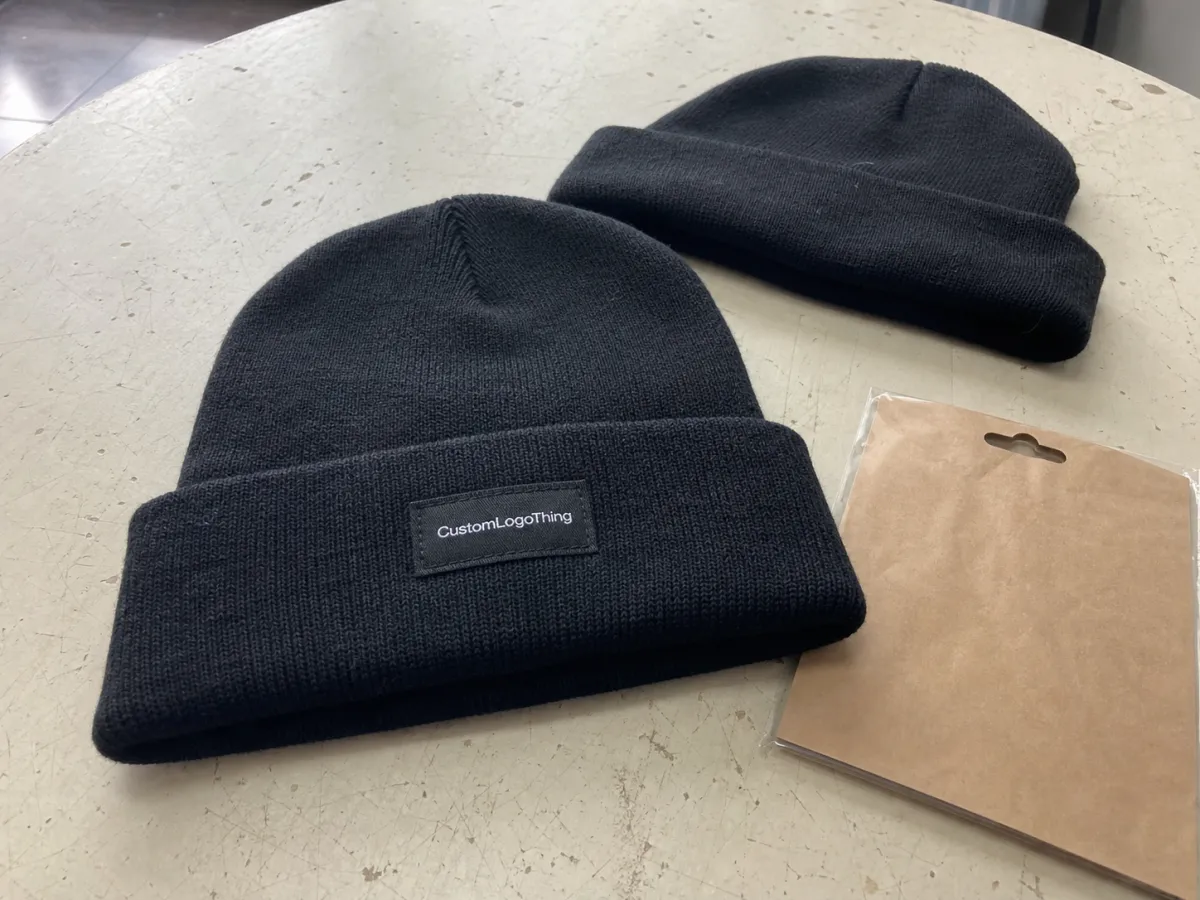
The blank knit cap is rarely where the budget goes. On a standard cuffed beanie order, the body may represent only part of the total. Decoration, finishing, packaging, and the amount of manual handling required before shipment often decide the final number.
A basic comparison makes that obvious. Two quotes for 1,000 beanies may both show a similar base price, but one includes one-color embroidery, woven brand labels, folded presentation, and individual polybags. The other may only cover the knit cap itself. That lower price is not really lower if half the work is missing.
Spec creep is the other trap. Buyers ask for a slightly taller cuff, a heavier gauge, or a more complex logo without realizing each change affects the cost per piece. A thicker cuff can add yarn. A denser knit can slow output. A custom decoration method can add both setup and labor. Small changes, real money.
The cleanest comparison comes from matching finished specs and packing methods across suppliers. If one quote is for a plain beanie in a bulk carton and another is for a folded, labeled, retail-ready piece, the numbers are not competing on the same field. They are describing different products.
Simple jobs are usually easier to buy well. A straightforward knit with fewer embellishments tends to give cleaner pricing, tighter schedule control, and fewer disputes about what “premium” was supposed to mean.
Beanie build details that move the quote
Fiber choice sets the floor. Acrylic is usually the lowest-cost option for Cuffed Knit Beanies because it is easy to source, predictable to knit, and stable in mass production. Recycled blends usually add a small premium, often around 5% to 12%, depending on fiber mix and whether certification paperwork is needed. Wool blends cost more again, often 10% to 25% above a basic acrylic style, because the material and handling requirements are higher.
Cuff size matters too. A shorter cuff saves yarn and machine time. A deeper cuff gives a more premium look, but it adds labor and can make the beanie feel heavier. Most adult cuffed styles land around 8 to 10 inches in total height with a cuff depth of roughly 2.5 to 3.5 inches, though fit changes with yarn, gauge, and stretch recovery. The tighter the knit, the cleaner the shape, but the slower the production.
Decoration is where many buyers get surprised. Embroidery is common and usually affordable at scale, but it still carries digitizing or tooling fees. Woven patches can look sharper on a fashion-forward beanie, yet they add application time. Sewn woven labels are efficient, but every extra finishing step adds labor. If the quote needs to stay lean, fewer logo colors, fewer stitch changes, and one clean placement usually win.
Color count can also move lead time. Stock yarn colors are straightforward. A specific match may require extra sourcing, dye approval, or a longer wait for a custom lot. If the order depends on exact brand color, ask for yarn swatches before production starts. That one check can prevent a mismatch that is expensive to fix later.
There is also a difference between what looks premium and what behaves well in production. A very dense knit can look richer, but if it slows knitting, raises defect rates, or reduces stretch, the cost is only part of the problem. The better spec is the one that balances appearance, durability, and repeatability. That is where quote language often gets vague, and where buyers need to get specific.
Spec sheet checks before you ask for a sample
A good sample starts with a boring spec sheet. That is a compliment. Boring means fewer mistakes. If the supplier has to guess the size, placement, or finish, the sample becomes a moving target and the production quote will follow it.
- Overall height: confirm the unfolded height in centimeters or inches, not just “standard fit.”
- Cuff depth: state how deep the cuff should sit so the logo does not ride too high or too low.
- Stretch range: define the target head size, especially if adult and youth sizes are both in scope.
- Logo placement: give millimeters from edge to center, not just “front center.”
- Label and hangtag: note whether these are sewn, pinned, folded, or packed separately.
Those details matter because a sample that looks “close enough” can still fail on a reorder. If the decoration shifts by 10 mm, the hat may still be wearable, but it will not match the approved standard. That is how repeat orders turn into slow, avoidable arguments.
Ask for photo approval of knit swatches and thread colors before production. A fabric swatch tells you more than a vague email. If the supplier is using recycled yarn or a wool blend, request evidence for the claim. For packaging materials and responsible sourcing, the FSC system is a useful reference: FSC.
Show me the line items, not the adjectives. That is how serious buyers keep a beanie quote honest.
Avoid words like “thick,” “luxury,” or “high-end” unless they are tied to an actual spec. Say 7-gauge knit, 100% acrylic, double-layer cuff, embroidered logo, and individual polybag. That is language a factory can build from without guessing.
Vitamin cuffed knit beanies unit cost review: pricing, MOQ, and tier breaks
A proper vitamin Cuffed Knit Beanies unit cost review should separate the order into line items. The body cost, decoration method, setup charges, packing format, and freight all pull in different directions. If one supplier gives a single all-in number and another breaks out every step, compare them carefully. The cheap quote may simply be less honest about what is included.
For standard Cuffed Knit Beanies, the ranges below are a practical buying frame rather than a promise. These numbers assume a common acrylic body, one logo application, and standard packing. Wool, custom yarn blends, multiple colors, or retail-ready finishing will push the number higher.
| Order band | Typical cost per piece | Setup charges | What it usually includes | Best use |
|---|---|---|---|---|
| 100-299 pcs | $5.80-$9.40 | $45-$150 per design | Basic knit body, one decoration method, simple fold | Small internal programs, samples, pilot drops |
| 300-999 pcs | $3.80-$6.20 | $45-$120 per design | Better MOQ efficiency, standard packaging, one or two logo colors | Events, clubs, brand giveaways |
| 1,000-2,999 pcs | $2.80-$4.60 | $35-$100 per design | Stronger bulk pricing, lower labor share, more stable lead time | Retail, field teams, seasonal campaigns |
| 3,000+ pcs | $2.20-$3.80 | $25-$90 per design | Best spread on fixed costs, easier repeat setup, tighter control on unit cost | Nationwide launches, uniform programs, large merch runs |
These ranges move quickly if the decoration gets more complicated. A woven label may add only a small amount to the body price, but it can still trigger tooling fees and sewing labor. Embroidery can look simple and still carry setup charges that matter on a smaller run. A custom patch can do the same.
The biggest blind spot is usually what is not included. Ask whether the quote covers polybags, folding, cartons, carton labels, and export paperwork. Ask whether freight is prepaid or billed separately. Ask whether a sample charge is deducted from the final invoice. Those details are not small. They are the total.
For buyers trying to keep the unit cost disciplined, the easiest savings usually come from standardizing decisions: one yarn type, one logo color, one packaging format, and one shipping method. That does not make the beanie generic. It makes the order predictable enough to buy well.
There is also a threshold effect at higher quantities. Once the fixed setup is spread across more units, the price curve flattens. That is why a 1,500-piece order can look materially better than a 600-piece order even if the knit structure is identical. The machine time does not change much, but the overhead does.
Process steps from artwork approval to carton arrival
The production path is simple on paper, but every step needs a sign-off. First comes the quote. Then artwork review. Then a mockup or sample. After that, the supplier confirms the spec, starts knitting, adds decoration, folds and packs the order, and books shipment. Miss one approval and the schedule slips.
For a standard run, a realistic lead time is often 12 to 25 business days after sample approval, depending on yarn availability and decoration complexity. If the order needs custom yarn sourcing, multiple colors, or special labels, the window can stretch to 20 to 35 business days. Air freight can move in 3 to 7 days once packed. Ocean freight is slower, usually 18 to 35 days depending on route and port flow.
Production time and arrival time are not the same thing. A fast knit run can still land late if cartons wait for vessel space or customs processing. If the order is headed to a distribution center, ask for carton strength and transit testing aligned with ISTA guidance. It is cheaper to test a box than replace crushed knitwear.
Before the factory starts, make sure these items are locked:
- Final quantity and size split.
- Approved artwork file and logo placement.
- Yarn color or PMS reference.
- Packaging instructions and carton labeling.
- Shipping method and delivery window.
A missing detail can reset the clock. That is not drama; it is standard production behavior. The fastest buyers are the ones who approve clearly, respond quickly, and ask for milestone updates before the ship date becomes a problem.
There is a practical reason to keep the approval sequence tight. Knit goods are sensitive to small changes in yarn lot, stitch tension, and finishing order. If artwork drifts after sampling, the supplier may need to rework swatches or rerun decoration plates. That adds days, and sometimes more than days. The cleanest projects treat every sign-off as final unless the spec itself changes.
How controlled suppliers protect repeat-order consistency
Repeat orders are where process control pays for itself. A one-time bargain is easy to find. A supplier that can make the same beanie again, with the same color, stitch tension, and packing count, is far more useful, especially for events, retail replenishment, or staff uniforms.
Good suppliers talk in numbers. They can tell you expected yield, acceptable defect range, reorder thresholds, and what happens if a yarn lot is unavailable. Weak suppliers talk in adjectives and hope that sounds reassuring. It does not.
Consistency also saves money in ways buyers often miss. A clean production record reduces rework, replacement shipments, and customer complaints over size or logo placement. Saved artwork, approved swatches, and final specs make the next order faster because the supplier is not rebuilding the job from scratch.
One useful test is to ask for the same beanie six months later. A controlled supplier will know which body spec was approved, which embroidery file was used, and how the label was attached. A messy supplier will search through emails and recreate the order from memory. That is where avoidable errors begin.
If a supplier can show a first-pass yield around 96% to 98% on a standard run and explain how rejects are handled, that is a good sign. Not a promise of perfection. Just evidence that the shop knows how to keep variation under control.
A cheap quote is nice. A repeatable quote is better.
Repeatability also matters for visual consistency. Yarn shade, cuff width, logo spacing, and packing count all affect how a product looks when it is unboxed again months later. A good vendor keeps records that make the second order behave like the first one. That is the real test of supplier quality.
What to send next to get an accurate quote fast
If you want a quote that means something, send the factory a complete packet. Not a vague sentence. Not a screenshot with missing details. A complete packet. That is how you get a useful number instead of a guess dressed up as sales language.
- Quantity: exact total and any size split.
- Beanie spec: cuff depth, unfolded height, fit target, and yarn preference.
- Logo file: vector artwork if possible, plus placement instructions.
- Color reference: PMS code, physical swatch, or approved sample photo.
- Packaging: polybag, insert card, hangtag, folding style, carton labeling.
- Timeline: needed-by date, sample deadline, and delivery location.
Include the use case too. A giveaway beanie does not need the same finish as a retail piece. A staff uniform may need more durable stitching than a trade-show handout. When the supplier understands the end use, they can recommend the right yarn mix, decoration method, and packing level instead of pushing the most expensive option by default.
Ask for a line-by-line quote with setup charges, unit cost, packaging, and shipping separated. That is the cleanest way to compare two suppliers without confusion. If one quote includes hidden extras and the other is transparent, the honest one may look higher until the totals are added. Then the picture changes.
For buyers who need to move quickly, the best approval path is straightforward: send vector art, confirm PMS if color matters, approve the mockup quickly, and lock the quantity before production starts. That protects both schedule and budget. It also keeps a vitamin cuffed knit Beanies Unit Cost Review from turning into a surprise invoice.
Compare quotes on finished spec, MOQ, setup charges, and timeline, not just the biggest number on page one. That approach makes the order easier to approve and easier to defend later. It is the difference between buying a beanie and buying a set of unresolved assumptions.
FAQ
What changes vitamin cuffed knit beanies unit cost the most?
Decoration usually drives the biggest swing because setup charges and labor stack fast. Quantity matters because a low MOQ spreads fixed costs across fewer pieces. Packaging and yarn choice can quietly add more than buyers expect.
What MOQ should I expect for custom cuffed knit beanies?
Small runs are possible, but the cost per piece is usually higher. Standard MOQ depends on whether the beanie is stock-knit, custom-knit, or decorated with embroidery or labels. Ask for both a low-MOQ quote and a tiered run so you can compare.
How long does a cuffed knit beanie quote and production run usually take?
Quotes can come back quickly if artwork and quantity are clear. Production time depends on sample approval, yarn availability, and decoration complexity. Shipping often adds more calendar time than the actual knitting run.
Can I reduce cuffed knit beanie price without hurting quality?
Yes. Use standard yarns, keep the design to one or two logo colors, and simplify folding or packaging where it does not affect the end user. Avoid over-specifying details that do not matter to the person wearing the beanie.
What should I include in a quote request for vitamin cuffed knit beanies?
Send quantity, size, color, logo file, packaging needs, and delivery location. Include the deadline and whether you need samples before production. If color matching matters, attach a PMS reference or a physical swatch.


