Embroidered Baseball Caps Wholesale Supplier for Boutique Retail Buyers
A good Embroidered Baseball Caps wholesale supplier for boutique retail buyers does more than add a logo. It delivers a cap that looks finished on a shelf, holds up in daily wear, and can be reordered without guessing at specs. That matters in boutiques, where buyers often have a few seconds to judge whether a product feels premium, relevant, and priced correctly.
Embroidery helps because it creates a complete look before the cap is even tried on. Clean stitch edges, balanced logo scale, and a shape that photographs well can do as much selling as the brand name. For smaller assortments, that is useful because one strong style often outperforms a broad mix that feels scattered.
There is also a practical reason to start here. Embroidered caps are easy to test in small runs, compare across colorways, and evaluate for response to silhouette, thread color, and price. A focused order gives clearer buying data than a large, unfocused assortment.
A cap either reads as merchandise or as leftover stock. Boutique buyers usually know which one within seconds.
Why embroidered caps move faster on boutique shelves
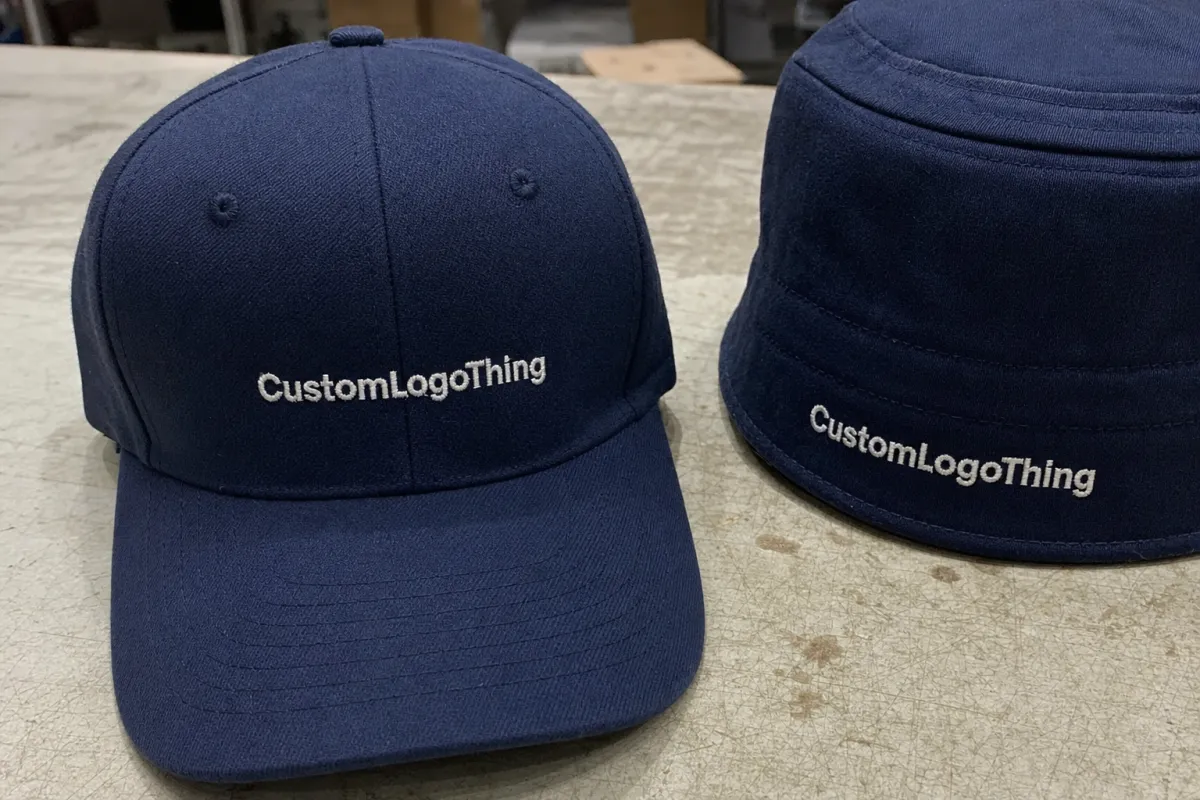
Blank caps still have a place, but they ask the customer to imagine the finished product. Embroidered caps do that work immediately. The logo creates a focal point, while the stitched texture makes the item feel complete rather than provisional. On a table with tees, totes, candles, and jewelry, that difference matters.
For boutique retail, the visual test usually matters more than the technical one. A cap with a strong logo and the right crown shape can sit on a shelf, a hook, or a display bust and still hold attention. It does not need much styling, which helps keep presentation costs down.
Small runs are especially useful because they show what the customer actually wants. A 100-piece order in two thread colors can reveal whether the shape is right, which color sells first, and whether the price lands where your audience expects. If one color moves much faster than the other, that is useful buying data.
Most boutique programs work better when they stay narrow at first:
- one silhouette, usually a structured six-panel or a low-profile unstructured cap;
- one front logo, kept within a manageable stitch count;
- two thread colors or fewer on the first run;
- one packaging standard so the product arrives ready for the floor.
That discipline helps with sell-through and replenishment. It also makes supplier errors easier to spot because fewer variables are changing at once.
Embroidery details that shape a retail-ready look
Not all embroidery creates the same result. Stitch density, logo scale, and thread finish can change a cap from polished to flat. A dense front logo with clean fill usually reads better than a thin mark stretched too far across the panel. Sparse embroidery often looks underdeveloped, especially on a structured cap.
For many boutique orders, front embroidery falls somewhere around 6,000 to 10,000 stitches, but that is only a starting point. Simple logos may need less. Detailed marks may need more. The goal is not to chase a stitch count; it is to make the logo legible, balanced, and durable enough to hold its shape after wear and packing.
Placement matters as much as stitch work. Front-panel embroidery has the highest shelf impact. Side embroidery feels quieter and more fashion-led. Back embroidery is easy to miss on a hanger, but it works for brands that want a subtler look. The choice should follow the merchandising plan, not just the artwork.
Cap structure changes the outcome too. A structured crown gives embroidery a flatter, more stable surface. An unstructured cap fits more casually but can flex under dense stitching. Brim shape changes the mood as well: flat feels sharper, pre-curved feels ready to wear, and a slight curve usually reaches the broadest retail audience.
Buyers should compare these choices before placing an order with a wholesale embroidered cap supplier:
| Decoration choice | Typical cost impact | Retail effect | Best use |
|---|---|---|---|
| Front logo, 1-2 thread colors | +$0.55 to +$1.20 per cap | Clear branding, easiest to merchandize | Core boutique assortment |
| Front logo, 3-5 thread colors | +$0.90 to +$1.80 per cap | More detail, more setup sensitivity | Graphic-driven collections |
| Side or back hit | +$0.25 to +$0.70 per cap | Subtle, lower shelf impact | Fashion-led drops or small brand marks |
| Front + side decoration | +$1.10 to +$2.20 per cap | Fuller look, tighter production control needed | Premium capsules and seasonal runs |
When buyers ask for “better embroidery,” they usually mean one of three things: fuzzy edges, poor thread sheen, or a logo that sits off-center. Those are production issues, not abstract style concerns, and they should be corrected in proofing rather than after cartons are packed.
Packing also affects presentation. A crushed crown or bent brim can ruin the look even if the embroidery is good. Suppliers that understand retail transit usually mention carton counts, inner packing, and outer box strength without being prompted. That is a useful sign.
For buyers who want a reference point for package handling, the testing language used by ISTA is helpful for thinking about distribution, stacking, and transit stress. It is not decoration, but it does affect whether product reaches the floor in sellable condition.
Specs that keep reorders consistent
Reorders go sideways when the first order was approved on feel alone. The opening buy should lock down the core specifications in writing: crown height, panel count, brim shape, closure style, fabric weight, and finished color. If those fields are loose, the second order becomes a guess.
Color control deserves special attention. A navy cap can drift from one lot to the next if the fabric source changes. Thread colors can drift too, especially on repeat runs months later. Ask for the fabric code, thread code, and approved sample reference so future production stays aligned.
Small retail details matter more than they seem to at first glance. Woven labels look cleaner than printed stickers. Interior taping can make the finish feel more considered. Hang tags help with storytelling. Barcode labels and carton markings reduce labor at receiving. If the store needs units ready for the floor on arrival, that needs to be specified early.
Fit is another practical issue. A snapback gives the widest adjustment range. A strapback often feels more refined. Some boutiques prefer a lower-profile unstructured cap because it works across different face shapes and hair types without leaning too sporty. The right choice depends on the customer, not a generic catalog description.
For a repeat program, this is the order lock list worth keeping:
- cap style and silhouette;
- crown height and panel count;
- brim curve;
- closure type;
- fabric and thread codes;
- packaging format;
- barcode and label requirements.
Once those pieces are fixed, buying becomes easier to repeat and easier to compare across seasons. That is where margin gets protected.
Wholesale pricing, MOQ, and quote breakpoints
Price is rarely just price. Stitch count, number of thread colors, cap structure, labeling, sampling, and packaging all move the quote. A structured cap with simple front embroidery might land around $4.80 to $7.20 per unit at modest boutique volumes. Add Custom Woven Labels, hang tags, and retail polybags, and the same style can move closer to $6.00 to $9.50. Heavier fabric, premium hardware, or more complex decoration can push the number higher.
MOQ is usually discussed as a total unit minimum, but the real rule is often more specific. Some suppliers set minimums by colorway. That means you might be allowed 100 pieces total, but still need 50 per color if you want two versions. For boutiques, that detail matters because color testing is part of the buying model.
The hidden costs are where budgets often break. Digitizing may be included on larger runs and billed separately on smaller ones. Sampling may be credited back or may not. Freight can matter more than decoration if the order is light and split across locations. Duties, brokerage, rush fees, and split shipments are the usual margin leaks. The best quote shows them up front.
A simple comparison helps separate factory pricing from landed cost:
| Order type | Example unit cost | Common MOQ | Quote risk |
|---|---|---|---|
| Stock cap + one-color logo | $4.80-$6.20 | 100-200 pcs | Low, if artwork is simple |
| Structured cap + two-color logo + label | $6.10-$8.40 | 150-300 pcs | Medium, due to setup and packaging |
| Premium fabric + multi-color embroidery + retail carton | $8.50-$12.00+ | 200-500 pcs | Higher, especially with custom packaging |
For boutique buyers, landed unit cost is the number that matters. A low ex-factory quote that leaves out freight, packaging, or setup fees can erase margin faster than a slightly higher quote that is complete from the start. Predictability is often more valuable than shaving a few cents off the unit price.
Process and timeline: artwork to delivery
A clean production run follows a straightforward sequence. First comes artwork review, where the supplier checks file quality, logo scale, and stitch feasibility. Next comes digitizing, which converts the design into an embroidery file. After that, a sample or digital proof is approved, bulk production begins, inspection happens, and the order ships.
Lead time depends as much on approvals as on sewing. A repeat order can often move in roughly 10 to 18 business days after approval, then transit time gets added on top. A first custom run is slower. Two to five weeks end to end is a common planning range, depending on sampling, revisions, order size, and shipping method.
Rush orders are possible, but speed has a cost. Late changes to thread colors or a second round of samples can introduce issues that would not show up on a slower schedule. Loose thread tails, misaligned placement, and rushed trimming are the kind of problems that appear when timing gets squeezed.
Send the key details in one message and the process moves faster:
- logo files in vector format if available;
- target quantity by color;
- preferred cap style and closure;
- thread colors or Pantone references;
- packaging instructions;
- ship-to address and deadline;
- barcode or label requirements.
Retail packaging should be specified early as well. If you need inserts, hang tags, or FSC paper components, those belong in the first spec sheet. For buyers who track sourcing claims, FSC is a useful reference point for paper-based materials and packaging language.
What reliability looks like in a supplier
Reliability is not a slogan. It shows up in repeatability, clear communication, and the way a supplier handles small problems before they become expensive ones. The real test is simple: can they make the same cap twice, months apart, without changing the fit or finish? Boutique retail depends on that more than large promotional buying does.
Specific communication matters. A reliable supplier can explain sample timing, production status, and issue resolution without hiding behind vague language. If they can tell you when a digitized file is ready, what changed after a sample revision, and how a mismatch will be corrected, that is useful. If every answer sounds like a promise without a detail, there is still work to do.
Retail support counts too. Can they add barcode labels? Can they pack by store? Can they ship in clean cartons with clear counts? Can they mark outer boxes in a way that helps receiving teams move quickly? These are not glamorous questions, but they affect labor and accuracy at the store level.
Ask for proof rather than broad claims. A serious supplier should be able to talk through QC checkpoints, sample turnaround, and reorder history in plain language. The difference between a nice-looking sample and a repeatable production standard is easy to miss until the second order arrives.
For boutique buyers, the better supplier is the one that protects the restock, not just the first shipment. If the first run is tidy and the second run matches it, the relationship is earning its place. If the numbers change, the fit drifts, or the packaging arrives inconsistent, the margin story changes with it.
Placing a cleaner first order
Start with two or three cap styles, not ten. Narrow the range around the silhouette that best matches your store position, customer base, and target price. A structured six-panel cap may be right for one boutique. A lower-profile unstructured cap may work better for another.
Build the order around the artwork, not the other way around. Send exact logo files, preferred thread colors, and a target margin before asking for samples. If embroidery is the main value driver, keep the rest of the spec disciplined. Too many variables make the first run harder to judge and harder to repeat.
Ask for photos that show the actual retail experience: embroidery density, closure hardware, inside finishing, and packaging. A clean front image can hide a sloppy interior. That interior work matters because customers do check it, especially in higher-end boutiques where touch and finish influence whether the item feels priced correctly.
Before placing the order, confirm these points:
- landed unit cost;
- sample and digitizing fees;
- MOQ by colorway;
- production lead time;
- packaging and labeling details;
- shipping method and delivery window.
Once those details are locked, the order becomes much easier to manage. That is especially true for boutiques that need inventory to hit a specific buying window rather than just arriving eventually.
Common questions from boutique buyers
What should boutique buyers ask a wholesale cap supplier before ordering?
Ask for MOQ, sample Cost, Lead Time, and whether pricing changes by stitch count or colorway. Request a mockup, a physical sample, or clear production photos before bulk approval. Confirm packaging, carton counts, and replenishment terms so the first order can be repeated without guesswork.
How do I compare pricing from different embroidered baseball cap suppliers?
Compare landed unit cost, not only factory price, because freight and setup fees can change the real margin. Check whether digitizing, labeling, and custom packaging are included or billed separately. Use the same spec sheet across quotes so each supplier is bidding on the same product.
What MOQ is typical for boutique embroidered baseball caps?
MOQ depends on cap style, decoration complexity, and the number of colorways in the order. Some suppliers set higher minimums for custom colors than for standard stock blanks. Smaller test orders can work if the decoration is simple and the packaging is straightforward.
How long does production usually take for wholesale embroidered caps?
Production timing usually includes artwork approval, digitizing, sampling, bulk sewing, inspection, and transit. Repeat orders move faster than first-time custom runs because the embroidery file already exists. Delays usually come from approval changes, not the stitching itself.
Can boutique buyers request custom packaging with wholesale embroidered caps?
Yes. Many suppliers can add polybags, hang tags, barcode labels, or retail cartons. Packaging should be confirmed before production so the quote reflects the real landed cost. Retail-ready packaging helps with shelf presentation and reduces setup time at receiving.
For boutique retail buyers, the strongest cap program is rarely the loudest one. It is the one that keeps stitch quality steady, pricing transparent, and delivery predictable from the first sample to the next reorder. That is what separates a one-off purchase from a product line that can stay on the floor for more than one season.


