Embroidered Beanies Factory Quote Checklist for Ecommerce Apparel Orders
An Embroidered Beanies Factory Quote checklist for ecommerce apparel orders works best when it turns a broad idea into a production-ready brief. A beanie may look simple, but quote differences usually come from knit style, yarn weight, embroidery method, packing, and shipping terms. If those details are not specified up front, the factory has to guess, and the quote becomes harder to trust.
For ecommerce buyers, the important number is landed cost, not just the unit price. A quote should show what is being made, how it will be decorated, how it will be packed, and what assumptions are being used for freight and duty. That makes supplier comparisons cleaner and reduces the chance of hidden costs after approval.
Why a Clear Quote Protects the Order
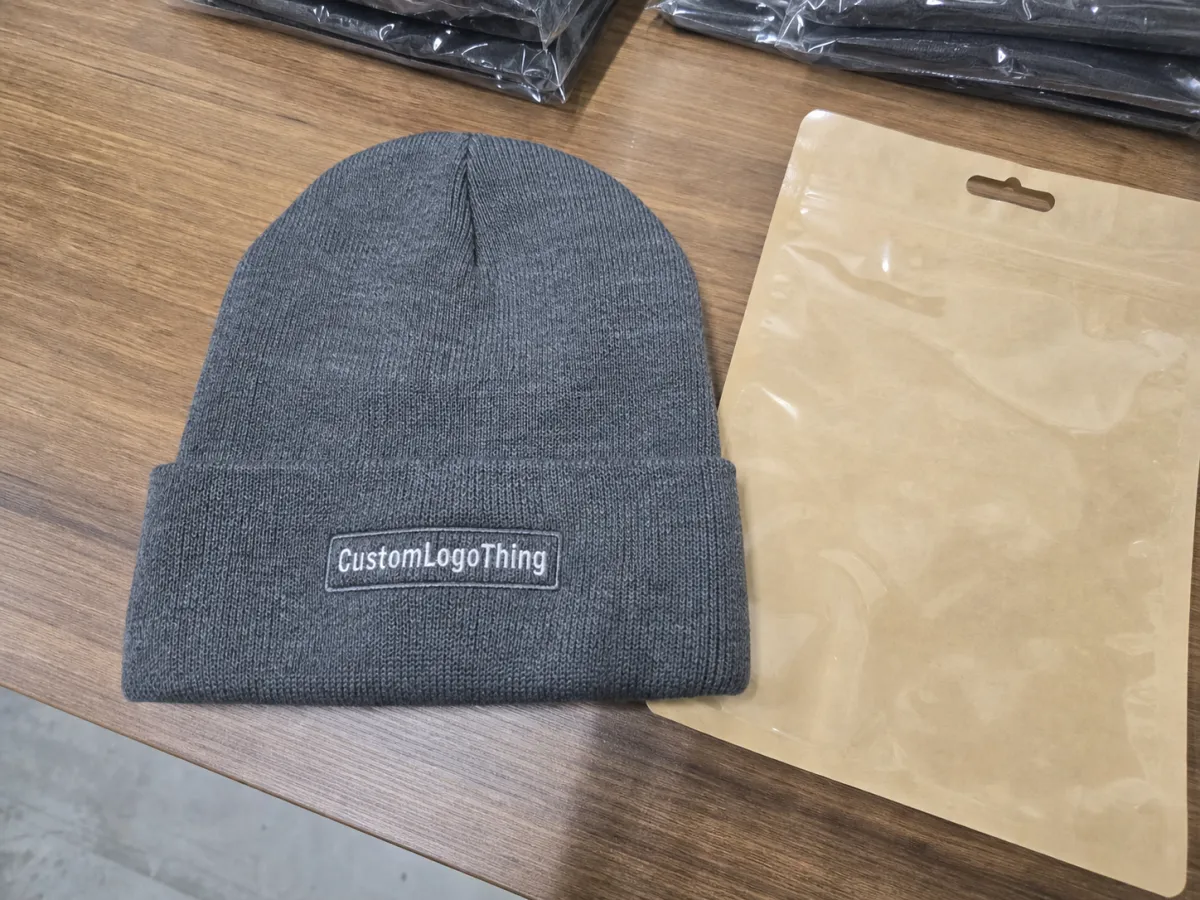
Beanies seem straightforward, which is why vague quote requests cause problems. A cuffed acrylic beanie with a small front logo is not the same product as a slouch beanie with recycled yarn, a side mark, and retail packing. The cost changes because the materials, stitch time, and finishing work change.
If the brief does not specify the knit style, cuff height, logo placement, and pack method, the factory may price an assumption instead of the actual order. That can lead to a quote that looks competitive but does not match the finished product. The later the mismatch is found, the more expensive it is to fix.
Packaging and labeling also affect the total. A plain bulk-packed beanie is very different from one with a woven label, hangtag, polybag, and carton markings. Buyers who sell direct to consumer usually need those details written into the quote so warehouse intake and customer expectations stay aligned.
A useful quote is specific enough that another factory could reproduce the same item from the paperwork alone. If the brief still leaves room for interpretation, the price is only an estimate.
Reorders need the same discipline. Small shifts in shade, yarn lot, label placement, or embroidery density can be easy to miss in sampling and hard to miss in a live ecommerce catalog. The quote checklist helps keep the first run and the repeat run consistent.
Style, Yarn, and Placement Decisions
The beanie style drives the embroidery zone and the production risk. Cuffed beanies usually offer the cleanest surface for a logo because the cuff is flatter and more stable. Uncuffed beanies can work, but the knit tends to move more. Slouch styles look relaxed, yet the extra drape makes placement and readability less forgiving.
Material choice affects both price and performance. Acrylic is the standard commercial option because it is durable, warm, and cost-effective. Cotton blends can feel softer and suit milder climates. Recycled yarn is often quoted separately when the brand wants a sustainability claim or specific sourcing story. Each option changes yarn cost, finishing behavior, and sometimes embroidery stability.
Heavier knits usually support embroidery better, but they cost more and can take longer to produce. Lighter knits reduce unit cost, yet they can pucker or show backing if the stitch count is too dense. The right choice depends on the product tier and the intended use, not on a generic idea of what a beanie should be.
Placement should be decided before the quote is approved. Front cuff embroidery is the most predictable for ecommerce because it photographs well and wears well. Side placement works for smaller marks or wordmarks. Large center placements on slouch or uncuffed styles need caution because the knit surface can shift after wear.
When asking for a quote, ask for the maximum clean embroidery area in millimeters, the position relative to the cuff edge, and whether the factory recommends flat embroidery or a simplified fill. Those details are more useful than phrases like “medium logo” or “large logo.”
- Cuffed beanies usually give the cleanest logo zone and the easiest quality control.
- Uncuffed beanies need tighter placement checks because the knit surface moves more.
- Slouch styles look more relaxed, but they are less forgiving with small text or fine lines.
- Recycled yarn should be quoted as its own material line if a claim or label depends on it.
Artwork, Stitch Counts, and Production Specs
The factory needs artwork that can be stitched, not just viewed. Vector files are the safest starting point because they reduce the chance of jagged edges or unexpected shape changes when the logo is digitized. If vector artwork is not available, send the cleanest source file and make the intended size clear.
Thread color references help, but embroidery thread does not behave like printed ink. Light reflects differently across satin stitch, fill stitch, and knit texture, so the closest available thread often matters more than a theoretical match. If the brand needs a tight match, ask the factory to confirm the nearest thread options before production starts.
Stitch count is one of the biggest pricing variables because it affects digitizing time, machine time, and the risk of distortion. A simple wordmark may stay relatively low in stitch count. A dense emblem with small type, internal detail, or multiple fills usually costs more and is more likely to pucker on knit fabric.
The quote should also state whether the embroidery will be flat, lightly raised, or simplified for stability. Raised effects can work on some products, but beanies are more sensitive to knit thickness and thread density than structured headwear. Good factories will flag when a design is too fine for the chosen knit.
Ask for the specs in writing. The list does not need to be long, but it should be precise:
- Vector artwork or the cleanest available source file.
- Final logo dimensions in millimeters or inches.
- Thread color count and any required color references.
- Embroidery method, such as flat, raised, or simplified fill.
- Placement distance from cuff, seam, or center line.
- Mockup format and whether a stitch simulation will be provided.
- Revision limit for digitizing or proof corrections.
These details protect both sides. The factory can price the item without padding for uncertainty, and the buyer can review the quote without wondering whether a hidden adjustment will appear after approval.
Pricing, MOQ, and the Real Cost Drivers
MOQ usually reflects blank availability, yarn setup, decoration complexity, and whether the order needs private labeling or custom packing. A stock acrylic beanie with one embroidery position often has a lower minimum than a custom knit, a specialty yarn blend, or a retail-ready packout. If the supplier does not explain whether the order is being treated as stock or custom, ask for that distinction first.
For planning, simple stock-style runs for embroidered beanies often land around $1.50-$2.60 per unit at larger quantities. More customized programs, especially those with heavier embroidery, recycled yarn, woven labels, or retail packaging, can move into the $2.75-$4.50 per unit range or beyond. Those numbers are only a frame of reference, not a promise.
| Quote Type | Typical MOQ | Typical Unit Range | Best For |
|---|---|---|---|
| Stock acrylic beanie, 1-color embroidery | 200-500 pcs | $1.50-$2.60 | Promo drops, small tests, fast launches |
| Cuffed beanie, 2-color logo, woven label, polybag | 500-1,000 pcs | $2.20-$3.80 | Core ecommerce assortments |
| Recycled yarn, custom packing, carton labeling | 1,000+ pcs | $2.75-$4.50+ | Retail-ready or sustainability-led programs |
The main cost drivers are usually base beanie quality, stitch count, number of embroidery positions, digitizing fees, private labeling, packing labor, and shipping terms. If the supplier offers tiered pricing at 500, 1,000, and 3,000 pieces, request all tiers. The larger breaks often show how much of the cost is fixed versus variable.
Sample charges should be separated from production pricing. A simple mockup may be inexpensive or waived with order, while a stitched pre-production sample requires setup and time. Buyers planning a reorder should also ask whether the factory keeps the embroidery file, thread references, and packaging spec for repeat runs.
Lead Times, Sampling, and Production Control
A proper quote should map the process from approval to shipment. A vague “delivery in three weeks” does not tell you much. The real sequence is usually quote review, artwork confirmation, digitizing, proof approval, production scheduling, embroidery, finishing, inspection, packing, and dispatch.
For standard runs, a production window of roughly 12-20 business days after proof approval is common. Custom yarns, busy seasons, and larger packout requirements can stretch the timeline. Rush jobs exist, but they should be labeled and priced as rush jobs so the schedule remains realistic.
Sampling deserves the same discipline. The buyer should know whether the sample is for visual approval, stitch approval, or packaging approval. A sample can look right in color and still fail on logo size, cuff fit, or thread density. If the factory offers a stitch simulation or first-piece check, it should be used.
Quality control should also be written into the brief. Ask whether the factory checks thread breaks, uneven tension, loose finishing tails, seam mismatch, and embroidery placement from the front edge of the cuff. For ecommerce, carton counts, barcodes, and SKU structure matter too, especially if the warehouse has specific intake rules.
If the order is moving through a rough distribution chain, packaging durability matters as much as the garment. Carton strength, compression resistance, and stackability help prevent a good product from arriving flattened or mislabeled. Transit references such as the International Safe Transit Association can be useful when packaging needs to survive repeated handling.
A realistic lead time is more useful than a hopeful one. If the factory cannot explain where delay could happen, it probably has not mapped the run with enough detail.
Comparing Quotes Without Missing Hidden Costs
The most common mistake is comparing quotes that do not describe the same product. One supplier may quote a softer blank, a smaller logo, fewer thread colors, or simpler packing and still appear cheaper on paper. Before comparing numbers, make sure the spec sheet matches across suppliers.
Hidden charges often appear in the details buyers scan too quickly: digitizing revisions, extra thread colors, woven label fees, care tag application, individual polybags, hangtags, carton markings, split shipments, and rush surcharges. The quote should say what is included and what is extra. If the response is “we can add that later,” ask for the final version now.
Delivery terms also matter. FOB, CIF, DDP, and door delivery are not interchangeable. They shift freight exposure, responsibility, and landed cost in different ways. A low-looking quote can become the most expensive option once duty, inland freight, or destination handling is added. The ship-to location and responsibility point should be explicit.
If the program includes paper inserts, hangtags, or retail cartons, ask about paper stock and certification requirements. That may not change the core production method, but it can affect procurement approval and compliance review. For paper-based components, fsc.org is a useful reference point when a brand wants certified materials.
Use this rule and comparison gets much cleaner: same style, same decoration size, same packing method, same delivery term, same sample policy. If one quote is for a cuffed beanie with a woven label and another is for a plain packed beanie, the numbers are not comparable yet.
What Reliable Factory Sourcing Looks Like
Reliable suppliers are not always the ones with the lowest first number. They are the ones who answer with measurable detail and flag problems before production starts. If a factory can tell you the maximum embroidery size that will hold cleanly on a specific knit, that is a better sign than a polished sales pitch with no technical content behind it.
Consistency matters for ecommerce, where the same beanie may be restocked across several colorways and seasons. A good factory keeps the logo placement, thread notes, and material references organized enough to reproduce the item without drift. When a yarn lot changes or a shade is unavailable, the supplier should say so clearly.
Operational transparency also matters. A credible factory will warn if the logo has too many fine lines for the knit, if side placement is too close to the seam, or if the packout will slow the line and push the schedule. Those comments save money because they prevent last-minute correction.
Documentation is part of sourcing quality. Ask how changes are recorded, who signs off on the sample, and whether the factory can ship directly to a warehouse with the correct carton and SKU information. If the answer is vague, the same vagueness usually appears in receiving.
The value of an embroidered Beanies Factory Quote checklist for ecommerce apparel orders is simple: it helps you identify who can actually make the item cleanly, not just who can respond the fastest.
What to Send for a Faster Quote
When the brief is complete, the quote becomes faster and more accurate. Send the logo file, target quantity, beanie style, colorway, embroidery placement, packaging requirement, ship-to location, and delivery window in one message. If you have a reference photo or a simple placement sketch, include that too.
Ask the factory to separate the quote into unit price, setup or digitizing, sample cost, packaging, freight, and any duty assumption. That format makes internal approval easier because merchandising, finance, and operations can each see their part of the cost.
If the launch is time-sensitive, say so. If the order needs to repeat cleanly for a live product page, say that as well. Specific briefs get specific answers, and specific answers are what keep beanie sourcing from turning into a chain of corrections.
What should an embroidered beanie factory quote include?
The quote should include beanie style, material, embroidery placement, stitch count, unit price, digitizing or setup fees, MOQ, packaging, and shipping terms. If any of those are missing, ask for a revised quote before approval.
How do I know if the MOQ on a beanie quote is fair?
Check whether the MOQ is tied to blank color availability, decoration complexity, or packing requirements. If the minimum seems high, ask for tiered pricing or alternate packing options before assuming the number is fixed.
What artwork files work best for a beanie embroidery quote?
Vector artwork is best, along with clear logo dimensions and any thread or color references. If the design has small text or fine detail, ask the factory to confirm stitchability before the order is locked.
Why do two factories quote the same beanie order differently?
Differences usually come from knit gauge, yarn quality, stitch count, included labeling, packing method, sample policy, and shipping assumptions. Compare the full spec, not just the unit price, to see the real spread.
How can ecommerce apparel buyers speed up the quote and production process?
Send one complete brief with quantity, artwork, style, packaging, and delivery deadline. Approve proofs quickly and keep one decision-maker on the account so revisions do not stall between departments.


