A bakery beanie order can look straightforward until a factory changes stitch gauge, cuff depth, or embroidery size and the quote moves by 10% to 20% without warning. That is why the Ribbed Knit Beanies factory quote checklist for bakery orders has to start with use case, materials, and decoration, not unit price.
From a packaging buyer’s point of view, the cheapest quote is rarely the cleanest one. A good bakery program has to balance warmth, appearance, repeat wash performance, and a consistent fit for staff who move between cold storage, ovens, front counter service, and delivery runs.
Give every supplier the same brief, the same artwork, the same quantity split, and the same ship date. Once the request is identical, the quote differences usually tell you where the real cost drivers are.
Ribbed Knit Beanies Factory Quote Checklist for Bakeries
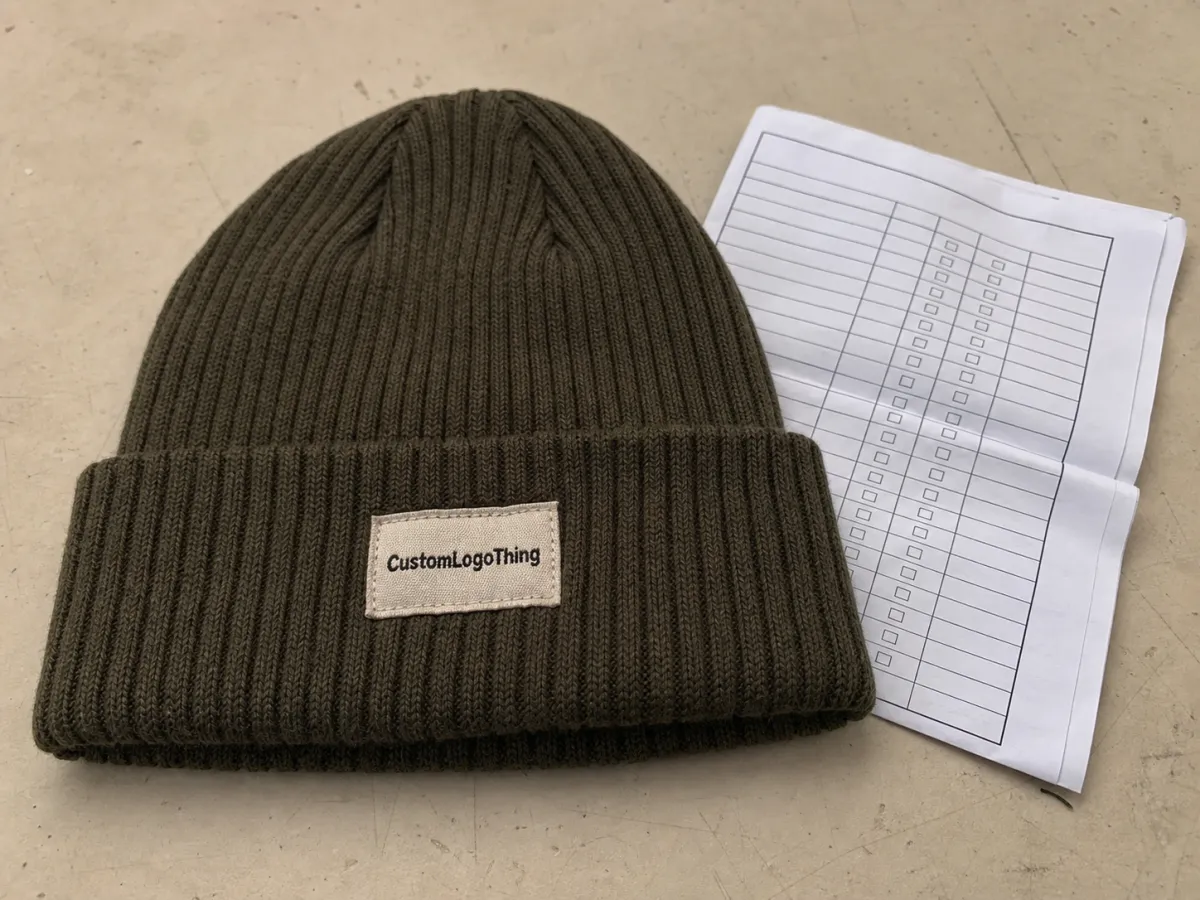
The first step is to define the job clearly. Are these beanies for prep teams, delivery staff, or customer-facing crews? That detail changes the build. A back-of-house hat can be simple and practical, while a front-of-house piece may need a cleaner silhouette, tighter color control, and a logo that reads well under bright shop lighting.
The phrase ribbed knit Beanies Factory Quote checklist for bakery orders matters because factories price against assumptions. If one supplier thinks you want a loose beanie with a folded cuff and another thinks you want a deeper cuff with a tighter fit, the numbers will never line up. Ask every supplier to quote against the same size, same yarn blend, same decoration method, and same packaging.
Bakeries also have a different wear pattern than outdoor apparel brands. Staff are often in and out of cold rooms, washing hands repeatedly, and working long shifts. The beanie needs to hold shape, stay comfortable, and look presentable after repeated use. That is why the quote request should mention laundering frequency, visible branding, and whether the hat must stay crisp on customer-facing shifts.
If you want the fastest comparison, send a one-page RFQ with these basics:
- Quantity by color and by location, if the order is split.
- Use case: prep, delivery, or customer-facing service.
- Decoration: embroidery, woven label, patch, or blank.
- Delivery window and ship-to address.
- Packaging: bulk packed, individual polybag, or labeled cartons.
That level of clarity cuts down on back-and-forth and gives you a real apples-to-apples comparison. It also helps a factory tell you early if the requested build is a poor fit for the price target.
How the beanie should work on a bakery floor
Fit is the first thing to get right. A ribbed knit beanie should sit securely without squeezing the temples or leaving a deep mark after a full shift. In practice, a medium rib tension with a cuff depth around 2.5 to 4 inches often gives a good balance of structure and comfort, but the right number depends on head size range and how much hair has to be contained.
Shade choice matters more than many buyers expect. Neutral tones, charcoal, black, navy, and heathered grey usually hold up best in busy food environments because they hide minor wear and keep the team looking consistent across multiple locations. Bright colors can work, but they tend to show lint, oil mist, and fading sooner.
For bakery use, the warmest hat is not always the best hat. A delivery driver may need more coverage than a counter team member who spends time under overhead heat. A back-of-house crew may prefer lighter weight and more stretch recovery, while a customer-facing crew often wants a neater crown shape and a cleaner logo placement.
Wash frequency is another practical filter. If the beanies will go through regular laundering, ask for yarn and decoration methods that can handle repeated cycles without losing shape or logo clarity. Embroidery usually holds better than printed decoration on knits, but the stitch density has to be controlled so the fabric does not pucker.
Specs to lock before you request samples
Before a sample is made, lock the fiber blend and knit gauge. Acrylic, wool blend, recycled polyester, and acrylic-wool mixes all feel different in hand and behave differently after wash and wear. A 7-gauge rib will not quote the same as a tighter 9-gauge or 12-gauge knit, because yarn usage, machine time, and finish are all different.
Confirm the silhouette with plain language and photos if possible. Specify rib width, crown shape, cuff depth, and overall length, because factories will otherwise fill in the blanks based on their own standard pattern. If you need a taller cuff for extra branding space, say so early; that one detail can change both appearance and cost.
Artwork should be shared in vector format, with the logo size measured in inches or millimeters. A 2-inch logo on the cuff behaves very differently from a 3.5-inch logo across the front panel. Thread count, stitch direction, and placement all affect how clean the final mark looks on a ribbed surface.
Packaging also belongs in the first request. Carton counts, hangtags, individual polybags, barcode stickers, and master carton marks can change the real landed price. If your team wants retail-ready presentation or distributor-ready labeling, ask for it up front so the factory quotes the full build rather than a stripped sample price. For packaging terminology and case-packing language, the resources at packaging.org are a solid reference point.
If you sell through multiple channels, it helps to choose one approved spec sheet and keep it unchanged. That way your reorders stay aligned, and the factory does not drift into a slightly different yarn lot, label size, or cuff construction on the next run.
Pricing, MOQ, and quote drivers for ribbed beanies
Most quote swings come from a short list of variables. Yarn type is usually the biggest one, followed by color count, logo method, and packaging. Stock acrylic in one body color is typically the easiest build to price. Custom-dyed yarn, mixed colors, and specialty blends add setup and inventory pressure, which usually shows up in the quote.
MOQ is tied to knitting efficiency and decoration setup, not just the number of hats you want. A factory may quote 100 pieces per color on a simple blank or woven label build, but embroidery with multiple colors and custom yarn often pushes the minimum higher. If you need a lower run, ask whether stock yarn or a simpler label can bring the minimum down.
Below is the kind of comparison that makes buyer review faster and less subjective.
| Option | Typical MOQ | Estimated Unit Price | Best For |
|---|---|---|---|
| Stock acrylic, woven label | 100-300 pcs per color | $2.10-$3.40 | Simple staff issue and quick replenishment |
| Stock acrylic, embroidery | 150-300 pcs per color | $2.60-$4.10 | Front-of-house branding with stronger logo presence |
| Wool blend, embroidery | 300-500 pcs per color | $4.40-$6.80 | Heavier hand feel and a more premium look |
| Recycled blend, custom packaging | 300-500 pcs per color | $2.70-$4.40 | Sustainability-led programs with retail-ready pack-out |
Those numbers are directional, not universal. Final pricing depends on yarn market conditions, artwork coverage, carton packing, freight, and whether the factory has stock yarn on hand. A sample fee is often $30-$90, sometimes credited back on the production order. Decoration setup can add another $20-$80 per logo, depending on complexity and number of stitch colors.
If a quote looks low, check what is missing. Sample cost, labeling, freight, and duties are often left out of the first pass. Ask for a clear split between unit price, decoration, sample charge, packaging, and shipping so you can judge the real landed number.
Order process and lead time from proof to shipment
A clean order process begins with a mockup or proof that shows color, logo placement, cuff layout, and any label details before production starts. That proof should be read like a spec sheet, not treated like artwork only. If the mockup does not show the exact cuff depth or logo size, you do not yet have a real approval.
Sample approval is the safest moment to catch problems. A logo can look fine on screen and feel too large on the knit surface. A color can look close in daylight but drift under indoor bakery lighting. A good sample review checks fit, stretch, crown shape, and the way the embroidery sits after the fabric relaxes.
Lead time usually has four parts: yarn availability, knitting queue, decoration time, and final packing. For standard stock-yarn runs, production often lands around 12-18 business days after approval. Wool blends, custom dyeing, or more complex packaging can push that into the 20-35 business day range. Freight is separate and should be planned early.
For launch programs, work backward from the store opening date. Leave room for sample review, revisions, production, transit, and a small buffer for delays. If your team is coordinating uniforms, aprons, or other branded items, the beanies should be scheduled with the same discipline. The Wholesale Programs page is a useful starting point if you are mapping a broader apparel rollout.
One more practical point: if your logo approvals go through several people, set one final decision maker. Small delays in proof approval often do more damage to the timeline than the knit production itself.
Quality checks that protect repeat bakery orders
Repeat orders only stay consistent if the approval standard is clear. Ask the factory to inspect stitch consistency, color match, embroidery tension, size tolerance, and cuff shape. Those are the details staff notice first, especially on a line of hats that will be worn together across several locations.
AQL inspection is still worth using for these programs, even when the order is not huge. A simple check for visible defects, loose threads, crooked labels, and shade variation can prevent a bad shipment from slipping through. For transit stress, package testing guidance from ISTA is helpful if your order has a long shipping route or multiple handling points.
If the hats will be washed often, ask for wash and wear testing before the order scales. Rib recovery, seam integrity, and logo distortion matter after laundering, not just on the day the sample arrives. A yarn that feels soft but sags after two washes is not a good bakery choice.
Carton marks and lot tracking are also worth standardizing. If a future reorder needs to match the approved run, the factory should be able to trace the yarn lot, the shade reference, and the production batch. That matters more than buyers sometimes realize, especially across multi-location bakery programs where one slightly off color can be noticeable beside the original stock.
For brands that care about paper labels or printed inserts, ask about FSC-certified paper options. That detail is small, but it signals that the packaging side of the order was considered rather than left as an afterthought.
What a dependable beanie factory partner should provide
A dependable partner should answer spec questions quickly and in plain language. If the factory sends a new mockup for every small change, that is useful. If they keep sending vague answers and wide ranges, you will spend too much time translating their process into buyer language.
Good factories also show side-by-side options, not just one price. For example, acrylic versus wool blend, embroidery versus woven label, or bulk packing versus individual polybagging. That comparison helps you see the tradeoff between appearance, durability, and budget without guessing which levers matter most.
Reorder support is a major differentiator. The first run is only part of the relationship; the next run is where consistency is proven. A partner who stores the approved artwork, color references, and packing notes can keep future bakery orders aligned without forcing you to rebuild the brief every time.
Export paperwork, carton labeling, and shipping coordination matter too, especially if the order moves through distributors or crosses borders. Small mistakes in carton marks or consignee details can slow a shipment more than a fabric issue ever would.
If you need help comparing a few sourcing paths, our Contact Us page is the fastest way to share artwork and ask for a quote review. For common buyer questions on sizing, artwork, and reorders, the FAQ page can also save a round of emails.
Next steps for a clean RFQ and faster comparison
Keep the RFQ short, specific, and identical for every supplier. The Ribbed Knit Beanies factory quote checklist for bakery orders works best when it includes quantity by color, logo file, desired material, delivery window, and packaging instructions. That gives each factory the same starting point and makes the differences easy to see.
- Send one spec sheet with quantity, color, and use case.
- Ask for sample charge, unit price, packaging, and freight as separate line items.
- Request proof timing and production lead time in business days.
- Confirm MOQ, carton count, and any reorder conditions.
- Compare landed cost, not just unit price.
If two quotes are close, do not choose on price alone. Proof quality, communication speed, and reorder support matter more over the life of the program than a small difference in the first invoice. A slightly higher quote can easily pay for itself if it prevents a logo mismatch or a late delivery.
For bakery buyers who need a neat, repeatable branded hat, the best move is simple: lock the spec, compare the same build across suppliers, and keep the approval trail clean. That is how the ribbed knit Beanies Factory Quote checklist for bakery orders turns a messy sourcing exercise into a controlled, predictable purchase.
What should I include in a ribbed knit beanie factory quote for bakery orders?
Include quantity by color, logo file, decoration size, target delivery date, and ship-to address. Add material preference, cuff depth, packaging needs, and whether the hats are for prep or customer-facing staff. The more exact the request, the easier it is to compare the ribbed Knit Beanies Factory quote checklist for bakery orders without hidden assumptions.
How does MOQ usually work for ribbed knit beanies for bakeries?
MOQ depends on yarn inventory, knitting setup, and decoration method rather than just the number of hats you want. A single color with one logo is often easier to run than multiple colors or mixed decoration types. If you need a lower MOQ, ask whether stock yarn or a simpler label method can reduce setup.
Which decoration method is best for bakery staff beanies?
Embroidery is usually the most durable choice and holds up well through repeated wear and washing. Woven labels work well for subtle branding, while patches create a bolder look with more structure. Choose the method that fits your logo size, budget, and how often the beanies will be laundered.
How long does production take after approval for bakery beanie orders?
Lead time starts after the proof or sample is approved, not when the first inquiry is sent. Standard stock-yarn runs often take 12-18 business days after approval, while wool blends or custom dyeing can take longer. Rush orders may be possible, but they usually depend on stock yarn and quick signoff.
What hidden costs should I watch for in ribbed knit beanie quotes?
Watch for sample fees, custom-dyed yarn charges, decoration setup, packaging, freight, and duties. Ask whether carton labels, hangtags, or individual polybags are included or billed separately. A quote is only easy to compare when every supplier lists the same inclusions and exclusions.
If you want help turning the ribbed knit beanies factory quote checklist for bakery orders into a clean sourcing brief, Contact Us and send the artwork, quantity, and target delivery window. A tight spec usually saves the most time, and it almost always produces a cleaner price comparison.


