For streetwear buyers, the Embroidered Beanies Material spec guide for streetwear brand procurement is less about decoration and more about control. A beanie looks simple on a sales deck, but the knit, the thread, the backing, and the fold all affect how the piece lands in hand and how it survives real wear. Get one variable wrong and the logo that looked sharp on approval day starts to buckle after a few wears, a wash, or a week in a crowded retail fixture.
That risk is why strong procurement teams treat the beanie as a system. The body fabric can stretch the embroidery out of shape. The stitch density can make the cuff pucker. The label can turn a premium item into something scratchy and forgettable. None of those issues is dramatic on its own; together, they decide whether the product feels deliberate or rushed.
“The factory can only build what the spec actually says. Vague instructions are usually expensive instructions.”
Buyers who handle repeat programs learn the same lesson fast: the sample is not the product. It is only a negotiated version of the product, and the negotiation only holds if the spec is precise enough for the factory, the QC team, and the merchandiser to read the same way.
Embroidered beanies material spec guide for streetwear brand procurement: what buyers miss first
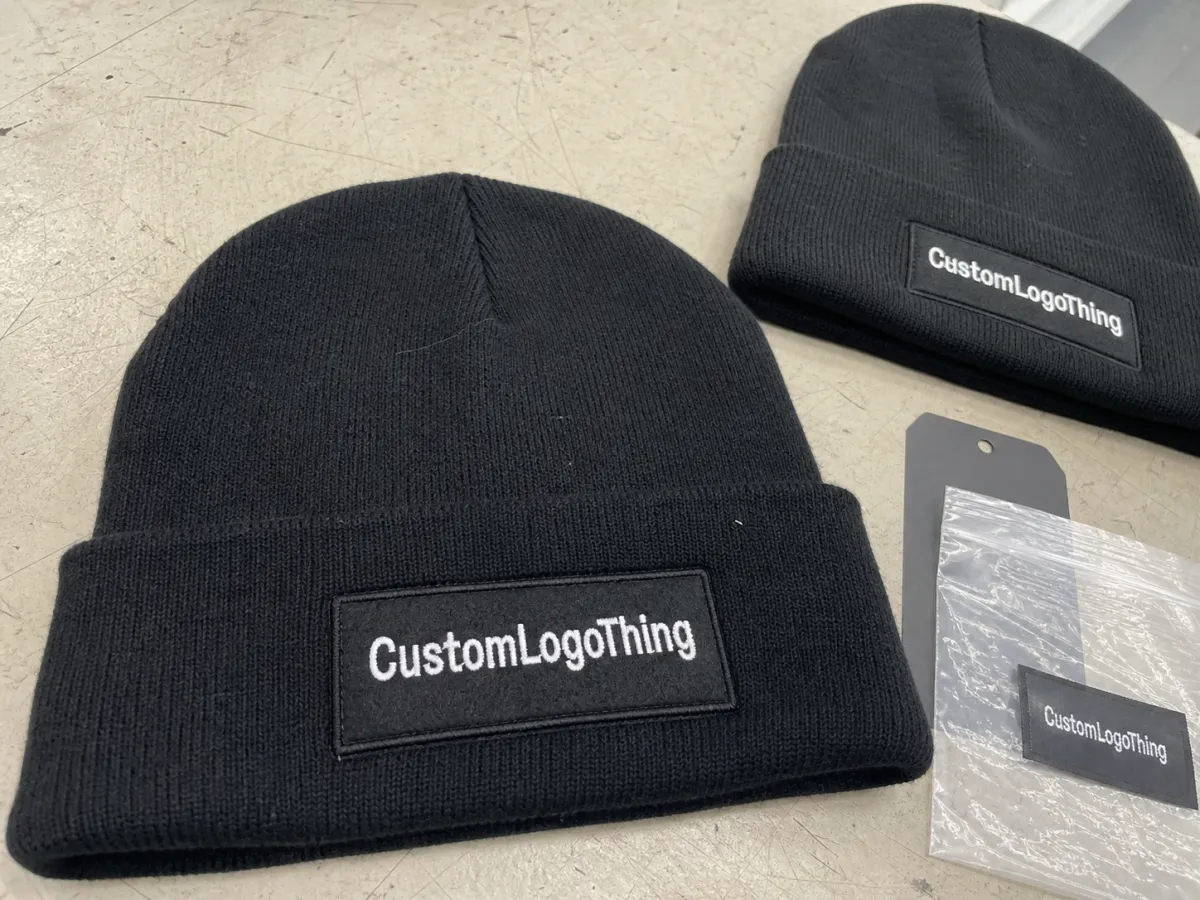
The first miss is assuming embroidery on a beanie behaves like embroidery on a flat surface. It does not. Knit fabric moves. Ribbing compresses. A logo that looks perfectly centered on a table can shift once the cuff is worn, stretched, folded into a carton, and worn again. That is why the starting point for any serious brief is the body construction, not the artwork file.
The second miss is underestimating how quickly bulk drifts when the approval sample is judged by eye alone. If the cuff height is not written down, if the yarn blend is implied instead of named, or if placement is described only as “front center,” the factory has room to make its own interpretation. Sometimes that interpretation is harmless. Sometimes it changes the shape of the product enough that the whole run looks slightly off.
A useful spec removes guesswork in layers. It should define the knit body, the yarn composition, the gauge, the finished measurements, the embroidery method, the stitch limits, the label type, the packaging, and the tolerance range. That level of detail is not bureaucratic. It is what keeps quotes comparable and quality measurable.
- Body: fiber blend, knit type, gauge, cuff height, relaxed and stretched measurements.
- Decoration: artwork dimensions, stitch type, thread colors, backing, and placement tolerance.
- Finishing: label, hangtag, fold method, bagging, carton pack-out, and barcode rules.
There is also a practical reason to write the spec this tightly: it shortens the approval loop. A supplier can price a clear spec faster than a mood board. Merchandising can sign off on a clear spec faster than a vague concept. Finance can compare two offers more accurately when both suppliers are quoting the same construction instead of two different ideas of what “premium” means.
Knit body choices that shape hand feel, drape, and durability
The shell does most of the visible work before embroidery even enters the picture. Acrylic is still the common procurement choice because it keeps color consistent, holds shape reasonably well, and usually lands in a friendly cost band. It also behaves predictably across larger runs, which matters when a brand needs repeatability more than romance.
Wool carries a more premium reputation and usually a better natural warmth profile, but it brings more variation in hand feel and more attention to shrink control. Cotton is softer and often more comfortable for transitional weather, yet it can lack the structure needed for sharp embroidery on a ribbed surface. Blends sit between those extremes. A wool-acrylic mix can reduce scratchiness while preserving shape better than pure wool. A cotton-acrylic blend can feel softer without becoming too floppy.
Gauge changes the result more than many first-time buyers expect. A finer gauge gives embroidery a flatter, more even platform and usually helps small artwork survive. A chunkier rib creates the classic streetwear look, but it can swallow thin details and make tiny lettering disappear. If the artwork depends on precision, the knit choice has to support that precision. If the knit is already chosen for a rugged look, the logo should adapt to the surface instead of fighting it.
Durability is not only about fiber strength. It is also about wear behavior. Buyers should ask how the body handles friction from coats, backpacks, seatbacks, and repeated stretch recovery. A beanie can pass a showroom check and still fail retail expectations if it pills quickly or relaxes too much at the crown. For streetwear, that matters because the accessory is often worn openly and photographed often. Small surface flaws show up quickly.
- Acrylic: best for price control and repeat color matching.
- Wool: best for warmth and a more premium feel, with tighter shrink control needed.
- Cotton: best for softness, but usually weaker shape retention.
- Blends: best when the brief needs a practical balance of feel, price, and recovery.
Thread, backing, and stitch density rules for clean embroidery
Thread choice affects both appearance and performance. Polyester is usually the safer procurement option because it resists abrasion better and tends to hold color well in retail use. Rayon has a richer sheen and can look nicer under certain lighting, but it is less forgiving when the piece sees friction. Specialty threads can add texture or shine, though they often increase cost and raise the chance that the factory swaps in a near-match unless the spec is strict.
Backing matters just as much as thread. A knit beanie needs support behind the embroidery so the stitches do not sink into the surface or distort the rib. Too little support and the logo collapses into the fabric. Too much support and the inside of the cuff can feel stiff or scratchy against the skin. The right stabilizer is the one that holds the design without changing how the beanie wears.
Stitch density is where many issues start. Over-dense embroidery can pucker the fabric. Under-dense embroidery looks thin, especially on dark bodies or high-contrast logos. A good brief sets minimum line widths, maximum detail levels, and the smallest text size that can still survive production. Tiny lettering is usually the first thing to fail. Gradients are the second.
It helps to approve artwork on a stretched sample, not only on a flat one. That simple step reveals whether the logo moves too much as the cuff opens. It also shows whether a digitized file respects the knit structure or tries to force an impossible level of precision onto a flexible surface. On beanies, simplified usually wins.
- Set minimum line widths so the digitizer can judge what will survive production.
- Limit micro-detail when the knit is coarse or highly elastic.
- Review under stretch and recovery, not just flat on a table.
The safest rule is straightforward: if the design needs perfect geometry to read correctly, it probably needs simplification before it hits the factory floor. That is not a creative downgrade. It is a better match between artwork and material.
Cost, pricing, MOQ, and unit cost levers to compare
Pricing for embroidered beanies is built from several small decisions, and buyers often see only the final unit quote. The actual cost stack usually includes yarn, knitting labor, embroidery stitch count, thread changes, labels, folding, polybagging, carton packing, and freight. A low unit price can hide expensive add-ons. A higher unit price can include fewer surprises. The difference matters when margin is tight.
MOQ changes the picture again. Lower minimums almost always carry a higher unit price because setup costs are spread across fewer pieces. Larger runs usually reduce the unit cost, but they also tie up cash and inventory. For streetwear, the best MOQ is rarely the lowest one. It is the one that matches sell-through confidence and replenishment planning.
| Beanie Spec Option | Typical FOB Range | What Drives the Price | Best Use Case |
|---|---|---|---|
| Basic acrylic cuff beanie with one-color embroidery | $2.10-$3.80 at 1,000-3,000 pcs | Simple yarn, low stitch count, standard label | Core volume styles and entry price points |
| Wool blend beanie with multi-color embroidery | $3.40-$6.20 at 1,000-3,000 pcs | Higher fiber cost, careful knitting, extra thread changes | Premium streetwear capsules |
| Textured knit with woven label and upgraded packaging | $4.10-$7.50 at 1,000-3,000 pcs | Special knit pattern, trim complexity, retail-ready pack-out | Launch pieces and ecommerce hero items |
Setup and sampling should be separated from bulk pricing so procurement can see the real approval cost. Digitizing is usually a modest one-time charge. Sample revisions cost more in time than in money, but time is still money when a season launch is fixed. A supplier that costs slightly more but gets the first strikeoff right can end up cheaper than a lower quote that needs two correction loops.
The easiest savings often come from simplification. Reduce thread colors. Remove tiny copy. Standardize labels. Keep the pack-out modest. If the brand story can survive a slightly cleaner stitch map, the margin usually improves without hurting the visual impact.
Process and lead time from artwork approval to bulk delivery
The production path is fairly predictable, but only if the brief is clear. The usual sequence is tech pack review, digitizing, strikeoff or sample, sample approval, bulk knitting, embroidery, finishing, packing, and shipment. A delay in one step usually spreads to the next. That is why the spec should function as a production map, not a static reference sheet.
- Tech pack review: confirm measurements, artwork, and packaging.
- Digitizing: convert the logo into an embroidery file that fits the knit.
- Strikeoff or sample: check size, placement, and thread behavior.
- Bulk production: knit, embroider, finish, and inspect.
- Packing and shipment: carton count, inserts, and transit protection.
Lead time is usually driven by a few practical variables: artwork revisions, yarn sourcing, holiday capacity, and color matching. Sampling often stretches longer than the actual sewing because it forces decisions that teams postponed during the concept stage. I see the same pattern across accessories: the factory is waiting, but the buyer is still adjusting the logo because the screen mockup did not show how the mark behaves on ribbed fabric.
Shipment protection deserves the same attention as decoration. If beanies are packed into corrugated cartons, the carton should be tested for stack pressure and transit abuse at a level appropriate for the route. The ISTA shipping test standards are a useful reference when packaging quality matters as much as garment quality. A crushed carton can undo the savings from a clean bulk run, especially if the beanies were folded in a way that leaves a permanent crease.
For a seasonal launch, buffer time is not optional. Build room for one sample revision, a production correction, and final QC before the ship date. If the calendar is fixed, work backward from the retail commitment, not forward from the supplier promise.
Fit, sizing, labels, and trim details that affect retail appeal
Fit is where a customer decides whether the beanie feels designed or generic. The spec should include crown depth, cuff height, stretch range, and relaxed circumference so the piece lands consistently across head shapes. A slouch beanie and a fitted cuff style may use similar yarns, but they send very different signals on a rack. One reads relaxed. The other reads sharper and more urban.
Labels and trims shape perceived value almost immediately. Woven labels usually feel more premium than a basic heat transfer, but a care label placed badly can irritate skin. Exterior patches can make a small logo feel more intentional, although they add thickness and can affect the fold line. The question is not whether trim should exist. It is whether the trim should disappear into the product or become part of the product language.
Packaging belongs in the same spec because the customer sees it first. A clean fold, a sensible bag size, and a label that does not crease the knit often matter more than a flashy insert. For direct-to-consumer shipping, the pack-out needs to protect the shape without making the product feel overworked. Recycled polybags, kraft hangtags, and restrained inserts can support the brand story without adding much cost.
Some teams separate packaging from the garment spec, then wonder why the final presentation feels disjointed. It is the same purchase order in practice. The embroidery, the fold, and the mailing carton all contribute to how premium the beanie seems before it is even worn.
Common spec mistakes that trigger rework, delays, or chargebacks
The biggest mistake is approving a sample without wear testing. A logo can look right on day one and then tilt, ripple, or curl once the fabric has been stretched several times. Ribbed knits are especially sensitive because the surface moves under the stitches. A quick look in the sample room is not enough. A short wear check, a daylight inspection, and a recovery test tell a much better story.
Color is another common trap. “Black” is rarely just black. Yarn lots, thread sheen, label stock, and packaging can all read differently under retail lights and phone cameras. If the brand cares about a very specific shade, the spec needs a physical reference or a controlled standard. Casual color language is one of the fastest routes to disagreement.
Artwork also causes surprises during digitizing. Thin strokes can disappear. Gradients can flatten. Small text can blur into decoration. The safest move is to simplify before production, because embroidery on a stretch surface rewards bold forms and punishes precision that is too fine for the substrate. In practical terms, the logo should be readable from a few feet away, not just impressive at 100 percent zoom on a screen.
Inspection criteria need to be agreed before bulk starts. If the factory does not know the acceptable range for stitch tension, placement tolerance, shade variation, or label alignment, the lot can pass one reviewer and fail another. Clear acceptance rules reduce disputes and make the QC process much less personal.
Building a clean supplier brief
The fastest way to tighten procurement is to build one brief that everyone uses. It should include the body material, knit gauge, artwork dimensions, thread colors, backing, label placement, packaging, target MOQ, and target landed cost. A single source of truth does more than improve communication. It also limits the number of places where the spec can drift during internal review.
Ask suppliers to quote line by line instead of handing over one blended number. Compare body construction, stitch count, sample fee, MOQ, Lead Time, label type, and packaging separately. That makes tradeoffs visible. One supplier may be cheaper but slower. Another may look expensive until you see that it includes better finishing or fewer revision rounds. Procurement earns its value by making those differences visible before the order is placed.
Order at least one physical sample or strikeoff before bulk. Then check it in daylight, under indoor retail lighting, and after a short wear cycle. Look at the stretch behavior, logo placement, fold consistency, and how the cuff returns after handling. If the beanies are shipping ecommerce, place them in the intended pack-out and confirm that the fold stays clean after transit.
Use the embroidered Beanies Material Spec guide for streetwear brand procurement as the reference point for the purchase order, QC sheet, and receiving checklist. The more consistent the document trail, the less likely the final carton will surprise anyone.
Frequently Asked Questions
What fabrics work best for an embroidered beanie spec sheet?
Acrylic is usually the easiest to source and the most cost-efficient, which is why it shows up in many streetwear programs. Wool or wool blends can feel more premium, but they need tighter controls for shrink and hand feel. Cotton or cotton blends are softer, though they do not always hold structure as well in colder-weather retail use. The best choice depends on the price point, the intended season, and how detailed the embroidery is.
How should a streetwear brand compare embroidered beanie pricing?
Compare unit price, setup fees, sampling fees, packaging costs, and freight together. A low bulk quote can look attractive until add-ons appear. Also check how MOQ changes the price tier, because smaller runs often cost more per piece. If you need multiple colors or packaging styles, ask for a matrix so the tradeoffs are visible instead of hidden in a single number.
What is a realistic MOQ for custom embroidered beanies?
MOQ varies by factory, but embroidered beanies often start higher than printed accessories because knitting, decoration, and finishing all need coordination. Smaller runs are possible, though they usually come with fewer material options and a higher unit price. For a brand with uncertain sell-through, a slightly higher MOQ can still be the safer decision if it lowers the unit cost enough to preserve margin.
How long does embroidered beanie production usually take?
A typical timeline includes artwork approval, sampling, bulk production, finishing, packing, and transit. Lead time stretches when you revise artwork, switch yarns, or add specialty trims and packaging. A realistic plan leaves room for one sample correction and final QC before ship date. If the launch is fixed, build the schedule backward from the delivery deadline rather than trusting a single factory estimate.
What should be included in an embroidered beanie material spec?
List the fabric blend, knit gauge, color references, embroidery thread colors, backing type, and stitch size rules. Add fit measurements, label placement, packaging instructions, MOQ, and target unit cost. If you have a reference sample, include it so the supplier can match the intended look more accurately. Clear tolerances matter as much as the visuals because they give the factory something measurable to build against.


