An Embroidered Logo Hats MOQ guide should answer a very plain question: how do you order caps that look sharp, arrive on time, and do not get swallowed by setup charges before the first stitch is made? That sounds simple until the quote lands. Then the real costs show up in digitizing, proofing, blank selection, freight, and the extra labor that comes with dense artwork or a tricky cap shape.
The smallest order is rarely the cheapest order. A run of 24 hats can cost more per piece than 100 hats because the same production steps still have to happen. If the logo is straightforward and the blank is stocked, minimums can stay manageable. If the art is detailed or the cap body is unusual, the order gets more expensive faster than many buyers expect.
Why a low cap MOQ can still be the expensive option
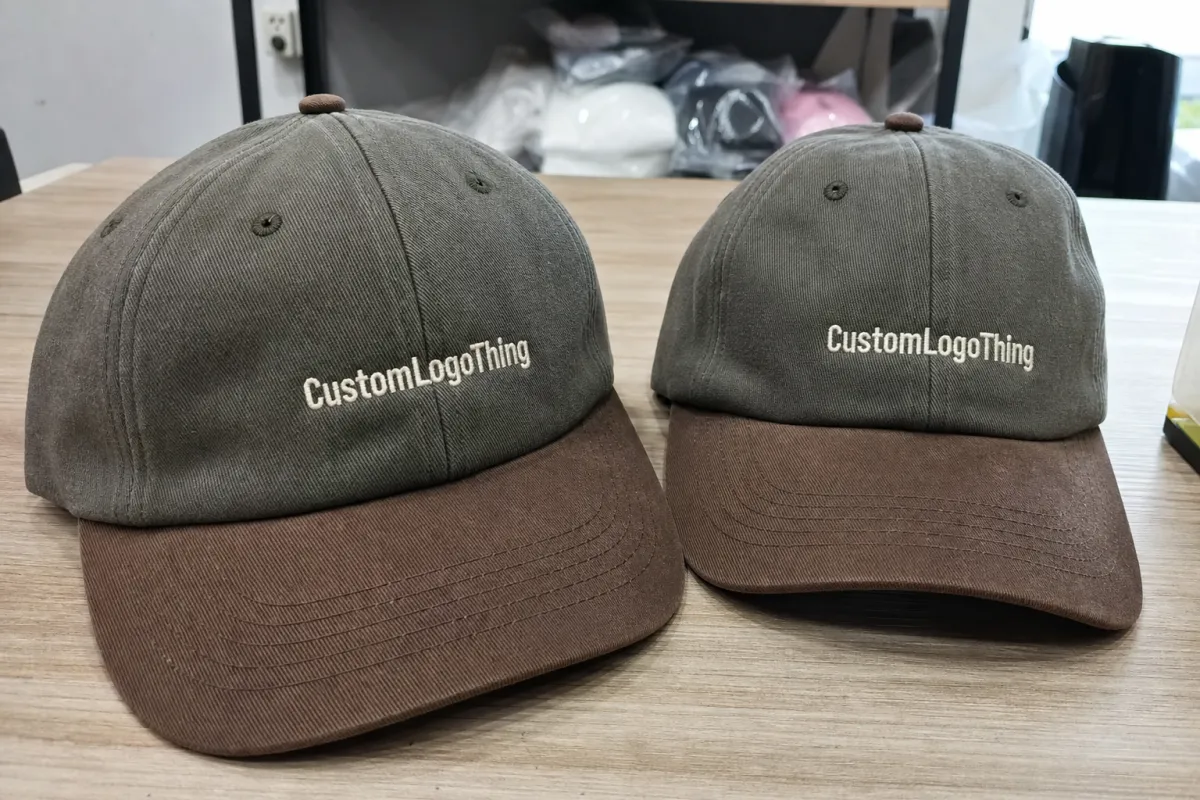
Buyers often focus on the line that says unit cost. That is understandable. It is also incomplete. With embroidered hats, the low number on the product line can hide a bigger total once digitizing, sample approval, thread setup, and shipping are included. The per-hat price may look attractive while the landed cost tells a different story.
Setup work does not shrink just because the order is small. Whether the shop is stitching 24 caps or 240, somebody still has to prepare the file, verify placement, load thread colors, and inspect the first run. That fixed labor gets spread across fewer pieces on a small order, so the math gets less friendly quickly.
Simple front logos are usually the safest place to save money. A one-color mark on a stocked twill cap is easier to quote, easier to approve, and easier to reproduce consistently. Add side embroidery, back embroidery, 3D puff, or a logo with thin lettering, and the job becomes more sensitive to both machine time and human review.
There is also a timing cost that buyers underestimate. A lower MOQ can be useful for a launch, a seasonal promo, or a trade show, but only if the artwork and cap choice are realistic for embroidery. If the logo is too detailed for the front panel, the supplier will either simplify it or spend more time forcing it to work. Neither option is free.
A useful quote should separate the cap, the decoration, and the approval steps so the buyer can see where the total cost is coming from.
That transparency matters more than a low headline number. It is the difference between a quote that looks cheap and an order that actually fits the budget.
Cap styles, crown shapes, and stitch details that change the look
Cap structure changes the final result more than many first-time buyers realize. A structured six-panel cap gives embroidery a firmer front surface, which usually helps the design hold its shape. An unstructured cap has a softer feel, but it can show puckering sooner if the stitch density is too heavy or the logo is too large for the panel.
Profile matters too. Low-profile caps sit closer to the head and tend to look more retail-focused. High-crown caps give the front panel more room and can handle bolder artwork better. Five-panel caps are popular because the front panel is flatter, but that same flatness can become a problem if the artwork spreads too wide or leaves no margin at the edges.
Trucker caps and performance caps add their own quirks. A trucker front may stitch cleanly, but the mesh back changes the feel and makes the cap less forgiving in fit. Performance fabrics, often polyester-based, can work well for active use, yet the surface finish may affect how the stitches settle and how much backing the embroidery needs.
Then there is the decoration method itself. Flat embroidery is still the standard because it reads clearly on most caps. Three-dimensional puff embroidery adds depth, but it is not a good match for tiny details or narrow lettering. It needs bold shapes, thicker strokes, and enough space for the foam to sit under the thread without looking cramped.
Patch and applique work are worth considering when the artwork is too detailed for direct stitching. Fine lines, gradients, and tiny type can disappear on a cap crown, especially when the panel curves sharply. A patch can preserve detail better and sometimes cuts down on stitch time.
- Structured front: better for crisp edges and cleaner embroidery alignment.
- Unstructured front: softer hand, but less tolerant of dense stitch files.
- 3D puff: best for bold letters and simple shapes with enough visual weight.
- Patch or applique: useful for detailed artwork or designs that do not scale well in thread.
The basic buyer question is not just whether a logo can be embroidered. It is whether that logo can be embroidered well on the cap body the buyer actually wants. Those are not the same thing.
Artwork setup and digitizing that protect the final stitch quality
Vector art is the best starting point because it gives the digitizer clean paths to convert into stitches. A low-resolution JPEG may still be usable, but it usually creates more back-and-forth, especially if the design includes small type, layered outlines, or tight spacing. Every extra revision adds time, and time becomes money once production is in motion.
Digitizing is not a file conversion in the casual sense. It is a production decision. The digitizer chooses stitch direction, density, underlay, and pull compensation, and each one changes how the logo sits on the fabric. Thread is not ink. It has thickness, tension, and texture, so artwork that looks fine on a screen can become crowded once it is stitched at cap size.
Small serif fonts, thin script, and delicate borders are common trouble spots. If the letters are too narrow, the stitches close the open space and the logo loses readability. If the fills are too dense, the cap fabric can pucker. If the underlay is too light, the embroidery may not hold its shape. These trade-offs are why experienced buyers ask for a proof instead of assuming the art will simply transfer over.
A proper proof should show more than a thumbnail. It should confirm size on the cap panel, stitch count, thread colors, placement, and whether backing is needed. The buyer should be able to tell if the logo is being simplified, stretched, or scaled down. That is especially useful for small emblems, badges, and text-heavy marks.
Some artwork does better as a hybrid decoration. A patch can carry tiny details that direct embroidery would flatten. Applique can reduce stitch count while preserving the shape of a larger design. These options are not shortcuts in the negative sense; they are practical choices when the cap surface has limits.
If the artwork is hard to read at cap size on a proof, it will not improve once the machine starts stitching.
Good files also reduce friction on the front end. When the supplier receives a clean vector and a clear color reference, the quote is usually faster and the approval process is less painful. That is not a cosmetic benefit. It affects lead time.
Embroidered logo hats MOQ guide: pricing, unit cost, and minimums
MOQ on embroidered hats is usually tied to production efficiency, blank sourcing, and setup time rather than a random threshold pulled from nowhere. A shop has to load the design, prepare the machine, verify the colors, and run a sample head before full production starts. That work exists even for very small orders, so minimums are often there to protect the economics of the run.
The price components are more revealing than the final unit number by itself. Buyers should watch for the blank cost, the digitizing fee, any setup or edit charges, decoration charges by location, packaging, and freight. Some suppliers bundle these items. Others break them apart. Both approaches can be legitimate, but the total needs to be visible.
Common pricing drivers include:
- Cap style: structured twill, trucker, five-panel, and performance bodies do not cost the same.
- Decoration location: front-only embroidery is usually cheaper than front plus side or back placements.
- Thread count: two-color art is simpler than multicolor work with frequent thread changes.
- Stitch density: dense fills take longer on the machine and can push the price upward.
- Backing and finishes: puff embroidery, patch application, and specialty support materials add labor.
- Packaging and freight: cartons, polybags, inserts, and shipping all affect the landed total.
For many orders, the common digitizing fee sits in the roughly $20 to $75 range, depending on complexity and the amount of redrawing required. Simple embroidery on a stocked blank may land around $9.50 to $14.00 per cap at smaller quantities, while moderate runs often drop into a $7.25 to $10.50 range. More complex decoration can still stay reasonable, but only if the design and cap choice are cooperating.
Those numbers are not promises. They are a useful bracket for planning. A 24-piece run with a detailed logo can easily cost more per cap than a 100-piece run with a cleaner design. That is not pricing confusion. It is the natural result of spreading setup work across more units.
| Order scenario | Typical MOQ | Illustrative cost per piece | Best fit | Common watch-outs |
|---|---|---|---|---|
| Simple front embroidery on stocked cap | 24-48 pcs | $9.50-$14.00 | Small launches, events, internal programs | Setup charges are spread over fewer units |
| One-location logo with moderate stitch count | 50-100 pcs | $7.25-$10.50 | Sales teams, retail test drops, promo use | Proof changes can slow the schedule |
| Multicolor or specialty decoration | 100+ pcs | $6.00-$9.25 | Brand programs, resale, larger campaigns | Thread changes and dense artwork add labor |
A slightly larger order often produces a better landed cost than a tiny one, but only when the buyer can actually use the quantity. There is no benefit in overbuying hats that will sit in storage. The smarter move is to compare the final invoice against the real need, then decide whether the lower MOQ is worth the higher per-piece friction.
If the blank carries a sustainability claim, ask for documentation instead of taking the label at face value. Claims tied to certified materials should be backed by paperwork that can be checked. That matters because buyers are increasingly asked to justify sourcing decisions, not just decorate them.
Production steps, timeline, and lead time from proof to delivery
A standard embroidered hat order moves through a predictable sequence: quote request, artwork review, digitizing, proof approval, production, inspection, and shipment. The bottlenecks usually show up early. Missing files, vague placement instructions, or late design changes cost more time than the actual stitching.
For straightforward orders, lead time often falls in the 12 to 15 business day range after proof approval, assuming the blank is available and the shop is not overloaded. More complex embroidery needs extra buffer. Puff embroidery, multi-location branding, and specialty caps are harder to rush because the approval and sampling steps matter more.
Approval speed matters more than many buyers admit. A clear sign-off lets production keep moving. A slow sign-off can leave the job waiting even when the machines are available. If the art is still being debated after the proof arrives, the timeline slips before a single cap is made.
Reorders can be much faster if the supplier keeps the stitch file, thread numbers, and approved spec sheet on record. That reduces the need to rebuild the job from scratch. It also lowers the risk of small but visible changes from one batch to the next.
The fastest order is usually the one that is fully decided before the first stitch file is loaded.
Packaging and shipping deserve attention too. If the order is headed to a warehouse, stores, or a trade show booth, carton counts and labeling should be confirmed before dispatch. Mixed pack-outs and unclear routing are a common source of avoidable delays once the goods leave production.
Lead time is not just a factory issue. It is an information issue. The cleaner the handoff, the more predictable the delivery.
What a reliable cap supplier should prove before production starts
A reliable supplier does more than give a number. They explain the MOQ, identify what is included, and review the artwork with enough attention to catch problems before the machines start running. If the quote is vague or the proof is thin, the buyer is taking on avoidable risk.
Quality control should happen at the cap level, not just at the carton level. That means checking stitch tension, alignment on the front panel, color consistency, and any sign of skipped stitches or puckering. A logo can look acceptable from ten feet away and still fail a close inspection if the density is too heavy for the fabric.
Blank consistency matters just as much. A reorder that shifts to a different cap body can change the crown height, front panel curve, and overall fit. Those differences are easy to overlook on paper and obvious once the hats are worn. A good supplier should either keep the same blank spec or flag a substitution before production begins.
Written timing is another basic test. The supplier should confirm the ship date, outline the approval milestones, and state whether substitutions are possible. That kind of clarity is useful because custom decoration leaves little room for surprises. A buyer does not need a perfect promise. A buyer needs a realistic one.
- Clear quote: unit price, setup charges, and freight shown separately.
- Strong proof: placement, size, and thread colors visible before production starts.
- Stable blanks: same fit and body when possible for reorders.
- Written timing: ship date and approval checkpoints confirmed in the record.
That is also where sample behavior matters. A supplier that moves quickly on questions, sends legible proofs, and documents changes is usually easier to work with when the order gets larger or more repeatable. Sloppy communication at the start tends to get worse, not better, under pressure.
How to request a quote and move embroidered cap orders forward
The best quote requests include the logo file, cap style, quantity, decoration location, thread color notes, target date, and shipping destination. Leave out one of those pieces and the answer may be broad instead of useful. A supplier can estimate, but an estimate is not the same thing as a production-ready quote.
One mistake appears over and over: comparing quotes only by unit price. That ignores the setup line, the digitizing fee, the freight estimate, and the number of revisions included. A vendor with a higher cap price may still end up cheaper once the rest of the order is counted. The reverse is also true.
A practical decision path looks like this:
- Simplify the artwork so it reads clearly at cap size.
- Choose a cap body that supports the logo and the budget.
- Lock the quantity so the supplier can quote the correct MOQ.
- Approve the proof quickly and keep changes to a minimum.
- Confirm packing, freight, and delivery details before production begins.
That sequence is ordinary, but ordinary is useful here. It keeps the order predictable, which matters more than squeezing the absolute lowest number out of the quote. For teams, events, or resale programs, the real win is a hat that looks intentional and arrives when it is supposed to.
Handled well, an Embroidered Logo Hats MOQ guide becomes a planning tool instead of a pricing puzzle. It helps buyers Choose the Right Cap, understand the minimum, and keep the order moving without unnecessary revisions or avoidable costs.
Frequently Asked Questions
What is the typical MOQ for embroidered logo hats?
There is no universal minimum, but many orders start at a practical production threshold rather than a fixed number. Simple logos on stocked blanks often support lower minimums than multicolor or specialty builds. Ask whether the MOQ applies to one design, one colorway, or one cap style, because that changes the real buying threshold.
How does hat style affect embroidered logo hats MOQ?
Structured caps, truckers, performance caps, and specialty fits can carry different minimums because they use different blanks and setup steps. A cap with a firm front panel is usually easier to embroider cleanly, which can reduce rework risk. Mixing styles in one order may be possible, but it can change pricing and make production more complicated.
Can I mix colors or sizes within one hat MOQ order?
Color mixes are often possible if the blank style is stocked, but the supplier may still require a minimum per colorway or per design. Most hats are one-size adjustable, so size variation is usually less of an issue than it is with apparel. Confirm whether the MOQ applies to total quantity or to each color before the order is finalized.
What artwork works best for embroidered logo hats?
Clean vector artwork with bold shapes and readable lettering usually gives the best result on a cap crown. Thin strokes, tiny text, gradients, and heavy shading often need simplification or a patch-based alternative. The best files are easy to digitize, easy to scale, and clear enough to fit the front panel without crowding it.
How long does it take to produce custom embroidered hats?
Lead time depends on artwork approval, digitizing, cap availability, and the complexity of the embroidery. Straightforward orders move faster when the logo file is ready and the proof is approved promptly. Rush jobs can work in some cases, but they usually require a simplified setup and very few changes after approval.

