Brand Bucket Hats Unit Cost: What Actually Drives the Number
Brand bucket Hats Unit Cost is rarely controlled by the logo alone. Two hats can look nearly identical in a product photo, then land 15% to 25% apart in price once the crown shape changes, the brim gets stiffer, or the inner finishing becomes more polished. That spread matters. For a promo buyer, it can decide whether the order fits the campaign budget. For retail, it can be the difference between a healthy margin and a line that needs markdowns later.
The most common mistake is comparing quotes that are not built on the same spec. One supplier may price a soft unstructured body in cotton twill, while another is quoting a reinforced brim, a custom sweatband, and retail folding. The numbers are not wrong. They are just describing different products. If the brief is loose, the unit cost will be too.
That is why experienced buyers start with the construction, not the decoration. A clean quote is the result of a clean specification: the same fabric, the same crown depth, the same brim width, the same packaging, and the same delivery basis. Without that, the lowest quote often becomes the least useful one.
Why Bucket Hat Unit Costs Shift Faster Than Buyers Expect
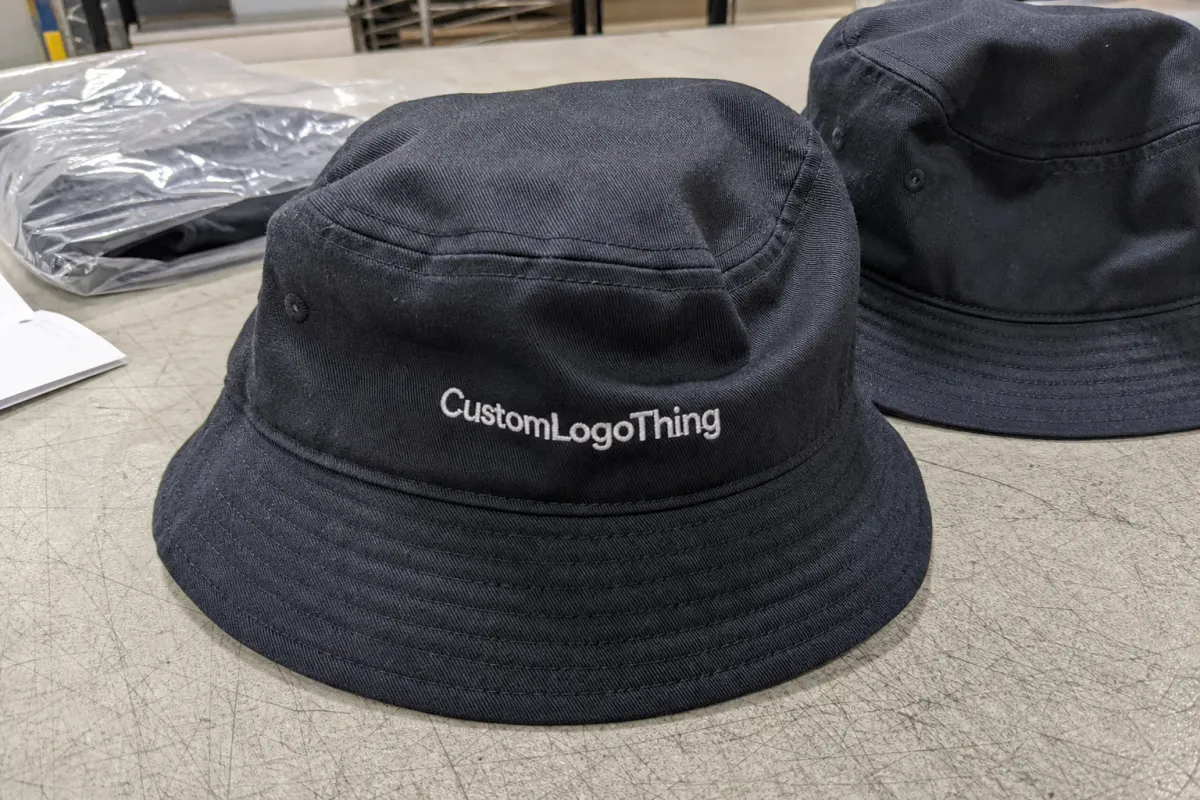
A bucket hat looks simple from a distance. In production, it is a stack of small decisions. The crown may be made from multiple panels or a single joined pattern. The brim may be soft, lightly interfaced, or fully structured. The seams can be narrow and fast, or dense and labor-heavy. Even the way the sweatband is attached changes machine time. That is why brand bucket Hats Unit Cost tends to move more with construction than with the artwork on the front.
Small changes add up quickly. Increase the crown depth and you use more fabric. Tighten the stitch density and you add line time. Switch from a plain internal seam to bound finishing and the operator needs another step. On a 500-piece run, a few extra minutes per dozen can show up as a meaningful unit increase. On a larger run, the same change may look small on paper but still alter the landed cost enough to affect pricing strategy.
The visible part of the hat is not always the expensive part. Buyers tend to focus on embroidery size or patch shape because that is what the customer sees first. In practice, the underlying body spec often drives the bigger cost swing. A hat with a simple one-color logo can still be more expensive than a seemingly busier version if the first hat uses heavier fabric, a reinforced brim, and custom labels.
There is also a comparison trap. A cheap promotional bucket hat and a retail bucket hat may share the same silhouette, but they are not built for the same job. The promo version can accept a softer handfeel and looser tolerances. The retail version usually needs sharper edge finishing, better symmetry, and more stable decoration. One is built to distribute. The other is built to be kept.
Practical rule: if two quotes differ more than expected, ask what changed in the body, not just the decoration. Brim width, panel count, sweatband type, lining, and stitch style can move the price faster than a simple logo update.
A quote without a full spec sheet is not a price. It is a placeholder.
Choose the Right Hat Body, Shape, and Fabric
Fabric choice shapes more than appearance. It affects handfeel, decoration quality, wearability, and how the product sits in the channel. Cotton twill is still the safest all-rounder for branded bucket hats. It usually gives a familiar feel, takes embroidery well, and photographs cleanly. Washed cotton has a softer, more relaxed look that works for lifestyle or heritage branding. Denim creates a heavier, more fashion-driven result. Nylon and recycled blends lean lighter and can make sense for outdoor programs or technical merchandising.
Most buyers underestimate how much fabric weight changes perception. A bucket hat in a light woven cloth can look casual and inexpensive even with strong branding. A heavier 220-280 gsm cotton twill signals more substance, but it may also hold heat more than a thinner build. That trade-off is not abstract. It shows up in customer comfort, repeat wear, and whether the hat gets used after the event.
Shape matters just as much. Crown depth changes the silhouette. Brim width changes how the hat reads from a distance. A wider brim may improve sun coverage and create a stronger visual line, but it can also increase cutting waste and alter the drape. An unstructured hat packs flatter and usually feels lower-risk for giveaways. A more structured body holds form better, which is useful for retail, staff uniforms, and higher-value brand programs.
Stitching is another quiet cost driver. A simple topstitch can keep the silhouette relaxed. Multiple rows of stitching around the brim improve stability and create a neater edge, but they also add labor. Add a contrast thread color and the hat becomes more visible, which can help the design, yet it increases the chance of color mismatch across repeat orders. That is a small issue on a one-off drop. On a long-running brand program, it becomes a consistency issue.
Fit is easy to ignore until the product lands. Adult bucket hats often sit around 58-60 cm, while youth sizes are usually closer to 54-56 cm. If the order needs broad coverage, adjustable sizing or a tested size range is safer than guessing. A product that fits poorly will not just disappoint the wearer. It will distort the unit cost, because unsold or unused hats are the most expensive hats in the room.
Here is a practical way to compare common body choices:
- Cotton twill: balanced cost, easy decoration, strong default choice for most branded runs.
- Washed cotton: softer appearance, slightly more casual finish, good for fashion-led branding.
- Denim: heavier handfeel, stronger style statement, usually better for premium or seasonal collections.
- Nylon: lighter and quicker-drying, useful for outdoor or sport-oriented use.
- Recycled blends: a good fit for buyers with sustainability requirements, though sourcing can take longer and color matching may be tighter.
None of those options is automatically better. The right one depends on how the hat will be used, how it will be packed, and what kind of brand story it needs to carry.
Brand Bucket Hats Unit Cost: Pricing, MOQ, and Quote Drivers
Once the body spec is fixed, the quote becomes easier to read. A useful price should separate the hat body, decoration, labels, packing, freight, and any setup or digitizing charges. Buyers get into trouble when they compare only the headline number. The lowest quote can become the most expensive landed cost once carton charges, sample fees, and packaging upgrades are added back in.
MOQ changes the math faster than many teams expect. Setup work such as pattern preparation, embroidery digitizing, and sample approval has to be spread across the order. On a small run, those fixed costs weigh heavily on each piece. On a larger run, they dilute. That is why brand Bucket Hats Unit cost usually falls as quantity rises, though there is a point where storage, cash flow, and sell-through risk start to matter more than the factory price.
Buyers often ask whether the decoration method is the main cost lever. Sometimes it is. A simple embroidered logo can be inexpensive, but once the art becomes dense or the placement is awkward, a woven patch or printed patch may be more efficient. The point is not to chase the fanciest method. The point is to choose the method that fits the artwork without forcing extra handling or creating a finish that looks strained on a small brim.
| Decoration method | Typical setup | Indicative unit add-on | Best fit |
|---|---|---|---|
| Embroidery | $25-$60 digitizing | $0.35-$1.20 | Simple logos, limited color count, durable brand marking |
| Woven patch | $40-$90 art prep | $0.60-$1.50 | Fine detail, smaller text, premium retail presentation |
| Printed patch | $30-$75 setup | $0.45-$1.10 | Color-heavy graphics, flexible branding, mid-tier budgets |
| Direct print | $0-$40 prep | $0.25-$0.85 | Fast promo programs, flatter surfaces, simpler artwork |
Those figures are directional, not universal. Stitch count, patch size, fabric type, and order quantity can move them materially. A small logo on a stable cotton body is usually straightforward. A multi-color design on a curved, soft crown is more demanding. If the logo is detailed and the run is small, the cheapest method on paper may not be the best method in practice.
A clean comparison should include the same baseline across suppliers:
- Use the same fabric, shape, and decoration method.
- Ask for the same delivery basis or Incoterms.
- Separate setup fees from recurring unit price.
- List freight, samples, and carton costs line by line.
- Confirm whether polybags, swing tags, and barcode labels are included.
That last point matters more than many teams admit. Retail-ready packing can add real cost, but it also changes receiving efficiency and shelf readiness. A quote that excludes packaging may look attractive until the rest of the supply chain gets involved. A quote that includes it may look expensive until you compare the actual landed number.
A rough reality check helps here. On a 500-piece order, a $0.70 difference per unit is $350 before freight. On a 5,000-piece order, that same gap becomes $3,500. If the margin on the finished product is thin, those gaps matter immediately. If the program is promotional, the numbers still matter; they just show up as budget pressure instead of margin pressure.
Process and Lead Time From Artwork to Shipment
The production path is usually simple, but the delays cluster in the same places. A standard order moves through briefing, artwork proofing, sample approval, bulk production, inspection, packing, and dispatch. If each stage is approved cleanly, the schedule stays predictable. If one step changes late, the whole order moves.
Most timing problems start before the sewing line. Missing vector files force cleanup. Low-resolution logos slow proofing. Unclear color references cause back-and-forth on shades. Last-minute changes to crown height or brim width can send a sample back into revision. Buyers often focus on factory capacity first, yet the bigger variable is usually approval speed.
A practical timeline for Custom Bucket Hats often looks like this:
- Artwork proofing: 1-3 business days if files are clean and the spec is settled.
- Sample lead time: often 7-12 business days, depending on fabric sourcing and decoration method.
- Bulk production: commonly 12-25 business days after approval for standard runs.
- Freight and transit: depends on route, season, and whether the order moves by air or sea.
Rush orders are possible, but they tend to raise the quote and reduce room for error. A factory that has to reshuffle a line, source faster, or split production into smaller batches usually prices that pressure back into the order. The extra cost is not random. It is the cost of speed and reduced flexibility.
Sea freight can make sense for larger runs or lower-urgency replenishment orders, but it adds transit time and requires cleaner planning around cartons and inventory. Air freight shortens the wait, though it can erase most savings on a small order. The decision should match the sell-through window, not just the production calendar.
If the proof changes after approval, the schedule changes too.
For buyers who manage packed goods or multi-item programs, transport handling standards matter more than they first appear. Trade groups such as ISTA are useful for understanding carton testing and distribution stress. If the order includes paper swing tags or inserts, FSC-certified stock can support a cleaner procurement brief without changing the product look; see FSC for the certification framework.
Spec Checks That Prevent Rework, Returns, and Margin Loss
The costly mistakes are usually small. A logo placed a little too low can make the hat feel off-center. A thread shade that is close but not matched can weaken brand consistency. A patch that looks balanced in a flat mockup can overwhelm a small crown once it is sewn. None of that sounds dramatic at the proof stage. On the finished product, the flaws are obvious.
Good teams lock the critical points before approval. Measurements should be written down, not left to interpretation. Placement should be shown in millimeters. Color should be tied to a reference where possible. That does not mean every supplier can hit perfection on the first try, but it does mean there is a clear target and a clear standard for rejection or correction.
The most useful spec checks are the ones that prevent downstream work. Rework costs time. Returns cost more. If an order is for a uniform rollout or a retail launch, the cost of a mistake can spread across multiple teams, not just the factory.
- Logo size and placement: confirm exact measurements rather than relying on a mockup alone.
- Thread or print color: specify Pantone or a verified sample where possible.
- Stitch style: flat, satin, outline, or border stitching changes both look and price.
- Packaging: polybags, inserts, barcode labels, and carton marks should be written into the spec.
- Fit and sizing: adult, youth, or adjustable sizing must match the end user.
Packaging deserves more attention than it usually gets. It affects how the product lands in storage, how easy it is to count and receive, and how consistent the line looks across repeat shipments. A retail program may need individual packing and barcodes. A giveaway may not. If the packaging spec is vague, the quote will be too optimistic. If the packaging spec is overbuilt for the channel, it will waste money without improving sell-through.
There is also a practical sustainability angle. If the order needs paper inserts, use material choices that match the program objective. FSC-certified paper and restrained packaging can support a better procurement story without adding unnecessary layers that disappear the moment the carton is opened. That is a useful distinction. Sustainable does not have to mean ornate.
One more item is worth checking: tolerance. A good supplier should be able to state how much variation is acceptable in crown symmetry, brim width, patch position, and color consistency. If nobody can define tolerance, the approval process will drift. And once drift starts, the cheapest quote becomes expensive very quickly.
Why Consistent Factory Controls Matter More Than a Cheap Quote
A low quote is attractive until defects appear. Then the actual cost shows up in inspection time, delayed freight, make-good shipments, and the time spent explaining the issue to the receiving team. Factory controls are not bureaucratic extras. They are a cost control system. Stable cutting keeps the shape consistent. Repeatable decoration keeps the logo in the same place. Documented checks reduce the odds that one batch looks different from the next.
Buyers should look for three things in particular: pre-production samples, in-line inspection, and traceable approvals. The sample confirms the build before bulk starts. In-line checks catch issues while they are still fixable. Traceable signoff creates a record if the order needs review later. That record becomes valuable very quickly on corporate programs, sports retail, and any order that will be repeated across multiple drops.
There is a simple arithmetic reason this matters. A 2% defect rate sounds small until it hits a 3,000-piece order. That is 60 units that need rework, replacement, or write-off. If the order is meant for resale, those 60 units are not just a factory problem. They are a margin problem. If the order is for an event, they are a fulfillment problem. The quote never warned you about either one.
Good factory control also helps comparison shopping. A supplier quoting slightly higher may actually be the better deal if the process is tighter and the inspection plan is clearer. A cheaper source with uneven stitching or weak communication often creates hidden costs later. Procurement sees the unit number. Merchandising sees the customer. Operations sees the returns. All three are right, but only one of them sees the full chain from approval to arrival.
For buyers comparing multiple suppliers, reviewing similar programs in a Case Studies archive can reveal more than a price sheet. If the spec stayed stable and the outcome stayed stable, that is a useful signal. If the vendor can only quote quickly when the brief is vague, the number is not helping the buyer make a sound decision.
The most dependable programs are usually the least dramatic. The spec is clear, the sample is approved early, the packing is written down, and the production checkpoints are boring in the best possible way. That is what keeps brand Bucket Hats Unit cost under control without turning the order into a correction exercise.
What affects brand bucket hat unit cost most?
Fabric choice, structure, decoration method, and packaging usually move the number more than the logo itself. MOQ and freight can change the landed cost enough to alter margin, especially on smaller runs where setup fees are spread across fewer pieces.
How does MOQ change the unit price for branded bucket hats?
Lower quantities spread sample work, setup, and approval time across fewer hats, so each piece costs more. Higher quantities usually improve unit cost until storage, cash flow, or sell-through limits become the real constraint.
Is embroidery cheaper than a patch on custom bucket hats?
Simple embroidery is often cheaper for clean logos with limited detail. Patches can be a better choice when the artwork is small, intricate, or color-heavy, because they preserve detail without forcing dense stitch work across the hat body.
How long does custom bucket hat production usually take?
Artwork proofing can take a few days, samples often take about one to two weeks, and bulk production commonly runs for a few more weeks after approval. Rush orders are possible, but they usually raise the quote and leave less room for changes.
What should I include to get an accurate bucket hat quote?
Send quantity, artwork files, decoration method, fabric preference, sizing, packaging needs, and delivery location. The more complete the brief, the easier it is to make brand bucket hats unit cost accurate instead of approximate.


