Event merch Bucket Hats Unit cost looks straightforward on paper, but the number that matters is usually the landed cost divided by how long the hat stays visible. A $4 hat worn through a full festival day can deliver more value than a cheaper giveaway that gets stuffed into a tote after 20 minutes. That is the core mistake many buyers make: they compare the purchase price, not the exposure.
For outdoor events, staff uniforms, sponsor activations, and merch drops, bucket hats sit in a useful middle ground. They are practical enough to get worn, branded enough to be photographed, and flexible enough to fit different budgets without looking cheap. The catch is that Event Merch Bucket Hats unit cost moves quickly if the spec is loose. Fabric weight, brim shape, decoration method, and packing choice can change the quote more than most people expect.
There is another reason they keep showing up in event budgets. A hat is not a throwaway item in the same way a flyer or sticker is. It has a use case. It gives shade, helps with heat, and can survive beyond the event. That is why smart buyers judge the spend against visibility and wear time, not just the sticker price.
Why Bucket Hats Can Beat Other Merch on Cost Per Impression
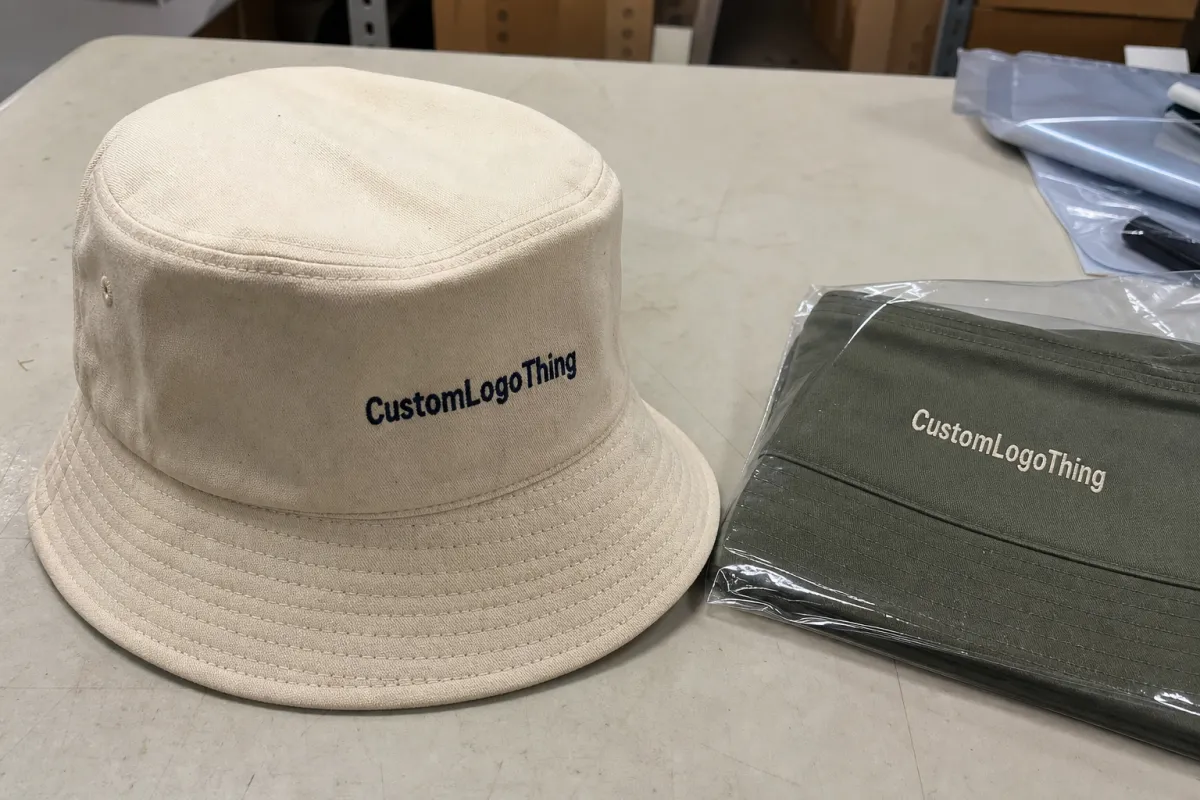
From a buyer's point of view, the best promo item is not always the cheapest one. It is the item that stays in circulation long enough to earn its keep. Bucket hats do that well. They show up in crowd photos, staff photos, and short-form video because they sit high on the frame and carry branding without needing explanation. One hat can create dozens of impressions in a single afternoon, which changes the math around event merch bucket Hats Unit Cost.
That is why they often outperform lower-priced handouts. A pen costs less, but it rarely gets repeated exposure. A branded bucket hat can sit on volunteers, activation staff, or field teams for hours. If the event runs for two or three days, the same piece works again and again. The unit cost does not change, but the visibility compounds.
The buyer scenario matters as much as the product. A music festival wants style and crowd appeal. A golf outing wants sun protection and a clean logo placement. A field team cares more about shade, sweat comfort, and packability than fashion. In all three cases, the hat is doing a job beyond decoration. That is why Event Merch Bucket Hats unit cost should be judged against reach, not against the lowest number on the quote.
Bucket hats also avoid one of the classic problems of flat merch: they are hard to ignore in motion. A logo on a chest is useful. A logo on a moving brim is often better. It catches light, stays readable in groups, and tends to survive the crop of event photos. If you are buying for visibility, compare cost per impression, not just cost per piece.
There is a practical packaging lesson here too. Items that have a clear field use and a long wear window usually justify a little more structure in production and packing. That means the cheapest option is not always the best budget outcome. A lower-cost blank with poor fit or sloppy packing can cost more once damage, returns, or replacement units are counted.
A better question than "What is the cheapest bucket hat?" is "Which version gives me the best impression value without creating packaging, approval, or lead-time problems?"
Bucket Hat Styles, Brim Shapes, and Decoration Areas
Bucket hats are not priced the same because they are not built the same. A soft cotton twill hat with a standard brim is usually the baseline. Washed canvas feels heavier and more premium. Nylon versions dry faster and work well for humid or active events. Reversible hats add material, stitching, and handling complexity, which almost always shows up in the quote. Each choice affects both the hand feel and the event merch bucket hats unit cost.
Brim shape is a small detail with a large pricing effect. A narrow brim is easier to sew and keeps the look tidy for retail-style merch. A wider brim gives more coverage, which matters for outdoor staffing or long exposure in the sun. A stitched-down brim holds shape better in photos, while a softer brim packs flatter for shipping and storage. Crown height changes the logo placement too. A taller crown gives more visual space; a lower crown looks cleaner but leaves less room for decoration.
Decoration areas deserve the same level of attention. Front-panel embroidery is still the most common choice because it is easy to see and usually predictable to price. Side-panel embroidery can look more premium but may require extra setup. Woven labels are useful for small logos or understated branding. Brim print is eye-catching, though it needs accurate alignment. Full-color transfers and all-over print support bolder art, but they are less forgiving than a single-location logo and often cost more.
In practice, the artwork should match the panel structure, not fight it. A detailed logo stretched across a curved front panel often looks worse than a simpler mark placed where the eye naturally lands. Buyers sometimes overdesign hats because the space feels small and they want to use all of it. That usually pushes the hat toward a higher cost tier without improving the result.
| Style | Typical Use | Common Decoration | Relative Cost Pressure |
|---|---|---|---|
| Soft cotton twill | Staff, festivals, general giveaways | Front embroidery, woven label | Low to moderate |
| Washed canvas | Premium merch, sponsor drops | Embroidery, patch, side label | Moderate |
| Nylon or quick-dry | Outdoor teams, active events | Patch, transfer, small embroidery | Moderate |
| Reversible build | Fashion-led campaigns, retail-style programs | Woven label, limited print zones | Higher |
Photos matter more than many buyers admit. In a group shot, a readable front mark and a clean brim line usually outperform a crowded design. That matters for recap content, sponsor photos, and anything that lives on social. A small, tidy logo is often more effective than a large graphic that distorts on a curved panel. In practice, the best hat is the one that looks intentional from three feet away.
Fabric, Sizes, and Build Specs That Affect Wearability
Comfort drives wear time, and wear time drives impression value. That is why fabric weight, lining, sweatband construction, and ventilation matter. A 100% cotton twill bucket hat feels familiar and usually prints cleanly. A lighter polyester blend can dry faster and may weigh less in bulk shipments. Heavier canvas can feel substantial, but if it is too stiff, it may sit unused after the event. Event merch bucket hats unit cost should always be read alongside comfort specs, because an uncomfortable hat is expensive no matter what the quote says.
Fabric weight is one of the easiest specs to miss and one of the easiest to feel in hand. A lighter twill can keep the hat breathable, but it may collapse in photos or lose shape after packing. A heavier fabric can hold a cleaner profile and improve perceived quality, yet it adds cost and can trap heat if the event is outdoors. If the hat is intended for summer use, breathability often matters more than a dramatic hand feel.
Most programs use one size fits most, which keeps MOQ and logistics simple. Adjustable features are less common than on caps, but some hats include elastic inserts, drawcords, or deeper crowns to broaden fit. That is useful for staff uniforms or mixed-age crowds. If the program is retail-like or for premium hospitality, a tighter size spec may be worth the added complexity. Buyers Should Ask for head circumference guidance, not just a generic size note.
Structure is the tradeoff most people miss. A softer hat ships flatter, stores more efficiently, and is often cheaper to produce. A more structured hat keeps its shape better during long wear and photographs well under event lighting. Neither is universally better. The right answer depends on whether the hat is meant to disappear into a kit or stand up as a visible brand asset. If you want a premium finish, ask about crown reinforcement, brim stitching density, and seam consistency.
There are a few quality checks that reduce surprises on arrival. Colorfastness matters if the event is outdoors and the hats may be exposed to heat or damp conditions. Panel alignment matters because a slightly crooked seam can make the logo look off-center even when the print itself is correct. Sweatband construction matters when wear time is long or the climate is hot. Ventilation eyelets or mesh panels can improve comfort, although they may not suit every look.
Do not ignore carton specs either. How many units per master carton? Are hats polybagged individually or packed loose to save cost? Are carton labels readable and consistent with the receiving team's process? These details sound operational, but they directly affect handling time, damage risk, and the chance of a shipment being delayed at receiving. A quote that looks low on paper can become expensive if every box needs extra labor on arrival.
Event Merch Bucket Hats Unit Cost, MOQ, and Quote Drivers
This is where the real pricing work happens. Event merch bucket hats unit cost is usually shaped by five variables: quantity, blank hat choice, decoration method, setup charges, and delivery requirements. Raise the quantity and the per-piece price usually falls because tooling fees, digitizing, and labor are spread across more units. Order 300 pieces and you may pay a noticeable premium over 1,000 pieces, even if the design stays the same.
For practical budgeting, broad ranges are more useful than a single "starting at" number:
- Basic cotton twill with one-color embroidery: often around $3.50-$5.50 per piece at mid-range quantities.
- Premium canvas or heavier build with patch decoration: often around $5.50-$8.50 per piece.
- Reversible or fully custom construction: commonly $8.00-$12.00+ per piece, depending on detail level.
Those are not fixed rates. They are buying ranges. The final quote depends on how the supplier handles setup charges, how many colors are in the logo, and whether the artwork is clean enough to move straight into production. Small runs always absorb more overhead per piece. Larger runs give better bulk pricing, but only if the spec stays stable from proof to shipment.
Decoration method changes the price structure more than most buyers expect. Embroidery adds digitizing and stitch-time considerations. A simple left-chest-style logo on a hat is not the same as a dense, multi-color design with fine detail. Woven patches bring their own tooling fees. Screen print can be efficient for simple artwork, but curved surfaces and small logos can create waste. Heat transfers are flexible for full-color art, though they may not suit every event because durability expectations vary.
There are also setup costs that rarely make the first conversation. Digitizing can be a one-time expense for embroidery, especially if the file is not already clean. Patch tooling, label production, or custom woven trim may carry their own minimums. If you plan to reorder, ask what gets stored and what does not. A program with repeated seasons should not pay the same setup twice unless the design changes.
MOQ deserves a straight answer too. Some factories quote a low number for standard blanks and a higher number for custom colors or custom trims. Mixed colors are sometimes possible, but that does not automatically mean the same unit cost applies across every colorway. A supplier may accept 100 each of three colors, yet still treat the order as three separate setup lines. If you want clean budgeting, ask whether all colors share one production run or several.
Freight and packaging often sit outside the base piece price, but they should not be treated as minor extras. Shipping can change the landed cost enough to move a purchase decision. The same is true for retail-style packaging, hangtags, belly bands, and special inserts. If you need each hat individually polybagged and carton-labeled for distribution at separate events, ask for that in the first quote. Late changes are where budget creep starts.
Seasonal timing can matter too. Orders placed ahead of festival season, end-of-quarter activations, or holiday-heavy production windows are more likely to face capacity pressure. That does not always mean a major surcharge, but it can mean fewer blank options and a tighter approval window. A cheap unit cost is not useful if the factory is already committed and the event date is fixed.
Here is the short version: the cheapest event merch bucket hats unit cost is rarely the cheapest order. What matters is the landed total, the quality of the logo finish, and whether the lead time fits the event window.
Production Process and Turnaround From Proof to Delivery
A clean production flow saves money. The process usually starts with a quote review, then moves to artwork cleanup, digital proofing, sample approval if needed, production, quality control, and shipping. Each step has a gate. If one gate fails, the schedule slips. Most delays happen before the machine ever starts running: blurry logos, missing Pantone references, or approval changes after the proof is already signed off.
Turnaround depends on the decoration and the material. A simple embroidered hat from approved artwork may move faster than a custom-woven or all-over-print option. Standard production often sits in the 12-15 business day range after approval, though that can stretch when fabrics need sourcing or the order lands near a peak event period. Rush work is possible in some programs, but rush pricing and freight upgrades usually push the event merch bucket hats unit cost higher.
Color matching is one of the biggest schedule variables. If your brand relies on exact tones, send the Pantone reference up front. If the logo is vector, send it in a clean format so digitizing does not become a back-and-forth cycle. The goal is not just to approve faster. It is to reduce the number of times the quote, the proof, and the final product need to be reconciled.
Shipping destination should be discussed early, not at the end. A domestic warehouse, a single event venue, and a multi-location drop ship are three different jobs. They have different carton labels, different timing risks, and different cost structures. A buyer planning a launch should share the hard deadline, receiving hours, and whether the hats must arrive with other event items. That information helps the supplier build the schedule around a real delivery need instead of a best guess.
Quality control should not be treated as a box-check. Ask what the supplier inspects: stitch count, logo placement, color consistency, loose threads, and carton counts. For larger programs, a pre-production sample can be worth the extra time because it confirms proportions before a full run starts. That is especially useful when the hat has a wider brim, a woven patch, or a mixed-material build.
Ask for one more thing if the order is large: a photo of the finished sample before mass production begins. That single step can catch proportion issues that are hard to read in a flat proof. A curved panel changes how a logo sits. A brim can hide part of a mark. A patch can look oversized once it is stitched. A good production partner will expect those checks and build them into the process.
Why Repeat Buyers Keep Hat Programs on One Supplier
Repeat buyers are usually not chasing the lowest quote every time. They are chasing consistency. If the same supplier stores the spec, keeps the color references on file, and knows the decoration placement, reorders become faster and less error-prone. That matters for annual events, staff refreshes, and programs that roll out across multiple locations. One supplier can keep size, crown shape, and logo position aligned across batches, which protects the brand image.
There is also a real administrative benefit. A stable program cuts back-and-forth. Instead of rebuilding the brief every time, the buyer can update quantity, delivery date, or a single branding element. That reduces approval time and lowers the chance of accidental spec drift. For purchasing teams under pressure, that is a cost control tool, not just a convenience.
Packaging and fulfillment become simpler too. If the supplier already knows the cartons, labels, and packing method, the order can move more predictably. Bulk packing may be best for staff distribution. Individual polybags may be better for retail-style programs or venue handouts. Kitting with shirts, lanyards, or tote bags adds another layer, but it is manageable when the supplier has handled the format before.
Reliability matters because mistakes multiply quickly. A minor logo shift on 1,000 hats is


