Chocolate Ribbed Winter Beanies Material Sample Guide
A chocolate ribbed winter Beanies Material Sample guide is less about browsing options and more about preventing expensive misunderstandings. Product photos can hide a lot. They do not show how a rib recovers after stretching, how a brown yarn shifts under indoor light, or whether the cuff feels clean on the head after ten minutes of wear. Those details decide whether the finished piece feels intentional or merely acceptable.
Chocolate is a deceptively difficult color. It can lean warm, cool, dusty, reddish, or nearly black depending on fiber content, dye method, and lighting. Rib construction adds another layer of complexity because texture changes how the shade reads. A beanie that looks rich on screen may turn flat once the yarn is knitted and the cuff is folded. The sample is where those mismatches surface early, while they are still cheap to fix.
Good sampling also tells you something about the factory's discipline. If the material swatch is consistent, the stitch density is clean, the label sits square, and the beanie measures what the spec sheet says it should measure, bulk production has a better chance of staying on track. If the sample already shows loose finishing or weak color control, that is not a small issue. It is a warning.
What chocolate ribbed winter beanies samples actually reveal
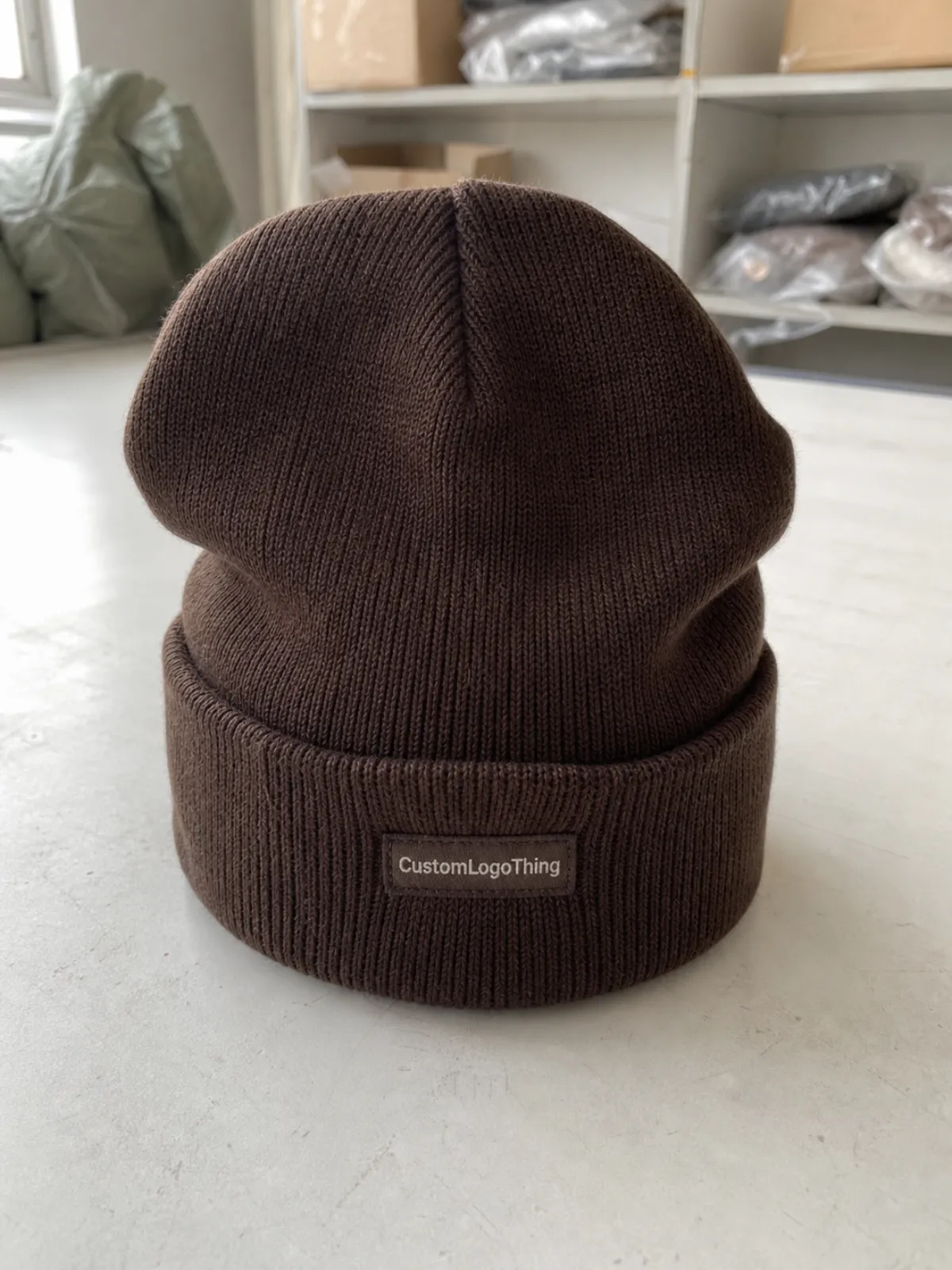
The first sample is a working prototype, not a display piece. Treat it that way and it will answer the questions that matter most: does the color hold up under real lighting, does the rib stretch without bagging out, and does the beanie still feel comfortable after a full wear cycle? Those answers are usually more useful than any polished render.
Color is the easiest place to get fooled. A brown yarn can look darker in warehouse light, softer in daylight, and more saturated on a phone screen. Polyester-heavy yarns often read flatter. Wool blends tend to bring more depth. Recycled yarns can introduce subtle tonal variation that feels premium when done well, but sloppy if the source control is weak. If a sample looks right in one setting and wrong in another, assume the bulk run will show the same inconsistency. Production rarely smooths out a color problem on its own.
Comfort matters just as much. Winter headwear gets worn against hair, skin, collars, and hoods. A sample that feels fine for thirty seconds can become irritating after an hour if the yarn is coarse, the seam is bulky, or the cuff edge digs in. Buyers often miss that because they test the beanie only once, and only briefly. A better check is simple: wear it, fold it, remove it, put it back on, then inspect how the shape and feel change.
"It looked rich online, but the sample told a different story: the shade was right, the handfeel was not, and the cuff kept losing shape." That is exactly the kind of friction a sample is supposed to uncover.
Another useful test is storage behavior. Ribbed winter beanies spend time packed, folded, compressed, and shipped. If the sample shows deep crease memory, a bent cuff, or a crown that does not bounce back after being folded in packaging, the buyer needs to know before bulk production. One overlooked wrinkle can turn into a line of returns that all look slightly off on the shelf.
Ask one blunt question while reviewing the sample: would this still be approved if the logo were removed? If the answer is no, the body of the hat still needs work. That question strips away the decoration bias and pushes attention back to the actual product.
How rib knit construction affects warmth, stretch, and fit
Rib knit construction does more than create texture. It controls stretch, recovery, and the visual weight of the beanie. A 1x1 rib usually gives firmer grip and a cleaner silhouette. A 2x2 rib tends to feel softer and slightly more relaxed. Neither is universally better. The right choice depends on whether the beanie is meant to fit close to the head, sit slouchier, or carry embroidery without distortion.
Gauge changes the feel more than many buyers expect. A finer gauge generally creates a smoother surface and better logo stability, while a heavier gauge can feel more substantial but may lose shape faster if the yarn does not recover well. If the sample feels "premium" but collapses after a few stretches, that premium impression is superficial. Recovery is what keeps the beanie looking current after wear.
Cuff height is another spec that quietly changes everything. A short cuff looks sharper and more modern, but it leaves less room for branding and may slide on some head shapes. A taller cuff adds decoration space and structure, yet it can make the hat feel bulky if the yarn is thick or the rib is loose. Crown depth matters too. Too shallow and the beanie rides up. Too deep and it sags in a way that looks unintentional rather than relaxed.
For buyers checking production quality, a practical measurement sheet should include:
- Relaxed circumference and stretch range
- Cuff height and cuff density
- Crown depth from top seam to brim
- Rib count, such as 1x1 or 2x2
- Weight per piece if the factory can provide it
Decoration is tied to construction too. Embroidery on a loose rib can distort when the fabric stretches. Woven labels need a stable seam area. Patches work well only if the knit is firm enough to support the edges without puckering. Even small changes in stitch density can alter how clean the logo sits. A flat mockup cannot show that. The sample can.
Warmth is not only about thickness. Dense knitting traps air more effectively than an airy structure, but very tight knitting can reduce comfort and stretch. That trade-off matters most in winter products because buyers often ask for warmth and flexibility in the same sentence. The sample is where those competing goals get negotiated.
Material options: acrylic, wool blends, recycled yarns, and lining
Most sourcing decisions for ribbed winter beanies land in four material lanes: acrylic, wool blends, recycled yarns, and lined versions. Each one shifts the sample in a noticeable way. Fiber content changes handfeel, warmth, wash behavior, color depth, and price at the same time. That is why the Chocolate Ribbed Winter Beanies material sample guide has to focus on physical performance, not just color approval.
| Option | Feel and performance | Typical cost impact | Best use |
|---|---|---|---|
| 100% acrylic | Soft, lightweight, easy to dye, usually reliable for color consistency | Lowest sample and production cost | Promos, seasonal merch, price-sensitive programs |
| Wool blend | Warmer touch, more natural loft, often stronger premium perception | Moderate to higher cost | Retail, gifts, outdoor-oriented branding |
| Recycled yarn | Can perform well, but quality depends on source control and batch consistency | Often slightly higher, sometimes much higher | Sustainability-led collections, brand programs with disclosure |
| Lined beanie | Warmer and softer inside, but bulkier and less stretch-friendly | Adds material and sewing cost | Cold-weather retail, ski shops, higher comfort expectations |
Acrylic still dominates a lot of programs because it is predictable. It dyes well, behaves consistently, and keeps unit cost under control. That does not make it luxurious, but it does make it practical. Wool blends can feel better right away and may wear warmer, though they usually raise cost and can introduce care limitations. If the design is meant to sit in a premium gift box, that extra feel may justify the expense. If the product is a low-margin promotion, it may not.
Recycled yarns need closer scrutiny than buyers sometimes expect. The challenge is not just the sustainability claim. It is consistency. A recycled yarn can look excellent in one batch and slightly off in another if the supplier does not control source and blend carefully. Ask for the fiber breakdown, the recycled content percentage, and any documentation that supports the claim. If the explanation is vague, the sample should be treated as provisional.
Lining changes the product more than a small spec note suggests. Fleece adds warmth and softness, but it also increases bulk and can limit stretch. Thermal jersey stays lighter and is usually easier to wear for longer periods. Brushed tricot sits in the middle. The right lining should match the target climate and retail price, not simply make the hat feel more expensive in hand.
There are also practical defects to watch for. Pilling usually shows up early on lower-grade yarns or loose knitting. Shrinkage after wash testing is a stronger warning than buyers sometimes admit. If the seam twists, the crown warps, or the label curls after a wash cycle, that is not an outlier. It is a process issue. A good sample should survive a simple cold wash and flat dry without changing character.
If sustainability messaging matters, request proof rather than adjectives. FSC certified packaging, verified recycled content, and clear fiber statements are easier to defend than "eco-friendly" language with no backing. The same applies to biodegradable packaging. Ask what part of the pack qualifies, what standard it meets, and whether the claim applies to the box, the insert, or the outer wrap. A precise claim is more useful than a flattering one.
Cost, pricing, MOQ, and quote drivers for sample orders
Sample pricing usually reflects more than one hat. The quote may include yarn setup, knitting time, finishing, decoration, packing, and freight. If the factory is using stock yarn and a standard rib, the cost can stay modest. If the chocolate shade needs custom dyeing or the beanie is lined from the start, the number rises quickly.
For a simple custom knit sample, a practical range is often around $35-$95 before freight. Once custom dye, lining, or more complex decoration enters the picture, sample pricing can move into the $100-$180 range, especially if the project needs revision rounds. That is not a universal rate, and no honest supplier should pretend it is. The point is to understand what drives the fee: not just the sample itself, but the setup behind it.
MOQ affects the economics in a predictable way. Lower minimums often mean higher unit cost because the factory has less room to spread setup time and finishing labor. Larger runs can lower the per-unit price, but only if the spec is stable. If you are comparing suppliers, ask for the sample fee, the bulk unit price, and the decoration add-on costs separately. Otherwise one offer looks cheaper until the final invoice appears.
Common quote drivers for a chocolate ribbed winter Beanies Material Sample guide include:
- Custom dyeing for the exact chocolate shade
- Yarn type, especially wool blends and recycled yarns
- Label method, such as woven label, woven patch, leatherette patch, or embroidery
- Lining choice, which adds cost and bulk
- Packaging level, from basic polybag to folded presentation pack
- Revision samples, which are common when fit or color needs correction
One useful procurement habit is to ask for three figures side by side: a first sample, a revision sample, and the projected production cost. That split reveals where the real pressure sits. Sometimes the sample is cheap because the factory is absorbing setup. Sometimes production is expensive because a custom color or lining structure will stay costly at scale. The quote is much easier to judge once those pieces are visible.
Freight is not minor either. A sample that ships poorly can arrive creased, crushed, or contaminated by packing odor. For soft goods, a clean corrugated cardboard mailer with a careful fold and some kraft paper usually protects the beanie well enough for review. If a brand wants to test transit performance more formally, some teams compare packaging methods against distribution test standards such as those referenced by ISTA. That may sound elaborate, but it becomes sensible when the product has to survive repeated shipping, retail handling, and storage.
Process, timeline, and lead time from request to approval
A clean sample process is straightforward: send the brief, confirm the yarn and rib spec, review the first sample, request revisions if needed, then lock the final version. The difficulty is not the sequence. It is the discipline. Teams often move too quickly on color or too slowly on feedback, and either mistake can stretch the timeline.
Most delays come from unresolved questions. If the color target is vague, the label file is unclear, or the buyer takes several days to answer whether the brown should lean warm or neutral, the sample schedule slips for no good reason. A factory can knit quickly, but it cannot guess what "dark chocolate" means in your category or lighting environment. That needs to be specified.
Typical timing looks like this: 3-7 business days for a simple stock-material sample, 7-15 business days if custom dyeing or special finishing is involved, and additional transit time based on destination. If the project needs a revision, add another cycle. Custom yarn sourcing can take longer still, especially if the factory has to match a specific tone or secure a recycled blend with the right consistency.
A clear timeline should break the job into dates, not just a rough promise. Ask when yarn selection closes, when knitting starts, when finishing is complete, when the sample ships, and how long the feedback window is before a revision starts. That level of detail matters because it lets everyone see where time is actually being spent. It also makes it easier to spot bottlenecks before they become excuses.
Packaging should be tested in the sample stage, not added later as an afterthought. A beanie packed too tightly can arrive with bent ribs or a compressed cuff. A sample that is folded badly can hide a fit issue because the buyer is reviewing the wrong shape. If the brand uses FSC certified inserts, biodegradable packaging, or post-consumer waste materials, confirm the exact specification before print files are released. Loose language in packaging claims can be more damaging than a slight finish flaw.
For practical planning, a sample schedule is strongest when it includes three checkpoints: material approval, construction approval, and packaging approval. If those are all bundled into one vague sign-off, the final order becomes harder to control. The sample should reduce uncertainty, not redistribute it.
Common sample mistakes that create expensive production problems
The biggest mistake is approving color and ignoring fit. A brown shade can be perfect and still produce a bad product if the beanie collapses, rides up, or feels oddly shallow. Color gets the first reaction. Fit determines whether the hat is kept, worn, and reordered.
Another common error is testing only one person. Ribbed beanies stretch differently across head sizes, hairstyles, and comfort preferences. A sample that feels balanced on one tester may feel tight on another or loose on someone else. Two or three testers often reveal more than a single approval from the office. That is especially true for winter accessories, where head shapes and layering habits vary a lot.
Wash testing gets skipped far too often. Even a simple cold wash and flat dry can reveal shrinkage, seam twist, label movement, or crown distortion. If the sample fails that test, the bulk order will not improve on its own. One supplier can make thousands of units with the same weakness. Quantity does not fix a structural mistake.
- Do not approve on color alone.
- Do not test only one head size.
- Do not skip wash and wear checks.
- Do not assume the sample price equals production price.
Batch-to-batch shade drift is another quiet risk, especially with brown tones. Chocolate is not a neutral problem color. A slight change in temperature, yarn lot, or dye recipe can shift the result enough to matter. That is why buyers should save an approved swatch, not just a photo. Photos compress color. Physical references hold the standard better.
Label placement also causes avoidable trouble. A woven label that looks centered on a flat table may sit crooked when the beanie is worn and stretched. Embroidery scale can be too small to read or too large to stay elegant. Even the best hat can be undermined by weak finishing if the decoration sits in the wrong place. A sample should be checked both flat and on-head before approval.
Next steps after approval: lock the spec and place the order
Once the sample works, freeze the spec in writing. Confirm fiber content, rib pattern, gauge, size, cuff height, crown depth, label type, packaging, and any decoration details. Save the approved sample photo, the physical swatch if available, and the measurement sheet. That paperwork becomes the reference point when production starts and memory gets fuzzy.
If the decoration is more complex than a simple woven label, ask for a pre-production proof or a final stitch sample. That extra check is cheap compared with correcting a whole run. It is also a good moment to confirm packaging format. If the brand uses FSC certified packaging, recycled materials, or biodegradable packaging, the proof should show exactly what will ship. Claims need to match the real pack, not the mood board.
Production is easier to manage when the spec is frozen at the right time. If the fit is still being debated after sample approval, the order is not really approved. If the shade is still being described as "a bit warmer," the color standard is not fixed. The more specific the approval stage, the less room there is for drift later.
That is the practical value of the chocolate ribbed winter Beanies Material Sample guide. It gives the buyer a way to separate good-looking sample noise from the details that affect cost, comfort, and consistency. The final product should not feel like a lucky accident. It should feel like the same beanie that was approved, only finished at scale.
How many chocolate ribbed winter beanies material samples should I request?
Start with one initial sample and, if needed, one revision sample. If the beanie is going into retail, gifting, or any program where comfort matters, ask for a second round of wear checks across different head sizes. More samples only make sense if yarn, lining, or decoration is still undecided.
What should I compare on ribbed winter beanie material samples?
Compare handfeel, stretch recovery, rib depth, cuff stability, and color under daylight and indoor lighting. Then check the fit on-head, not just flat on a table. A quick wash test is also useful because shrinkage, seam twist, and label movement often show up there first.
Are recycled yarn samples more expensive for chocolate ribbed winter beanies?
Usually yes. Recycled yarns often cost more, and the source control can be stricter than standard yarn. The premium depends on yarn origin, dye method, and whether the supplier already stocks the right material. Ask for the cost split so you can see whether the price comes from fiber cost or setup.
How long does the process usually take for a beanie material sample?
A simple stock-material sample can move in 3-7 business days, while custom dye or special finishing often takes 7-15 business days or longer. Revisions add another round. The best way to keep the schedule tight is to confirm all decisions before knitting begins and answer supplier questions quickly.
Can I change the spec after I approve a chocolate ribbed winter beanie sample?
Yes, but every change can affect cost, timeline, and consistency. Small changes like label placement are easier than changes to yarn, gauge, or cuff structure. In practice, approval should be the point where the spec gets frozen unless you are willing to sample again. That is the whole reason a chocolate ribbed winter beanies material sample guide exists: to catch the problems before they become expensive.


