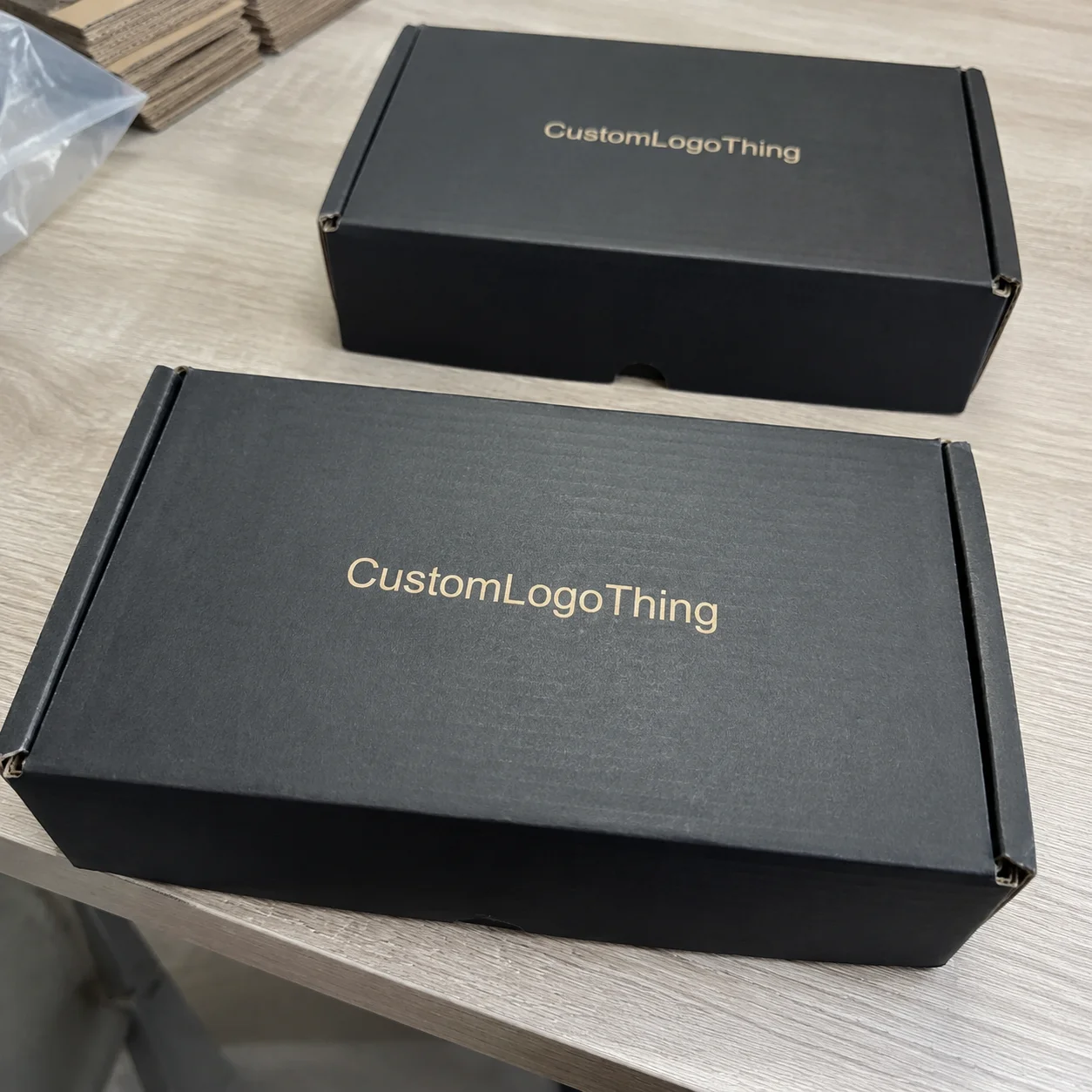
For many brands, event merch Custom Poly Mailer Bags wholesale order planning is not a packaging afterthought. It is the first physical brand impression after the booth closes, the keynote ends, or the influencer post goes live. That outer mailer is often seen before the shirt, notebook, or sample inside. If it looks intentional, the merch feels more valuable. If it looks generic, the whole campaign can feel cheaper than it was.
That is why experienced buyers treat branded packaging as part of the event plan, not a shipping task to solve later. Poly mailers are light, easy to print at scale, and efficient for apparel and soft goods. They also protect contents from scuffs and light moisture while putting the logo where people actually notice it: on arrival, in photos, and during handling. For event merchandise, that visibility has real value.
There is another reason the category has become so common. Event schedules are messy. Registration counts change, sponsor inserts arrive late, and a speaker gift may suddenly become a shipping priority. A good mailer plan absorbs those shifts without forcing a reprint or blowing up the freight budget. In practice, the best choice is the one that fits the contents, the calendar, and the storage space available before the event even opens.
Why event merch mailers matter when the shipment is the first touchpoint
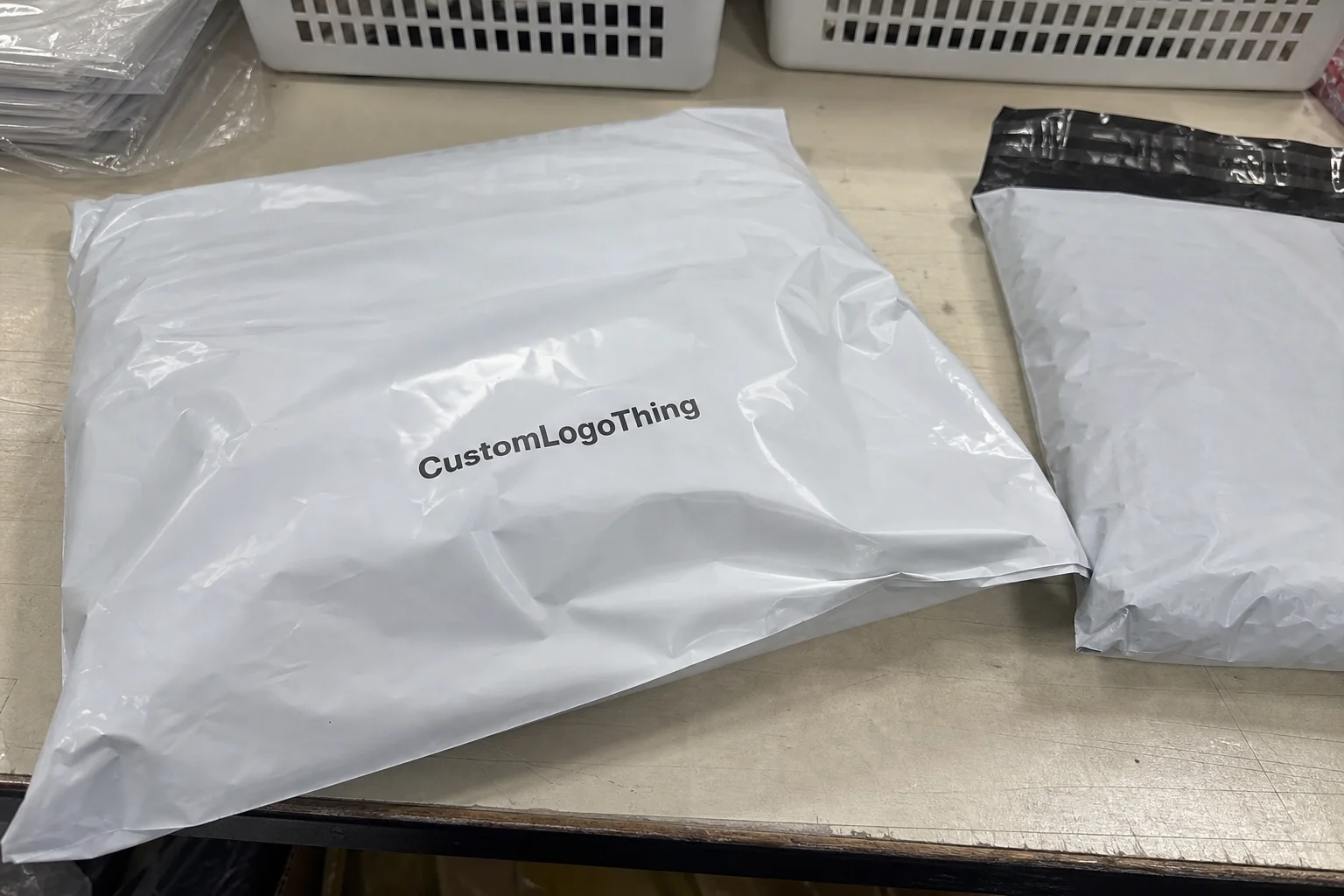
Event shipments are judged quickly. The recipient opens the box, pulls out the mailer, and forms an impression in seconds. That makes the outer package part of the brand experience, not just logistics. A plain shipping bag says utility. A custom mailer says planning.
Poly mailers outperform many plain shipping options because they are compact, low-weight, and highly visible. Compared with corrugated packaging, they usually reduce dimensional weight and can lower postage on apparel or non-fragile swag. Compared with a plain envelope, they do a better job keeping contents clean and organized. For influencer drops, conference kits, and giveaway fulfillment, that combination is hard to beat.
There is also a perception effect that buyers sometimes underestimate. A tote inside a branded mailer feels more curated. A t-shirt inside a printed bag feels more like merchandise than inventory. That is not marketing fluff; it is simple presentation psychology. Packaging shapes value before the product is touched.
Event teams also need packaging that stays manageable during a compressed schedule. Some orders are packed in-house. Others are shipped to a fulfillment partner or directly to attendees. Either way, the mailer has to be easy to store, fast to pack, and consistent enough that the team does not waste time sorting through mismatched sizes.
For broader product programs, the same logic applies across Custom Packaging Products: the outer layer should support the brand and the operation at the same time.
Custom poly mailer formats for merch, swag, and attendee kits
Not every event package should use the same structure. The right format depends on what is inside, how it ships, and how polished the first touch needs to feel.
Common use cases
- Apparel drops such as tees, hoodies, socks, or hats.
- Conference kits with notebooks, pens, badges, and inserts.
- VIP welcome packs that need a more premium presentation.
- Product samples shipped after booth scans or email signups.
- Giveaway fulfillment for social campaigns and post-event follow-up.
Standard poly mailers are best for light, non-fragile contents. They are simple, economical, and especially practical for soft goods. Printed mailers add branding without adding much weight, which is why they are common for direct-to-recipient event shipments. Padded mailers make sense when items need extra cushioning, but they add thickness and often increase postage. That tradeoff works for fragile pieces and small accessories. It is less attractive for large batch apparel shipments.
For event merch, the best sizing decision is usually based on the finished bundle, not the largest item alone. Too much empty space lets contents shift and wrinkle. Too little space creates bulging seams and an untidy result. A snug fit generally improves presentation and reduces damage during transit.
Finish matters too. Matte mailers tend to photograph well and feel more premium. Glossy films reflect more light and can make color appear brighter, though they also show fingerprints and scuffs more easily. Tear strips improve opening behavior. Tamper-evident seals matter when packages pass through multiple hands or sit in shared storage before distribution. These are small details, but they affect how the package is received.
For buyers comparing mailers across different programs, the main question is presentation versus protection. Event merch usually needs both, but the balance changes by item. A light apparel order can stay thin and simple. A bundled kit with inserts needs more structure, even if the contents are not fragile.
| Mailer type | Best for | Typical strengths | Tradeoff |
|---|---|---|---|
| Standard poly mailer | Tees, socks, simple swag | Lightweight, low postage, efficient for bulk | Limited protection for fragile items |
| Printed poly mailer | Brand-forward event fulfillment | Strong visual impact, good for package branding | Artwork setup adds cost |
| Padded mailer | Samples, small accessories, fragile inserts | Extra cushioning, stronger perceived protection | Heavier and usually more expensive to ship |
One practical observation: the more items in the kit, the more important it becomes to test the pack-out before ordering. A mailer that looks right on a flat mockup may not close cleanly once a lanyard card, folded flyer, and shirt are all inside. That is where a packaging spec stops being theoretical and starts affecting operations.
Material specs, print options, and durability standards buyers should verify
Before approval, confirm the basics: film thickness, seal strength, opacity, water resistance, and any recyclability claim. Buyers often focus on artwork first, then discover the bag is thinner than expected or the seal is not strong enough for a heavier kit. That problem is avoidable.
A typical Custom Poly Mailer for event merch may use 60 to 100 micron film, depending on the contents and the level of durability needed. Thinner films can work for lightweight apparel. Heavier kits and multi-item bundles usually benefit from thicker gauges because the mailer resists puncture better and holds its shape more cleanly during handling. That matters visually as much as mechanically.
Print method also changes both appearance and cost. A one-color logo on a solid bag is usually the most economical route. Two- or three-color branding costs more, and full-coverage artwork costs more again because ink coverage and registration become harder to control. If the campaign is simple and the schedule is tight, a clean logo placement often performs better than a crowded graphic.
Color control deserves its own check. Pantone matching matters when the brand color must be exact. CMYK can work well for photographic or gradient designs, but the result depends on the base film and the ink system. Scuff resistance matters if bags will be packed, sorted, and handled several times before shipping. A logo that looks sharp at proof stage but rubs off in the warehouse is not a win.
Industry standards can help here. If the transit chain is rough, ask whether testing aligns with ISTA procedures. For sustainability claims, ask whether the material is recyclable in common store-dropoff streams or only under narrow conditions. If the packaging program includes paper inserts or cartons, FSC is relevant for those paper components, though not for the poly film itself.
A practical pre-approval checklist keeps expensive mistakes out of production:
- Final dieline with exact finished size.
- Bleed and safe-area confirmation.
- PMS or CMYK expectations documented.
- Logo placement approved against live artwork.
- Sample or proof signed off before production.
It also helps to verify the full bundle thickness, not just the item count. A mailer that works for a single shirt may fail once a brochure, sticker sheet, and accessory card are added. That is the point where packaging design becomes a supply-chain issue.
Cost, pricing, MOQ, and quote factors that shape the order
The quote number is only part of the real cost. For event merch Custom Poly Mailer Bags Wholesale order planning, the biggest drivers are bag size, material gauge, print complexity, total quantity, and add-ons such as tear strips or matte finish. Freight, sample fees, and art setup can change the landed price faster than many buyers expect.
As a practical range, simple Custom Printed Mailers at volume often fall around $0.12 to $0.30 per unit, depending on size, thickness, and decoration. More complex runs with full-coverage artwork, specialty finishes, or lower quantities usually climb above that. A 5,000-piece run and a 20,000-piece run are not priced the same way, even if the design is identical.
Minimum order quantity works the same way. Larger runs usually lower the unit cost because setup is spread across more pieces. That sounds attractive until the excess stock sits after a one-time event. Buyers often over-order because they focus on unit price and ignore carrying cost. For a single conference, it is usually smarter to match the bag count to confirmed kits plus a modest buffer of 3% to 8% for spoilage, replacements, or walk-up demand.
Quote structure deserves close reading. Tooling or plate charges may be included, or they may be separate. Freight may be quoted only after carton count is finalized. Rush fees can appear if artwork arrives late or if the schedule requires a compressed production window. None of that is unusual. It just needs to be visible before purchase approval.
For recurring merch programs, pricing tends to stay more stable when the specification does not change. That is one reason many teams keep a documented spec sheet tied to a single packaging source. Reorders are faster, color variation is smaller, and inventory planning becomes more predictable. If the event calendar repeats every quarter, that stability has real value.
Here is a simple way to think about the budget split:
- Base bag cost: film, size, and quantity.
- Print cost: number of colors and coverage area.
- Setup cost: plates, artwork prep, proofing.
- Logistics cost: freight method and delivery timing.
That breakdown makes it easier to compare quotes without getting distracted by a low headline number that does not include freight or setup.
Process and turnaround: from artwork approval to delivery
The process should be direct. Request the quote. Confirm the specs. Submit the artwork. Review the proof. Approve the sample if needed. Then move into production. If a supplier cannot explain that sequence clearly, expect delays later.
Most timing problems come from three places: proof revisions, material availability, and print queue volume. A print-ready file can move quickly. A file that needs dieline corrections or color adjustments slows down immediately. Material shortages are less common than they used to be, but they still happen, especially on niche sizes or special film colors.
For event merch, leave room in the schedule. Registration numbers shift, speaker gifts get added late, and sponsor requirements can change. If the event date is fixed, the packaging timeline should be built backward from that date. Ask for a staged schedule that shows the proof date, production window, estimated ship date, and a realistic delivery buffer. Not an optimistic one.
Typical production timing after artwork approval is often 12 to 18 business days for standard custom runs, though the actual schedule depends on spec complexity, order size, and current plant load. Rush jobs can move faster, but they usually cost more and leave less room for error. If the campaign is a high-visibility launch, the longer lead time is usually safer. If the bags are for a smaller internal event, the schedule may be more flexible.
Shipping also affects planning. Smaller cartons can move by parcel. Larger wholesale orders may ship palletized, especially if the quantity is high or the bags are packed with inserts. That changes delivery timing, receiving labor, and storage space. Teams often forget to ask about carton count until the freight quote arrives, and by then the calendar is already tight.
“The best event packaging is the kind that arrives before anyone starts worrying about it.”
Reliability is a feature. On event timelines, it can matter more than an extra color or a special finish.
How we support wholesale buyers planning event merch at scale
Wholesale buyers need more than a generic quote. They need spec control, repeatability, and someone who can flag issues before the order is locked. That becomes especially valuable for multi-location events, recurring trade shows, or merch programs that roll out in waves. One version of the truth saves a lot of trouble later.
At Custom Logo Things, the operational advantage is in the details: fast quoting, spec verification, sample coordination, and freight planning that fits larger carton counts or palletized shipments. That support matters because event merch is rarely a one-off. It usually has a second run, a regional variation, or a follow-up campaign that needs the same look and size.
Wholesale ordering also helps teams keep package branding consistent across campaigns. If the dieline, artwork, and material spec are stored properly, reorders become straightforward. That reduces variation in color, fit, and finish. It also makes it easier to compare performance across events, which is useful when marketing wants to know whether presentation influenced response rates or social sharing.
For teams managing broader retail packaging or mixed Wholesale Programs, the same principles apply: fewer surprises, cleaner records, and more predictable production. A good supplier does not just print bags. It helps keep the order usable after the first run.
Documentation usually separates a smooth program from a messy one. A locked spec sheet, approved artwork, and a repeatable reorder path are worth more than a small discount that disappears the first time a proof has to be corrected or a carton count changes.
Next steps for placing a smarter bulk order
If you are preparing a quote request, gather the details that actually drive the order: bag size, target quantity, artwork files, shipping destination, event date, and preferred finish. If one of those pieces is missing, the quote will be vague. Vague quotes cause rework.
Then move through the decision sequence in order. Confirm the merch dimensions first. Choose the material and print coverage next. Request pricing based on realistic volume, not a guess. If the branding is strict or the event is high-profile, order a proof or sample before production. That step is inexpensive compared with reprinting an entire run.
For many teams, the smartest approach is to compare one rush-safe option and one cost-optimized option before approval. Sometimes the faster spec is worth the premium. Sometimes it is not. The point is to see both numbers before time pressure takes over.
Strong event merch packaging does not need to be complicated. It needs to be planned. That is why event merch custom poly mailer Bags Wholesale Order planning works best when the bag spec, print method, order quantity, and delivery window are decided together instead of one by one. Do that, and the package shows up on time, the merch looks intentional, and the budget stays under control.
How do I size event merch custom poly mailer bags wholesale order planning correctly?
Measure the finished merch bundle, not just the largest item. Add room for folds, inserts, and a small sealing margin. Choose a mailer that fits snugly enough to protect contents without bulging.
What affects the unit cost of custom poly mailer bags for event merch?
Order quantity, bag size, print colors, and film thickness have the biggest impact. Extra features like matte finishes, tear strips, or full-coverage printing raise cost. Shipping method and rush timing can change the final landed price.
What MOQ should I expect for wholesale custom mailer bags?
MOQ varies by size and print complexity, but larger runs usually unlock better pricing. Ask whether the MOQ is set by material setup, print setup, or packaging configuration. For events, it is often smarter to match MOQ to confirmed kits plus a modest overage.
How long does production usually take after artwork approval?
Timing depends on proofing, material availability, and print schedule. Approved files move faster than projects that need design corrections or dieline changes. Build extra time into the plan if the bags must arrive before a fixed event date.
Can I reorder the same poly mailer spec for recurring events?
Yes, if the dieline, artwork, and material spec are stored accurately. Reorders are easier when the first run is fully documented and proof-approved. Keeping a locked spec sheet helps maintain color and size consistency across events.
To compare options or request a quote, review our FAQ or browse Custom Packaging Products for related solutions that fit your next campaign.