The fastest way to improve a fitness studio Custom Poly Mailer Bags factory quote checklist is not to start with the logo. Start with the substrate, thickness, and closure. Those choices move price, protection, and minimum order quantity far more than artwork does, especially when the shipment is mostly folded apparel, small accessories, and starter kits.
For fitness brands, the mailer is a working part of the operation, not decoration. It has to protect light goods, store flat, ship cheaply, and still look deliberate when it lands on a desk or at a front door. That balance is why buyers who ask better technical questions usually get better pricing, fewer revisions, and fewer surprises after the proof stage.
One useful way to think about the quote is simple: size, material, print coverage, seal type, and order quantity. If any one of those is vague, the quote becomes a moving target. Two prices can look close on paper and still be built on completely different bags.
Fitness Studio Custom Poly Mailer Bags: What Buyers Should Verify
Fitness studios use poly mailers for a narrow set of jobs, which makes the buying logic more specific than generic retail packaging. They work for folded leggings, tees, towels, grip socks, resistance bands, membership kits, promo bundles, and occasional gift items that do not need a rigid box. For those products, a mailer keeps freight low, storage simple, and presentation cleaner than many carton formats.
The first question is structural, not graphic. Ask whether the quote is based on virgin polyethylene, recycled-content film, or a blended structure, because that choice changes clarity, puncture resistance, and cost. A virgin LDPE or LLDPE film usually offers more consistent seal performance and a cleaner printed surface. Recycled-content film can be a smart choice for repeat orders, but the buyer should confirm whether the recycled percentage is post-consumer, post-industrial, or a mix. Those distinctions matter when the business wants to make a defensible claim later.
Closure style is equally important. A standard pressure-sensitive adhesive strip is fine for outbound shipments. A tamper-evident seal makes more sense when the package will pass through several hands. A reseal strip adds value if the studio expects exchanges or return shipping. These are not cosmetic choices. They affect the experience the customer has the first time they open the bag and the second time they need to close it.
Branding sits behind the functional spec, not ahead of it. Matte film gives a more muted, premium look. Gloss can make colors pop, but it can also exaggerate registration issues if the art is dense or the print contrast is high. Full-bleed graphics can work well for a launch campaign, while a restrained one-color mark often performs better for routine shipments. The right answer depends on how often the bag will be used and how much visual emphasis the studio wants to place on the package itself.
Ask for a plain spec sheet before you ask for revisions. A buyer who starts with the right structure usually gets fewer rounds of back-and-forth and a more accurate quote. An estimate built on assumptions is expensive in a different way: it burns time, not just budget.
A quote without film gauge, closure style, and print method is not really a quote. It is an estimate with disagreements waiting behind it.
Product Details That Make The Mailer Work For Apparel And Add-Ons
The practical use case is easy to picture. A studio ships a folded pair of leggings, a tee, a towel, and sometimes a card or promo insert. That bundle needs enough room to slide in cleanly, but not so much excess that the package looks loose or wastes material. Good packaging design balances fit and presentation, and that is harder to fake with a mailer than with a box.
Interior fit matters more than the label size printed in a catalog. The usable dimension changes once seal margins, side seams, and gusset behavior are accounted for. A bag marked 10 x 13 inches may be too tight for a folded top plus a card if the closure line takes up too much space. Buyers should ask for the actual usable interior dimension and, if possible, a photo of the packed bag with a realistic load.
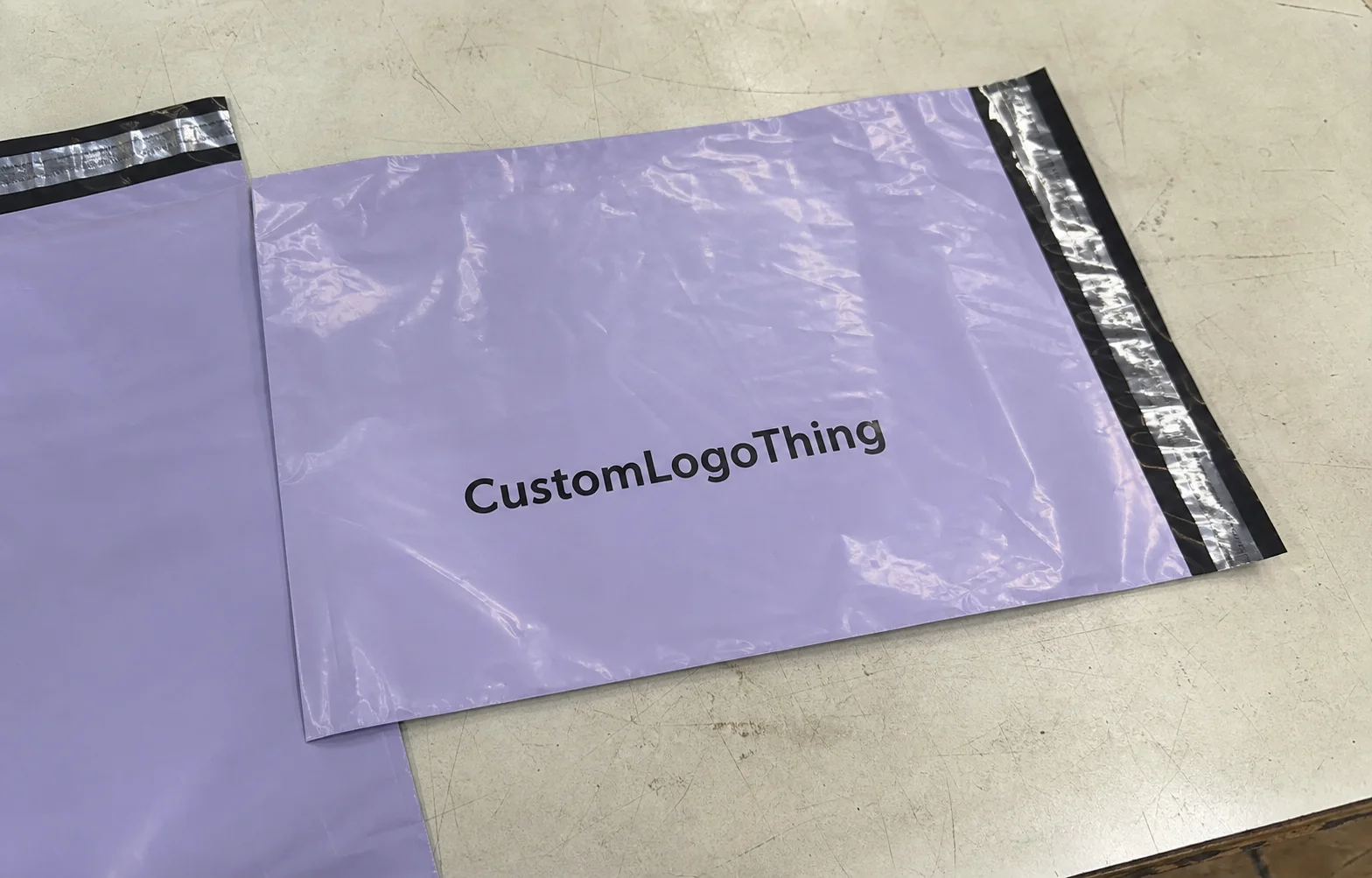
Opacity changes the impression a package makes. Translucent film can be acceptable for low-risk shipping, but opaque film generally looks more finished and hides contents better. That can matter for premium apparel, influencer seeding, and member welcome kits, where the first impression is part of the brand experience. Darker film also gives more freedom when the logo uses light ink or a pale background.
For studio shipments that move through mixed channels, a mailer with a strong seal and a low-slip exterior helps more than many buyers expect. It stacks better in transit, survives repeated handling, and is less likely to catch on adjacent cartons. If the operation ships sweatwear, towels, or items stored in humid rooms, moisture resistance becomes a practical requirement rather than a marketing phrase.
Useful performance features to write into the RFQ:
- Tear resistance for crowded mail handling and sharp corners from folded inserts.
- Moisture protection for sweatwear, towels, and humid storage areas.
- Tamper evidence for member kits, launch mailers, and premium bundles.
- Print durability if the package will rub against other parcels in transit.
For shipment testing, many packaging teams borrow ISTA methods to simulate drops, vibration, and compression. A full certification program is not necessary for every studio order, but the logic is useful. If the bag splits during a simple drop test or the seal lifts under light pressure, the problem will usually show up before the first customer complaint.
There is another practical point that gets missed in early sourcing conversations: add-ons change the fit. A folded insert, tissue, loyalty card, or small accessory can push a bag that looked generous into a tight corner case. The quote should assume a realistic packed load, not an empty shell.
Sizing, Film Weight, Seal Type, And Print Specs That Matter
Nominal bag size is not enough. What matters is the usable interior dimension after seams, seals, and print margins are counted. Buyers often pick a size by comparing garment dimensions only, then discover the closure line compresses the contents or an insert card creates a bulge. A factory can usually prevent that if the RFQ includes the packed load and not just the mailer label.
Film weight is one of the strongest cost signals in the quote. Standard mailers for light apparel often sit around 2.0 to 2.5 mil, while heavier or more abuse-prone applications move toward 3.0 mil or more. Thicker film improves puncture resistance and usually feels more substantial in hand, but it raises raw material cost and can slow some production lines. Buyers should ask for the thickness tolerance, not just a headline number, because small deviations affect both performance and price consistency.
The seal changes the customer experience and the return process. A single-use adhesive strip is the simplest option and works well for outbound shipping. A dual-strip or reseal version costs more, but it can reduce friction when exchanges are common. If a studio runs frequent size swaps or expects returns from seasonal drops, the extra strip can save time elsewhere even if the bag itself costs a little more.
Print specifications deserve the same discipline as the structure. Ask for the file format, Pantone targets, print coverage, and minimum line weight. If the logo contains fine type or hairline detail, it can blur on glossy film unless the production limits are clear up front. The safest approach is usually a cleaner front panel with restrained graphics, then a fuller treatment on the back or flap where the risk of visual clutter is lower.
If the studio wants to make sustainability claims, the wording should stay specific. Recycled-content film, downgauged thickness, and fewer total grams of plastic are better claims than vague green language. Paper inserts or hang tags can be FSC-certified when the stock supports it, but that certification does not automatically apply to the mailer itself. Buyers should keep those claims separated.
Useful spec checks for the RFQ:
- Interior size in usable inches or millimeters.
- Film gauge or micron thickness with tolerance.
- Seal type and adhesive width.
- Print colors, coverage, and finish.
- Packaging count per carton and carton dimensions.
There is also a practical reason to ask for carton details. A mailer order that looks cheap per unit can become less attractive if the carton pack is inefficient, the pallet pattern wastes space, or the shipment density drives freight up. Total landed cost is the number that matters, not the bag price in isolation.
Pricing, MOQ, And Quote Inputs That Move Unit Cost
Most quote confusion comes from missing inputs. A usable factory quote should spell out bag size, film thickness, number of print colors, setup or plate charges, sample fees, packing method, and freight destination. If the supplier bundles those into one line, the buyer cannot see which change actually moved the price. That makes comparison almost impossible.
MOQ is usually more predictable than it first appears. Standard sizes and one-color print often keep the minimum lower. Custom dimensions, specialty film, full coverage artwork, and extras such as reseal strips usually push the minimum up. A small change in the bag profile can affect tooling and production efficiency more than a modest change in quantity, which is why “just a little smaller” is not always a cheaper move.
For a typical fitness studio run, the pricing pattern is straightforward: standard-size, one-color Custom Poly Mailers are the cheapest path, while heavier film, more print coverage, and special finishes raise the unit price. As a working range, a 5,000-piece order may land anywhere from about $0.12 to $0.35 per unit, depending on the specification. Setup fees, sample charges, and freight sit on top of that. Buyers who quote only the per-unit number often underestimate the landed cost by a meaningful margin.
| Option | Typical Spec | Indicative MOQ | Indicative Unit Price | Best Fit |
|---|---|---|---|---|
| Standard branded mailer | 2.0-2.5 mil, one-color print, pressure-sensitive seal | 3,000-5,000 pcs | $0.12-$0.18 | Apparel drops, starter kits, routine merch shipping |
| Mid-tier premium | 2.5-3.0 mil, two-color print, matte finish, stronger adhesive | 5,000 pcs | $0.18-$0.26 | Member welcome packs, retail packaging, higher perceived value |
| High-visibility custom run | 3.0 mil+, full-bleed artwork, special finish, reseal strip | 5,000-10,000 pcs | $0.24-$0.35 | Campaign launches, premium merchandise, brand-heavy shipments |
The buyer’s leverage is usually not quantity alone. Standardizing the bag size and reducing print complexity often lowers cost faster than shaving a small amount off the order. That is the tradeoff hidden inside most fitness studio custom Poly Mailer Bags factory quote checklist requests. The cleanest way to see it is to ask for one base quote and one upgraded quote on the same spec sheet.
That comparison also makes freight easier to judge. A unit price that looks better before shipping can lose once carton packing, duty, and transport are added. If the supplier can quote EXW, FOB, and delivered terms separately, the buyer gets a much clearer picture of actual cost.
There is a small but important trap here: low MOQs can look attractive if the studio is testing a new line, but a low quantity with a custom size and multiple print colors can be expensive enough to distort the real economics. In that situation, a standard size with adjusted artwork usually gives the cleaner test.
Process And Lead Time From Artwork Approval To Dispatch
A realistic production path usually starts with RFQ review, then a technical check of the artwork, then a digital proof, then sample confirmation, then mass production, inspection, packing, and shipment booking. That sequence sounds obvious. It often gets blurred in practice. Buyers sometimes assume the clock starts when the quote is accepted, but the real clock starts after the proof is approved.
Sample timing and production timing should stay separate. A digital proof can come back in 1 to 2 business days if the artwork is clean. A physical sample may take 5 to 10 business days, especially if the factory is matching a finish, adhesive, or exact color tone. Mass production after approval often lands in the 12 to 18 business day range for standard Custom Poly Mailers, though custom dimensions or a busy production window can extend that timeline.
Freight time is a second clock. Air shipments move quickly but cost more. Ocean freight is usually cheaper per unit and makes more sense for repeat packaging orders, but it adds variability. If a studio is planning a launch or rebrand, the internal deadline should include proof time, sample time, production time, and freight time separately. Otherwise the packaging arrives after the campaign, which defeats the point.
There is also a quality-control step that buyers skip too often: approve the sample against the exact artwork and the exact seal performance, not just against a low-resolution preview. A clean proof can still hide a seal that is too narrow or a logo that sits too close to the edge. That is why a documented approval process matters more than a friendly sales promise.
If the studio is coordinating the mailer with shirts, inserts, and event kits, keep the broader packaging plan aligned. A mailer should not look disconnected from the rest of the shipment. If the same order also includes Custom Packaging Products, matching color tone, finish, and visual hierarchy usually makes the whole rollout feel intentional rather than assembled from separate parts.
What To Check In A Factory Partner Before You Place The Order
A factory partner should be able to answer direct questions about where extrusion happens, who prints the film, and how final inspection is handled. If the response is vague, the buyer may be dealing with a reseller rather than a true manufacturer. That is not automatically a problem, but it changes the pricing structure and usually slows down technical clarification.
Ask for capability evidence. Factory photos, a current spec sheet, sample pack examples, and a short description of process control are more useful than broad claims. If the supplier can explain thickness tolerance, seal strength checks, and batch traceability, the odds of a clean order go up. If they cannot, the revision cycle usually gets longer and the chance of inconsistency rises.
For packaging buyers who compare this category with custom printed boxes or folded cartons, the difference is sharp. Mailers are simpler in structure, but the film process is less forgiving on print alignment and seal control. A box can hide some variation. A poly mailer cannot. That is why the inspection process matters so much.
Quality control items worth confirming:
- Thickness tolerance across the production run.
- Seal strength testing on sample packs.
- Color consistency from proof to mass run.
- Batch traceability for reorders and issue tracking.
- Artwork approval records so the final version is clear.
If the order includes recycled-content claims or sustainability language, ask for documentation instead of marketing copy. For paper inserts or hang tags, FSC paperwork may apply to those components. For broader material decisions, EPA guidance on sustainable materials management is a better reference point than generic green claims. It helps separate actual reduction from packaging that merely sounds responsible.
Working directly with a factory often shortens the path from question to answer. Pricing is cleaner. Spec language is sharper. And when a bag needs a last-minute adjustment, the discussion stays technical instead of being diluted through several sales layers. For a buyer under time pressure, that difference is not small.
Next Steps For The fitness studio custom poly mailer bags factory quote checklist
If the goal is a cleaner order, keep the RFQ small and disciplined. Six inputs are enough for most fitness studio Custom Poly Mailer Bags factory quote checklist requests: size, thickness, print colors, quantity, closure style, and shipping destination. Everything else is secondary until those six are locked.
Then ask for two versions of the same quote: one standard and one upgraded. The standard version shows the baseline. The upgraded version shows the cost of better film, stronger adhesive, higher print coverage, or a more premium finish. That comparison is far more useful than a single number that hides the tradeoffs.
The final review should tie the whole package together: artwork, spec sheet, sample, lead time, and freight terms. If those five items do not match, the approval is not ready. That is the point where a buyer should pause and correct the record rather than push the order forward on hope.
For studios that need to move quickly, the cleanest internal process is to circulate a compact brief, collect itemized quotes, and compare them on the same basis. Separate unit price from setup charges, sample cost, and shipping. A disciplined buying process reduces revision cycles, catches weak specs early, and makes the final package more consistent across reorders.
FAQ
What size fitness studio custom poly mailer bags fit leggings and a tee?
Choose the size from the folded bundle, not from the garment alone. A practical bag usually needs extra clearance for an insert card and a clean seal, so ask the factory for usable interior dimensions rather than only the nominal label size.
How does custom poly mailer pricing change with print colors and thickness?
More print colors, heavier film, and full-coverage graphics usually raise the unit price faster than a small quantity change. Request itemized quotes so setup, sample, and freight are separated from the bag price.
What MOQ should a fitness studio expect for custom poly mailer bags?
MOQ is usually lower for standard sizes and simple print layouts, and higher for custom dimensions or specialty film. Ask for tiered pricing so you can see the break point between a test run and a larger reorder.
How long is the factory lead time after artwork approval?
Lead time usually starts after the proof is approved, not when the quote is accepted. A realistic plan includes proof time, sample time, production time, and freight time if the order must land before a launch or membership campaign.
What should be on a factory quote checklist before ordering custom mailers?
Confirm size, thickness, closure, print coverage, MOQ, lead time, sample policy, and freight terms in one written quote. Ask for a matching spec sheet and proof so the approved version is easy to compare against the final production run.