For buyers trying to stretch event budgets without settling for forgettable merchandise, event merch five panel Caps Unit Cost deserves more attention than it usually gets. A decent five-panel cap can do several jobs at once: staff identification, sponsor visibility, attendee giveaway, and post-event wear. That matters because the value is not only what each cap costs at checkout. It is also how often it gets worn, photographed, and kept after the event ends.
The five-panel format has a practical advantage that shows up immediately in decoration. The front panel is broad and uninterrupted, which gives logos a cleaner read than many seam-heavy caps. That makes the style useful for trade shows, festival teams, campus activations, and limited-run retail merch tied to an event. The buyer’s task is not simply to find the lowest quote. It is to match the construction to the job, then judge the unit cost against the actual life of the product.
There is a reason this category keeps showing up in event planning meetings. Cap orders are easy to underestimate, yet small details in fabric, fit, and decoration can change how the item performs once it leaves the box. A cap that sits in a drawer is dead inventory. A cap that gets worn twenty times can look expensive on paper and cheap in practice.
Why Five-Panel Caps Punch Above Their Weight at Events
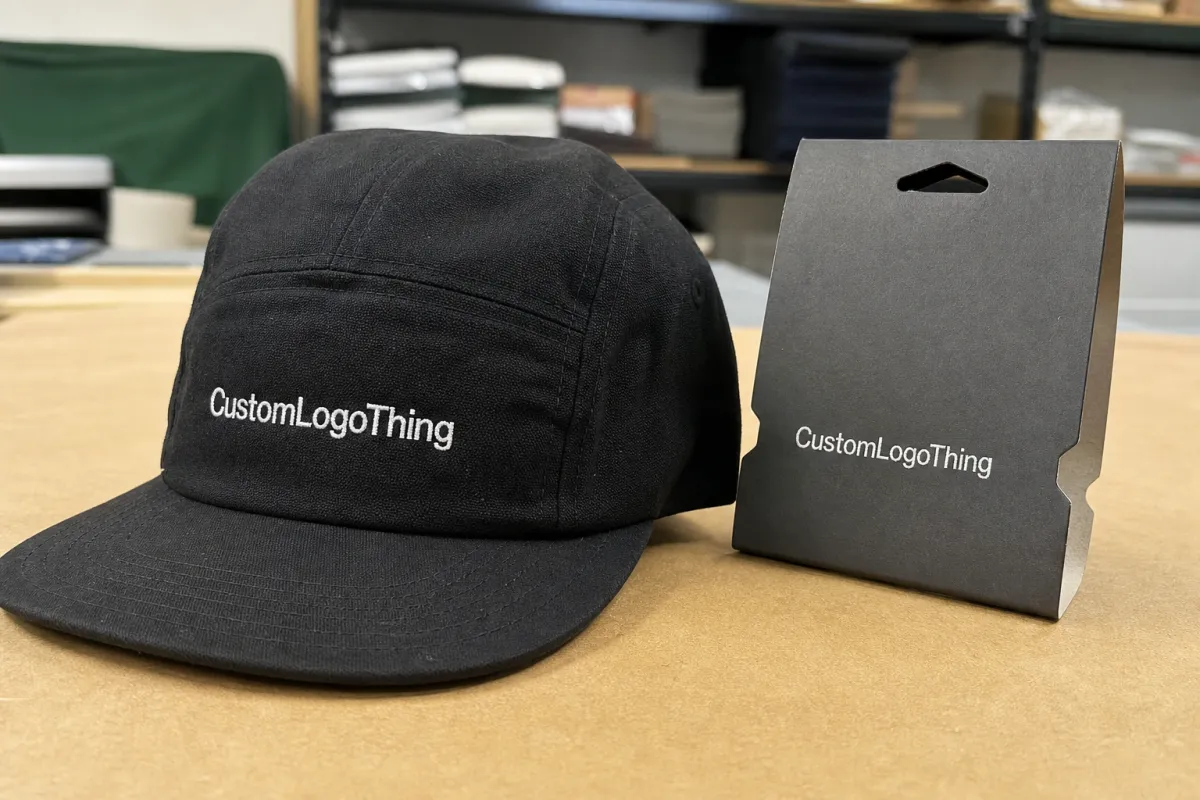
A five-panel cap is built from a simple crown: one front panel, two side panels, and two rear panels, with the brim attached separately. That shape gives it a flatter front and a cleaner silhouette than many low-profile six-panel styles. For event branding, that front panel is the real asset. It creates a larger, more legible placement for embroidery or patches, and it avoids the center seam that can interrupt artwork on other caps.
That visual clarity matters more in event merch than it does in many retail categories. Crowded spaces, quick photos, and short attention spans reward the cap that reads instantly. A logo that would look busy on a structured dad cap may look crisp on a five-panel because the surface area is easier to control. In a venue filled with movement, that cleaner read can be the difference between a visible brand and a forgettable one.
Five-panel caps also sit in a useful middle ground between promotional stock and premium retail product. They can be priced aggressively when the build is simple, but they still have enough shape to feel intentional. Buyers often reach for them when they want merch that feels more considered than a standard giveaway without moving into expensive specialty headwear.
Comfort plays a role too. Staff will wear a cap for long shifts only if it does not feel stiff or awkward. Attendees are even less forgiving. If the cap pinches, rides too high, or feels hot, it gets taken off and carried around instead of worn. That is not a branding win. The best event caps usually disappear on the head, which is to say they do their job without asking for attention.
There is also a logistics argument. One style, one print area, one size strategy, one order line. For planners juggling schedules and inventory, that simplicity can reduce mistakes. The cleaner the product spec, the easier it is to compare suppliers, check proofs, and keep the order moving.
Build Options That Change the Look, Feel, and Price
The cap body sets the baseline, but the final look and price depend on the materials and finishing choices. Cotton twill remains the most familiar option because it is predictable, easy to source, and straightforward to decorate. Brushed cotton has a softer hand and often reads as slightly more retail-oriented. Nylon is lighter and more athletic. Ripstop brings a tougher, utilitarian look that works well for outdoor activations, field crews, and brand programs that need the cap to hold up under heavier use.
Fabric weight matters more than many buyers expect. A lighter fabric can reduce cost and make the cap easier to wear in warm venues, but it may also feel less substantial in hand. Heavier twill can improve perceived quality, yet it may hold heat more aggressively. On a humid summer event schedule, that tradeoff is not abstract. It shows up in how long people keep the cap on.
Structure is another price driver. A structured front panel, often supported with buckram or a similar stiffening layer, holds embroidery better and keeps the cap looking crisp. Unstructured crowns feel softer and more relaxed, but they can collapse when the art is too dense or the cap is packed badly. Buyers planning a premium giveaway usually want structure. Buyers aiming for a more casual lifestyle look may prefer a softer crown, provided the artwork is simple enough to survive the shape.
Closures matter because they affect both fit and inventory. Snapbacks are still popular for events because they handle a wide range of head sizes and are easy to distribute. Strapbacks can feel a little less promotional and a little more retail. Buckle closures have a traditional feel. Fitted caps look sharp but are risky for broad giveaways unless the audience is controlled. If the caps need to serve staff, volunteers, and attendees, adjustability usually wins.
Decoration method can move unit cost by more than the cap body itself. Simple embroidery is usually the safest choice for logos with clear shapes and limited color changes. Woven patches handle fine detail better and can look cleaner on small designs. Leather or PVC patches add texture and a more premium tone, but they need to match the brand. Printed patches can be a useful compromise for complex art, gradients, or very small type that would otherwise be lost in thread. None of those methods is automatically better. The right one depends on the artwork, the expected wear, and how close the cap needs to feel to retail merchandise.
Small finishing details often separate a cap that gets kept from one that gets tossed. A decent sweatband helps in warm venues. Clean seam taping inside the crown signals better construction. Consistent panel symmetry matters because a cap that looks slightly twisted on the table will look worse on a head. Even label placement can change whether the item feels like a branded premium product or a rushed promo run.
For procurement teams, it helps to think in tiers rather than slogans:
- Entry level: stock cap, standard snapback, simple embroidery, minimal packaging.
- Mid tier: custom fabric color, woven patch or denser embroidery, better sweatband, cleaner labeling.
- Premium: cut-and-sew build, specialty patch or high-density embroidery, custom packaging, tighter finishing control.
That framework keeps the discussion grounded. A supplier should be able to explain why one tier costs more than another without hiding behind vague language. If the explanation is thin, the quote probably is too.
Specs Buyers Should Lock Before Requesting Quotes
Fast, accurate quotes start with complete inputs. Before requesting pricing, lock the panel count, crown shape, brim style, structure level, closure type, and decoration placement. If those details are still floating around, the quote may look helpful while comparing a different product than the one you actually want. That is a common reason event budgets drift: each supplier is pricing a slightly different version of the same idea.
Artwork is just as important as the hat spec. Send vector files, not screenshots, and include clear Pantone references if color matching matters. A clean file lets the producer estimate stitch count, spot where small text may fail, and flag artwork that needs simplification before the order starts. The cap front panel has real dimensions, and a logo that looks balanced on a monitor can become crowded or distorted when it is translated to thread or patch construction.
Placement should be agreed early. Center-front branding is the default, but side placement or back-strap branding can work better for sponsor-heavy events or multi-partner programs. If the cap is being used in photos, the logo size has to be readable at distance, not just technically present. A mark that disappears at ten feet is not doing much for the brand.
Fit-related details deserve the same attention. Confirm the head circumference range, the opening on the closure, ventilation eyelets, and sweatband finish. For teams working outdoors or in crowded indoor venues, moisture management becomes a real comfort factor. A small upgrade in lining or sweatband quality can reduce complaints and increase wear time.
Packaging should be defined before production starts, not after. If the caps are being handed out at a registration desk, simple polybagging may speed distribution. If they are being sold, retail-ready presentation matters more: size stickers, tidy cartons, and consistent fold or pack orientation. Freight efficiency can also change with carton count and pack method, so it helps to ask how many units are packed per box and whether that affects shipping cost.
Pricing conversations are clearer when the quote language is specific. Ask whether the number is ex-factory, FOB, or landed. That one distinction can change the apparent unit cost by a lot once freight, customs handling, and local delivery are included. A cap that looks inexpensive at the factory can become much less attractive after the shipping line is added.
For sustainability-minded programs, request documentation up front rather than treating it as a late-stage preference. If recycled materials or responsibly sourced packaging are required, the supplier should be able to say what is available and what is not. For paper-based packaging, FSC documentation can be relevant; for broader packaging and materials discussions, industry references such as the FSC and PMMI packaging resources are useful starting points.
Event Merch Five Panel Caps Unit Cost, MOQ, and Pricing
This is the number buyers usually want first, but it only makes sense in context. Event merch Five Panel Caps unit cost is shaped by the cap body, the decoration method, the setup charges, the packaging choice, and the quantity ordered. In most cases, the biggest savings come from spreading fixed setup costs across more units, not from shaving a few cents off the base hat.
Volume pricing tends to move in steps rather than a smooth line. A jump from 100 units to 300 can lower the per-piece cost sharply because digitizing, setup, or plate fees are no longer concentrated on such a small run. Going from 500 to 1,000 usually still improves pricing, but the drop is often smaller. That is why low minimums can look appealing until the math is done.
For planning purposes, the following range is a useful starting point. These are not universal prices, but they reflect common bulk patterns when the spec stays straightforward.
| Order Size | Decoration | Typical Unit Cost Range | Notes |
|---|---|---|---|
| 100-199 pcs | Simple embroidery | $5.80-$8.50 | Setup has a heavy impact at this size |
| 300-499 pcs | Embroidery or woven patch | $3.90-$6.20 | Often a practical range for event programs |
| 500-999 pcs | Patch or embroidery | $3.10-$4.90 | Usually a better balance of cost and flexibility |
| 1,000+ pcs | Standard decoration | $2.40-$4.10 | Lowest unit cost if the spec stays simple |
MOQ is the other side of the same coin. Some suppliers will quote an attractive rate only if the buyer accepts a higher minimum order quantity. Others will accept smaller runs, but the unit cost rises because the setup is spread over fewer pieces. That tradeoff is manageable if the event has a clear distribution plan. It becomes expensive when excess stock sits in storage because the order was sized for a price target instead of a real need.
The cleanest comparison is like-for-like: same cap style, same closure, same decoration, same packaging, same delivery terms. If one quote includes digitizing, proofing, or pre-production photos and another does not, the gap is not as wide as it seems. Hidden charges often show up as setup fees, rush fees, extra decoration locations, branded packaging, split shipments, or carton changes requested after approval.
One practical point buyers sometimes miss: a lower quoted unit cost does not always mean better economics. Thin fabric, weak stitching, poor crown shape, or decoration that cracks or peels after short use all lower the actual value of the order. For event merch, the cheapest cap is the one that gets worn and remembered, not the one that only looks good on a spreadsheet.
Production Timeline From Artwork Approval to Delivery
Timeline is where even good orders can slip. A buyer may approve pricing quickly and then lose several days waiting for art revisions, internal sign-off, or a missing file. The cleaner the approval chain, the more predictable the delivery date. A standard path usually includes artwork review, digital proof, sample or pre-production confirmation, production, inspection, and shipping.
Most delays are not mysterious. Vector files are missing. Pantone references are vague. A logo gets resized after the proof is approved. Someone adds a second placement after production has begun. Each change creates rework, and rework consumes time. If the event date is fixed, the safest move is to lock the spec before the factory books the line.
Lead times vary with quantity and decoration complexity, but there are patterns. Simple stock caps with straightforward embroidery move faster than cut-and-sew orders or caps with multiple patch types. As a planning range, many bulk orders land around 12-20 business days after proof approval, with longer schedules if the artwork needs correction or the order includes special finishing. Rush orders exist, but they narrow the margin for error and usually raise the unit price.
Freight needs its own buffer. Domestic shipping, customs clearance, peak-season congestion, and final delivery are separate steps. A cap can be fully produced and still miss the event if it is not planned backward from the deadline. The strongest buyers add time for inspection, possible carton rework, and small shipping delays. If the event cannot shift, the order should not be treated as flexible.
Quality control also belongs in the timeline. A useful inspection is not just a glance at the first sample. It checks stitching tension, logo placement, panel symmetry, sizing consistency, color accuracy, and packaging counts. If the supplier can share pre-production photos or a short sample video, that often catches issues before they become a full carton problem. On tighter timelines, that evidence is more useful than a long promise.
For teams worried about shipping damage or carton performance, packaging standards can help frame the conversation. ISTA guidance is worth reviewing if the caps are being shipped with other materials or need a more deliberate transit plan. It is not specific to headwear, but it gives buyers a better way to ask about carton strength, compression risk, and handling during distribution. See ISTA for a useful reference point.
What Separates a Reliable Cap Supplier From a Cheap Quote
The spread between suppliers is often smaller than the spread in risk. A reliable supplier shows consistency in color matching, logo placement, crown symmetry, and stitching quality. A cheap quote can still produce good hats, but it also raises the odds of variation from carton to carton. In event merch, that inconsistency is more visible than it would be in a private internal order because the product is worn in public and photographed in motion.
Process discipline matters. The fewer handoffs between spec, proof, sample, and production, the fewer places there are for error to enter. Buyers do not need a romantic factory story. They need signs that the approved spec will be repeated faithfully. That means one person or team owns the order, proof changes are tracked clearly, and the final sample matches the digital approval before the run is released.
Clear communication is a strong indicator of reliability. A good supplier answers direct questions directly: What is the MOQ? Is digitizing included? What happens if a stitch count change affects the price? Can the delivery window be met without a rush fee? If those answers are vague before the order, they are unlikely to improve after it.
Quality checks should be visible, not assumed. Ask how the supplier handles panel alignment, stitching inspection, carton counts, and issue resolution if defects appear. Even a small defect rate becomes noticeable on a branded headwear order because people wear caps in clusters. A batch of slightly off-center logos or uneven closures can undermine the look of the whole activation.
The better suppliers also speak plainly about tradeoffs. Faster turnaround usually means fewer decoration choices. Lower unit cost may require a higher MOQ. A premium patch may add lead time. That honesty is useful because it helps the buyer choose the right balance rather than being sold an impossible combination of speed, quality, and price.
There is another quiet difference: suppliers that quote with precision usually understand the order better. They ask for panel construction, decoration size, packaging method, and delivery terms because those details affect the outcome. Suppliers that skip the questions often leave the buyer to discover the missing pieces later, usually after a delay or surcharge.
Next Steps to Place the Right Cap Order
Start with the basics: quantity, artwork files, preferred decoration method, delivery date, and packaging needs. Then decide what the cap is supposed to do. Is it staff uniforming, attendee giveaway, sponsor merch, or resale inventory? That one decision influences everything from fabric choice to finishing detail. A staff cap should prioritize comfort and repeat wear. A retail-minded cap can justify more refinement.
If the budget is still moving, request two quantity tiers. A quote at 250 units and another at 500 units, for example, makes the pricing curve visible. That is one of the fastest ways to evaluate event merch Five Panel Caps Unit cost without guessing whether a larger run actually earns its lower price. The result is a cleaner comparison and a more realistic conversation with internal stakeholders.
Then compare only true like-for-like options. A supplier that includes a woven patch, a better sweatband, and clearer delivery terms may be the better value even if the headline number is higher. A cheap quote is only cheap if it arrives on time, matches the proof, and survives actual use after the event.
The most practical orders are the ones that strip out unnecessary complexity. Lock the spec, approve the artwork, confirm the timeline, and keep the product aligned with the event’s real purpose. Do that, and the cap order becomes a controlled purchasing decision instead of a last-minute scramble.
That is the real work behind event merch five panel caps unit cost: not chasing the lowest sticker price, but buying a piece of merch that still looks right when the booth is gone and the photos are all that remain.
How do I estimate event merch five panel caps unit cost for my quantity?
Start with the quantity, decoration method, and artwork complexity, because those three variables usually drive the biggest swing. Then ask for two or three quantity tiers so you can see how the unit cost changes as volume rises. If the supplier does not separate setup charges from the cap price, ask for a line-item breakdown.
What is the MOQ for custom five-panel caps?
MOQ depends on the factory and the decoration method. Embroidered or patched caps usually require a higher minimum than blank stock caps. If you need a smaller run, expect either a higher per-unit price or fewer customization choices.
Which decoration method gives the best value for event caps?
Embroidery usually gives strong value for simple logos, especially when the cap will be worn often after the event. Woven or leather patches can look more premium when the design needs more detail or texture. Printed options can lower cost for complex artwork, but durability depends on the application and material.
How long does production usually take after approval?
Typical timing includes proof approval, production, inspection, and shipping, so the full schedule is longer than the sewing stage alone. For many bulk orders, 12-20 business days after approval is a useful planning range, but artwork changes and special finishing can extend that window.
Can I request a sample before ordering event merch five panel caps?
Yes, and it is the safest way to verify fit, logo size, color accuracy, and fabric feel before approving the full run. If time is tight, ask for a digital proof plus pre-production photos so the order can keep moving while you review the final details.


