Order Event Merch Logo Patch Beanies: Digital Proof Checklist
Cold-weather merch looks straightforward until it reaches proofing. Then patch size, cuff position, stitch density, color drift, and logo scale can turn a simple beanie into a production problem. That is why the event merch Logo Patch Beanies Digital Proof checklist matters: it catches the errors that cost money after approval.
For event teams, the goal is not just a good-looking mockup. It is a controlled order with clear specs, confirmed quantities, a realistic price, and a lead time that matches the event date. If those pieces are not locked before approval, the rest of the process gets harder to manage.
Most proof issues are small but expensive. A patch that looked balanced on screen may sit too high on a cuff beanie. A sponsor logo can land across a seam. Fine type may disappear once it is reduced for knitwear or stitched into a smaller patch. None of these problems is dramatic. All of them are avoidable.
Event merch logo patch beanies digital proof checklist: what gets missed
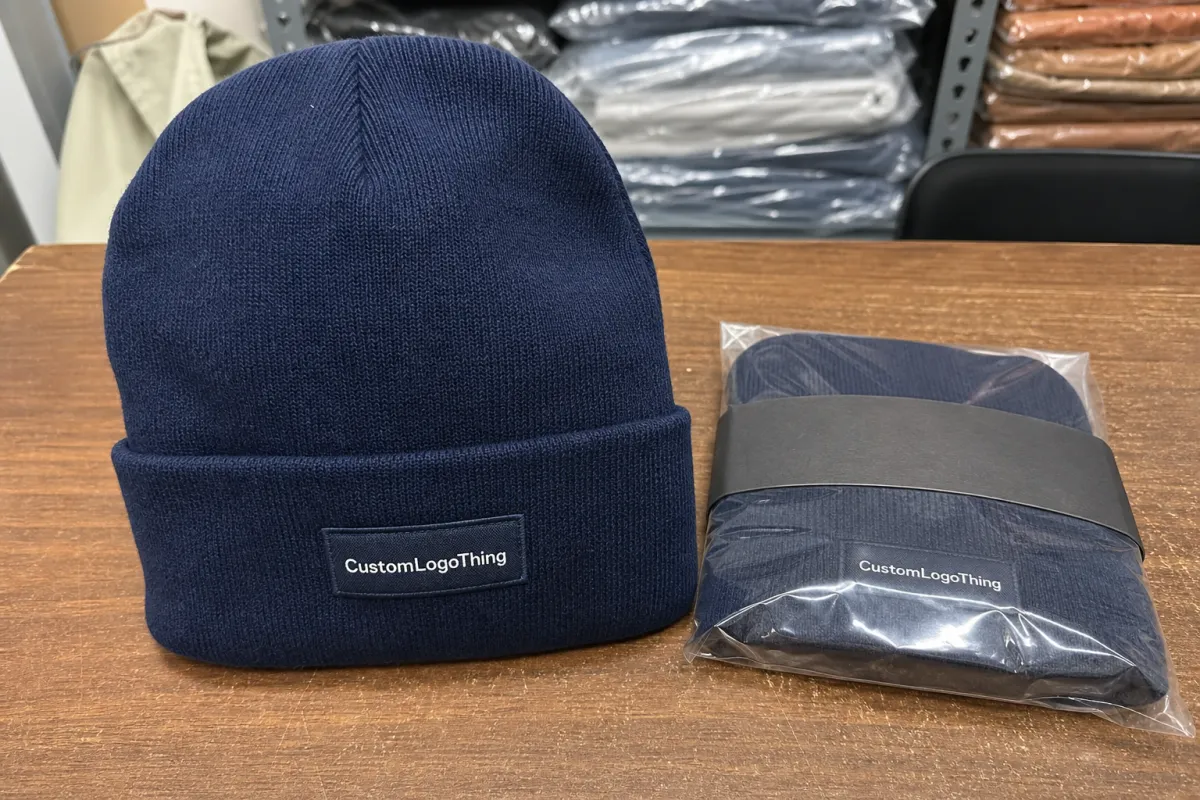
Buyers usually focus on the artwork file, but a usable proof is really an instruction sheet. It should show patch type, patch size, placement, logo scale, quantity, color references, and any split across colors or ship-to locations. If the supplier sends a polished render without those details, the proof is incomplete.
The weakest proof looks finished but explains almost nothing. If the patch must shift to avoid a seam, that note belongs on the proof. If the logo is centered on the cuff rather than the crown, say so. If the order is split between black and charcoal, the count on each color needs to be visible. Missing details are how mistakes survive approval.
A beanie proof is not a final product photo. It is an instruction sheet with pictures.
That distinction matters. Buyers sometimes approve a mockup because it feels close enough, then discover the finished item did exactly what the proof told it to do. The issue was not production quality. The issue was that the proof did not answer the right questions. If the cuff fold, patch edge, or final scale is unclear, ask for a revision.
A practical checklist should include artwork format, decoration method, patch diameter, placement notes, final quantity, and approval authority. Basic is useful here because it keeps the order from drifting under deadline.
If you want a quick read on whether a supplier can handle decoration and packing cleanly, the Manufacturing Capabilities page is worth checking. Event merch gets messy when a vendor is good at mockups but vague about what happens after approval.
How digital proofs move from mockup to approved sample
The proof process should be simple: file intake, layout, proof, revision, approval, production. It gets complicated when nobody agrees on what the proof is supposed to confirm.
A digital proof can verify composition, scale, placement, and approximate color. It cannot prove how the patch will feel in hand, how the knit will behave around the cuff, or how a thin stroke will read once it is stitched or woven into a smaller format. If the logo depends on fine detail, treat the proof as a warning light, not a green light.
Fast approvals usually come from fewer voices and cleaner feedback. One person collects comments. One person sends the consolidated revision. One person signs off. That keeps the supplier from answering the same question three different ways and losing a day to avoidable back-and-forth.
Annotate directly on the proof whenever possible. Mark patch diameter, distance from the cuff edge, and color callouts. If the sponsor lockup cannot be altered, say that plainly. If the beanie needs retail-ready polybags or carton labels, include that before approval, not after.
Do not expect proofing to fix a weak brief. A low-resolution logo, unclear sponsor hierarchy, or missing quantity split will still be a problem after the proof is generated. Clean input still matters.
Packaging and transit deserve attention too. If the beanies move through multiple warehouses or arrive in stacked cartons, the shipment has to survive that trip without crushed boxes or loose labels. The ISTA transit testing resources are useful when you are thinking beyond the mockup and into the actual shipment.
Spec details that change the final beanie more than the mockup does
Spec choices shape the finished beanie more than the render does. Patch type, knit gauge, cuff height, backing, and stitch density all change how the product reads in person. A 2.25-inch round patch may feel balanced on one style and oversized on another. A square patch can look sharp, but only if the art has enough breathing room to survive the corners.
Text is where good logos often get punished. Small type, thin strokes, and sublines are the first things to disappear once artwork is reduced for knitwear or patch construction. A bold one-color mark usually survives better than a detailed multicolor design. That is not a design criticism; it is a production constraint.
Color is trickier than most buyers want it to be. PMS references help, but thread and yarn are not ink. Acrylic, recycled polyester, wool blends, and mixed knits all shift the visual result. Deep navy can look softer in yarn. Bright red can warm up more than the screen version. Approve within an acceptable range instead of chasing a monitor match the material cannot physically deliver.
There is also a practical lower limit for readability. For many cuff beanies, patch sizes below about 1.75 inches start compressing text and fine detail. Around 2.0 to 2.5 inches is often the sweet spot for event merch, but the logo itself should make the final call. If the beanie will be photographed often, simpler art usually wins because simple art holds its shape.
Placement is another place where mockups can mislead. If a patch lands too close to a seam or crown transition, the finished piece can look slightly warped even when the proof looked square. Ask how the patch is positioned against the knit structure, not just where it sits on a flat graphic. A decorator who thinks in fabric behaves differently from one who only traces artwork.
Material selection also changes the hand feel and the price. A plain acrylic cuff beanie is usually the most affordable option and works well for high-volume events. Wool blends feel better and cost more. Recycled yarns can support sustainability goals but may affect color accuracy and lead time. If special finishing is required, ask whether those steps are done in-house or handed off.
If you are comparing vendors, do not assume they all mean the same thing by “custom.” Some suppliers decorate pre-made blanks. Others control more of the process and can manage patching, labeling, folding, and carton prep under one roof. That difference matters when the event is on a hard deadline.
Pricing, MOQ, and unit cost signals to compare
Price is rarely just a unit number. It includes setup, decoration, blank cost, revision time, packing, and shipping. If the art is simple, the decoration may be inexpensive. If the patch has multiple colors, special backing, or a woven construction, the quote rises quickly.
MOQ changes the math even faster. A 100-piece order and a 1,000-piece order can use the same artwork but land very different unit costs because setup gets spread across fewer or more pieces. Buyers splitting the same design across teams, colors, or ship-to locations should ask whether the factory treats those as one run or several. That answer can move the price more than the patch choice does.
Fair comparisons require identical assumptions. If one vendor quotes embroidered patches, another quotes woven patches, and a third quietly adds a rush fee, the numbers are not comparable. Ask for itemization so you are not comparing apples to oranges.
| Patch option | Typical add-on cost at 500 units | Best for | Watch-out |
|---|---|---|---|
| Embroidered patch | $0.45-$0.90 per beanie | Bold logos with simple shapes | Fine text can fill in |
| Woven patch | $0.55-$1.10 per beanie | Smaller details and cleaner edges | May look flatter than expected |
| PVC patch | $0.85-$1.50 per beanie | Durable, high-contrast event branding | Heavier hand feel; less textile-looking |
| Printed twill patch | $0.40-$0.80 per beanie | Short-run promos and photographic art | Print quality depends on artwork resolution |
Those ranges are signals, not promises. Blank style, quantity, patch construction, and finishing all move the final number. A basic acrylic beanie can stay relatively low-cost before decoration, while a wool blend or specialty knit will push higher. Add rush timing, split shipments, or custom packaging inserts and the quote changes again.
Packaging can be a line item too. Belly bands, hangtags, barcode labels, and carton marks cost money because someone has to produce and apply them. If the event has sustainability requirements, ask whether cartons or inserts can support FSC certification. If the claim matters, the paperwork should be clean enough to back it up.
Production steps, timeline, and turnaround checkpoints
A usable schedule starts with the right split between proof time and production time. Proofing is the back-and-forth before approval. Production is everything after approval. Those are not the same clock, and buyers often confuse them. A supplier may send a proof in a few hours or a few business days, but that does not mean the beanies are close to shipping.
The normal sequence is file intake, proof creation, buyer revision, final approval, production, finishing, and shipping. The weak point is usually approval. A proof that sits in inboxes for two days compresses the rest of the schedule more than people expect. Deadlines are rarely killed by one large issue; they are eaten by many small delays.
For event work, build in real decision windows. If the conference opens Thursday, do not plan to approve on Tuesday and receive on Wednesday. That is how rush fees happen. Freight needs room. Correction cycles need room. Cartons need room.
Use a hard approval rule: no final sign-off until every color, placement, quantity, and shipping line matches the purchase order. If the proof says 250 black beanies and the PO says 300 charcoal beanies, stop. If the patch is 0.25 inches too high, stop. Tiny mismatches become disputes after production starts.
For larger programs, organize the order by use case: volunteers, speakers, retail, press, or VIP. That keeps the artwork and the logistics in one place. Separate spreadsheets tend to create separate mistakes.
Common proofing mistakes that cause expensive do-overs
The biggest errors usually start with someone saying, “That should be fine.” It often is not. Unreadable patch text is a classic failure. So is a sponsor logo placed too close to a cuff edge. So is approving a screen color as if thread or yarn will behave exactly the same way. It will not.
Use the product in your head while reviewing the proof. Will the beanie be folded, slouched, or worn under a jacket hood, helmet, or headset? A patch that looks generous on a flat render may disappear once the knit relaxes. A tall crown design may work for retail display and still feel awkward on volunteers who need warmth more than photography.
Typos are not small if they are baked into a run of 500 pieces. Same with sponsor changes, year updates, and logo swaps. Once the proof is approved, those errors become production errors. Buyers should check spelling and ownership language like it matters, because it does.
Logistics details matter too. Carton counts, barcode labels, delivery addresses, and packing notes are not glamorous, but they are the difference between a clean handoff and a warehouse scramble. If the shipment arrives unlabeled or packed badly, somebody on the receiving end gets to fix it.
One rule keeps paying off: if you would not approve a carton label with a typo, do not approve a patch proof with one either. Small mistakes scale. They get duplicated exactly as approved.
Expert tips for the final approval and next steps
The cleanest approvals are usually the least dramatic. One decision-maker. One annotated proof. One revision round if possible. One final file saved with a date or version number that makes sense later.
If the supplier can show two patch sizes or two placements side by side, ask for that. Small visual differences matter more on beanies than people expect. A 2-inch patch may feel conservative; a 2.25-inch patch may suddenly make the logo readable from across a booth line. That quarter inch can change how the whole piece photographs.
Send one complete approval packet instead of scattered replies. Include the final artwork, quantity breakdown, shipping list, event date, and brand restrictions. If the order has sponsor rules, put them in the same message. If the packing needs to be special, say so before approval. A complete packet is faster than an email thread that nobody can audit later.
There is no prize for overcomplicating the end of the process. Confirm the artwork. Check the counts. Match the placement. Lock the timeline. Use the event merch Logo Patch Beanies Digital Proof checklist as the final gate before production, not as a formality.
Frequently asked questions
What should be on an event merch logo patch beanies digital proof checklist?
Confirm patch size, placement, and orientation on the mockup. Check logo spelling, color references, quantity breakdowns, and ship-to details. Name the person who has final approval authority so the supplier is not guessing.
How do I review logo patch beanie proof colors before production?
Start with your brand guide, not your monitor. Ask the supplier which thread, yarn, or patch color references they are using and what tolerance they expect. Approve within an acceptable range instead of chasing a perfect screen match.
What drives the unit cost of custom patch beanies the most?
Patch construction, color count, setup work, and quantity tiers usually move the price first. Rush timing, extra revisions, and special packaging can add cost fast. MOQ matters because the setup gets spread across fewer or more pieces.
How long does proofing and production usually take for event beanies?
Digital proof turnaround is often a few hours to a few business days. Production lead time depends on quantity, decoration complexity, and factory queue. Add shipping buffer so the order arrives before the event, not after it starts.
What files help me approve a digital proof faster?
Send a vector logo file, any PMS or brand color references, exact placement notes, quantity breakdowns, and the delivery deadline. Include sponsor rules or brand restrictions in the same packet. That is the cleanest way to move from proof to production without extra back-and-forth.

