Beauty logo patch beanies Bulk Order Planning sounds simple until the quote lands and the details start multiplying. Patch size, knit gauge, yarn content, packaging, shipping method, and timing all change the final number. A nice-looking beanie is easy. A beanie that holds up in retail, arrives on time, and still leaves margin is the real job.
Beauty brands usually want the same three things: a logo that reads clearly, a finish that feels premium, and a landed cost that does not wreck the budget. That is a practical brief, not a glamorous one. Good. Practical briefs produce better products.
The best results usually come from boring decisions made early. Lock the artwork. Pick the patch type. Decide whether the beanie is for retail, gifting, staff wear, or influencer kits. The fewer late changes, the less likely the order drifts into expensive rework.
This is also why beauty logo patch beanies Bulk Order Planning works best with a spec sheet that is specific enough to be useful and short enough that people actually read it. Most problems show up before production starts. They are just easier to ignore at that stage.
Why beauty brands choose patch beanies over louder merch
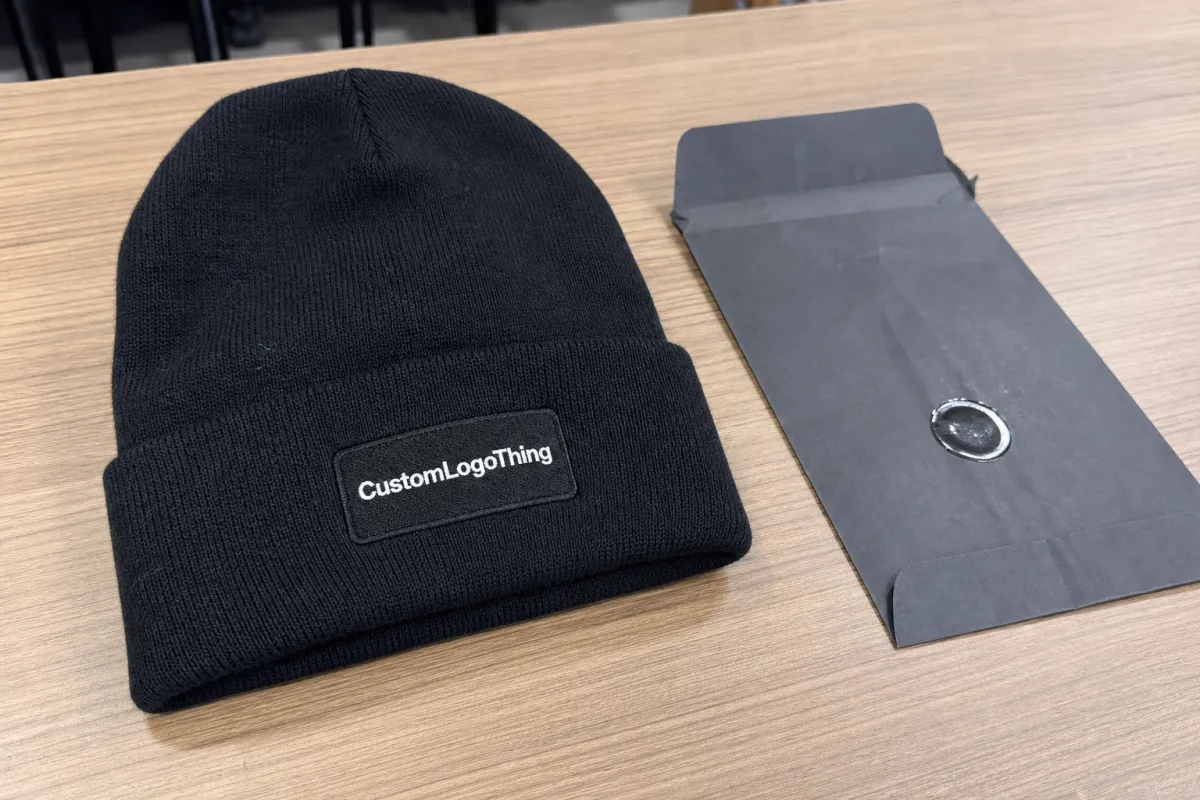
Patch beanies sit in a useful middle ground. They carry branding without turning the product into a walking advertisement. That matters in beauty, where the item has to look intentional next to skincare, fragrance, accessories, and seasonal gift sets. A clean patch usually feels more premium than oversized embroidery or a busy all-over knit pattern.
There is a reason buyers keep returning to this format. It photographs well. It folds well. It behaves well in a box or polybag. A small patch on a cuff gives the logo enough visibility for retail and PR, but it still leaves the beanie looking like something someone would wear after the campaign ends.
That restraint is useful for launch kits and staff programs too. Beauty merch often needs to cross a few channels at once: resale, gifting, salon use, and event giveaway. Loud graphics lock an item into one moment. A patch beanie is easier to reuse across seasons without feeling stale.
Most beauty teams do not need a louder hat. They need a cleaner one that survives close-up photos, shelf display, and actual wear.
Placement affects that balance more than people expect. Front cuff patches are the safest because they read quickly and package neatly. Side patches feel a little more editorial. Center placement gives the strongest retail visibility, but it can look too promotional if the logo is oversized. The right answer depends on where the beanie will live after production, not just how it looks in a mockup.
There is also a cost reason. Patch beanies usually give more control over decoration than fully custom knit graphics. That matters when the order needs to hit a budget and still feel branded. Beauty logo patch beanies Bulk Order Planning is really about finding that point where the item looks deliberate without becoming too expensive to stock.
Patch materials, knit styles, and colorways that hold up in real use
Patch material changes the personality of the whole product. PU leather gives a smooth, retail-friendly finish. Woven patches are better for logos with small type or fine edges. Embroidered patches bring texture and a more traditional feel, though they can get bulky if the artwork is too detailed. Felt patches read softer and more casual. Silicone patches look modern and hold crisp edges well, especially for more sportswear-adjacent beauty brands.
Each material has a tradeoff. PU leather can look flat if the logo is too simple. Woven patches keep detail but lose tactile depth. Embroidery looks rich until the art gets crowded. The patch should fit the brand, but it also has to survive production without becoming fuzzy or awkward.
Knit style matters just as much. Cuffed beanies are the safest choice because they create a stable patch zone and a more predictable fit. Slouchy styles feel relaxed, but the patch can sit oddly if the crown is too loose. Fisherman beanies have strong fashion appeal, though the shorter body limits placement options. Fine-gauge knits look smoother and more premium in close-up shots, but they also show flaws faster if stitching, tension, or alignment is off.
Color is where buyers often overcomplicate things. Neutral shades still do most of the work: black, cream, oatmeal, heather gray, navy, charcoal, and muted olive. These colors age better, photograph cleanly, and reduce the risk of the beanie looking tied to one short-lived trend. If the patch is dark, a lighter knit helps the logo read. If the patch is light, a deeper body color can make the brand mark pop without shouting.
For beauty programs, the logo should be readable from a few feet away, not across a parking lot. That means contrast matters more than novelty. A sharp patch on a solid knit usually beats a clever color combination that looks interesting on screen and confusing in person.
Here is a practical way to compare patch options:
| Patch Type | Look | Best For | Tradeoff |
|---|---|---|---|
| PU leather | Clean, polished | Retail, gifting, premium kits | Can feel plain if the logo lacks depth |
| Woven | Sharp detail | Small type, thin lines, multi-color art | Less texture than embroidery |
| Embroidered | Tactile, classic | Bold marks, simple icons | Not ideal for tiny lettering |
| Felt | Soft, casual | Lifestyle branding, lower-key merch | Can read less premium if overused |
| Silicone | Modern, sporty | Active beauty or streetwear crossover | May feel too technical for some brands |
For broader order structures, our Wholesale Programs page is a useful reference before finalizing quantities and pack-out requirements.
Specs that protect logo clarity, fit, and retail consistency
A quote is only as accurate as the spec sheet behind it. If the brief is vague, the result is a guess. And guesswork has a funny way of showing up later as missed expectations, delayed samples, or a unit price that makes no sense.
At minimum, the spec should include yarn content, knit gauge, cuff height, crown depth, patch dimensions, patch placement, attachment method, and color references. Pantone is still the cleanest reference for production. HEX can help for screen matching, but it should not be treated as the final word for dyed goods or patch materials. If the supplier has to interpret too much, the risk goes up immediately.
Logo simplification matters more on a patch than many buyers expect. Hairline strokes, tiny text, and gradients tend to fail first. They either disappear, distort, or become unreadable once translated into woven, embossed, sewn, or printed patch formats. If the logo only works at full-screen size, it probably needs cleanup before you approve bulk production.
Fit deserves real attention too. A beanie that feels tight gets left on the shelf. One that is too loose loses shape and looks worn faster than it should. For a standard adult fit, many buyers aim for roughly 21 to 24 inches in circumference, but the exact target depends on the yarn, stretch, and stitch density. Internal seam finish matters as well. Rough seams are one of those small things that turn into complaints in premium programs.
Retail consistency is a different problem from fit. A product can fit well and still fail if it arrives wrinkled, flattened, or inconsistent across cartons. Ask about snag resistance, colorfastness, wash behavior, and whether the patch can handle folding without warping. If the order is going into stores, it should be able to come out of the package looking intentional. That sounds obvious. It still gets missed.
Useful checks to confirm before quoting:
- Yarn content: acrylic, acrylic-wool blend, recycled content, or specialty fiber
- Knit gauge: fine, medium, or chunky based on the finish you want
- Patch size: often 1.5 to 3 inches wide for clear branding
- Attachment: sew-on, heat-apply, or reinforced stitching
- Packaging: folded, banded, polybagged, or retail boxed
Packaging and transit testing should not be an afterthought either. Standards published by the ISTA are useful if the program needs more than a basic ship-and-hope setup. For beauty orders that move through distribution centers or retail back rooms, the pack-out has to protect the product as much as the product itself protects the brand image.
Cost, pricing, MOQ, and unit cost drivers for bulk orders
Pricing usually comes down to patch material, stitch complexity, knit density, color count, packaging, and whether the yarn is stock or custom-dyed. Buyers often assume the decoration is the main cost driver. Sometimes it is. More often, the combination of setup, packaging, and low quantity pushes the price higher than expected.
MOQ changes the economics fast. A 100-piece order spreads setup costs over fewer units than a 500-piece run, so the unit price rises. That is not a trick. It is just production math. In many cases, a larger order gives better per-unit pricing and makes the inventory more usable across channels, especially if the beanies are tied to a launch, a salon network, or a seasonal retail push.
In the market, pricing tends to move in ranges rather than one neat number. For a standard custom patch beanie, higher-volume orders may land around $3.80 to $6.50 per unit. Smaller runs can sit well above that, especially if the patch is complex or the packaging is retail-ready. Custom dyeing, woven labels, hang tags, and individual boxing all add cost. Freight and duties can change the landed total just as much as the factory price.
A good quote should separate those pieces clearly. If sample cost, production cost, decoration cost, and freight are mashed together, the comparison becomes useless. Ask for pricing at more than one quantity tier. A 100-piece quote tells you one thing. A 300-piece quote tells you whether the order can actually work. A 500-piece quote tells you where the better break sits.
That is the part of beauty logo patch beanies Bulk Order Planning most buyers underestimate. The lowest unit price is not always the best decision. Sometimes the better move is the quantity that gives you the cleanest landed cost without overcommitting cash to inventory that has a short selling window.
Here is the kind of cost breakdown worth reviewing:
| Cost Bucket | What It Covers | Common Buyer Mistake |
|---|---|---|
| Sample cost | Mockup, patch proof, fit check | Assuming the sample price equals bulk pricing |
| Production cost | Knitting, patch application, finishing | Ignoring how yarn and stitch choice affect labor |
| Decoration cost | Patch making, embroidery, print setup | Forgetting extra colors or special finishes |
| Freight and duties | Shipping, customs, landed delivery | Budgeting only the factory price |
For sustainability-minded buyers, packaging should be reviewed against current retailer rules and recycling guidance from the EPA recycling resources. The point is not to add noise to the spec. The point is to avoid packaging that creates avoidable friction later.
Process, production steps, and lead time from art to shipment
The usual workflow is straightforward: inquiry, spec confirmation, mockup, sample approval, bulk production, quality check, packing, and shipment. The process is simple enough. The delays come from missing decisions, late artwork, and approvals that keep bouncing between people.
Lead time changes more from approval speed than from knitting speed. A clean logo file shortens the mockup stage. A finalized patch direction keeps sample revisions from multiplying. Custom yarn colors take longer than stock shades. If the supplier has to pause for artwork cleanup, the schedule will slip. That is not a manufacturing flaw. It is part of the job.
Good buyers help the timeline by sending vector files, final color references, patch dimensions, and one person who can approve changes. A complete ship-to address also matters earlier than people think. If cartons need retail labels, distribution-center marks, or country-specific documentation, those details should be in the brief before production begins.
Typical timing for a custom patch beanie order often looks like this:
- Mockup and quote: 1 to 3 business days
- Sample production: 5 to 10 business days
- Bulk production: 10 to 20 business days after sample approval
- Transit: varies by route, often 3 to 10 business days for expedited freight
Those ranges stretch quickly during holiday peaks, when color matching slows down, or when freight is backed up. A winter launch should be planned backward from arrival date, not from the day the order is placed. That sounds obvious. The number of seasonal orders that miss that step says otherwise.
Build in time for sample revisions. Add some room for shipping delays. If the beanies have to hit shelves on a hard date, the production schedule needs buffer. There is no prize for cutting the timeline so thin that everyone spends the last week pretending traffic, customs, and approvals are under control.
What a dependable supplier should handle for beauty programs
A good supplier does more than quote hats. They should catch logo issues early, show mockups that match the build, and flag risks before production starts. If the patch is too detailed, they should say so. If the chosen knit and patch combination is likely to look awkward, they should say that too. Producing a bad sample without warning is not service. It is just an expensive way to stay polite.
Beauty programs often need more than the beanie itself. Folded packing, barcode stickers, hang tags, polybags, and carton planning all matter if the order is heading to stores, fulfillment centers, or salon locations. For influencer kits, the packaging can be lighter, but it still needs to arrive clean and consistent. Creased product does not make a premium launch feel premium.
Repeat orders are another test. Anyone can quote a first run. The real question is whether the supplier can keep patch placement, yarn shade, and packing consistent on the next order. That matters when a product sells better than expected and needs a replenishment batch without reworking the entire spec.
Documentation matters here too. The approved sample should be recorded. Tolerances should be clear. The supplier should be able to say what can vary and what cannot. If they cannot explain their own inspection checkpoints, that is a warning sign. A dependable partner should know where the risk sits and how they control it.
That practical mindset is what separates a serviceable vendor from a useful manufacturing partner. The job is not just making a beanie. It is making the same beanie again, with the same patch, the same fit, and the same finish, when the second order shows up.
If you need a broader reference point for sourcing and order handling, our FAQ page covers common questions before artwork and quantities are finalized.
Next steps to lock your beauty logo patch beanies order
Start with the basics: logo file, beanie style, patch material, target quantity, packaging needs, and delivery date. Do not wait until the first mockup to decide whether the order is for retail, gifting, staff wear, or a launch kit. Channel changes alter packaging and pricing, sometimes more than the product itself.
Use a simple approval checklist. Confirm the artwork, patch size, placement, color references, and pack-out. If the order is going to more than one destination, list every ship-to point now. Cleaning that up later is tedious and avoidable.
Compare pricing across quantity tiers before committing. A quote at 100 units is useful. A quote at 300 units is often where the economics make sense. A quote at 500 units shows whether the order can be restocked without starting from scratch. That is the practical side of beauty logo patch Beanies Bulk Order Planning: get the spec right, then let the numbers tell you whether the program is worth scaling.
And yes, timing matters more than people want to admit. Winter merch ordered after the season has shifted is just inventory with a story attached. Approve the sample before the schedule becomes wishful thinking. That saves everyone from pretending the calendar will negotiate.
FAQs
What is the typical MOQ for beauty logo patch beanies in bulk?
MOQ varies by patch type, knit style, and whether the yarn is stock or custom-dyed. Smaller runs usually carry a higher unit price because setup costs are spread over fewer pieces, so it helps to compare 100, 300, and 500-piece pricing before deciding.
How long does production usually take?
Most orders include mockup approval, sample production, bulk knitting, patch application, inspection, packing, and shipping. A realistic timeline is often a few days for mockups, about a week for samples, and 10 to 20 business days for bulk production after approval, plus freight time.
Which patch type looks best for beauty brand beanies?
PU leather and woven patches usually create the cleanest premium look for beauty brands. Embroidery works well for simple logos, while woven or debossed styles can handle finer detail better than bulky stitched artwork.
What files should I send before requesting a quote?
Send a vector logo file, preferred colors, patch size, beanie style, target quantity, and delivery deadline. If you have Pantone references, packaging requirements, or a physical sample, include those too so the quote is closer to the final order.
How should beanies be packaged for resale?
For retail, folded packing, clean labeling, and either polybags or custom inserts are common. If the beanies are for influencer kits or staff distribution, packaging can be lighter, but the product should still arrive crease-free and consistent.
What should I check on the sample before approving bulk production?
Check patch placement, logo clarity, knit tension, color accuracy, seam finish, stretch, and whether the folded product still holds its shape. If the sample looks fine only from a distance, it probably needs another round of review.
Can a small logo still work on a patch beanie?
Yes, but the logo needs to be simplified so it survives the patch format. Tiny text, thin lines, and gradients usually create problems. A cleaner mark almost always prints, weaves, or stitches better than a detailed one.
What drives landed cost the most?
Patch material, quantity, packaging, custom yarn, and freight are usually the biggest levers. A lower factory price can still become a poor deal once shipping and duties are added, so landed cost is the number that matters.


