If you are buying for a product launch, sponsor kit, or cold-weather activation, event merch Premium Cuffed Beanies lead time is the number that decides whether the giveaway actually lands on time. The product looks simple from the outside. A knit cap, a folded cuff, a logo, done. The schedule behind it is not simple. Yarn sourcing, knitting, decoration, finishing, packing, and freight each add their own slice of time, and each slice can slip for a different reason.
The safest way to think about lead time is not “how long the factory needs.” It is the full path from approved artwork to cartons in hand. That includes proof review, sample approval if needed, production, quality control, and shipping. A supplier can say the beanies are fast, but fast is only useful if the order also clears the parts nobody likes to talk about: packaging, transit, customs, and internal sign-off.
For event merch, the calendar is the real product spec. If the beanies arrive after the event, the decoration may be perfect and still useless. That is why the best buying decisions are usually the boring ones: clear art, realistic quantity, one approval owner, and a timeline that leaves room for the small disasters that always show up.
What Event Merch Premium Cuffed Beanies Lead Time Really Includes
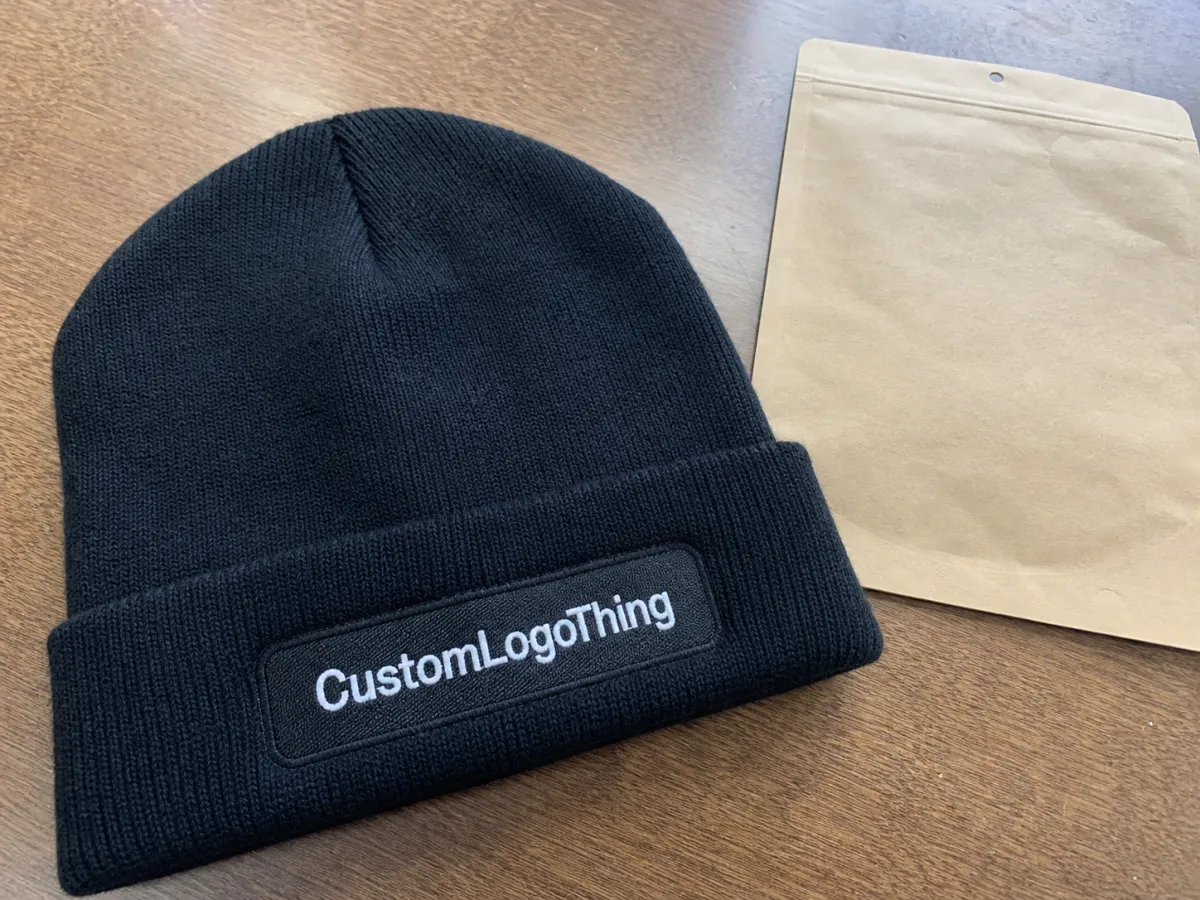
A cuffed beanie may be one line on a purchase order, but it moves through several production stages. Yarn has to be available. The body has to be knit. The cuff has to fold cleanly and hold its shape. Decoration comes next, whether that is embroidery, a woven patch, a label, or a mixed finish. Then the pieces need trimming, inspection, folding, packing, and shipment booking. A delay in any one of those steps can shift the whole schedule.
That is why a quoted lead time and a real lead time are often different things. A factory quote may refer to production only. It may not include artwork revision, sample turnaround, freight, or delivery to a specific address. If you are buying for an event, those missing pieces matter more than the production clock itself. A beanie that finishes neatly in the factory but waits three days for a truck is still late.
There are two common traps. First, “stock” does not mean instant. It usually means the blank base exists and can reduce one part of the schedule. Second, “lead time” does not always mean the total project timeline. Buyers who forget those distinctions usually discover them too late, and usually in an email that starts with “quick update.”
For event merch Premium Cuffed Beanies lead time, it helps to ask for two dates instead of one: the earliest ship date and the latest safe arrival date. Those two numbers are more useful than a broad estimate because they force the conversation onto actual calendar risk. Holiday surges, freight congestion, and proof delays do not respect optimistic promises.
If the order is being shipped domestically, ask whether the quoted schedule assumes final-mile delivery or only departure from the warehouse. If the order is coming from offshore production, ask what the schedule includes after the goods leave the factory. Those questions sound basic. They save campaigns all the time.
"A clean quote is not the same thing as a safe timeline. The safe timeline includes the ugly little delays up front."
How the Process Moves From Brief to Finished Cartons
The first thing a buyer needs is a usable spec. “Premium feel” does not count. A workable brief names the yarn type, cuff height, knit style, decoration method, quantity, color range, packaging, and any insert or kitting requirement. If the beanies need polybags, hangtags, barcodes, sponsor cards, or bundled pieces, those details should be locked before production starts. Each add-on touches the schedule.
The usual sequence looks like this:
- Confirm artwork and product spec.
- Prepare mockups or a sample if the order needs one.
- Approve color, decoration placement, and sizing.
- Knit the beanies and form the cuff.
- Add embroidery, patchwork, woven labels, or another finish.
- Trim, inspect, fold, pack, and label.
- Book freight and ship.
That list looks orderly. Real projects are messier. A marketing team uploads the wrong logo version. A brand manager changes the cuff color after seeing a screen mockup. Someone notices that the logo feels a little too wide and asks for “one more option.” Each change can restart a piece of the process, even if the change seems minor from the buyer’s side.
The fastest orders are usually the simplest. One logo placement. Clean vector art. Two or three thread colors instead of a dense, highly detailed palette. A cuffed beanie with straightforward embroidery will usually move faster than a multi-part patch with special finishing. The less the factory has to interpret, the less time gets lost in back-and-forth.
Decoration method matters more than many teams expect. Direct embroidery is often easier to schedule than a woven patch that needs edge finishing, backing, or a separate approval cycle. A small woven label on the cuff can be quick if the supplier already has the setup. A fully custom badge or patch can add another round of sampling and inspection. More parts mean more handoffs. More handoffs mean more time.
For tighter planning, ask for a milestone timeline, not a single blanket estimate. A practical plan shows proof approval, production start, quality check, and ship date. That gives the internal team something they can actually manage. It also makes it obvious where the delay lives if the schedule starts slipping.
Materials and packaging choices also affect the timeline. Recycled yarns can be available, but not always in every shade or texture. Paper-based inserts can be simple, but a custom printed insert adds approval time. If the order is part of a larger kit, transit testing logic can matter too. Packaging standards such as ISTA are useful when outer packaging has to survive long shipping lanes or repeated handling, and FSC can matter when paper components are part of the spec. Those choices are not just compliance details; they can change how quickly the job moves.
What Actually Extends or Shortens Delivery Windows
The biggest variable is quantity. A run of 100 pieces is not just one-tenth the work of 1,000 pieces. Small orders often pay more per unit because setup costs are spread across fewer items, while large orders may need more machine time, more inspection, and a longer production queue. Quantity affects cost and calendar at the same time.
Decoration complexity is the next lever. A single embroidered logo on the cuff is usually cleaner than a large patch, a second placement on the body, or a layout with multiple sponsors. Every extra decoration zone adds setup, alignment, and inspection. That does not mean extra detail is bad. It means detail costs time, and the buyer should decide whether the extra time is actually serving the event.
Color matching is another quiet schedule drag. If the brand requires a precise yarn shade or an exact thread match, the supplier may need a dye lot check, an approval sample, or a backup plan if the first color misses the target. “Close enough” moves faster than “exact,” and that difference is often bigger than buyers expect. If the brand team wants strict color control, the timeline should be written with a little breathing room.
Fulfillment location changes the risk profile as much as the ship date. Offshore production can reduce unit cost on some orders, but transit, customs clearance, and port congestion add uncertainty. Domestic production is often easier to adjust when something goes wrong, especially if a trim component or embroidery file needs a quick fix. For a near-term event, the higher factory price can be easier to justify than the extra freight risk.
Seasonality can turn a modest project into a slow one. Holiday merch windows, Q4 corporate gifting, and back-to-back winter events crowd the same production capacity. A lead time that works in spring may look completely different in late fall. If the order is being placed during peak season, assume the calendar is already tighter than the quote suggests unless the supplier proves otherwise.
| Option | Typical Lead Time | Typical Unit Cost | Best For |
|---|---|---|---|
| Stock blank beanie + simple embroidery | 10-20 business days | $5.50-$9.00 | Short timelines, smaller events |
| Custom cuffed beanie with one-color embroidery | 3-5 weeks | $6.50-$11.50 | Mid-size campaigns, repeat branding |
| Fully custom knit style | 4-8+ weeks | $7.50-$15.00 | High-volume launches, brand-critical merch |
| Rush order with expedited freight | Varies by capacity | $9.00-$18.00+ | Last-minute events with flexible budget |
The ranges above are realistic buying bands, not guarantees. Yarn type, stitch density, logo size, packaging, and quantity all move the number. Still, the table makes one thing obvious: faster usually costs more, and custom usually takes longer than a simple stock-base decoration.
Pricing, MOQ, and Unit Cost: What Moves the Number
MOQ can shape the whole order. A supplier may quote a sharp unit price at 1,000 pieces and a much less charming one at 100 pieces because setup is being spread over fewer units. That is normal. It also explains why buyers who only chase the lowest per-piece number often end up with the least useful quote.
Setup charges deserve attention. Embroidery digitizing can run roughly $25 to $75 for a simple logo, and more if the artwork needs cleanup, versioning, or multiple placements. Samples may be included, discounted, or billed separately depending on the supplier and the complexity of the beanie. A pre-production sample is worth the spend when the event is high-profile or the design is new. Catching a problem after bulk production is much more expensive.
Pricing usually follows a few familiar patterns:
- Lower quantity: higher unit cost, faster decision cycle, less inventory left over.
- Higher quantity: better per-piece pricing, more cash tied up, more items to inspect.
- Rush production: extra fee for priority machine time or overtime.
- Expedited freight: often the biggest surprise line item when the deadline is close.
Always ask for total landed cost. Factory price alone tells only part of the story. Production, setup, packaging, freight, customs, and final delivery should all be visible in the same quote. Half-quotes are useful only for creating false confidence. They do not help a buyer compare offers in a meaningful way.
Rush fees can feel uncomfortable because they sometimes rival the product price. That is not unusual. A compressed timeline forces the supplier to rearrange capacity, pay for overtime, or book faster transport. The cost is real because the tradeoff is real. If the project cannot move, someone has to pay for the speed.
For event merch Premium Cuffed Beanies lead time, most buyers eventually choose one of three paths: simplify the design and pay for speed, keep the spec rich and accept a longer schedule, or reduce quantity so the order can clear before the event. Rarely do all three coexist. Any quote that suggests otherwise should be read twice.
How to Plan the Order Timeline Without Missing the Event
Work backward from the handout date, then add buffer. Not a token buffer. Real buffer. Proofing, production, freight booking, customs, and internal approvals all deserve room. If the event is on Friday, a carton arriving Thursday afternoon is not a plan. It is a gamble with a delivery label.
Lock the artwork early and make one person responsible for final sign-off. When six people weigh in after approval, the schedule becomes unpredictable in a hurry. The supplier cannot finish a design that keeps changing, and no production calendar gets better because a committee is still debating logo placement.
A practical order plan also includes a fallback. That could be an alternate beanie color, a simpler decoration, or a smaller emergency run that still keeps the event intact. A fallback is not a compromise on quality. It is a backup against time. The best merch programs are the ones that still work when the first choice gets squeezed.
Packaging and kitting need direct questions. Are the beanies shipping loose, folded in polybags, paired with a printed card, or boxed as part of a larger kit? Are size stickers, barcodes, or inserts required? Every extra touch point adds handling time, and handling time becomes lead time. It is easy to underestimate the labor in “just add a tag.”
Internal approval deadlines should be written into the plan as well. If legal needs to review claims on a hangtag, that is time. If branding needs two days to approve a color sample, that is time. The factory cannot move the order forward while waiting for a reply buried in someone’s inbox. Hidden internal lag is still lag.
"The safest buying plan is usually the least dramatic one: clear spec, one approval owner, one ship date, and a backup if the calendar tightens."
Mistakes That Blow Up the Schedule
The most expensive mistake is approving the wrong file and discovering it after production has started. Wrong logo version. Wrong placement. Wrong color reference. At that point, the supplier is not being difficult when they say the fix will cost time. The work already in motion has to stop or be redone. That is how a small error becomes a schedule problem.
Another common error is assuming the quote includes freight, customs, and local delivery. Sometimes it does. Often it does not. A production timeline is not the same thing as a door-to-door schedule, and the difference matters most when an event date is fixed. Ask for the full path every time.
Buyers also create delays by splitting the order too much. Three colors, two decoration methods, separate packaging for each region, and different delivery addresses can look organized in a spreadsheet and chaotic in production. Separate versions mean separate setup and separate chances for slippage. Consolidation is usually faster unless there is a strong reason to break the order apart.
Then there is the “we still have time” mistake. It is common because the project does not feel urgent until the calendar is suddenly not generous anymore. The order sits while the internal team debates details. The supplier books other work. The event date does not move. Once urgency arrives, the price usually does too.
Choosing the lowest quote without checking exclusions is another classic problem. What was omitted? Samples, revisions, packaging, freight, color matching, rush handling, or destination delivery? The missing items often hide the real cost. A low initial number with a long list of exclusions is not a bargain. It is a trap with neat formatting.
For orders that need stricter transit control, packaging testing standards can be worth a look. ISTA guidance helps when merch is being shipped in secondary packaging or kitted with other items because the outer pack becomes part of the product’s survival. If the beanies include recycled paper elements or branded inserts, FSC certification may matter too. The point is not paperwork for its own sake. The point is making sure the spec survives contact with shipping.
Next Steps for a Safer Buy
Ask for a dated milestone plan: artwork approval, sample, production start, quality control, and ship date. If a supplier cannot give that level of detail, the timeline is still theoretical. A real schedule has checkpoints, not wishful phrasing.
Request both a standard quote and a rush quote. That makes the tradeoff visible. Sometimes the extra fee is easy to justify because the event is tied to a launch or sponsor commitment. Sometimes it is smarter to save the money and simplify the design. The point is to make the speed premium explicit instead of guessing at it.
Compare capacity, not just promises. Ask what happens if a yarn color is unavailable, a patch component is delayed, or a packaging piece arrives late. Does the supplier substitute, wait, or split shipments? The answer matters because it reveals how the order will behave under pressure.
Decide on a fallback before production begins. Simpler decoration, fewer colors, or a smaller quantity can still protect the event. A backup plan is cheaper when it exists on day one. It becomes awkward only when it is needed on day twelve.
The best way to review event merch premium cuffed Beanies Lead Time is to check the same handful of variables every time: quantity, artwork, decoration method, packaging, proof approval, freight, and arrival date. That process is not glamorous. It does keep the beanies from showing up after the crowd has already left.
FAQs
How long is the lead time for premium cuffed beanies for event merch?
Stock blank beanies with simple embroidery often land in about 10-20 business days. Custom cuffed styles usually need 3-5 weeks, and fully custom knit builds can stretch to 4-8+ weeks. Add shipping time if the order is not moving domestically. Production time and delivery time are not the same thing.
What shortens event merch premium cuffed beanies lead time the most?
Final vector art that is ready on day one. One decoration method. One logo placement. In-stock colors. Quick proof approval. Those five details remove more friction than most buyers expect, because they reduce the number of decisions the supplier has to wait on.
How does MOQ affect pricing and turnaround on cuffed beanies?
Lower MOQs usually raise unit cost because setup is spread across fewer pieces. Higher quantities can lower the per-piece price, but they may also take longer if the factory is already booked. Some suppliers will offer flexibility on quantity only if the buyer accepts a higher rush fee or limited color choices.
Can premium cuffed beanies be rushed for a last-minute event?
Sometimes, yes, if the base beanie is in stock and the decoration is simple. Custom knit structures, special yarns, and layered patches are poor rush candidates. Expect extra cost for priority production and faster freight.
What should be confirmed before placing the order?
Quantity by color, decoration placement, artwork version, shipping address, and required delivery date. Confirm who signs off on proofs, because late internal changes are a frequent reason the schedule slips. Make sure the quote lists what is included so the final invoice does not surprise you.


