subscription Premium Cuffed Beanies Unit cost is rarely a single number. It is a moving result shaped by yarn choice, knit structure, decoration, packing, freight, and how often the same spec gets reordered. The first quote usually looks higher than the second or third because setup is front-loaded; the factory has to prepare the knit file, confirm colors, review artwork, and align packaging before a single hat is produced.
That pattern matters for subscription and recurring merch programs. A beanie that looks expensive in a first-run quote can become very manageable on reorder, but only if the spec stays steady. Once the details stop drifting, the price stops drifting with them. The challenge is less about hunting the cheapest hat and more about building a repeatable cost structure that does not unravel every time the logo changes by a few millimeters.
Buyers usually get into trouble in the same place: they compare base product price without carrying through the whole landed cost. Freight, carton count, labeling, tissue, hang tags, relabeling, and split shipments can erase the savings from a low production quote. A clean quote is one that tells the truth about all of it, not just the knit price.
Why subscription premium cuffed beanies unit cost drops with repeat reorders
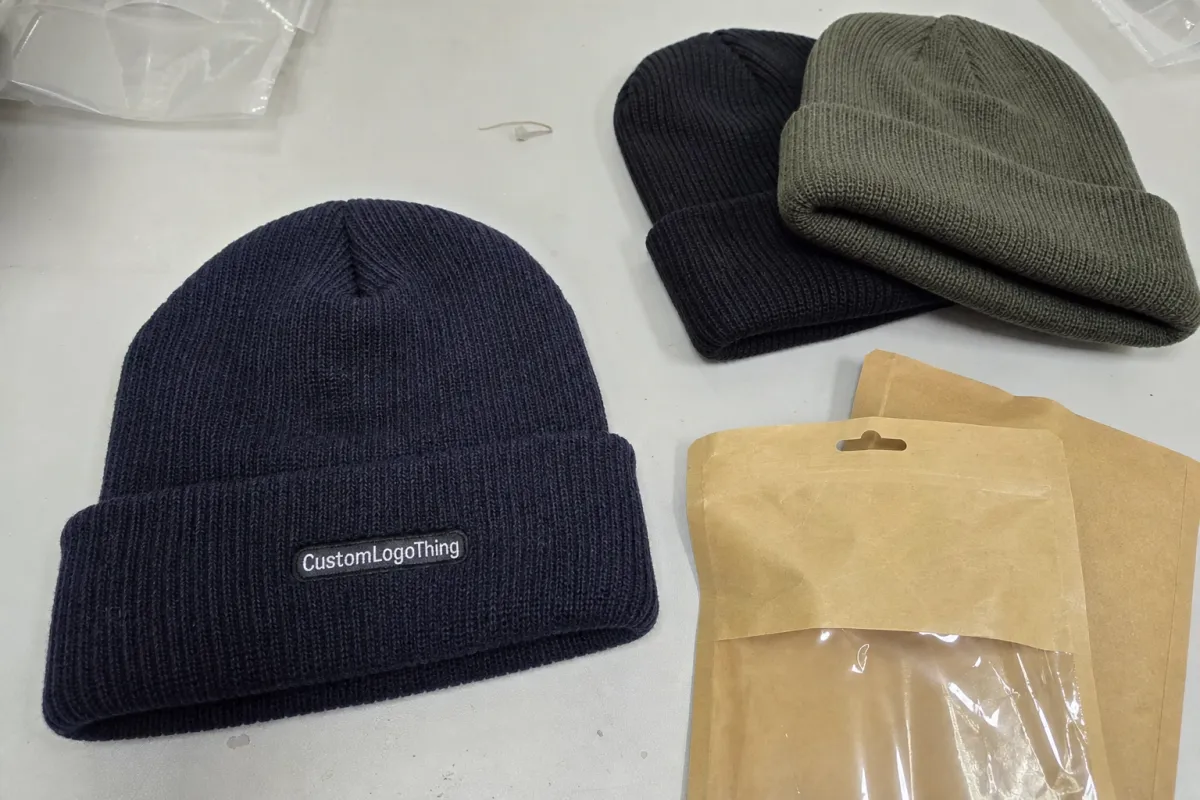
The first run carries the heaviest overhead. There is artwork setup, stitch file preparation, color matching, sample review, and back-and-forth on packout details that have to be settled before production starts. Those are real costs, even if they do not show up as a line item on the first quote. After that work is done, a repeat order becomes easier to run and easier to price.
That is the core reason subscription Premium Cuffed Beanies unit cost tends to fall after the initial order. The factory does not need to rebuild the job. The approved sample already exists. The trim specs already exist. If the buyer does not introduce a new decoration method or change the yarn blend, the reorder is mostly about filling the same mold again, only at better scale.
Recurring programs also benefit from less waste. When a supplier knows the next order is likely coming, it is easier to plan yarn buying, schedule the line, and hold onto the production notes that matter. That does not mean prices magically collapse. It means the cost structure becomes less chaotic. In manufacturing, boring usually means healthy.
One-off orders pay for setup every time. Subscription programs spread those setup costs across multiple drops, which is why the later orders often look much better. The savings are most visible when the branding, size, and packaging stay fixed. If the product keeps changing, the savings evaporate quickly.
Do not evaluate the quote in isolation. A base unit cost that looks attractive can become less useful once the freight method, package inserts, and relabeling are added. A 40-cent difference in the knit can be swallowed by an extra bag insert or special carton mark. That is why cost planning has to include the full path from factory floor to customer doorstep.
If the spec changes every cycle, the price will too. Lock the spec first, then compare quotes.
For subscription buyers, the right question is not which beanie is cheapest on paper. It is which beanie can be repeated reliably, with the least friction, at the lowest landed cost over time. That is a more useful question, and usually a more profitable one.
Premium cuffed beanie construction that justifies the spend
Premium is not a decorative word here. A premium cuffed beanie should have a denser knit, a cuff that lies flat, solid stretch recovery, and a hand feel that survives handling without looking cheap. If the product is going into a subscription box or a monthly merch drop, consistency matters as much as appearance. The customer sees the item beside the previous month’s version, so any drift is obvious.
Material choice drives both feel and price. Acrylic remains the most common option because it gives stable color, predictable knitting behavior, and better control over unit cost. Acrylic-wool blends usually cost more, but they can deliver a warmer hand and a more elevated finish. Recycled yarn supports sustainability claims, though it can bring added sourcing limits and slight shade variation depending on the supplier and colorway.
Gauge and yarn weight matter more than casual buyers expect. A heavier knit can feel more substantial and photograph better, but it also uses more yarn and may require tighter process control to keep the cuff from rolling. A lighter knit may reduce cost, though it can look less premium and be more sensitive to fit complaints. The best choice depends on whether the program is aiming for retail presentation, utility, or long-term brand familiarity.
Cuff depth is a practical design decision, not just a style choice. A taller cuff provides more room for embroidery or a woven patch, which usually improves visibility. It also increases material use and can raise labor time. Small changes in cuff height often have a bigger price impact than buyers expect, especially when a factory has to adjust placement or recheck the artwork window.
Decoration method is where the budget often spreads apart. Embroidery is usually the safest route for recurring orders because it repeats cleanly and stands up to handling. Woven labels can look crisp but add an extra step. Faux leather patches and rubber badges create a stronger visual statement, yet they increase complexity and may add enough cost to matter at scale. For a subscription item, simpler decoration often protects both margin and repeatability.
The product also needs to keep its shape after packing and transit. A beanie that arrives flattened, twisted, or loose around the cuff loses the benefit of premium materials very quickly. Good construction is partly about yarn and partly about how the piece is packed. The job is not finished when the hat leaves the knitting machine.
- Acrylic: steady pricing, broad color range, and the easiest path to repeatability.
- Acrylic-wool blend: warmer feel and stronger premium perception, usually at a higher unit cost.
- Recycled yarn: useful for sustainability positioning, but verify color consistency and supply stability early.
Specs that affect fit, decoration, and repeatability
If the spec sheet is vague, the quote will be vague too. That is not a supplier tactic; it is a direct reflection of how production works. Before asking for pricing, define yarn content, knit gauge, finished height, cuff depth, stretch range, and crown shape. Those figures control how the beanie fits, how it looks, and how closely a reorder can match the original run.
Fit deserves more attention than it usually gets. A beanie that feels tight on one wearer and loose on another often means the stretch tolerance was never documented properly. For a recurring program, consistency is more valuable than trying to force a fashion silhouette that drifts from batch to batch. A subscription customer wants the same item every time, not an item that behaves like a different product depending on who puts it on.
Decoration placement should be specified with the same care. Center-front embroidery on the cuff, a side tab, a woven label, or a patch all create different labor steps and different approval burdens. A small logo may reduce cost, but not every brand can hide behind minimal branding. If the visual job needs more presence, the cuff height and decoration window need to be planned together from the start.
Packaging is part of the spec, not an afterthought. Polybagging, hang tags, barcode labels, tissue inserts, and master carton labeling all affect the quote. This is where many projects quietly become more expensive than expected. A low production price can disappear once the packout needs extra handling or custom labeling at the unit level.
For products that need to survive distribution and transit, packaging standards matter. If a program involves warehouse handling, retail replenishment, or customer-direct fulfillment, ask how the beanies are protected in transit and how the cartons are marked. The ISTA resources are useful if you need a better framework for packaging and transit risk than guesswork.
If the program includes recycled paper components or branded inserts, the sourcing claim should be documented carefully. The FSC framework is a practical reference point for paper-based materials. It does not solve everything, but it gives buyers a cleaner way to verify what is actually being shipped.
- Core specs: yarn content, knit gauge, finished height, cuff depth, stretch, crown shape.
- Decoration specs: method, size, placement, thread colors, backing type.
- Pack specs: polybag, sticker, hang tag, carton label, insertion order.
Unit cost, pricing tiers, and MOQ thresholds
The cost stack is straightforward once it is broken apart. You are paying for yarn, knitting, trim, decoration, packaging, quality control, and freight. If a supplier only gives a single bottom-line number, ask for a breakdown. You need to know whether the quote is competitive or merely incomplete.
| Order band | Typical unit cost behavior | Best for | What usually drives the price |
|---|---|---|---|
| 100-300 units | Highest cost per piece | Testing a new subscription offer | Setup charges, sample time, and packaging setup |
| 300-500 units | Improving pricing | Early repeat drops | Setup spread across more units, moderate labor efficiency |
| 500-1,000 units | Better bulk pricing | Stable recurring programs | Better line efficiency, more room to absorb overhead |
| 1,000+ units | Lowest practical unit cost | Established subscription volume | Scale, fewer relative setup fees, more efficient material buying |
The MOQ is not just a factory rule. It changes the pricing model. Below the threshold, setup is spread across too few pieces and the unit price feels heavy. As volume rises, the per-piece cost becomes more efficient because the fixed work is diluted. For recurring orders, pricing usually starts to behave better somewhere around 300 to 500 units, while 1,000+ units often gives the cleanest scale advantage if the program is steady.
Quantity changes can matter more than aggressive negotiation language. Adding a few hundred pieces may move the unit cost more than arguing over a few cents on the base knit. Scale is often the real discount. If the forecast supports a larger run, the factory can usually buy materials more efficiently and schedule the line with less friction.
When requesting a quote, send the destination, exact quantity, size mix, yarn preference, decoration method, packaging details, and whether you need sample approval before bulk. Leave out one of those details and the resulting number will probably come back with assumptions attached. That is not a stable buying position. It is a placeholder.
For subscription Premium Cuffed Beanies unit cost planning, packaging is often the most underestimated variable. A plain polybag with a sticker costs one way. A branded insert, hang tag, and full carton marking costs another. The beanie itself may not change, but the economics absolutely do. That is why landed cost, not just unit production cost, should anchor the decision.
Process and timeline from artwork to shipment
A good quote should move quickly if the brief is complete. Send the logo file, target quantity, color references, and delivery destination first. A clear brief often gets a usable quote within 24 to 48 hours. A vague brief creates more questions, and more questions usually mean a slower quote and more room for mistakes later.
The sample stage is where the product becomes real. This is the point to check knit tension, cuff proportion, logo size, and color accuracy. For a straightforward spec with yarn in stock, five to ten business days is a common sample window. If the yarn needs special dyeing or sourcing, the timeline expands. There is no production trick that removes that waiting period.
Bulk production usually takes 15 to 25 days once the sample is approved, though the range depends on quantity, decoration complexity, and whether the yarn is stock or custom dyed. Simple jobs move faster. Complex branding, custom packaging, or heavier knit specs slow the line down. Anyone promising an unusually fast schedule should be pressed on exactly where the time is being saved.
Shipping can make a well-priced order expensive if the timing is not planned early. Ocean freight takes longer but protects margin. Air freight protects timing but can be hard on the landed price. Split shipments can solve a launch problem, yet they often raise total cost in exchange for speed. The shipping method should be part of the buying decision from the first quote, not something added at the end when the delivery date starts to slip.
Distribution planning matters because the product has to survive more than production. A beanie packed perfectly at the factory can still arrive compressed, disordered, or mislabeled if the cartons are weak or the packout was rushed. The cheapest item on paper is not cheap if returns, relabeling, or rework show up after delivery.
- Brief: send files, quantity, destination, and pack specs.
- Sample: review fit, color, and logo placement.
- Bulk: lock approvals before production starts.
- Ship: choose ocean or air based on launch timing and margin.
Why subscription programs need factory-level repeat control
Subscriptions fail when the product drifts. One month the color looks slightly off. The next month the logo sits higher. Then the packaging changes and the customer feels the brand has become inconsistent. That sort of drift is small in isolation and damaging in aggregate. Recurring programs live or die by repeat control.
A factory with archived specs can keep reorder behavior disciplined. The stitch file is already approved. The trim pack is already known. The carton layout is already documented. Those small efficiencies add up, and they are exactly what keeps subscription premium cuffed Beanies Unit Cost from wandering upward over time.
Quality control matters more on recurring jobs because the same customer sees the item repeatedly. Pre-production approvals, inline checks, carton audits, and final photo confirmation reduce unnecessary returns and complaint handling. It is much cheaper to stop a bad batch before shipment than to explain why the third monthly drop does not match the first two.
There is also a communication issue that experienced buyers notice quickly. A strong supplier warns early when a rush order, yarn substitution, or packaging change affects pricing or timing. That warning is not a nuisance. It is the difference between a managed variance and a surprise. In subscription programs, surprises usually cost money.
If stable bulk pricing is the goal, ask whether the factory can hold the spec across reorders without reopening every approval step. A supplier that can repeat the job cleanly is usually more valuable than one that just says yes quickly. Speed matters, but repeatability is what protects margin month after month.
For recurring merch, the right supplier is the one that can repeat the job cleanly, not the one that answers first.
Good control also makes comparisons easier. If two vendors are quoting the same product but one has more assumptions, more substitutions, or more hidden packout costs, the lower number is often an illusion. Subscription programs need fewer illusions and more documentation.
Next steps to get a clean quote and approval
Start with the essentials: quantity, logo file, color references, decoration method, packaging needs, and ship-to address. Add your target landed cost if you already have one. Without those details, the quote can only be directional, and directional quotes are a poor foundation for recurring supply.
The best sequence is simple. Confirm the spec. Approve the sample. Lock production. Then choose freight. If freight comes first, the project usually gets pulled into avoidable changes. That creates extra cost, and extra cost is easier to prevent than recover later.
Use a plain comparison checklist so the numbers stay readable. Compare unit price, setup fees, sample cost, packaging cost, and freight separately. That approach exposes where the money is going and keeps the conversation grounded in actual supply decisions instead of wishful pricing.
- Ask for: product specs, MOQ, sample cost, bulk pricing, and lead time.
- Compare: base knit, decoration method, packaging, and freight separately.
- Confirm: landed cost, approval sequence, and reorder terms before production starts.
If the target subscription premium cuffed Beanies Unit Cost already has a ceiling, send the spec around that number rather than asking vendors to guess it. That keeps the quote anchored to the real buying objective and avoids the slow drift that makes recurring programs harder to defend internally.
What affects subscription premium cuffed beanie unit cost the most?
The biggest drivers are quantity, yarn choice, decoration method, and packaging. Small runs carry more setup charges per piece, while larger runs spread those costs out. Embroidery, dyeing, and custom inserts can move the price faster than the beanie base itself.
What MOQ usually gives a better premium cuffed beanie price?
Pricing usually improves once the order moves beyond the smallest production tier. Roughly 300 to 500 units is where recurring orders start to look more efficient, and 1,000+ units often gives the strongest per-piece value if the volume is stable.
How long does a subscription cuffed beanie order usually take?
Quote turnaround is often 24 to 48 hours when the brief is complete. Sampling usually takes 5 to 10 business days. Bulk production often runs 15 to 25 days, plus shipping time depending on the route and freight method.
Which decoration method keeps repeat orders most consistent?
Simple embroidery is usually the most reliable choice for recurring programs. It holds up well, repeats cleanly, and is easier to match across reorders. Woven labels and patches can work too, but they add steps and sometimes extra cost.
What do I need to send for an accurate cuffed beanie quote?
Send the quantity, logo file, color references, decoration placement, packaging needs, and delivery address. Add your target landed cost if you have one. The more exact the spec, the less likely the price is to change later.

