For a hotel buyer, Hotel Premium Cuffed Beanies unit cost is rarely just the knit cap price. The number moves with the cuff height, the yarn, the decoration method, the packaging, and even the way the beanie is folded before it reaches a guest room or retail shelf. That is useful, because it means the budget can often be controlled without making the product feel disposable.
A cuffed beanie earns its place in a hotel program because it looks complete. The fold creates a clean branding zone, the silhouette reads well in a gift box, and the item can move between use cases without needing a different shape. It can serve as a winter welcome amenity, a spa retail accessory, a staff piece, or a VIP arrival gift. The same body can work in all four settings, but only if the spec is disciplined.
What matters most is not the slogan on the hat. It is whether the structure, finish, and packing match the way the property actually uses it. A beanie meant for a front-desk giveaway does not need the same build as one intended for a retail wall display. Buyers who separate those uses early usually get cleaner quotes and fewer surprises later.
Why hotel cuffed beanies work as a premium guest gift
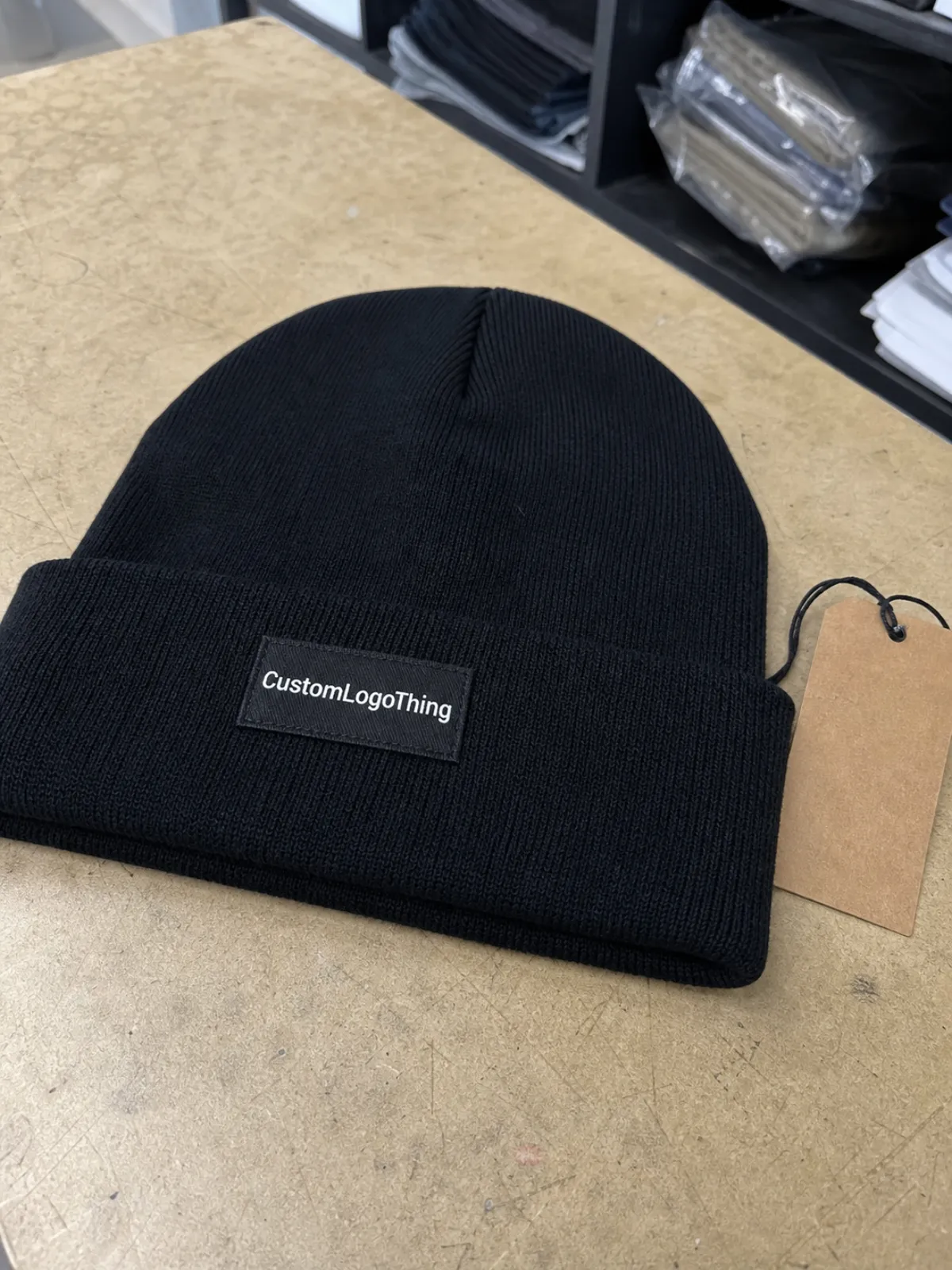
Hotels tend to favor items that are useful, seasonally appropriate, and simple to brand. A cuffed beanie checks all three boxes. It is compact enough to package neatly, warm enough to feel thoughtful, and visible enough for branding to register without taking over the product.
The cuff is the detail that changes the commercial value. It gives a stable band for embroidery, a woven patch, or a label, and it makes the piece look intentional rather than generic. On a plain beanie, the brand can feel like it was added after the fact. On a cuffed version, the branding feels built in.
That difference shows up quickly in guest perception. A hat with even stitching, a firm cuff, and a measured logo size tends to read as premium even if the raw materials are modest. A soft cap with a sloppy fold or crooked mark does the opposite. In other words, perceived value often comes from execution, not from one expensive ingredient.
For a winter welcome package, the beanie may sit beside gloves, a thermos, or a room upgrade card. For a resort boutique, it has to look like it belongs next to the rest of the merchandise wall. For staff wear, durability matters more than shelf appeal, because repeated use will expose weak seams and loose trims quickly. The same product category can serve all three, but the buyer has to decide which version is being purchased.
That is why hotel Premium Cuffed Beanies Unit Cost should be read in context. A higher quote may reflect a more stable cuff, better yarn, a denser knit, or a cleaner decoration method. Those are not cosmetic upgrades. They change how the product behaves in service and how long it keeps its shape.
The strongest hotel accessories are rarely the flashiest. They are the pieces that hold their form, photograph well, and can be reordered six months later without a new round of guesswork.
Build choices that define look and hand feel
Most of the visual character lives in the build. Yarn type affects touch, knit density affects drape, cuff depth affects branding space, and crown shape affects how the beanie sits on the head. Those choices sound small on a spec sheet, but they decide whether the finished piece feels plush, structured, relaxed, or functional.
Acrylic remains common because it is cost-effective, color-stable, and easy to knit consistently. Acrylic-wool blends usually feel warmer and more elevated, but they also raise the price and can add care concerns if the hotel wants a gift that feels easy to use. Recycled polyester blends are useful when sustainability language matters, although the feel can vary more by supplier than buyers expect. A recycled yarn can be perfectly acceptable; it just should not be chosen on messaging alone.
Knit density deserves more attention than it usually gets. A tighter gauge produces a cleaner surface, supports embroidery better, and reduces the chance of the fabric stretching out after handling. A looser gauge can feel softer at first touch, but it often makes the logo area less stable and the overall shape less predictable. For a branded hotel piece, predictability usually matters more than a slightly softer hand.
Decoration method is the other major decision. Each method brings a different cost structure and a different look:
- Embroidery is the clean default for many hotel logos, especially on the cuff, and it wears well.
- Woven labels work when the logo is small and needs crisp detail without bulk.
- Woven patches create a more textile-forward finish and can feel premium without looking heavy.
- Faux leather patches create a distinct retail style, though they are not right for every brand story.
- Heat-applied graphics can work for simple artwork, but stretch and wash behavior need review before bulk production.
Layering also changes the feel of the product. Single-layer beanies are lighter and may suit milder climates or promo use. Double-layer versions hold warmth better and usually look more substantial in hand. Lined versions add comfort and can reduce itch, which is valuable for guest gifting or staff wear. More layers do not automatically make a better beanie; they just move the item into a different price and performance band.
Production is faster when the construction is straightforward. A plain knit with one small embroidered logo is easier to schedule than a custom jacquard body, contrast cuff, woven patch, and specialty hang tag. None of those extras is wrong. They simply need to be priced as a complete build, not as a base cap with decoration tacked on at the end.
Specs buyers should lock before quoting
A useful quote starts with a usable brief. If the spec is still floating between sizes, finishes, and packaging styles, the pricing will be rough at best. The more complete the input, the less back-and-forth later.
Start with the basics: size, cuff height, crown shape, and whether the beanie should be single-layer, double-layer, or lined. Then define yarn color, logo dimensions, and label placement. Each of those choices affects material usage, production time, or decoration setup. On a small order, a small change can shift hotel Premium Cuffed Beanies unit cost enough to move the piece into a different tier.
Fit should be stated clearly. Some buyers want a shallow, tailored silhouette that sits neatly in display packaging. Others want a roomier guest fit that works across more head sizes and feels easy to wear. A structured body often photographs better. A softer body may feel more forgiving in use. There is no universal correct answer, only the version that matches the property and the moment.
Brand placement deserves the same level of specificity. Front-center embroidery on the cuff is popular because it is visible and easy to repeat. Side placement can feel quieter and more refined. Back-of-cuff decoration is less common but can work when the front needs to stay clean. If the logo must stay within a certain width or stitch count, put that in writing before sampling starts.
Material language should also be plain. “Soft hand” is not enough. Buyers Should Ask for fiber content, yarn thickness, knit gauge, and whether the yarn is spun for anti-pilling performance. That level of detail helps separate a polished sample from a cap that looks good once and gets fuzzy after a few uses.
Before approving production, define the acceptance standard for the sample. Check stitch consistency, color accuracy, logo alignment, cuff symmetry, and how the hat sits after folding. If the beanie is going into guest amenities or retail, those are not decorative details. They are the product itself.
For packaging and transit planning, the ISTA test framework is a useful reference for how cartons behave in shipment, and the Packaging Machinery Manufacturers Institute offers broader context on packaging systems and materials. If paper sourcing matters, ask whether outer cartons can use FSC-certified board. Those details do not make the product better by themselves, but they matter when the hotel has procurement or sustainability requirements.
Hotel premium cuffed beanies unit cost, pricing tiers, and MOQ
This is where most buyers start, and for good reason. Hotel premium cuffed Beanies Unit Cost is shaped by a stack of decisions, not one line item. Yarn quality, knit complexity, decoration method, color count, label type, packaging, and any custom color matching all push the price up or down.
MOQ changes the quote in a direct way. At low quantities, setup charges, sampling time, and decoration prep are spread across fewer pieces, so the per-unit cost rises quickly. At higher quantities, those fixed costs are diluted, and the unit cost usually falls while consistency improves. That is why 300 pieces and 3,000 pieces can land in very different price bands even if the hat looks similar from a distance.
| Order band | Typical MOQ | Common build | Indicative unit cost | Best fit |
|---|---|---|---|---|
| Small run | 200-500 pcs | Acrylic knit, 1-color embroidery, simple label | $4.20-$6.80 | Test program, seasonal pilot, limited VIP gift |
| Mid run | 500-2,000 pcs | Better yarn blend, tighter gauge, patch or embroidery | $2.70-$4.10 | Hotel retail, staff issue, repeat guest gifting |
| Large run | 2,000-5,000+ pcs | Custom color match, premium patch, tailored packaging | $1.95-$3.20 | Multi-property rollout, branded shop assortment, seasonal campaign |
Those ranges are indicative, not a promise. They assume a standard commercial build with no unusual dyeing challenge, no elaborate multi-part packaging, and no luxury finishing that adds labor at every step. A wool blend, a branded insert card, or a custom patch can push the number higher. A simple acrylic body with a small embroidery often sits toward the lower end of the range.
It helps to read a quote line by line. Separate the base knit price from setup charges, sample fees, label or patch tooling, packing labor, and freight. A low headline price can turn expensive after the “extras” are added back in. A cleaner-looking quote may be more honest if it includes those items from the start. That comparison matters more than the first number on the page.
Buyers often get better insight by asking for three pricing bands in the same conversation: a test quantity, a mid-volume order, and a larger seasonal run. That makes the economics visible. It also shows where hotel premium cuffed beanies unit cost starts to improve enough to justify stocking for the whole season instead of buying narrowly.
One practical caution: custom Pantone matching sounds minor until the yarn is sourced. Color-matching knitwear is harder than matching print on paper. Even a small shade shift can force a new dye lot or add sampling time. That is one reason a quote that looks simple on paper may take longer to firm up in production.
Production steps and lead time from approval to ship
Once the spec is locked, the order usually moves through a predictable sequence: artwork confirmation, yarn sourcing, knitting, finishing, decoration, inspection, packing, and shipment booking. Each step is straightforward on paper. In practice, the handoff between steps is where timelines are won or lost.
Late artwork changes are the most common delay. Slow color approval is another. Low-resolution logo files, screenshots used as color references, and repeated placement changes after sample review all stretch the schedule. The knitting machine does not move faster because the launch date is close.
A pre-production sample is not the bulk run. The sample exists to prove the look, the feel, and the decoration placement. It is the checkpoint. The bulk order is where the approved standard is repeated across the full quantity. Buyers who treat those two stages as the same often get frustrated because they are solving different problems.
For a typical custom beanie program, a sample can take about 7-14 business days after art approval, depending on yarn sourcing and decoration method. Bulk production often lands around 12-25 business days after sample sign-off for mid-sized runs. Larger orders, multiple colorways, or special packaging can extend that window. Transit time then depends on destination and shipping mode.
It is worth confirming milestones up front: sample due date, bulk start date, production completion, and freight booking window. If the beanies are needed for a winter opening, a holiday package, or a property event, the order should be planned backward from that date. Planning forward from the quote request usually leaves too little room for sampling or freight changes.
There is one more timing issue that is easy to miss: seasonal capacity. Knitwear programs often compete for machine time before peak winter demand, and decoration teams get busy before holiday deadlines. Even a good quote can slip if the order is approved late. That is not a quality issue; it is a capacity issue.
Quality checks, packaging, and freight details
Quality control on a cuffed beanie is mostly about consistency. Stitch density should be even. Seams should sit flat. The cuff should fold cleanly and hold its shape. Logo placement should stay centered and aligned across the run, with no wandering between pieces. Loose yarn ends, uneven trimming, and color drift are the details that separate a polished piece from a sloppy one.
It helps to define a simple inspection checklist before bulk production begins. Check the yarn lot, the sample approval photo, the logo position, the cuff width, and the final fold. If a hotel is ordering multiple colors, verify that each shade is checked under the same light. Knitwear can look more consistent in the factory than it does near a window, and that difference matters when the items are displayed side by side.
Packaging changes the guest experience more than many buyers expect. An individual polybag keeps the beanie protected and is practical for distribution. A branded belly band adds presentation without much bulk. A custom hang tag makes the item feel retail-ready. Bulk carton packing is the most economical option, but it shifts the presentation burden to the hotel team. The right choice depends on whether the product is being handed out, merchandised, or stored for replenishment.
There is always a tradeoff between presentation and cost. A property with a strong visual standards program may want a folded insert card, a printed belly band, and a labeled outer carton. Another may only need clean polybagging and a barcode sticker. Neither is wrong. The right answer is the one that fits the property’s operating style.
Freight belongs in the quote review, not at the end of the process. Carton count, carton size, destination terms, and shipping mode all affect landed cost. Air freight is faster and sometimes the right choice for a deadline-driven launch, but ocean freight usually improves unit economics on larger replenishment orders. If cartons are being engineered for transit performance, ask whether the packing plan has been reviewed with shipment stress in mind, not just shelf appearance.
Carton efficiency is easy to overlook and often worth real money. A tighter fold method or a better pack pattern can reduce shipping volume, which may save more than shaving a few cents off the beanie itself. That is one of the less glamorous parts of procurement, but it is also one of the few places where the landed cost can drop without changing the product.
Ask about outer carton board if paper sourcing matters to the brand. FSC-certified board is a modest detail, but it can matter to a property group that tracks packaging claims closely. Good suppliers will explain the options instead of pushing one format as if it fits every program.
What to include for a fast, accurate quote
A clean brief saves time. Quantity, delivery location, logo file, preferred color, decoration method, and packaging needs are the core fields. If you already know whether the beanies are for guest gifting, retail, staff wear, or a VIP package, include that too. Use case changes the right build more than many buyers expect.
It also helps to include the standard you want the factory to hold. If the cuff must be exact, say so. If the logo can move slightly for better balance, say that too. A supplier can work much faster when the boundaries are clear. Vague direction usually leads to extra proofs, extra revisions, and extra time.
For strict branding programs, ask for a pre-production sample or a detailed sample photo before bulk knitting starts. That step is especially valuable for multi-property rollouts, because once one version is approved, the same standard can be repeated without reopening every design choice.
If the order is seasonal, mention the deadline in plain terms. A winter launch, holiday delivery, or opening-night event changes the way the project should be scheduled. The useful comparison is not between “fast” and “slow.” It is between a schedule that leaves room for revision and one that does not.
The most reliable quotes are the ones built from real constraints: quantity, decoration, yarn, packaging, and shipping. Get those details in front of the supplier early, and hotel premium cuffed beanies unit cost turns into a planning figure instead of a surprise.
What affects hotel cuffed beanie unit cost the most?
Decoration method, yarn choice, and knit density usually move pricing faster than the basic cap shape. Packaging, color matching, and low quantity orders can also raise the per-piece cost because setup work is spread across fewer units.
How does MOQ change premium cuffed beanie pricing?
Smaller orders carry more setup cost per piece because sampling, knitting setup, and decoration prep are divided among fewer units. Higher quantities usually lower the unit cost and Make Custom Packaging easier to justify.
Which logo method is best for hotel cuffed beanies?
Embroidery is the clean default for most hotel branding because it looks tidy and wears well. Woven labels or patches can feel more premium if the design needs sharper detail or a different texture on the cuff.
How long does a custom hotel beanie order usually take?
Lead time depends on sample approval, yarn sourcing, decoration, and the size of the run. Ask for separate sample and bulk dates so you can plan around a seasonal launch, a resort event, or a property opening.
What should I send to get an accurate quote fast?
Send quantity, target delivery location, logo file, preferred color, decoration choice, and packaging needs. If you already know the cuff style and material feel, include that too so the quote reflects the right spec level from the start.


