Event merch Private Label Caps reorder plan decisions usually get made too late. The blank cap might still be available, but the embroidery file needs a cleanup, the patch vendor wants a new proof, the carton label needs another round of approval, and suddenly the event is closer than the production schedule. The order still exists on paper; the timing no longer does.
That is why repeat cap buying is less about placing another purchase order and more about controlling the version history. A merch team that locks the silhouette, decoration method, packaging, and approval path early can move faster on the next release without reopening every decision. The best reorder is not the one with the most urgency. It is the one with the fewest surprises.
For teams comparing replenishment methods or cleaning up procurement handoffs, the common questions on our FAQ page can help, but the core work starts with the spec sheet.
Why a reorder plan prevents stockouts
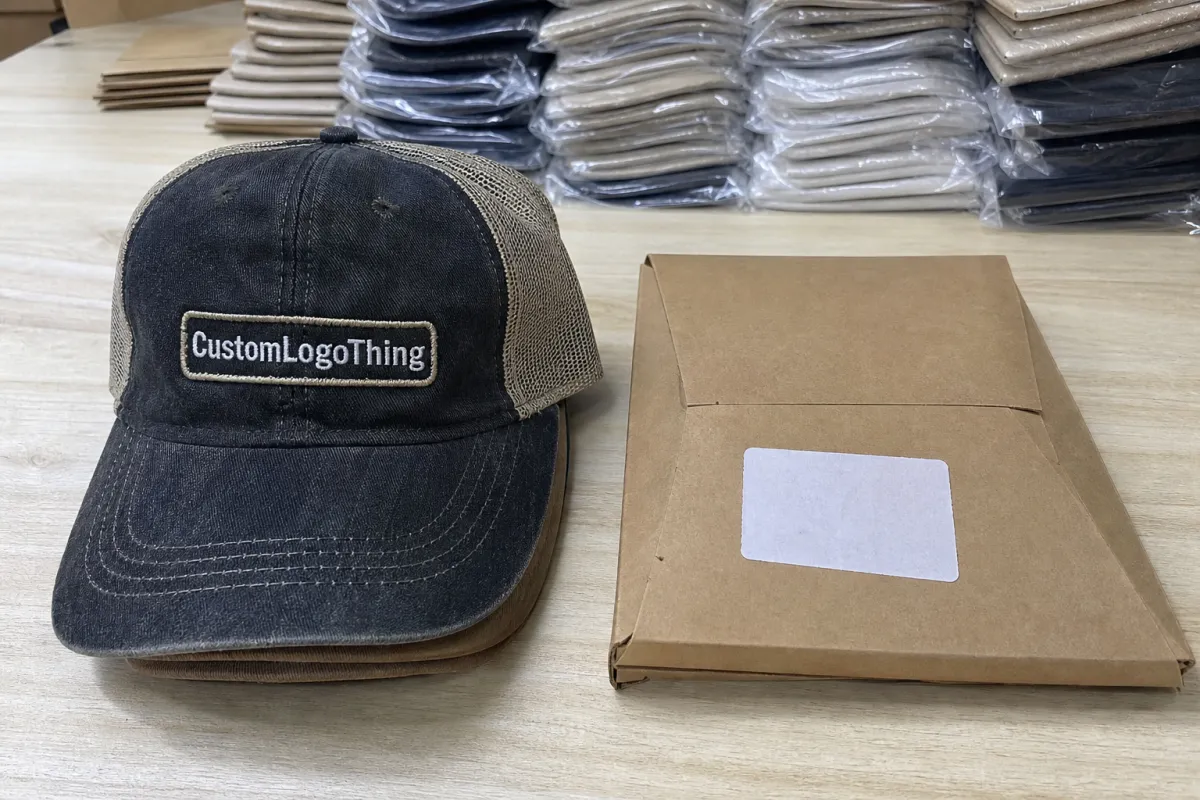
Stockouts on caps rarely happen because the base product vanished first. More often, the delay sits in the decoration chain. A simple embroidered logo can move quickly, but once a woven patch, leather badge, interior label, insert card, or custom carton mark enters the mix, every approval step matters. A missing thread color reference can cost a day. A patch proof that needs revision can cost several. Add freight and warehouse receiving, and a supposedly safe reorder window starts to look thin.
The practical value of an event merch private label Caps Reorder Plan is that it separates demand planning from panic. That matters for sponsor activations, recurring trade show giveaways, field launches, and seasonal events where the cap is only one piece of a larger kit. If the program already has a fixed cap body, a recorded decoration setup, and an approved packout, the supplier can repeat the order without rebuilding the job from scratch. The result is usually fewer substitutions, fewer last-minute charges, and fewer awkward explanations about why the second run does not match the first.
- Lower rush exposure: Reorders happen before the event calendar turns urgent.
- More stable spec control: The same silhouette, thread colors, and labels carry forward.
- Cleaner internal handoff: Procurement, merchandising, and the supplier work from one approved record.
- Better inventory timing: Replenishment follows forecasted demand instead of a shelf-empty emergency.
One pattern shows up repeatedly in buyer conversations: emergency buying tends to create small compromises that later become the new normal. A carton label is “close enough.” A closure changes by one step. The insert card is omitted to save time. Individually, those choices seem minor. Together, they produce a product that no longer matches the original approval. A disciplined reorder plan keeps those changes visible before they become baked into the line.
The cleanest reorder is the one that does not require a new debate about the basics: same cap, same decoration, same packout, same delivery window.
Choose the right cap build for repeat event use
The best repeat-order cap is not always the most complex one. It is the one that can be reproduced consistently and still feel right when it comes out of the box. Structured crowns keep shape better in transit and present a firmer front panel. Unstructured styles feel softer and more casual, which is useful for lifestyle-focused promotions. A 6-panel construction usually gives a reliable decoration area, while a 5-panel cap can work better when the front needs a single uninterrupted canvas for a bold logo or phrase.
Material choice affects both appearance and repeatability. Cotton twill remains a dependable standard because it wears predictably and takes decoration well. Brushed chino has a cleaner hand and can look slightly more polished. Washed canvas gives a relaxed, broken-in feel, but the finishing process can introduce small shade differences from lot to lot. Mesh-back caps breathe well for outdoor events. Performance fabrics hold up better in heat and sweat-heavy use cases. Foam-front styles still have a place in high-visibility promotions, though they are not always the easiest option for recurring private label programs.
Decoration is where repeatability either gets simpler or gets expensive. Flat embroidery is the most straightforward to repeat because the stitch file is stable and the output is easy to compare across runs. 3D puff embroidery adds dimension, but the foam height, stitch density, and edge clean-up all need tighter control. Woven patches, PVC patches, and leather badges can look premium, though each one introduces tooling, approval, or attachment variables that should be documented in advance. Interior taping and branded labels are often overlooked, yet they are among the first details a buyer notices when they want proof that the program is truly private label, not just a logo on a blank cap.
The most useful rule is plain: choose one repeatable body spec and keep it stable. Artwork can change. Patch copy can change. Insert cards can change. The underlying cap construction should not need to change every time the order comes back. If the program also includes sewn-in identifiers, retail tags, or packaging labels, our Custom Labels & Tags page is a practical reference for planning those components before the next run.
Specifications that keep every repeat order identical
A repeat order moves quickly only when the original approval file is complete. For caps, that means more than a logo and a target quantity. The master record should list panel count, crown height, brim shape, closure type, sweatband style, stitch color, ventilation hole placement, and label location. If the cap includes a sandwich brim, rope detail, contrast underbrim, or special seam tape, those details belong in the file too. They can change the final look more than a buyer expects, especially when the product is viewed side by side with the first run.
Color control is one of the biggest reasons repeat orders drift. Thread, patch background, underbrim color, and printed packaging should all have a reference point. PMS or Pantone targets are useful where the production method supports them, but a physical approved sample still matters more than a photo gallery. Photos can hide differences in brim stiffness, crown profile, or seam finish. A sample does not.
Small construction details matter because customers notice them while wearing the cap, not while reading a spec sheet. A seam tape that curls inside the crown feels unfinished. A bill that comes out softer than the first run changes the profile. Front-panel reinforcement that is too light can flatten the shape. Closure range matters when caps are distributed to teams or volunteers with mixed head sizes. Those are not cosmetic issues; they affect whether the program feels consistent from one event to the next.
- Lock the front panel shape: structured, unstructured, or foam front.
- Record the brim profile: curved, pre-curved, or flat.
- Specify the closure: snapback, strapback, hook-and-loop, buckle, or fitted.
- Capture decoration placement: center-front, side, rear, or under-brim.
- Save packaging notes: polybag, insert card, barcode label, or retail hang tag.
Keeping a master spec sheet and one approved sample on file can cut days out of the next release. It also protects the order when someone new places the reorder. That is the kind of quiet process control that prevents expensive misunderstandings and makes the event merch Private Label Caps reorder plan usable across multiple event cycles, not just the first one.
Pricing, MOQ, and quote drivers
Cap pricing looks simple from the outside, but a repeat order is built from several moving parts. Decoration complexity is the first. A one-color flat embroidery logo is easier to price than a multi-color 3D puff design, a woven patch, or a cap that needs multiple label locations. Setup costs matter as well, especially if the program includes patch tooling, print plates, or new insert artwork. Packaging can move the number more than people expect, because retail-ready insert cards, barcode labels, and special folding or bagging add labor as well as materials.
MOQ has a direct effect on unit cost. Smaller runs carry a higher per-unit price because setup is spread over fewer pieces. Larger reorders can improve pricing when the body, decoration, and packout remain unchanged. Freight, split shipments, relabeling, and mixed pallet requests can all affect landed cost even if the product itself stays stable. That is why a useful quote should separate the base cap, decoration, packaging, and freight instead of bundling everything into one number that is hard to audit later.
| Repeat order type | Typical MOQ | What is usually included | Planning range per unit |
|---|---|---|---|
| Basic embroidered cotton twill cap | 300-500 pcs | 1-2 color logo, standard polybag, simple carton pack | $3.25-$5.25 |
| Structured 6-panel cap with 3D puff or woven patch | 500-1,000 pcs | Patch setup, standard label, tighter QC on placement | $4.50-$7.25 |
| Brushed chino or washed canvas cap with branded insert card | 500-1,000 pcs | Decoration, retail insert, barcode or size labeling | $5.75-$8.95 |
| Performance mesh-back cap with PVC patch and hang tag | 1,000+ pcs | Higher labor decoration, retail-ready packaging, custom labeling | $6.25-$9.80 |
Those numbers are planning ranges, not quotes, and they move with quantity, stitch count, packaging, and freight method. Still, they are useful because they give a buyer a realistic way to compare options instead of treating every event as a one-off purchase. If your program spans multiple drops, our Wholesale Programs page is a better lens for examining repeat order economics than a single-run mindset.
For budget predictability, fixed pricing on the approved spec is usually the best path. If the order may shift in volume or delivery window, a flexible quote can make sense, but the buyer should know exactly which variables can move the number. A clean quote for an event merch Private Label Caps reorder plan should spell out the blank cap cost, decoration, setup, freight, proofing, carton pack, relabeling, and any kitting fees before the order is released.
Process and timeline from sample approval to ship date
The order path is simple when the sequence is respected: brief, art proof, sample or strike-off, pre-production approval, bulk production, quality check, final packout, shipment. Problems usually start when a team tries to skip a step because the deadline feels close. A last-minute logo placement change, a thread color adjustment, or a packaging revision can add several business days after the order seemed ready to move.
Lead time is easier to manage when it is split into two parts. Sample approval often takes a few business days, especially if a patch or label requires a physical strike-off. Bulk production then follows on a separate schedule, and that clock can range from roughly 12 to 20 business days for simpler embroidered caps, or 18 to 30 business days when custom patches, labels, or retail packaging are involved. If the event date is fixed, freight and warehouse receiving need their own cushion. Peak-season shipping does not speed up because the launch is urgent.
Packaging can quietly extend the schedule. Insert cards, branded sleeves, and retail cartons should be approved with the same discipline as the cap itself. If the cartons need to withstand rough handling or distribution-center throughput, it helps to discuss ISTA transit-test expectations early. If the inserts or cartons require certified fiber, request FSC documentation before print production starts, not after the shipment is already being packed.
A good reorder file saves more than time. It reduces handoffs because the approved sample, art files, and packaging notes can move directly into production without re-litigating the basics.
That is why the first order matters so much. Once the approved sample, final artwork, and packaging instructions are recorded, the next release can move with less back-and-forth and fewer delays. For recurring promotions, that difference is often the line between a controlled replenishment and an expensive hot job.
What a dependable private label cap program should control
A dependable cap program is really an operations program with fabric on top. The supplier should control color consistency, decoration placement, carton counts, labeling accuracy, and the rules for overages or underruns. If those terms are not written down, confusion can appear later when one person expects a small surplus and another expects exact counts. The same risk applies to component changes. A different closure, a new sweatband, or a substituted patch backing can alter the product even if the cap still looks close at first glance.
Good suppliers document the approved spec and keep artwork organized so nobody has to dig through old email threads to find the right file. They also flag component changes before production starts. That matters because a buyer should not discover a substitution by opening the box. Speed only helps if the output is still correct.
Packaging discipline belongs in the same conversation. Some programs need retail-ready bagging. Others only need a simple polybag and master carton. Some need barcode labels, some need mixed-size pallet builds, and some need a branded insert card that explains the event or sponsor story. Each choice affects labor, carton counts, and handling. If labeling needs to change between runs, a good supplier will say so before release, not after goods are in motion.
- Repeatability: The same look, fit, and label logic across every order.
- Documentation: Approved sample, spec sheet, and artwork stored in one file set.
- Communication: Early notice if a fabric, thread, or packaging component changes.
- Packaging control: Retail-ready or bulk pack options defined before release.
- Predictable timing: A clear plan for approvals, production, and freight.
The value here is not hype. It is repeatability. For a buyer managing an event merch private label caps reorder plan, the right partner keeps the same product story intact across each event cycle instead of forcing the team to rediscover the order every time.
Next steps: build the reorder calendar, files, and approvals
Start by collecting the last purchase order, approved sample photos, logo files, color references, shipping dates, and any packaging notes. If a master spec sheet already exists, use it as the source of truth. If it does not, build one before the next release. The objective is simple: make the next order a release, not a redesign.
Then set a reorder point based on event cadence, safety stock, and the actual lead time for your decoration and packaging mix. A cap that sells quickly should not be reordered only after the shelf is nearly empty. Buyers do better when the trigger is tied to a planned buffer, because that buffer absorbs proof delays, freight variability, or a schedule change on the event side. For larger recurring programs, the structure on our Wholesale Programs page can help with volume planning, while the product details for Custom Labels & Tags are useful if the private label story depends on packaging details.
Before releasing the next order, ask for three things: a side-by-side quote on the approved spec, a proof or sample schedule, and a clear list of packaging or labeling options that could affect landed cost. That is the cleanest way to protect timing and pricing without giving up control. If the supplier cannot explain each line item, the quote is not ready.
For recurring programs, the sequence is straightforward: confirm forecast, lock the spec, approve the proof, and release the event merch private label caps reorder plan before the deadline closes in.
How far ahead should an event merch private label caps reorder start?
Start as soon as the next event calendar is clear. Decoration approval and packaging details often take longer than buyers expect, and a few business days can disappear quickly once proofs or inserts are involved. For recurring programs, use stock on hand and the approved lead time to trigger the next release instead of waiting for the last carton to leave the shelf.
What do I need to reorder private label caps without changing the fit?
Keep the exact cap style, crown shape, brim type, closure, and material in the spec sheet. Use the approved sample or a detailed tech pack so the factory can match the same construction on the next run. If packaging or labeling changes are needed, confirm that those changes do not require a construction change.
What drives unit cost on repeat cap orders?
Decoration complexity, stitch count, patch tooling, packaging, and order quantity are the biggest cost drivers. Lower MOQ usually means a higher unit cost, while larger reorders can improve pricing if the spec stays the same. Freight, rush timing, and special labeling can also raise landed cost even when the cap body does not change.
Can I change branding details and keep the same cap body?
Yes, in many cases the body can stay the same while the logo placement, patch artwork, label, or insert card changes. The supplier should confirm whether the change affects setup, production time, or minimum quantity. Keeping the core cap spec stable is usually the fastest way to manage a recurring private label program.
What happens if my event date changes after approval?
Tell the supplier immediately so production can be paused or rescheduled before materials are committed. If the order is already in motion, the options may be limited to revised ship dates, split shipments, or storage arrangements. A clear reorder plan should include enough buffer that a date change does not force a full rush remake.
That is the practical value of an event merch private label caps reorder plan: fewer surprises, steadier pricing, and a cap program that stays true from one event cycle to the next.