Trade Show Private Label Caps Quote for Bulk Buyers
If you need a trade show Private Label Caps quote, start with the cap itself, not the decoration. The logo matters, but the item has to earn its place on the table first. A buyer usually has seconds to judge whether a cap looks wearable, photographed well, and worth keeping after the booth traffic slows down. That is a hard test for a small product, and it is exactly why style, fit, and finish should drive the quote before anyone gets excited about thread colors or patch mockups.
At a trade show, a cap does more than carry a logo. It can pull visitors into a booth, support staff uniforms, and keep a brand visible long after the event ends. That only works if the cap feels like something a person would actually wear outside the hall. Cheap trim, rough sweatbands, and awkward sizing usually send it straight to the giveaway pile. A useful cap disappears on the head and lets the branding do its job quietly.
A good trade show cap is wearable first and promotional second. If it fails on comfort or fit, the branding never gets a fair chance.
Why Booth Traffic Starts With the Cap on the Table
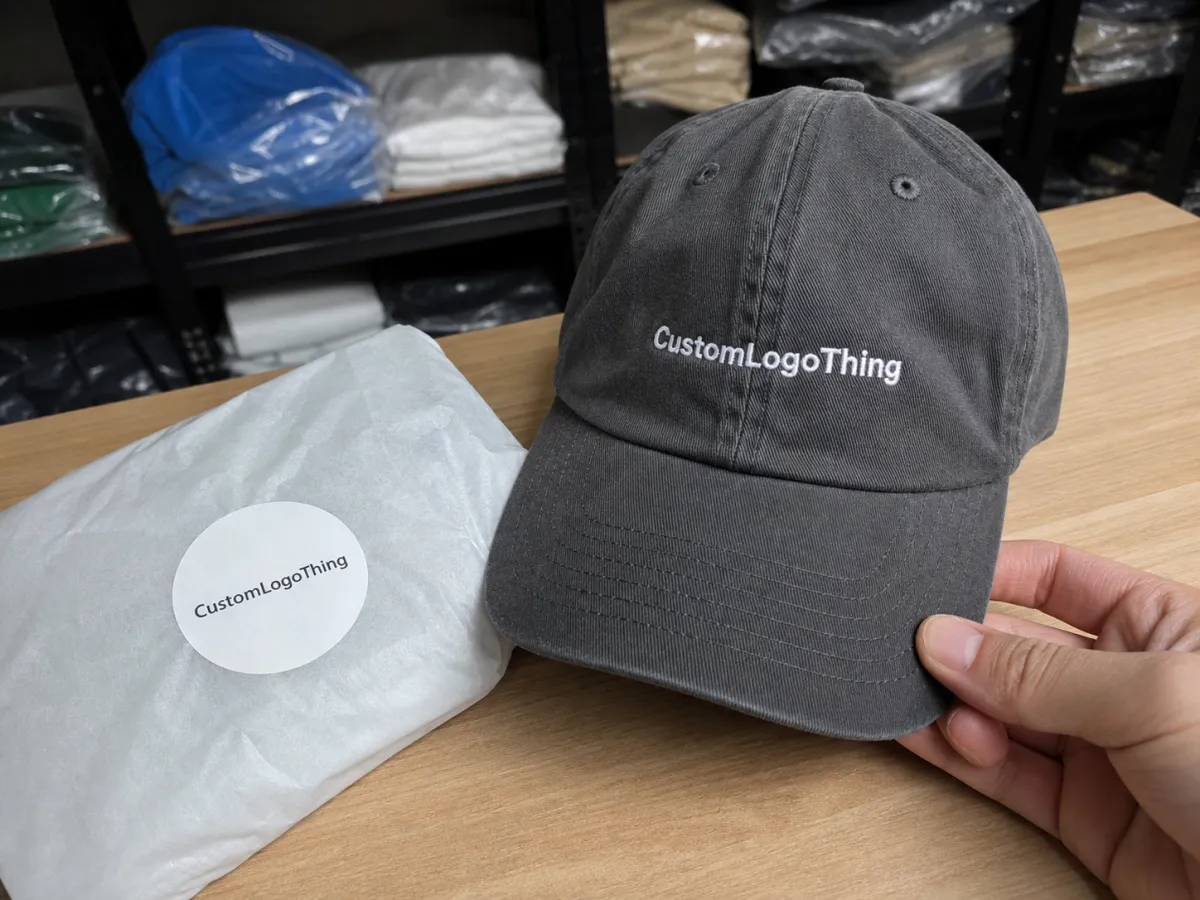
Trade show buyers usually want branded headwear that looks sharp, stays inside budget, and can be produced in volume without drama. That sounds simple. It rarely is. The same cap has to survive packing, shipping, handling, try-ons, and long booth shifts, then still look presentable in photos. Once you look at the product through that lens, the quote stops being about the cheapest piece and starts being about the right build.
Visual impact matters more than many teams expect. A clean front panel, a balanced logo, and a color that fits the rest of the booth create a stronger display than a louder design with poor construction. Buyers often underestimate how much a cap contributes to the overall impression of a booth. If the cap looks intentional, the whole setup feels more organized. If it looks like an afterthought, people notice that too.
There is also a practical reason cap orders reward restraint. Caps get worn, folded, tossed into bags, and carried through crowded aisles. That means crown shape, closure quality, and fabric hand feel matter as much as the decoration method. A flimsy front panel can buckle under embroidery. A scratchy inner band can turn a nice-looking item into a shelf ornament. The best trade show cap is the one that gets worn all day without drawing attention to itself.
For programs that include packaged kits, the cap should be planned alongside the rest of the set. Labels, inserts, and outer packaging influence labor and presentation in ways that are easy to miss if the cap is quoted in isolation. For coordinated pack-outs, it helps to think through the entire build, including Custom Labels & Tags for identification, set consistency, and carton control.
Shipping deserves the same attention. Caps bundled into larger trade show kits do not need museum-grade handling, but they do need packaging that can survive realistic freight abuse. Drop tests, vibration, and compression are not abstract concerns; they are the part of the process that decides whether a box opens neatly or arrives crushed. Guidance from ISTA is useful because it focuses on actual transit conditions rather than ideal ones.
Private Label Cap Styles That Fit Real Trade Show Use
The right style depends on who will wear the cap and how it will be handed out. A hot conference floor calls for breathable construction. A premium launch may need a cleaner profile and better finishing. A low-cost giveaway needs broad appeal and a unit price that still works after decoration and freight. Matching the style to the use case usually produces a better quote and fewer regrets.
| Cap Style | Best For | Typical MOQ | Common Decorated Unit Range | Buyer Note |
|---|---|---|---|---|
| Structured trucker | High-volume handouts, casual booth traffic, broad audience appeal | 100-300 pcs | $3.20-$5.75 | Strong front panel and reliable logo visibility |
| Low-profile dad cap | Lifestyle brands, softer merchandising, mixed-age audiences | 100-250 pcs | $3.60-$6.20 | Comfort and shape drive acceptance |
| Performance cap | Hot event floors, outdoor demos, staff wear, athletic or tech programs | 200-500 pcs | $3.40-$6.00 | Fabric choice affects breathability, sheen, and hand feel |
| Five-panel style | Clean graphics, sharper branding, retail-inspired presentation | 100-300 pcs | $3.10-$5.50 | Flat front gives more room for bold artwork or patches |
| Premium snapback | Executive gifts, launch kits, higher-end event programs | 250-500 pcs | $5.00-$8.90 | Heavier materials and upgraded trims lift the feel quickly |
Structured truckers remain the workhorse for many trade show programs because they read clearly and are easy to price at volume. The mesh back keeps them lighter, and the front panel gives decoration a solid surface. Dad caps feel more relaxed and often work better when the audience is broad or the brand is less athletic. Performance caps are useful when staff will wear them for long stretches or when the event is outdoors and heat becomes a real issue. Five-panel caps lean modern and give cleaner space for graphics. Premium snapbacks are the answer when the item needs to feel like a real piece of merchandise rather than a throw-in.
Construction details change the fit more than most buyers expect. Higher crowns create more space for front decoration but can look bulky on smaller heads. Lower crowns sit closer and often feel more current. Curved brims are the safest default because they match what many people already wear. Flat brims can look sharper, but the style is more opinionated and works best when the target audience already likes that silhouette. Adjustable closures remain the least risky choice for trade show handouts because one size almost never fits every buyer equally well.
Fabric choice is another place where practical buyers separate good ideas from expensive mistakes. Cotton twill usually gives a softer hand and a more traditional look. Polyester and performance blends resist sweat better and keep their shape more reliably on busy event floors. Mesh backs reduce heat, but they also change the character of the cap. A buyer trying to use the same style for staff uniforms and gift kits may need two versions, not one compromise that does neither job well.
Decoration and Fit Specs That Change the Final Look
The decoration method reshapes the cap before the buyer ever sees a sample. Embroidery remains the most familiar premium finish for simple logos and short wording. It adds texture, holds up well, and usually reads cleanly from a distance. Woven patches are stronger when the artwork includes detail that would get lost in stitches. Leather patches fit outdoor, heritage, or utility-focused brands. Printed patches handle color-heavy artwork better than embroidery. Sewn labels are useful when the logo should feel restrained rather than loud.
Artwork prep matters because decoration methods punish sloppy files in different ways. Vector files such as AI, EPS, or SVG are the cleanest starting point. PNG and JPG files can work for concept checks, but they often need rebuilding before production. Pantone references help when color accuracy matters, especially if the cap has to match a campaign palette or a retail line. Screen color shifts constantly. Ink, thread, and patch materials shift too. Expect some variation and ask for approval against physical swatches whenever the brand is picky.
Small design choices can change the way the cap lands visually. A patch that is too large will make the front feel heavy. A logo that is too small will vanish once the cap is worn. With embroidery, stitch density matters because dense stitching can make the front panel stiff and warm, while sparse stitching can look thin or unfinished. For logos with fine lettering, a supplier may recommend simplifying the art rather than forcing a detail level the cap cannot carry well.
Fit is a production spec, not a style note. Adjustable closures reduce sizing risk and usually make the cap easier to distribute at events. Sweatband comfort becomes important when staff wear the cap for hours at a time. Structured fronts hold logos crisply but can feel less forgiving on the head. Unstructured caps are softer and often more comfortable, though they may not support large decoration as cleanly. If the audience is mixed in age, gender, and head size, comfort should carry more weight than trendiness.
Packaging can change the final impression just as much as decoration. Individual polybags keep caps clean for distribution. Hang tags help if the cap is meant to feel retail-ready. Barcode stickers speed intake in warehouses and event storage. Carton labels matter when a single order is split across multiple booths, show sites, or fulfillment points. If the order includes inserts or branded packaging, those details should be aligned before production begins, not after the shipment is already moving.
The strongest orders treat the cap, label, and pack-out as one system. That reduces avoidable surprises and keeps the final presentation consistent. If the item is arriving as part of a larger event kit, the packaging spec should be reviewed with the same care as the logo placement.
Trade Show Private Label Caps Quote: Pricing, MOQ, and Unit Cost
A trade show Private Label Caps quote should show the real cost pieces, not hide them behind a single polished number. Base cap price is only one part of the total. Decoration setup, digitizing, patch tooling, packaging, freight, and color matching can all move the final cost. The quotes that look best on paper are often the ones that leave half the job unpriced until later. That is how “good deals” become budget overruns.
Typical MOQ ranges depend on style and decoration method:
- Stock caps with simple embroidery: often 100-250 pieces.
- Patches or multi-step decoration: often 250-500 pieces.
- Custom colors, custom fabric, or premium builds: often 500 pieces and up.
At common order levels, the unit math tends to move in a predictable direction:
| Quantity | Typical Decorated Unit Range | What Usually Happens |
|---|---|---|
| 100 pcs | $5.50-$9.50 | Setup costs are spread across a small run, so each cap carries more overhead |
| 250 pcs | $4.20-$7.20 | Labor and setup begin to balance out better |
| 500 pcs | $3.40-$5.90 | Often the best trade-off for event campaigns and roadshow programs |
| 1,000 pcs | $2.80-$4.90 | Unit cost drops, but inventory, storage, and distribution need planning |
Those ranges are not fixed. A simple one-color embroidery run usually prices better than a patch-heavy build. A custom woven patch can be worth the extra cost if the logo is detailed and the patch can be reused across future orders. Packaging adds a little more. A polybag and barcode sticker is cheap enough on most jobs. A full retail presentation, especially one with hang tags and custom inserts, raises the total in a way buyers should see before approval.
Watch for partial quotes. A vendor may quote a low base cap price, then add digitizing, tool charges, color matching, rush handling, and freight later. Another common problem is the reverse: decoration is priced attractively, but the blank cap is inflated. Either way, the final number is what matters. A real quote tells the truth early enough for a buyer to compare options without decoding the fine print.
For planning purposes, the price conversation should also include any expected exceptions. Is the logo small enough for standard embroidery, or will it need a patch? Is the cap color in stock, or does it require custom dyeing? Is the packaging standard polybag, or does it need shelf-ready presentation? The fewer assumptions left standing, the fewer surprises later.
Production Steps and Turnaround from Brief to Dock
Once the trade show Private Label Caps quote is approved, the process usually follows a steady path: brief, mockup, proof approval, sampling if needed, production, quality check, packing, and shipment. That is the clean version. The messy version usually starts with missing artwork, a logo file that cannot be used as-is, or an approval chain that takes three days to respond to a one-line question. Production is often straightforward. Coordination is the part that slows everything down.
Lead time depends on stock availability and decoration method. Simple stock caps with embroidery can often ship in about 10-15 business days after proof approval. Patch decoration or layered finishing usually needs 12-20 business days. Custom colors, specialty fabrics, or more complex builds can take 20-30 business days or more. Sampling adds another 5-7 business days in many cases, depending on the method and how fast the buyer responds to the proof.
Most delays come from the same places. Artwork arrives in the wrong format. The logo needs adjustment for stitchability. The cap style is not actually in stock. Someone changes the delivery address after production begins. Approvals sit in email while the schedule gets tighter. None of these problems are exotic. They are ordinary. That is what makes them so common.
Buyers can save time by sending complete information up front. A usable logo file, quantity split, color requirements, delivery date, and shipping destination let the supplier price the job accurately. If the cap is part of a larger show kit, all linked items should be timed together. A single late component can hold the whole shipment. That is one of the few truths in trade show logistics that never seems to become less true.
Quality control should not be a formality. Finished caps need to be checked for logo placement, stitch quality, patch alignment, color consistency, seam quality, and carton counts before shipment. When the order is large, ask how the supplier handles sampling and final inspection. For freight, transit testing is worth discussing if the boxes will be stacked, cross-docked, or split across multiple destinations. ISTA guidelines are a practical reference because they focus on the punishments freight actually receives.
There is one planning habit that saves show schedules more often than luck does: keep a margin. A freight delay by itself is not unusual. A freight delay against a zero-margin deadline is the kind of problem that turns a clean order into a crisis. Build enough cushion that a late truck is annoying, not catastrophic.
What Makes a Supplier Worth Reordering From
Repeatability is the real test. A first order can look good and still come from a supplier that is difficult to use twice. If the second batch changes logo size, crown shape, patch position, or packaging details, the brand starts looking inconsistent. Trade show programs depend on sameness in the best sense of the word. The buyer should not have to relearn the spec every time a reorder is placed.
The strongest suppliers are usually the least theatrical. They ask for clear specs. They flag issues before production starts. They keep proofing disciplined and do not rush a weak file into the line just to make the order feel fast. They check stitching, patch placement, carton count, and labeling before release. None of that is glamorous. All of it saves money.
Packaging coordination is another marker of whether the supplier is worth keeping. If the team can align caps with inserts, labels, and case pack instructions without making the buyer untangle the job one detail at a time, the order tends to move more cleanly. That matters in booth shipments, distributor mailers, and warehouse fulfillment alike. A supplier that understands carton labeling and split deliveries is usually easier to work with on the next project too.
Materials claims deserve scrutiny as well. If a supplier says a cap uses recycled fabric, specific paper stock, or certified components, ask what standard supports that claim. For printed inserts or paper hang tags, FSC certification is one of the clearer references buyers can request. Not every order needs certified materials, but vague sustainability language is not enough when a compliance team starts asking questions.
The best reorders feel almost boring. The specs are already on file. The packaging is already known. The pricing structure makes sense. That is what a reliable supplier gives you: fewer surprises, fewer corrections, and less time spent explaining the same cap twice.
Next Steps to Lock In the Right Cap Order
The cleanest quote requests are the ones that arrive complete. Send the logo file, target quantity, preferred style, decoration method, delivery date, and shipping destination together. If the brief is partial, the quote will be partial too. That is not a process problem; it is a information problem.
It also helps to have a backup option. If the preferred style is a structured trucker but inventory is tight, a low-profile alternative may keep the schedule intact. If embroidery is the first choice but the art is too detailed, a patch version may produce a cleaner result. Packaging should be treated the same way. If polybags are required, say so. If the item needs hang tags or shelf-ready presentation, include that up front so the quote reflects the actual build.
Proofs should be checked for the details that get missed in a hurry: logo placement, closure type, crown shape, patch size, and packaging notes. A sample that looks attractive but ignores the production spec is not a useful sample. It is a distraction with better lighting.
For buyers comparing options, the most valuable quote is the one that arrives close to the final cost on the first pass. That is usually the sign that the supplier understood the brief, priced the work honestly, and checked the production details before sending numbers.
FAQ
What do you need to prepare a trade show private label caps quote?
Send the cap style, estimated quantity, decoration method, usable logo artwork, target delivery date, and shipping destination. If color standards, packaging, or split shipments matter, include them in the first message. The more complete the brief, the closer the first quote will be to the final cost.
What MOQ is typical for private label trade show caps?
MOQ varies by style and decoration method. Stock caps with simple embroidery often start around 100-250 pieces, while custom colors, patches, and heavier builds usually move closer to 250-500 pieces or higher. Smaller runs are possible in some cases, but unit pricing rises as setup costs are spread across fewer caps.
How long does a trade show cap order usually take after approval?
Simple stock caps can often ship in about 10-15 business days after proof approval. More complex decoration or custom materials usually need 12-30 business days, depending on inventory and production load. Sampling adds time, so clean files and quick approvals matter more than most buyers expect.
Can I mix colors or styles in one private label cap order?
Sometimes yes, but each variation can change setup, MOQ, and unit cost. Mixing styles often makes the job more expensive because decoration or packing has to be reset. If flexibility matters, ask for a split-run quote before locking the order.
Which decoration method works best for trade show private label caps?
Embroidery is the most familiar premium finish for simple logos. Patches work better when the artwork has detail or needs texture, and printed patches help with color-heavy designs. The best method depends on budget, logo complexity, and the level of polish the cap needs on the booth floor.


