Event Merch Trucker Caps MOQ: What Actually Drives Cost, Quality, and Turnaround
Event Merch Trucker Caps MOQ usually decides the project before the art team even opens the file. The minimum tells you whether the budget works, whether the blank is stocked, and how much room there is for decoration choices without pushing the order into rush territory.
The best cap programs are rarely the cheapest on paper. They are the ones people keep wearing after the event. A cap that travels home, gets used on weekends, or becomes staff uniform after the booth closes keeps earning impressions long after the first handout. That is why buyers still choose trucker Caps for Trade Shows, street teams, concerts, sports activations, volunteer groups, and outdoor sponsorships. They are compact, visible, and comfortable enough for repeated use.
Why trucker caps stay in rotation after the event
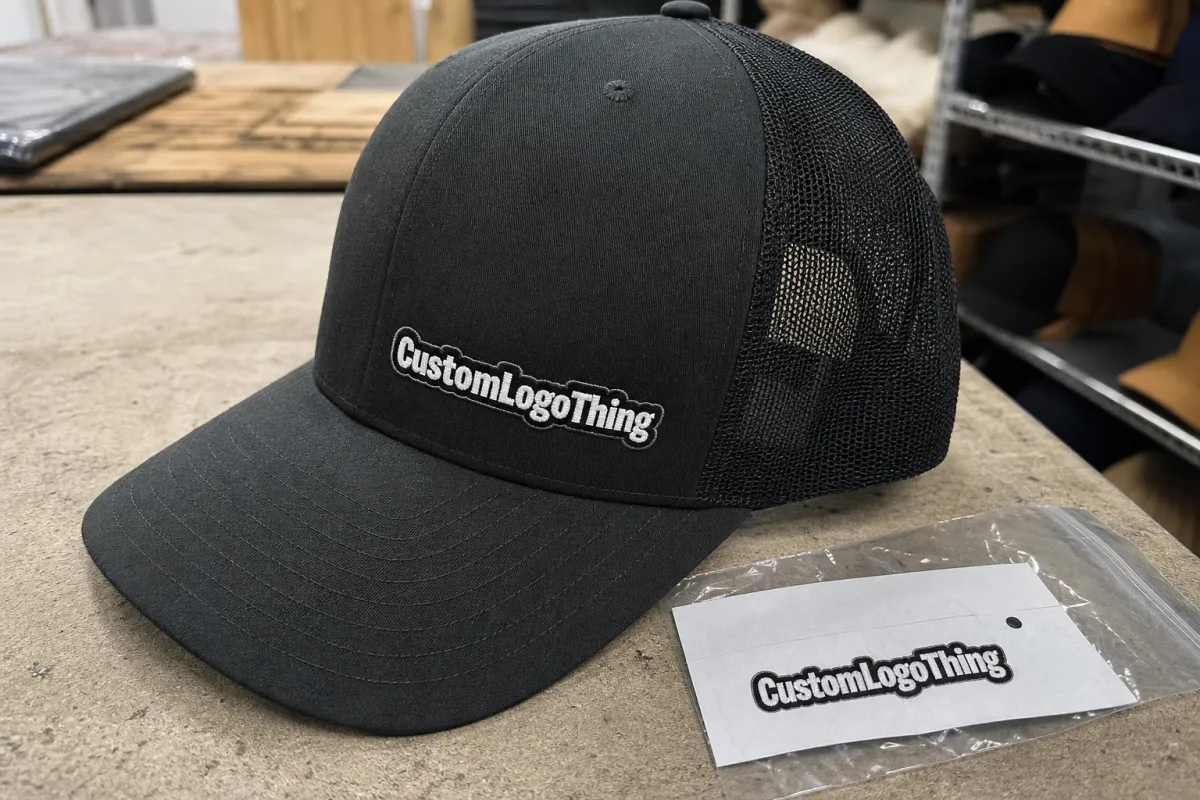
Trucker caps work because they sit in the middle of several competing goals. They are budget-friendly, but not disposable-looking. They offer a large front panel for branding, and the mesh back keeps the silhouette light enough for outdoor use. They also fit most heads without a complicated size matrix, which is a major advantage for event merch.
The mesh back matters more than many buyers expect. Heat changes adoption. A heavier cap may look polished in a mockup and still end up tossed in a bag once the sun comes up. Polyester mesh, foam fronts, and cotton-twill front panels all behave differently in real use. A breathable back improves comfort, and comfort affects whether staff or attendees actually wear the item.
Visibility matters too. A shirt disappears under layers. A tote disappears into a car. A cap stays in the frame: on a person walking a parking lot, at a check-in desk, in an airport queue, on a job site, or at a weekend market. That creates a lot of small, repeated exposures for one item, which is where the value shows up.
Pick the right cap body, crown, and closure
Not all trucker caps feel the same, and the differences show up quickly once people start wearing them. The front panel material, crown height, panel count, and closure type all change the fit, the decoration options, and the price. A cap that looks fine in a product grid may feel wrong once it is on a head for several hours.
- Foam-front: Light, familiar, and usually the lowest-cost option for large event drops.
- Cotton-twill front: Cleaner appearance, stronger hand feel, and a better base for embroidery.
- Washed canvas: Softer look, more retail-like, and useful for merch that should feel less promotional.
- Hybrid build: A middle ground for buyers who want a more finished front without going fully custom.
Crown shape changes how the logo reads. A higher crown gives more front-panel space and works well for bold marks that need distance visibility. A lower-profile cap feels quieter and can suit staff uniforms or brands that prefer a subtler look. Five-panel caps offer a broader front area, while six-panel versions tend to fit standard embroidery layouts more naturally. Neither is inherently better; the art and the audience decide that.
Closure style is just as practical. Snapbacks remain the easiest choice for event orders because they reduce sizing risk. Hook-and-loop closures can work for quick staffing runs, though they often age less gracefully. Fitted caps are precise but can complicate inventory and raise the cost of error. For most event programs, a size-flexible closure is the safer path.
Small material details affect wear and decoration quality. Tighter mesh tends to look a little more premium. More open mesh feels lighter and reads as more casual. Flat front panels are easier to decorate cleanly. Curved or structured fronts can work too, but they leave less room for crowded logos. If the artwork is complicated, the cap should probably be simple. If the cap is the hero item, the logo can afford to be restrained.
Decoration methods that survive heavy use
Embroidery is still the default for a reason. It lasts, it has texture, and it gives even a basic logo a more finished look. For staff caps and recurring programs, embroidery handles packing, handling, and sweat better than most printed methods. It also tends to hold its shape when the cap is folded, stacked, or worn daily.
There are limits. Fine text can fill in. Thin lines can disappear. Gradients do not translate well. If the logo has too much detail, embroidery can make it look busier instead of better. That is where patches earn their keep. A woven patch keeps small detail cleaner than direct stitch in many cases. PVC patches offer sharper edges and a more modern feel. Leatherette labels can add contrast without making the cap look overworked.
Screen print and heat transfer still have a place, especially for simple one-color marks or short timelines. They can be cost-effective on larger front panels, and they work when the buyer needs speed over texture. The trade-off is durability. Printed decoration can crack, peel, or fade sooner, especially in long sun exposure or repeated handling.
For stitched art, keep the file realistic. A cap logo often looks best when it stays compact, clear, and under roughly 6,000 to 8,000 stitches, depending on the shape and size. More than that can make the front panel stiff and push production time up. For patches, size and border style matter just as much as the artwork. A patch that is too small will lose legibility. One that is too large can overpower the crown.
Ask how setup is being priced. Digitizing is not the same thing as a mold or die charge. Embroidery usually carries a digitizing fee. Woven, PVC, and molded patches may require tooling fees. Those charges are normal, but they should be visible before approval, not discovered after the proof is already in motion. If a quote does not separate them, ask for the breakdown.
Event merch trucker caps MOQ, pricing, and unit cost
MOQ is more than a number on a quote. It is where blank availability, decoration complexity, and shipping economics intersect. For stock trucker caps with embroidery, minimums often start around 50 to 100 units. Patch-based programs frequently land in the same zone if the blank is in stock and the artwork is straightforward. Fully custom colors, unusual trims, or hard-to-source silhouettes can push the minimum closer to 250 pieces or higher.
The important thing is not the minimum by itself. It is how the per-piece cost changes as quantity rises. Setup fees spread out. Freight becomes a smaller share of the total. The blank price drops. That is why the difference between 100 and 250 units can be more dramatic than the difference between two decoration methods. In some cases, moving up a quantity tier saves 20% to 30% per piece, which changes the buying decision fast.
| Run size | Typical cost per piece | Common MOQ profile | Best use case |
|---|---|---|---|
| 50-99 | $6.50-$9.50 | Stock blank, one decoration location | Small staff teams, pilot events, narrow guest lists |
| 100-249 | $4.75-$7.25 | Most common decorated MOQ range | Regional activations, booth giveaways, volunteer crews |
| 250-499 | $3.50-$5.50 | Better bulk pricing and more stable inventory planning | Sponsor programs, multi-day events, mixed distribution |
| 500-999 | $2.80-$4.25 | Lower unit cost with room for steadier repeat runs | National campaigns, retail-style merch, long event calendars |
| 1,000+ | $2.20-$3.60 | Best unit cost if artwork and blank choice stay stable | Large campaigns, franchise rollouts, recurring venue programs |
Those ranges move with decoration choice, packaging, and freight. A simple embroidery setup may sit around $35 to $75 per location. More complex files can cost more because they need cleanup and test stitching. Patch tooling can range from roughly $60 to $150 for a basic mold or die, with more elaborate PVC work landing higher. Add individual polybags, inserts, or hang tags and the unit cost changes again.
Ordering fewer pieces is not always the safer financial move. A low minimum can hide a higher true cost if the blank is weak, the cap is hard to reorder, or rush freight becomes necessary later. It is often better to pay a little more for a stocked cap that can be repeated than to save pennies on a style that disappears from inventory before the event date arrives.
Proofing, quality control, and turnaround
A good cap order follows a predictable path: quote, artwork check, proof, approval, production, and shipping. Most delays happen before production starts. The logo needs a tweak. The color callout is incomplete. Someone changes the shipping address after the proof is already moving. Once the details are locked, the actual manufacturing step is usually much less dramatic than the email trail around it.
Standard timelines often fall around 12 to 15 business days after proof approval, but that window changes with blank availability and decoration complexity. Embroidery tends to be quicker than molded patches or special finishes. Custom-dyed blanks take longer because the cap itself has more moving parts. Rush jobs are possible on stocked inventory, though freight can become the limiting factor faster than decoration.
Quality control on caps should be visible, not assumed. A useful check list includes stitch alignment, thread trim, patch edge finish, panel symmetry, seam consistency, closure function, and shade matching against the approved art. A cap can look fine in a digital proof and still fail one of those checks when it is in hand. Good decorators catch that before packing. Buyers should ask how that inspection is done, especially on repeat or multi-venue orders.
Packaging deserves attention too. Caps are not fragile like glass, but they can still be crushed if cartons are underbuilt. Carton quality, carton count, and carton labeling matter if the order is being split across venues or stored before distribution. For larger runs, ask how boxes are stacked and whether the packing plan accounts for compression or rough handling in transit. A cap that arrives misshapen creates avoidable cleanup on event day.
Shipment timing is another place where the plan can go sideways. A job can finish on schedule and still miss the event if the delivery window is too tight. Build in buffer time, especially if the caps are going to multiple addresses. If a freight quote seems too good, it may be because it assumes ideal timing or ignores where the cartons are actually going.
Keeping repeat runs consistent across programs
Repeat orders are where process matters most. The first run may be strong. The second run has to match it. That means the exact cap SKU, the same panel shape, the same stitch count, the same patch dimensions, and the same color standard. Even a small mismatch can stand out once the caps are distributed in the same lighting or photographed side by side.
The simplest fix is recordkeeping. Save the cap code, the approved artwork, the thread or patch spec, the proof PDF, and the final notes in one place. If those details live only in email, someone will eventually quote from memory and miss a small but important spec. That is how a front panel shifts, a patch border changes, or a reorder comes back looking almost right but not quite.
For multi-event programs, labeling by venue or department saves real time. Some teams sort cartons by city. Others label by shift, crew type, or distribution point. That sounds minor until event day, when the caps need to move quickly from storage to people. Good packing does not get praise. It just prevents delays.
What to send for an accurate quote
Fast pricing starts with complete information. A quantity by itself is not enough. The cap body, decoration method, art file, event date, and shipping ZIP all shape the quote. Leave one of those out and the estimate gets softer, which usually means more revisions and a slower approval path.
- Event date: So lead time and freight can be matched to the deadline.
- Quantity: Ask for multiple price breaks so you can compare true unit cost.
- Cap style: Foam-front, cotton-twill, washed canvas, or hybrid.
- Artwork: Vector files are best; a clean PDF usually works if the art is simple.
- Decoration location: Front, side, or back, plus embroidery, patch, or print.
- Shipping ZIP: Freight changes more than most buyers expect.
Ask for the proof timeline as part of the quote. That is where slowdowns often begin. A buyer who approves the proof the same day keeps the schedule intact. A buyer who waits several business days can lose the shipping window, even if production itself is moving normally. Also ask for a backup blank if the first choice is out of stock. That question is worth asking before the order starts, not after the event has already been scheduled.
For buyer-side planning, the real comparison is not just total cost. It is the mix of bulk pricing, setup charges, turnaround, and repeatability. A lower headline number can turn out more expensive once rush freight, art revisions, and reordering are added back in. That is why event merch trucker caps MOQ should be judged against the delivery date and the audience, not just the first line on the quote.
What MOQ should I expect for custom trucker caps for events?
Many decorated trucker cap orders start around 50 to 100 units, but the exact minimum depends on the blank and the decoration method. Stock caps with embroidery are usually easier to place at lower quantities than fully custom styles.
Which decoration method is the most durable?
Embroidery is usually the most durable choice for simple logos. Patches can also last well and are a strong option when the art has detail that would be hard to stitch cleanly.
How long does production usually take?
Standard decorated orders often take about 12 to 15 business days after proof approval, though custom blanks or patch tooling can extend that window. Freight time should be added on top of production time, not treated as part of it.
Can one MOQ include mixed colors?
Yes, but the mix can affect pricing if it requires multiple blank SKUs. A simple color split is usually easier to manage than a wide range of color combinations.
What details help the quote stay accurate?
Send the quantity, cap style, artwork, decoration placement, event date, and delivery ZIP. If there are brand color requirements or packaging needs, include those too so the pricing reflects the real order.


