Unstructured Dad Hats can look right in a render and still miss the mark in hand. This event merch Unstructured Dad Hats Material Sample guide focuses on the decisions that affect buying outcomes: fabric, fit, decoration, inspection, lead time, MOQ, and landed cost. If those pieces are clear before production starts, the bulk order is far less likely to turn into deadstock.
A sample is the cheapest place to catch a crown that collapses too far, a visor that sits oddly flat, or embroidery that shifts once the hat is worn. Small differences in twill weight, closure style, or stitch density can change the whole read. For event merch, that means the difference between a hat people keep and one that stays boxed.
The sample is where assumptions get expensive. If the cap feels wrong in hand, the production run will not feel better because the unit price was lower.
What this guide shows before you buy
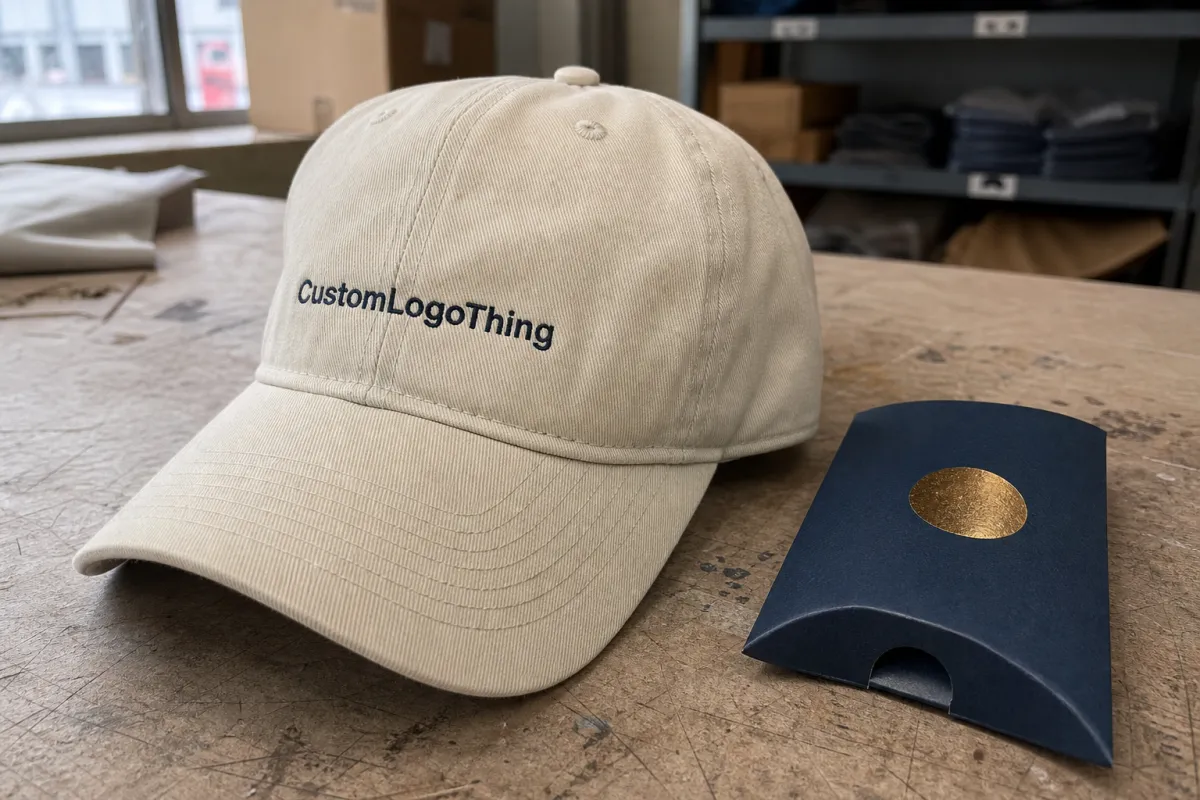
Swatches, construction samples, and pre-production caps are not the same thing. A swatch answers one question: how does the fabric feel, look, and age under light? A construction sample shows the crown, visor, stitching, and closure together. A pre-production cap is the closest version of the final order, usually with the intended decoration already applied.
That distinction matters more on Unstructured Dad Hats than on stiffer caps. The soft front panel, low profile, and relaxed silhouette are the product. But softness also makes fabric choice and stitch placement more important. A brushed cotton that feels premium may collapse too much at the forehead, while a lighter twill may hold a cleaner shape and still miss the look the merch team expected.
For event merch, the sample also protects against returns and overstock. If a hat rides high, feels flimsy, or puckers under embroidery, the issue rarely improves at scale. Catching it on one sample is much cheaper than discovering it across 300 or 3,000 units.
Useful terms, in plain language:
- Unstructured crown: no firm front buckram, so the cap follows the head more loosely.
- Soft front panel: flexible front panel that gives a casual look but less logo support.
- Low-profile shape: the hat sits closer to the head and reads more understated.
- Relaxed fit: the crown and visor are meant to feel broken-in rather than crisp.
Fabric weight matters too. Many cotton dad hats sit roughly in the 180-260 gsm range, while heavier twills and brushed finishes can run higher. That does not automatically mean better. A heavier cloth can improve perceived quality, but it can also make the crown stiffer than the brief intended. For event merch, the right weight is the one that matches the wearer, weather, and use case.
Sample process and lead time
The cleanest sampling requests start with a complete brief: artwork files, target fabric, closure preference, quantity, decoration method, and the event date that actually controls the schedule. If the order is for staff merch, retail giveaways, sponsor kits, or a public launch, say so. The more precise the brief, the fewer expensive revisions later.
The usual sequence is straightforward. First, the supplier confirms the fabric or offers the closest stock match. Then the sample is cut, stitched, finished, and decorated. Photos often come first, physical shipping second, and one revision loop may follow if the sample misses the brief. Swatch packs can be ready in 2-5 business days if the fabric is on hand. A stitched sample often needs 7-14 business days. If the fabric must be sourced or the decoration is dense, 15-20 business days before shipping is not unusual.
Shipping adds another variable. Express courier can land in 3-6 days, while standard freight takes longer and delays tend to cluster around holidays and border congestion. Rush sampling looks efficient until it compresses the review window so much that the team approves the wrong thing.
Practical approval chain:
- Confirm artwork, quantities, and event date.
- Choose the fabric family and closure style.
- Request the sample type that matches the decision you need to make.
- Review photos first, then inspect the physical sample.
- Send one consolidated round of comments.
- Lock the approved sample as the production reference.
Packaging around the sample is worth checking too. A cap shipped in a corrugated mailer with kraft paper inserts arrives with less crushing than one tossed into a thin poly bag. If your brand cares about the unboxing, ask for recycled materials, FSC certified cartons, or biodegradable void fill. Packaging does not fix a bad cap, but it does show how carefully a vendor handles the rest of the order.
Decoration setup can add time as well. Embroidery digitizing may need a day or two, especially for complex fills or small type. A woven patch or label may need separate approval. If a sample is rushed through with generic decoration just to save time, the final bulk order can end up looking like a placeholder instead of an approved product.
Cost, pricing, MOQ, and quote math
Sample pricing should be separated from production pricing. That sounds obvious, but it is easy to compare quotes that are not truly equal. A $25 sample that excludes freight and revisions can cost more overall than a $60 sample that includes clearer proofing and a more accurate view of the finished build. Some suppliers credit sample fees back against the bulk order, some partially credit them, and some treat them as non-refundable development cost.
MOQ changes the math as well. A cotton dad hat can look inexpensive at 100 pieces, then become more efficient at 300 or 500 pieces because setup, embroidery digitizing, and sewing labor spread out better. If the sample locks in a specific brushed fabric, a heavier sweatband, or an upgraded closure, the unit price can move by roughly $0.18-$0.55 per piece depending on quantity and decoration coverage. That is small on paper and meaningful across 1,000 units.
| Sample type | Typical cost | What it shows | Best use |
|---|---|---|---|
| Swatch pack | $15-$35 | Fabric handfeel, weave, color, finish | Early fabric narrowing |
| Stitched construction sample | $40-$90 | Crown shape, panel collapse, fit, closure | Design approval before bulk |
| Pre-production cap | $75-$150 | Closest match to final production | Final sign-off on event merch |
| Rush sample add-on | $25-$60 extra | Faster turnaround, limited revision room | Tight event calendar |
Watch landed cost, not just unit cost. A low sample fee can hide expensive freight, while a slightly higher fee with better packing and faster proofing may be cheaper overall. The same logic applies to production. If the approved spec requires a tighter stitch count or a more stable closure, the quote should reflect that before the bulk order starts, not after the first invoice lands.
Ask for apples-to-apples quotes after approval. Once the sample is accepted, the spec is tighter: exact fabric, stitch count, color, and label placement. That is the right time to request a fresh quote because the vendor can price the final version instead of guessing at a draft.
A second money trap is hidden variation. Two hats can share the same silhouette and still differ on inner taping, sweatband quality, or closure hardware. Those parts are easy to overlook in a spreadsheet and obvious once worn for a few hours. If the hats are for a conference, field activation, or festival crew, those comfort details matter more than they do in a static photo.
Key fabric, fit, and finish factors
Fabric choice drives the first impression. Cotton twill is the safest workhorse: familiar, stable, and easy to decorate. Washed canvas feels more broken-in and usually photographs well for streetwear-style merch. Brushed cotton is softer still, which can read premium if the logo stays crisp. Corduroy adds texture and can make a limited drop feel more deliberate, though it also changes how light hits the crown. Performance blends work well for outdoor events because they dry faster and handle sweat better, but the surface still has to accept embroidery cleanly.
Fit is the second filter. Crown height, front panel softness, visor stiffness, and closure type all influence how the cap sits on different head sizes. A six-panel unstructured dad hat with a self-fabric strap feels different from the same silhouette with a metal buckle or antique brass clasp. The difference can be subtle on a spec sheet and obvious on a head. Sweatband quality matters too. If the hat is worn all day at a conference or festival, a cheap inner band becomes the complaint people remember.
Finish details often separate a usable sample from a genuinely good one. Stitch density affects how clean embroidery edges read. Lining changes comfort. Thread color can drift under warm indoor light even when it looks correct on a screen. If the brand uses a strict PMS target, check the sample under daylight and venue lighting before signing off. That one habit catches more color issues than most teams expect.
For packaging shipments, external standards can help buyers ask better questions. Transit testing practices from ISTA are useful when you want the sample to arrive undamaged, while cartons and inserts from responsible fiber chains are easier to verify through FSC. Those are not hat standards, but they help buyers judge how the sample is packed and shipped.
There is also a comfort issue that rarely appears in product copy: pressure points. A low-profile unstructured cap can feel softer overall, yet a poorly finished seam or stiff closure edge can become irritating after an hour. The sample should be worn long enough to reveal that. A five-minute try-on tells you almost nothing.
How to evaluate samples against the brief
The fastest way to review a cap is also the easiest way to miss a problem: put it on one person, glance at it, and move on. A better process uses a simple scorecard. Before the sample arrives, make a one-page sheet with pass/fail boxes for fit, drape, color, logo space, closure comfort, sweatband feel, and overall brand match. That keeps the review from turning into a vague opinion contest.
- Inspect the fabric first. Feel the hand, check thickness, and see how quickly the crown rebounds after folding.
- Test the fit on multiple people. Unstructured hats vary more in perceived shape than structured caps, so one head is not enough.
- Check logo placement. Make sure the front panel gives enough flat space for embroidery or print without distortion.
- Measure key points. Confirm crown depth, visor curve, and panel width against the approved drawing.
- Photograph the sample in real conditions. Use daylight, office light, and event-style lighting.
- Record the changes. Keep a revision log so round two does not drift away from the original brief.
That revision log is underrated. It prevents the common mistake where a team likes three different versions of the same cap and accidentally asks the factory to combine them into one impossible target. Write down what changed, why it changed, and who approved it. Then freeze the approved sample as the production reference with notes on thread color, label position, and any acceptable variance.
A physical sample also gives you something a spreadsheet cannot: context. The same hat can feel casual, premium, or flat depending on lighting, proximity, and the rest of the merch kit. If the cap will ship with a tee, sticker pack, or sponsor insert, lay the items together. In practice, the hat should belong in the kit, not just pass on its own.
For decorated samples, check the backside too. Loose threads, patch fraying, or uneven backing can be invisible in front-facing photography and obvious once the hat is turned over. If the decoration is a woven patch or leather patch, inspect edge finish and adhesive consistency.
Common mistakes that create expensive revisions
The biggest mistake is approving a sample from a polished studio image instead of touching the actual fabric and checking how the crown collapses. Photos help, but they cannot tell you how the visor flexes, how the sweatband feels, or whether the fabric catches light in a flattering way. A second common miss is ignoring shrinkage and stitch visibility until after the bulk order ships. At that point, the only fix may be a re-run or a markdown.
Price-only comparisons are another trap. A lower headline quote can hide freight, extra revision rounds, or a rush charge that appears late in the process. Buyers also forget to align sample review with the event calendar. If approvals happen after the print window closes, the order may be forced into a compromise fabric or a weaker decoration method just to make the date.
A few sharper moves usually prevent rework:
- Ask for one alternate fabric and one alternate closure during sampling.
- Request side-by-side photos or short videos on the same head form.
- Confirm MOQ, lead time, and unit cost after the sample is approved.
- Keep one signed control sample on file for reorders.
- Match the packaging request to the brand story, whether that means recycled materials or an FSC certified carton.
If the sample misses the brief, do not force production to make it work. Tighten the spec, remove the variables that do not matter, and resample only what changed.
That is usually the smartest path for event merch. A tight spec beats a hopeful one. If the goal is to protect margin, timelines, and brand perception, treat this guide as the decision filter, not paperwork after the real decision.
What should I check in event merch unstructured dad hats material samples?
Start with fabric handfeel, drape, and how the crown collapses when folded. Then check logo placement, visor shape, closure comfort, and sweatband quality on an actual head. Review color under daylight and indoor light so a shade shift does not hide in the sample room. If the decoration is embroidered, inspect thread tension and edge clarity from a few angles.
How long does an unstructured dad hat sample usually take?
Swatch packs are usually faster than stitched samples because they skip sewing and decoration. Production-ready samples take longer when the fabric is not in stock or the embroidery needs a second pass. Build in shipping time, approval loops, and seasonal bottlenecks. A realistic plan often needs more buffer than the first quote suggests.
Does a material sample change MOQ or unit cost for custom hats?
The sample fee is usually separate from production and does not replace the MOQ. The approved sample can change unit cost if it locks in a different fabric, closure, or decoration method. Ask for a fresh quote after approval so pricing matches the final spec. That prevents a late-stage surprise where the sample and the bulk run are no longer comparable.
Which fabrics work best for promotional unstructured dad hats?
Cotton twill and washed canvas are common choices when you want soft structure and an easy everyday feel. Brushed cotton or corduroy can make the hat feel more premium for a limited event drop. Performance blends work well outdoors, but they still need to accept the logo cleanly. The right choice depends on climate, wear time, and how much structure the design should keep.
What happens after I approve the sample?
The factory uses the approved sample as the production reference for fabric, color, stitching, and placement. You should lock the final quote, lead time, and approval window before bulk work starts. Keep one signed sample on file so future reorders can match the same standard. If any later change is requested, document it before cutting begins.


