Fitness Embroidered Beanies Bulk Order Planning for Teams starts with use, not headcount. Beanies get worn, borrowed, stuffed into gym bags, washed, and worn again, so the right order usually includes a reserve for replacements and late additions. A 120-person rollout can easily require 135-140 units once you factor in no-shows, extras, and lost inventory.
For buyers, one-size knit headwear is easier to manage than most apparel categories, but it still needs a plan. The best quote is not the cheapest on paper; it is the one that still looks sharp after repeated wear in cold studios, outdoor boot camps, and early commutes. That means weighing style, stitch quality, landed cost, lead time, and inspection expectations together.
Fitness embroidered beanies bulk order planning starts with wear rates, not logo size
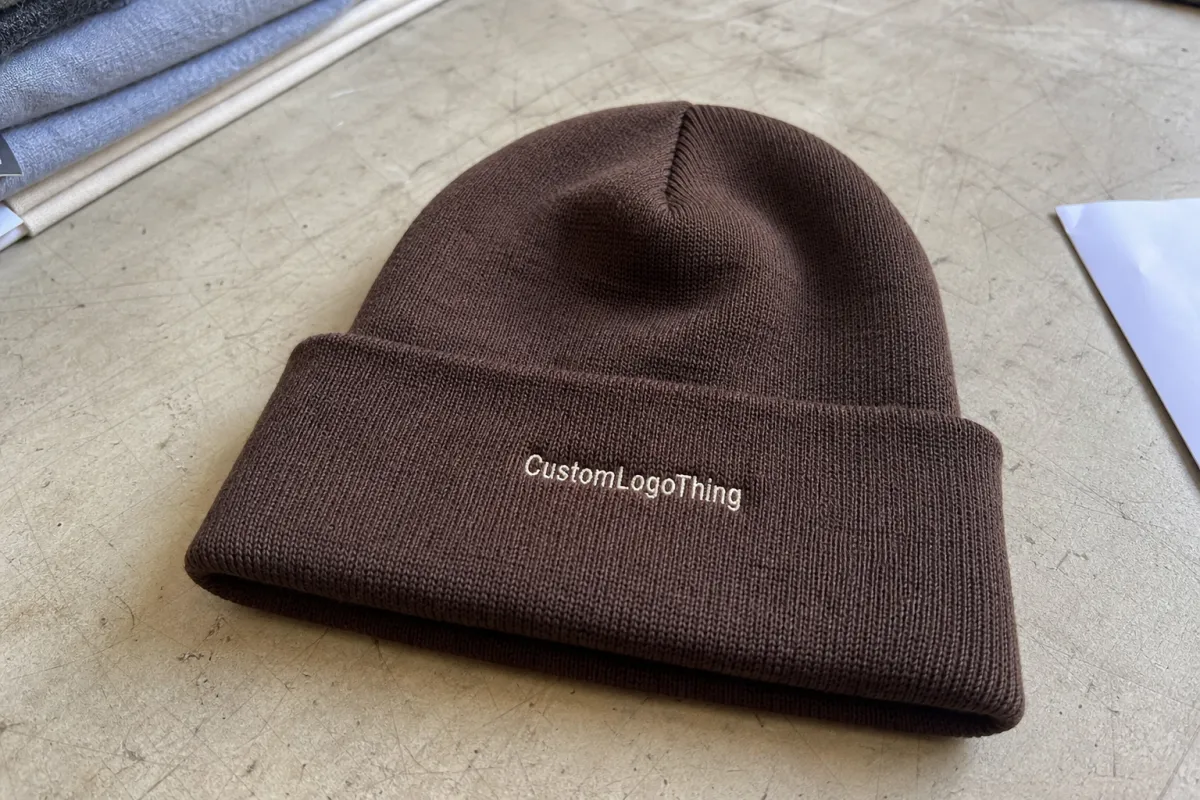
Most teams begin with headcount and stop there. That is usually too thin. A better plan maps who will wear the beanie daily, who gets one as a gift, who needs a backup, and who is likely to ask for a replacement after the first cold snap. Beanies are repeat-use items, so the quantity should reflect rotation, not just the roster.
Break the order into use cases before requesting quotes. Staff uniforms need consistent color and cleaner logo placement. Member giveaways need enough overage for new signups, no-shows, and family requests. Onboarding kits often need a few extra units because hires or coaches are added late. Retail add-ons need a different margin target entirely.
- Staff uniforms: quality and logo clarity matter more than the lowest unit cost.
- Member giveaways: plan 10-15% extra for replacements, late joins, and misplaced inventory.
- Retail add-ons: choose a more premium blank if the beanie must support a resale price.
- Event handouts: keep the artwork simple and legible from a distance.
Embroidery is usually the durable choice for knit headwear because thread holds up better than print on a stretchy surface. It resists cracking and fading better through washing and friction, though it still has limits. Fine text, small crests, and dense detail need to be simplified so they stitch cleanly. For most fitness brands, clubs, and studios, embroidered logo beanies are the safer long-term buy.
One-size headwear makes planning faster, but only if the logo is sized for the knit, not the vector file.
Choose the beanie style that matches your training space and audience
The blank you choose shapes the final feel and the decoration area. A cuffed beanie gives you a stable front panel for embroidery and is usually the most versatile option. A slouch beanie feels more fashion-forward, but the extra drape can reduce logo visibility. Rib-knit styles stretch and recover well, which matters when the same item is worn by different people over time. Lightweight beanies fit mild climates, indoor facilities, and travel kits where comfort matters more than insulation.
Material matters too. A 100% acrylic beanie is common because it is warm, durable, and cost-effective. Acrylic-poly blends can feel softer. Recycled yarn options support sustainability messaging, especially if the merch program also uses paper inserts or hangtags. If you want to review standards for paper-based packaging, the FSC guidelines are a useful reference. For carton handling and transit damage risk, the testing framework from ISTA is worth reviewing.
Audience should drive the blank choice. For a premium member drop, a heavier knit with a firmer cuff usually feels better than a thin promo cap. For staff uniforms, consistency and readability matter more than fashion cues. For a low-cost handout, a basic cuffed acrylic beanie often wins because it keeps the unit cost manageable without looking disposable.
Color is another early decision. Heather gray, black, navy, and forest are common because they accept most thread colors cleanly. Bright branding can also work, but only when the thread has enough contrast. A navy beanie with a navy logo wastes decoration budget, so color pairing should be treated as a production decision, not a style preference.
| Beanie style | Best use case | Typical bulk price per unit | What to watch |
|---|---|---|---|
| Cuffed acrylic | Teams, studios, member gifts | $4.25-$6.50 | Best all-around embroidery area and easy logo placement |
| Slouch knit | Lifestyle merch, premium retail | $5.25-$8.00 | Logo can sit lower and be less visible when worn loosely |
| Rib-knit performance blend | Outdoor training, colder facilities | $5.00-$7.75 | Choose thread contrast carefully so the mark stays readable |
| Lightweight beanie | Travel kits, mild-weather giveaways | $3.75-$5.75 | Less warmth, but easier to carry and cheaper to ship |
Decoration specs that keep logos readable after heavy use
Embroidery on knit headwear has limits, and the best suppliers say that plainly. A logo that looks sharp on a flat mockup may blur once it hits a ribbed surface. The safest approach is to set a minimum width for the mark, then simplify anything too delicate. Small text, thin outlines, and gradient effects usually need to be reduced or removed.
Thread contrast deserves more attention than most buyers give it. Dark knit backgrounds usually need brighter thread colors to maintain legibility. Heathered yarn can add texture, but it also softens contrast between fabric and thread. If your logo depends on a subtle tone-on-tone look, ask for a sample stitchout before production. A digital proof alone will not show whether the mark reads clearly from ten feet away.
Placement changes visibility. A logo on the cuff is easier to see when the beanie is folded naturally. A front-panel placement can feel cleaner, but if the knit stretches too much, the mark may distort slightly. Side placement can work for smaller marks or secondary branding, but it is usually less visible in photos. For fitness embroidered beanies Bulk Order Planning, placement should match how the group actually wears the beanie, not the nicest mockup.
Ask for digitizing guidance before approving any design with fine detail. Good digitizing converts the artwork into stitches that suit the fabric density, thread path, and final size. That process often exposes weak points in the logo. If a supplier refuses to flag those problems, that is a warning sign. A better partner will tell you whether the design needs thicker letterforms, a reduced stitch count, or a larger embroidery field.
If you want a simple rule, use this: the more the logo must communicate at a glance, the more you should favor bold shapes and fewer lines. Fitness brands rely on recognition. A clean icon or strong wordmark usually performs better than a dense badge on knitted headwear.
Pricing, MOQ, and unit cost tradeoffs to model before you quote
Headline price is only part of the picture. The real landed cost includes the blank beanie, embroidery setup, digitizing, any sample or strike-off, thread changes, packaging, and freight. When buyers skip those lines, the quote looks cheaper than it really is.
MOQ is where many order plans fall apart. A supplier may quote one minimum for one-color embroidery and a higher minimum for multiple placements or mixed colors. Sometimes mixed-color runs count toward a single MOQ and sometimes they do not. That small detail can change the economics of the entire project. In bulk orders, quantity tiers matter, but so do hidden jumps caused by special labels or rush timing.
A 500-unit run usually costs less per piece than a 150-unit run, but not because the blank suddenly gets better. The savings come from spreading setup and digitizing over more pieces. Ask for delivered cost per wearable item, not just base unit price. A quote that is $0.40 cheaper before freight can become more expensive after shipping, packaging, and proof corrections are added.
| Cost element | Typical range | Why it matters |
|---|---|---|
| Blank beanie | $2.50-$5.50 | Style, gauge, and fiber content drive the base price |
| Embroidery setup / digitizing | $35-$125 | Complex logos and multiple versions increase prep cost |
| Per-piece embroidery add-on | $1.25-$3.75 | Stitch count and thread colors affect labor time |
| Packaging / insert card | $0.15-$0.60 | Useful for retail or branded distribution kits |
| Freight | Varies widely | Distance, carton count, and urgency can change the total fast |
Bottom line: a transparent quote should show the tradeoff between quantity and decoration complexity. That matters even more when the order is tied to a launch, season change, or member campaign. If you want a structured buying path for larger programs, our Wholesale Programs page is a useful starting point.
Process and timeline from proof approval to dock delivery
The fastest orders are the ones that settle artwork early. The usual sequence is simple: artwork submission, digital proof, sample or strike-off if needed, production, quality check, and shipment. Delays usually happen in proof revisions, especially when the buyer wants to keep too much small text or changes the logo after seeing the first mockup.
For standard runs, a realistic production window is often 12-15 business days after proof approval, though larger quantities or special blanks can push that longer. If a sample is required first, add another 3-7 business days. Freight can add 2-10 days depending on method and destination. If the beanies are needed for a launch or event, build a buffer into the schedule.
- Day 1-2: submit artwork, quantities, blank color, and placement notes.
- Day 2-4: review the digital proof and request only necessary edits.
- Day 4-7: approve sample stitchout if the design is complex or small.
- Day 7-15: production, trimming, inspection, and packing.
- Final stretch: ship with enough transit time for receiving and distribution.
Build decisions into the schedule, not around it. If quantities, colors, and thread choices are still changing, the production window becomes fuzzy. A supplier should be able to tell you the point at which a change becomes a delay. If they cannot, the order is exposed to avoidable churn.
Packaging deserves a quick check here. Cartons that travel through parcel networks should be sized so the contents do not crush against the sides. For larger orders, ask whether the outer shipper aligns with common transit-test logic such as ISTA protocols. That is not overkill; it reduces the chance of bent, damp, or mispacked merch.
Also confirm carton counts, pack quantities, and label format before the truck rolls. The more precise the shipping instructions, the less time your team spends sorting boxes after arrival.
What a dependable supplier should prove before you place the order
Mockups are useful, but they are not enough. A dependable supplier should be willing to show real production examples so you can judge stitch density, thread consistency, panel placement, and color accuracy. If every sample looks perfect on a white background but no one can show what the actual beanie looks like in hand, you are buying hope instead of product.
Ask direct questions about quality control. How are defects caught? What happens if one dozen comes out misaligned? How is rework handled, and who pays if the issue came from the factory side? Buyers often focus on setup and ignore correction procedures. That is backwards. Good suppliers are not just good at making product; they are good at handling exceptions without turning them into chaos.
Repeat orders are another marker of dependability. If the supplier keeps digitized files organized, a seasonal reorder should move faster than the original run. That matters for gyms, studios, and team programs that restock each fall or before a winter campaign. Reorders should not feel like a new project every time.
Specific date ranges and specific production steps are better than vague promises. A seller who says “we can probably do it” is not giving you enough to protect the schedule. A seller who says “proof approval by Tuesday puts you on a 12-business-day run, excluding freight” is acting like a real production partner.
For deeper order planning details, the answers in our FAQ are worth reviewing before you send final artwork.
Final checks before you submit quantities and artwork
Before you approve the quote, lock the quantity split by audience segment. Do not mix staff uniforms, giveaways, and retail inventory into one vague count if the budget needs to reflect real distribution. A clear split makes the order easier to approve and easier to explain internally.
Next, check the artwork package. Send vector files when possible, plus Pantone references, logo placement notes, and any text that must remain readable on a small knit surface. If the logo includes a tagline, ask whether it should be removed. On a beanie, fewer words often lead to stronger recognition.
Then confirm shipping details. Ship-to address, receiving hours, carton labeling, and packaging preferences should all be set before production begins. If the order is for a facility with limited receiving windows, that detail matters as much as the decoration spec. A clean deliverable is not just a good product; it is a product that lands at the right place, on the right day, in the right count.
Add a small reserve for replacements or late signups. That buffer is cheap insurance for team rollouts and event calendars, and it is easier to hold back a few units at the start than to recreate them later.
Fitness embroidered beanies Bulk Order Planning works best when it is handled like a buying decision, not a last-minute swag request. Choose the blank for the audience, simplify the embroidery for the knit surface, price the landed cost, and hold a realistic timeline. That is how the order stays on budget and still looks good after the first month of wear.
How many embroidered fitness beanies should I order for a team rollout?
Start with the actual recipient count, then add a 10-15% reserve for replacements, late signups, and staff requests. If the beanies will support more than one program, split the order by audience instead of treating every unit the same. One-size headwear removes sizing headaches, but it does not remove the need for a buffer.
What changes the price of fitness beanies in bulk with embroidery?
Quantity, stitch count, number of thread colors, and beanie style all affect the unit price. Setup charges, digitizing, special packaging, and rush freight can raise the total even when the blank cost looks low. The cleanest comparison is delivered cost per piece, not the base quote alone.
Can small logo text work on fitness beanies bulk orders?
Small text is possible, but knit surfaces reduce readability, so bold simplified lettering usually performs better. Increase logo width or remove secondary copy if the design feels crowded on a cuff or front panel. A digital proof should confirm whether the final stitch detail still reads cleanly at the chosen size.
How long does an embroidered fitness beanie order usually take?
Timing depends on proof approval, sample needs, order size, and freight method. The longest delay often comes from artwork revisions or waiting for sign-off, not the embroidery run itself. Ask for a date range that includes production plus transit so the delivery window is realistic.
What artwork do I need for a fitness beanies bulk quote?
Send vector artwork when possible, plus logo colors, placement notes, and the quantity split you want quoted. Include Pantone references and any text that must stay readable at a small size. If you have a deadline, share it early so the supplier can recommend the right production path.

