Book trucker caps Bulk Order Planning gets messy fast when buyers chase the lowest unit price before they lock the cap build, decoration method, and delivery window. That is usually where budgets start leaking. A cap that looks cheap on paper can turn expensive once you add digitizing, rework, freight, and a last-minute artwork change that should have been caught before proof approval.
Trucker caps make sense for bookstores, author events, reading clubs, retail shelves, and employee merch because the front panel gives you a clean branding zone without the cost of a fully structured fashion cap. In practice, the best orders start with five decisions: quantity, style, artwork, deadline, and budget. If you skip that order, the quote you get will be vague, and vague quotes are how people buy the wrong hats.
“The cheapest cap is not cheap if it misses the launch date or comes back with a weak logo.” That is the part most buyers learn after the second rush order, which is a clumsy way to learn anything.
Book Trucker Caps Bulk Order Planning: What Gets Expensive Fast
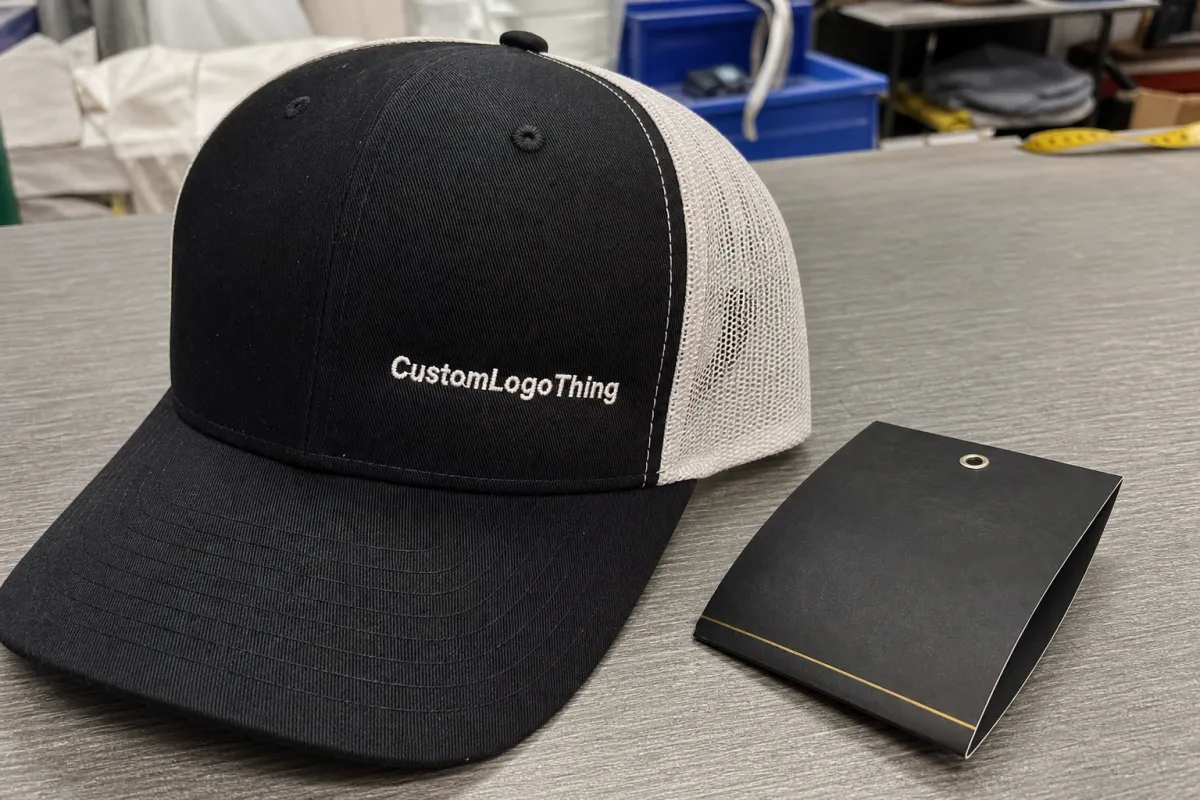
The first mistake is simple: buyers ask for a price before they know what they are actually buying. In book trucker Caps Bulk Order Planning, the hidden cost is rarely the blank cap. It is the stuff around the cap. Rework after a bad proof. Color mismatch between cap stock and logo thread. Carton damage because the packing spec was loose. Expedited freight because the deadline was set before the production timeline was checked. Add a late logo tweak after approval, and the order can drift from controlled to annoying very quickly.
Trucker caps stay popular because they are practical. They are light, easy to display, and easier to price than many retail headwear styles. For bookstores, they also carry a strong visual cue: the front panel can show a logo, a title mark, or a short phrase without looking crowded. That matters. A cap is a small item, so the decoration has to work hard. If the art is busy or the contrast is poor, the cap looks more like promo stock than something people would actually wear.
Set the sequence before you request quotes:
- Quantity: the real number you need, not a guess.
- Style: five-panel or six-panel, foam front or fabric front.
- Artwork: exact logo file, not a screenshot from a website.
- Deadline: the date the caps must be in hand, not the date you want to launch.
- Budget: blank cap cost, decoration, packing, and freight together.
That order sounds basic because it is. Yet it saves real money. Buyers who clarify the brief first usually get cleaner quotes, fewer revision rounds, and less drama in production. Buyers who do not? They often end up comparing apples, oranges, and a shipping bill that somehow got “forgotten.”
Choose the Right Trucker Cap Build Before You Quote
Not all trucker caps feel the same, and the build changes both the look and the price. Five-panel caps often give you a smoother front panel for larger graphics. Six-panel caps usually feel more traditional and can hold shape well, especially in fabric-front versions. Foam-front truckers have a classic promotional look and can work well for bold, simple art. Fabric-front versions feel more retail-ready and usually handle embroidery or patches more gracefully.
Closure choice matters more than people think. Snapback closures are the default for many bulk orders because they are easy to size and familiar to wearers. Hook-and-loop closures can be useful for giveaway campaigns, though they may feel less premium. Adjustable straps can work well if you want a more lifestyle retail feel, but they are not always the cheapest option. None of these choices are “better” in a vacuum. They change fit range, comfort, and the perceived quality of the cap.
Then there is the front panel itself. A flat front gives a cleaner decoration field. A curved or lightly structured front may feel softer, but it can complicate logo placement. Mesh density also matters. Fine mesh usually feels a bit more polished; coarse mesh reads more casual and can affect how the cap sits on the head. The brim curve and sweatband finish are small details that buyers ignore until they put the cap on and think, “Why does this feel cheaper than the sample?”
For a bookstore drop, I would match the build to the use case:
- Simple giveaway: foam front, snapback, one-color embroidery or print.
- Retail merch: fabric front, structured crown, patch or dense embroidery.
- Repeat collection: consistent panel shape, tighter color control, and a trim that can be reordered without redesigning the whole cap.
If the buyer wants a useful middle ground, a structured six-panel fabric-front trucker is usually the safest starting point. It balances cost, decoration space, and shelf appeal without pretending to be a premium fashion cap.
Specs That Control Fit, Front Area, and Logo Placement
Specs are where bulk orders get decided, whether the buyer realizes it or not. Ask for the crown height, front panel width, brim length, and the usable decoration zone before you approve anything. Those numbers tell you how much visual space you actually have. A logo that looks balanced at 3 inches wide can look awkward at 4.25 inches if the panel height is short or the seam line cuts through the art.
Mesh-back construction limits decoration in a way many buyers do not expect. If the artwork sits too low on the panel, part of the design can clash with the seam or sit too close to the visor line. Detailed logos, tiny type, and thin lines also need more care on trucker caps than on flat fabric hats. If you want crisp detail, a woven patch or a cleaner embroidery layout can be smarter than forcing a tiny print onto a curved surface.
Here is the practical spec checklist I would ask for on a serious order:
- Fabric weight and panel count.
- Stitch density and seam alignment.
- Closure hardware and strap color.
- Color matching method, ideally with Pantone references when possible.
- Decoration size and exact placement in inches.
A small spec change can change the whole order. Moving a logo up half an inch can fix the look. Switching from a fabric patch to embroidery can change the unit cost and the lead time. Changing from black mesh to charcoal mesh may look trivial on a screen and obvious in production. That is why approval should happen on dimensions and artwork placement before production starts. Not after.
For buyers who need a packaging standard reference, headwear orders should still be handled with the same discipline used for shipping cartons and retail inserts. The ISTA testing standards are useful if your freight plan includes retail-ready cartons that need to survive distribution instead of a gentle ride across town.
Unit Cost, MOQ, and Pricing Breakpoints to Expect
Pricing for Custom Trucker Caps is usually a stack of separate costs: blank cap, decoration, setup or digitizing, sample, packing, and freight. Buyers who only look at the unit cap price are missing the middle of the bill. That is how quotes appear cheap and still land high. It is also how people end up paying twice for samples because the first artwork file was not ready.
For realistic bulk ranges, basic custom trucker caps often land around $3 to $6 per unit in larger runs, depending on cap build, decoration, and print coverage. Premium patch work, denser embroidery, or more retail-focused trims can move the total into the $5 to $9 range at modest volumes. Smaller orders usually carry higher unit pricing because setup costs are spread across fewer pieces. That is not a trick. It is just math with a better haircut.
MOQ depends on the decoration method. Embroidery often has a different threshold than woven patches, leather patches, or printed labels. If the design is simple, the MOQ may stay lower. If the art needs multiple thread colors, a custom patch shape, or more labor in application, the minimum can climb. That is why one supplier can quote 100 pieces while another wants 300 for what looks like the same cap from the outside.
| Decoration Type | Typical MOQ | Best For | Common Price Range |
|---|---|---|---|
| Flat embroidery | 100-300 pcs | Simple logos, cleaner retail look | $3.50-$7.00 |
| Woven patch | 100-500 pcs | Detailed art, sharper edges | $4.50-$8.50 |
| Leather patch | 100-300 pcs | Premium feel, bookstore merch | $5.00-$9.00 |
| Print or heat transfer | 50-200 pcs | Simple graphics, lower setup | $3.00-$6.50 |
Do not compare quotes unless the specs match exactly. Carton counts, packing method, decoration size, and freight terms all change the total. A quote that looks lower can be worse if it leaves out individual polybags, insert cards, or warehouse labeling. If you want cleaner landed cost, ask for everything in one line, then compare apples to apples and stop pretending a different carton spec is “close enough.”
Production Steps, Lead Times, and Approval Points
The cleanest production flow is not complicated, but it does require discipline. Start with a clear request. Get a mockup. Approve a sample if the order warrants one. Lock the artwork. Move into bulk production. Inspect. Pack. Ship. Every one of those steps has a place where delays can creep in, and almost all of them come from rushed decisions at the start.
For timing, a realistic range looks like this: mockups can come back fast, often within a day or two if the brief is clear. Samples usually take 5 to 10 days. Bulk production commonly runs 15 to 25 days after approval, depending on order size and decoration type. Freight is separate, and it can be the shortest part or the longest part depending on method, lane, and season. A buyer who forgets shipping time is not planning; they are hoping.
Most delays happen for the same boring reasons. Artwork arrives as a low-resolution screenshot. Colors are not confirmed before sampling. The buyer changes the decoration method after the proof looks “almost right.” Almost right is not right. It is a polite way to create extra work. If the deadline is tied to a store launch, trade event, or holiday display, build a buffer. Better to receive the caps early than to explain why the display is empty.
That is also where standards matter. Packaging and freight are not glamorous, but they are the difference between caps arriving sellable and caps arriving bent, crushed, or missing inserts. For paper-based tags or inserts, a FSC-certified paper option can help support a cleaner retail story without changing the cap itself.
One more practical note: if a supplier cannot tell you when proof approval happens, when the sample is due, and when bulk starts, they are not organized enough for a real order. Simple as that.
What a Reliable Trucker Cap Supplier Should Deliver
A good supplier does more than quote a price. They make the order easier to buy. That means accurate mockups, straight answers on material options, realistic lead times, and proof photos before shipment. If they cannot explain the difference between a flat patch and a sewn patch in plain language, you are probably not speaking to someone who understands production, just someone who knows how to send a spreadsheet.
Direct factory control matters more as the order size grows. Fewer handoffs usually mean fewer surprises in stitching, color, and packing. That does not guarantee perfection. Nothing does. But it reduces the number of chances for a mistake to get buried between a salesperson, a merch coordinator, and a production line that never saw the original brief. For bulk caps, that reduction matters.
Look for support services that save money later:
- Carton planning so shipping units match your storage and retail needs.
- Retail packaging if the caps will sit on shelves or hang displays.
- Label options for size stickers, hang tags, or barcodes.
- Freight coordination so the shipment lands where it should, not where someone guessed.
The trust signal should be visible in the details. Repeat-order consistency matters. Inspection standards matter. Transparent pricing matters. A polished sales page means very little if the second order arrives with a different crown shape than the first. Buyers should ask about sample retention, color control, and approval photos. Those questions are not fussy. They are basic risk control.
If you are buying through a broader merch program, compare the cap order against the support offered in our Wholesale Programs. The right supplier should make reorders less painful, not more decorative.
Next Steps for a Cleaner Bulk Cap Purchase
If you want book Trucker Caps Bulk Order Planning to go smoothly, gather the right information before you ask for a quote. Send the quantity, target delivery date, cap style, logo file, color specs, and preferred decoration method. If you already know whether the order needs retail packaging, carton labels, or split shipments, include that too. Those extras affect the landed cost, and nobody enjoys discovering that after approval.
The fastest quote path is usually the simplest one: send a reference photo, choose the decoration method, and confirm whether samples are required before full production. That cuts out unnecessary back-and-forth. It also helps the supplier tell you whether your art fits the panel size or needs to be simplified. Honest feedback there is useful. You do not want a cap with a logo that looks like it was squeezed through a keyhole.
A clean close usually looks like this:
- Approve the mockup.
- Review the sample or pre-production proof.
- Confirm the carton count and packing spec.
- Sign off on the final production schedule.
That is the point where the order stops being a rough idea and starts behaving like a purchase order. If you need more process detail, the answers in our FAQ cover the usual points buyers ask about MOQ, decoration choices, and production timing. Helpful, plain, no nonsense.
Good bulk cap buying is not mysterious. It is just careful. Once you lock the build, check the specs, and price the full landed cost, book trucker caps Bulk Order Planning becomes a straightforward purchase instead of a series of expensive guesses. That is the goal, and frankly, it should not be hard.
How many trucker caps count as a bulk order?
Most suppliers treat 100 pieces or more as bulk, but better pricing usually shows up around 300 to 500 units. Smaller runs can still work, but setup and decoration costs are spread across fewer caps, so the per-unit price climbs.
What is the usual MOQ for custom trucker caps?
MOQ depends on the decoration method, not just the cap. Embroidery, woven patches, leather patches, and printed labels can each have different minimums. If you need a lower MOQ, ask for the simplest decoration path and check whether mixed colors are allowed.
Which decoration works best for a bulk trucker cap order?
Embroidery is the safest choice for a clean premium look. Woven or leather patches add texture and handle detail well. Print or heat transfer can work for simpler art, but the right method depends on logo complexity and how much wear the cap will get.
How long does bulk trucker cap production usually take?
A realistic range is 5 to 10 days for sampling and 15 to 25 days for bulk production after approval. Shipping is separate, so buyers with fixed launch dates should add buffer time instead of hoping freight moves like a miracle.
What should I send for an accurate quote on book trucker caps bulk order planning?
Send the quantity, target delivery date, cap style, logo file, color specs, and preferred decoration method. Also mention whether you need retail packaging, carton labeling, or split shipments so the quote reflects the real landed cost.

