Cosmetics embroidered baseball caps Bulk Order Planning starts with stitch count, not the logo sketch. That sounds dull until the first quote lands and a small mark suddenly costs more than expected because the embroidery is dense, slow, or oddly placed.
For cosmetics brands, caps are rarely throwaway merch. They appear in salon counters, launch kits, training uniforms, creator mailers, and retail events, so they carry the brand farther than a flyer ever will. A cap that gets worn twice a week for a few months has a better return than a cheap giveaway that never leaves the box.
A cap can be a disposable handout or a usable brand asset. The difference is usually in the spec sheet, not the logo.
That is why practical planning matters. A buyer who understands cap structure, embroidery limits, and production timing usually ends up with a cleaner order and fewer surprises. The ones who skip those details tend to discover them at the worst possible moment, usually after sample approval is already in motion.
Why embroidered caps beat generic promo hats for cosmetics brands
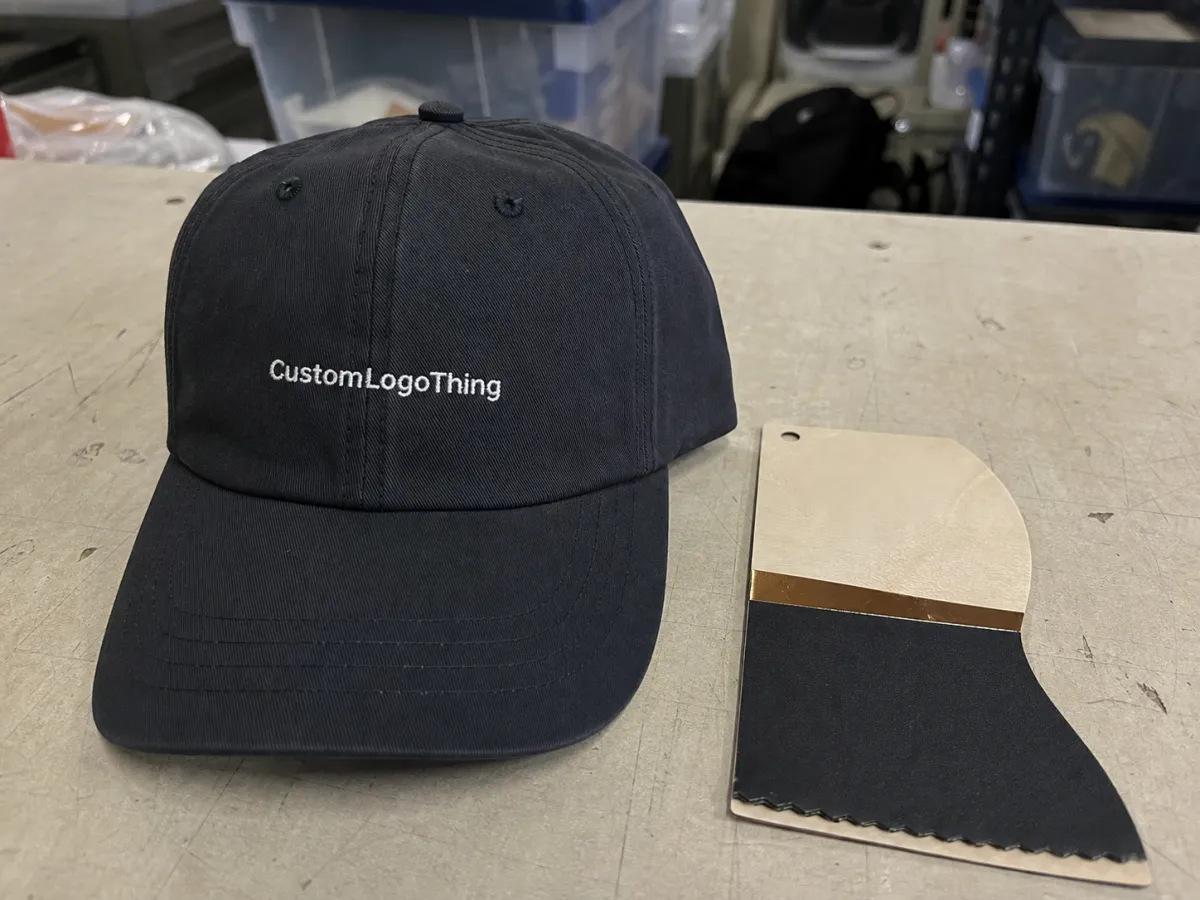
Generic promo hats are fine for a crowded event where the main goal is visibility. Cosmetics brands usually need more than visibility. They need a cap that looks deliberate under bright retail lighting, reads clearly in photos, and still feels worth wearing after the event is over. That is why cosmetics embroidered baseball caps Bulk Order Planning usually begins with embroidery requirements instead of artwork alone.
Embroidery has a direct effect on cost and wearability. A simple front logo with 5,000 to 7,000 stitches is very different from a detailed mark at 12,000 stitches or more. Add metallic thread, small lettering, multiple placements, or raised puff embroidery and the order price climbs quickly. The machine is not charging for attitude. It is charging for time.
That cost difference only makes sense if the cap actually gets worn. A low-value hat handed out once may generate a few social posts. A well-built cap used in store, on staff, or in recurring creator kits produces repeated impressions without additional spend. For cosmetics, that matters because the category depends on polished presentation. If the cap looks flimsy, the brand can look rushed too.
A better build also helps the brand survive the move from packaging to real life. Photos, counter displays, and in-person wear expose flaws that mockups hide. Thread density that seemed elegant on screen can feel heavy on the cap. A logo that looked balanced in a render can crowd the front panel. Those are small issues in isolation, but they add up fast.
Product details that control the final look and wear
The cap body affects the final result more than many buyers expect. Structured caps hold their crown shape and keep the front panel flat, which helps logos sit cleanly. Unstructured caps feel softer and more casual, but they can wrinkle the embroidery area and make small text less legible. Low-profile caps sit closer to the head and tend to feel more current. Mid-profile caps give the front panel more room, which can help larger logos breathe.
Fabric choice matters too. Cotton twill is still the safest starting point because it holds embroidery well and feels familiar to most wearers. Washed cotton creates a softer, broken-in look, though it can make fine branding look less crisp if the logo is too small. Polyester blends usually hold color well and are practical for repeated use, but some cosmetics teams find them less premium for staff wear or retail-facing kits.
Closure style sounds minor until a bulk order has to fit real people. Snapback, strapback, and Velcro all solve the sizing problem, but they do it differently. Snapbacks are simple and familiar. Strapbacks look a little cleaner. Velcro is practical for uniforms, though it is not always the best fit for a polished brand kit.
Color is a bigger decision than it first appears. Matching the cap to packaging can look sharp, but only if the embroidery still has enough contrast to read from a few feet away. A beige cap with pale thread may look refined in a mockup and disappear on a shelf. Tasteful is fine. Invisible is not.
For cosmetics brands, the most useful cap is usually the one that balances wearability with legibility. That balance comes from the cap profile, the fabric weight, the front backing, and the decoration method. If one of those is wrong, the rest of the order has to work harder to compensate.
Specifications to lock before you request a quote
If a supplier has to guess on the artwork, the quote is not a quote. It is a placeholder. Before asking for pricing, confirm the logo width, the maximum stitch area, thread colors, and whether the design needs flat embroidery or raised puff embroidery. Those choices affect digitizing time and production labor, which means they affect cost.
A clean vector file is still the best starting point. It lets the digitizer work from crisp lines instead of blurry edges. That matters even more for cosmetics marks, which often use thin type, elegant spacing, or delicate icon details. A file that looks sharp on a screen can become messy once it is translated into stitches.
Small text is where many logo ideas break down. Letters below about 3 mm can blur once they are stitched, especially on a curved front panel. Fine lines, tiny taglines, and hairline outlines are often better handled with a patch, woven label, or a simplified embroidery version. Simplifying the art may feel like a compromise, but it is usually less expensive than paying for detail nobody can read.
If the artwork includes tiny text, simplification is usually cheaper than forcing the embroidery machine to do impossible work.
Proofing should have two layers. First comes the digital stitch proof, which shows scale, placement, and thread direction. Then comes a physical sample if the order size or launch schedule justifies it. A slight change in stitch density can alter the surface enough that the second run no longer matches the first. Brand teams often notice that only after the reorders arrive.
Before you compare quotes, lock these details:
- Panel count: 5-panel caps create a flatter front; 6-panel caps are more traditional.
- Brim shape: curved brims fit broader audiences; flat brims lean more streetwear.
- Front backing: structured fronts need the right reinforcement or the logo can buckle.
- Decoration method: direct embroidery suits clean marks; patches work better for fine detail.
- Sweatband: cotton sweatbands usually feel better for staff wear than basic polyester tape.
Here is a practical comparison that helps buyers match decoration to the artwork instead of forcing the artwork to fit the decoration.
| Method | Best for | Typical cost effect | Risk level |
|---|---|---|---|
| Direct embroidery | Simple logos, clean lettering, front panel branding | Lowest setup cost for straightforward art | Low, if the stitch count stays reasonable |
| Raised puff embroidery | Bold wordmarks and strong retail presence | Higher than flat embroidery because of added materials and labor | Medium, since small text can suffer |
| Patch application | Fine lines, small text, complex logos, textured finishes | Often higher per unit, but cleaner on detailed art | Lower readability risk for complex marks |
That table matters because the cheapest method on paper is not always the cheapest method in practice. If direct embroidery forces multiple revisions or produces unreadable type, the apparent savings disappear. Patch construction can cost more per piece, but it can save a difficult logo from turning into a blur.
Pricing, MOQ, and unit cost for bulk cap orders
The quote is not just the cap price. It is stitch count, logo complexity, cap fabric, placement count, digitizing, sample work, packaging, and freight sitting in one total. Two suppliers can both say "custom embroidered cap" and still be miles apart on price. Same label. Very different numbers.
For cosmetics embroidered baseball caps Bulk Order Planning, quantity tiers matter a lot. Most buyers see better pricing around 100, 300, and 500 pieces, with sharper savings once setup costs are spread across a larger run. Small orders feel digitizing and sample fees much more heavily. Large orders absorb them better.
| Order size | Typical unit range | Setup impact | Best use |
|---|---|---|---|
| 100-149 pcs | $6.50-$10.50 | Digitizing and sampling hit hard on the unit price | Launch events, limited staff kits, test runs |
| 300-499 pcs | $4.80-$7.20 | Better spread of setup and proofing costs | Influencer kits, retail teams, regional campaigns |
| 500+ pcs | $3.90-$6.00 | Most efficient for custom decoration and repeat use | National campaigns, uniforms, seasonal replenishment |
Those ranges assume a standard 6-panel cotton twill cap with one front logo and ordinary packaging. Add side embroidery, puff thread, special fabric, or a back hit and the price moves up. Add gift boxes or rigid inserts and it moves again. If a quote looks dramatically lower than those ranges, ask what was removed. Usually something was.
Compare quotes only after normalizing the spec. Same cap style. Same logo size. Same stitch count. Same decoration position. Same delivery terms. Freight can hide a surprise too, especially on smaller orders where a low cap price gets dragged upward by air shipping and repacking charges. The lowest number on the page is not always the lowest landed cost.
Packaging deserves its own line item. If the caps will ship in printed cartons or retail-ready inserts, ask for FSC-certified paperboard options. The Forest Stewardship Council explains chain-of-custody basics at fsc.org. For transit cartons or bundled cases, ask whether the shipment has been tested against a handling standard such as ISTA 3A. The International Safe Transit Association lays out those methods at ista.org.
That extra detail matters because cosmetics brands often use caps as part of a larger kit. A crushed box, bent brim, or dirty insert can make the whole package feel cheaper. The hat may be fine. The presentation may not be.
Production timeline, lead time, and approval steps
A smooth order follows a predictable sequence. Artwork review. Digitizing. Digital proof. Sample approval. Bulk production. Quality check. Shipping. Skip a step and you are not saving time, just moving uncertainty downstream. That usually costs more later.
- Artwork review: confirm the file, logo size, and placement before anything enters production.
- Digitizing: convert the logo into stitch data so the embroidery machine knows what to do.
- Proofing: check logo scale, thread direction, and cap color on a mockup or sample.
- Bulk run: produce the order once the proof is signed off.
- Quality check: inspect thread tension, placement, and packaging before shipment.
- Freight: choose the shipping method based on deadline and order value.
Straightforward bulk orders often need about 2 to 4 weeks after approval. That is a realistic range for a simple logo, a standard cap body, and no complicated packaging. Complex artwork, mixed colors, special inserts, or a rushed schedule can push the timeline longer. A supplier who promises a miracle before seeing the file is either guessing or overselling.
The biggest delays are usually preventable. Late artwork slows digitizing. Last-minute thread changes trigger new proofs. Sample revisions add another round of waiting. A buyer who sends one clean file and one firm delivery date usually gets clearer answers than the buyer who says "we need it soon" and expects that to define the schedule.
Rush production is sometimes possible, but it brings tradeoffs. Material choices narrow, sample approval may get compressed, and the price rises because the factory has to reshuffle production. If the caps support a launch or retail event, build in enough time for one proper proof cycle. That extra buffer is cheaper than overnight freight and a bad first impression.
Lead time also depends on season. Cap factories get busier around gift seasons, trade shows, and large campaign windows. A 3-week promise in a slow month can become a 5-week reality during peak demand. That is not a reason to panic. It is a reason to lock the order earlier than the event calendar suggests.
What a dependable supplier should prove before you buy
Ask for sample photos, not polished catalog images that could belong to any hat. You want stitch close-ups, seam shots, crown structure, and a view of the back closure. For cosmetics work, you also want proof that the supplier can keep logos centered and thread color consistent across the run. A pretty mockup is not proof. It is only a promise.
Quality control should cover thread tension, placement, color matching, seam consistency, and packaging cleanliness. If embroidery puckers or a cap arrives crushed, the order feels cheaper than it was. That is especially true for retail-facing brands, where the hat is part of the presentation, not just an accessory.
Communication matters as much as the product. Slow or vague answers during quoting often become delays during production. Clear suppliers can tell you whether they are quoting direct embroidery or a patch, whether mixed colors change the MOQ, and whether the delivery target is realistic. If they cannot answer those basics, the risk usually moves to the buyer.
Repeat orders need special care. The second run should match the first in thread color, placement, and crown shape. That matters for cosmetics teams that reorder seasonally or split shipments across launches. Even a small shift in stitch density can make the next batch look slightly different under store lighting.
Ask how the supplier handles inspection and packed cases before shipment. A clean count and consistent carton build matter more than a vague "we inspect everything" claim. If the supplier can explain the inspection process in plain language, that is a good sign. If every answer sounds like a brochure, the buyer should ask more questions.
Good suppliers also understand defect thresholds. A few loose threads may be acceptable on a sample. Misaligned embroidery on a production run is not. The point is not perfection for its own sake. The point is preventing avoidable rejection after the caps have already been made.
Next steps for a cleaner bulk order
Before contacting a supplier, prepare three things: final artwork, target quantity, and required delivery date. That alone removes most of the back-and-forth. Add cap color preference and whether the logo needs direct embroidery or a patch, and the quote will reflect the real order instead of a placeholder.
Use the first quote to compare quantity tiers, not just the bottom line. A 300-piece run may land at a much better unit cost than a 100-piece run, even after adding a few extras for replacements or size changes in the field. That often makes more sense for cosmetics brands that plan launches, events, and recurring giveaways across the year.
Keep the spec simple where possible. One cap style. One main logo. One thread palette. One deadline. If the project needs multiple colors or placements, ask for the pricing impact before approving anything. It is easier to control the order on paper than to sort it out after production starts.
For cosmetics embroidered baseball Caps Bulk Order Planning, a vector logo, a realistic quantity range, and one firm delivery date will solve more problems than a long revision chain. Those three inputs help avoid inflated pricing, unreadable embroidery, and lead times that quietly grow teeth.
How many cosmetics embroidered baseball caps should I order to get a better bulk price?
Most suppliers improve pricing around 100 to 300 pieces, with stronger breaks at 500 and up. The best number depends on launch volume, staff use, and whether a reorder is likely. A slightly larger run can reduce unit cost enough to absorb setup and freight more comfortably.
What affects the cost of cosmetics embroidered baseball caps the most?
Stitch count and logo complexity usually move the quote first. Cap structure, fabric, embroidery placement, packaging, and the number of colors also change the final price. Smaller orders feel digitizing and setup fees much more sharply than larger runs.
Can I mix cap colors in one bulk order?
Usually yes, but each color may carry its own minimum depending on fabric availability and production rules. Mixed colors work best when the cap style and embroidery spec stay identical across the order. Always confirm whether color mixing changes the lead time or price tier before committing.
How long does production usually take after approval?
Straightforward orders often take about 2 to 4 weeks after proof or sample approval. Complex artwork, special packaging, or late color changes can extend the schedule. Rush orders are possible in some cases, but they usually narrow your options and raise the cost.
What artwork do you need for a quote on cosmetics embroidered baseball caps?
A vector file is best because it keeps the logo clean and editable for digitizing. Also send the cap style, logo size, preferred thread colors, quantity, and delivery date. A high-resolution PNG can help as a reference, but it should not replace a production-ready file.