Fitness Flat Bill Snapbacks quote requests get messy when the cap style, decoration, and packaging are not defined up front. A flat bill gives the logo more room and a cleaner read from a distance, which is why it keeps showing up in gyms, studios, and retail merch. If the cap is meant to sell, the spec has to be tighter than “black hat with logo.”
The price moves because one snapback can serve different jobs: staff uniform, member gift, event merch, or shelf stock. Fabric, closure, stitch count, packaging, and order size all affect the number. Leave out one of those details and the quote is usually only a placeholder.
A good quote should behave like a spec sheet. If it only gives a single number, the buyer still has to guess about the actual cap build, and that is where delays and rework start.
Fitness flat bill snapbacks quote: what changes the price
The blank cap is just the starting point. A basic structured snapback may look cheap before decoration, but embroidery, patch work, private labels, and retail packaging quickly turn it into a real production order. Smaller runs feel setup costs more sharply. On a 25-piece order, even a modest setup fee can add noticeably to each unit. On a 500-piece run, the same fee matters much less.
Useful quotes answer a few questions immediately: what cap body is being used, how many panels it has, whether the crown is structured, which decoration method applies, and how the order will ship. Bulk cartons, polybags, size stickers, and hang tags all affect price. If those details are missing, the number is not ready for a decision.
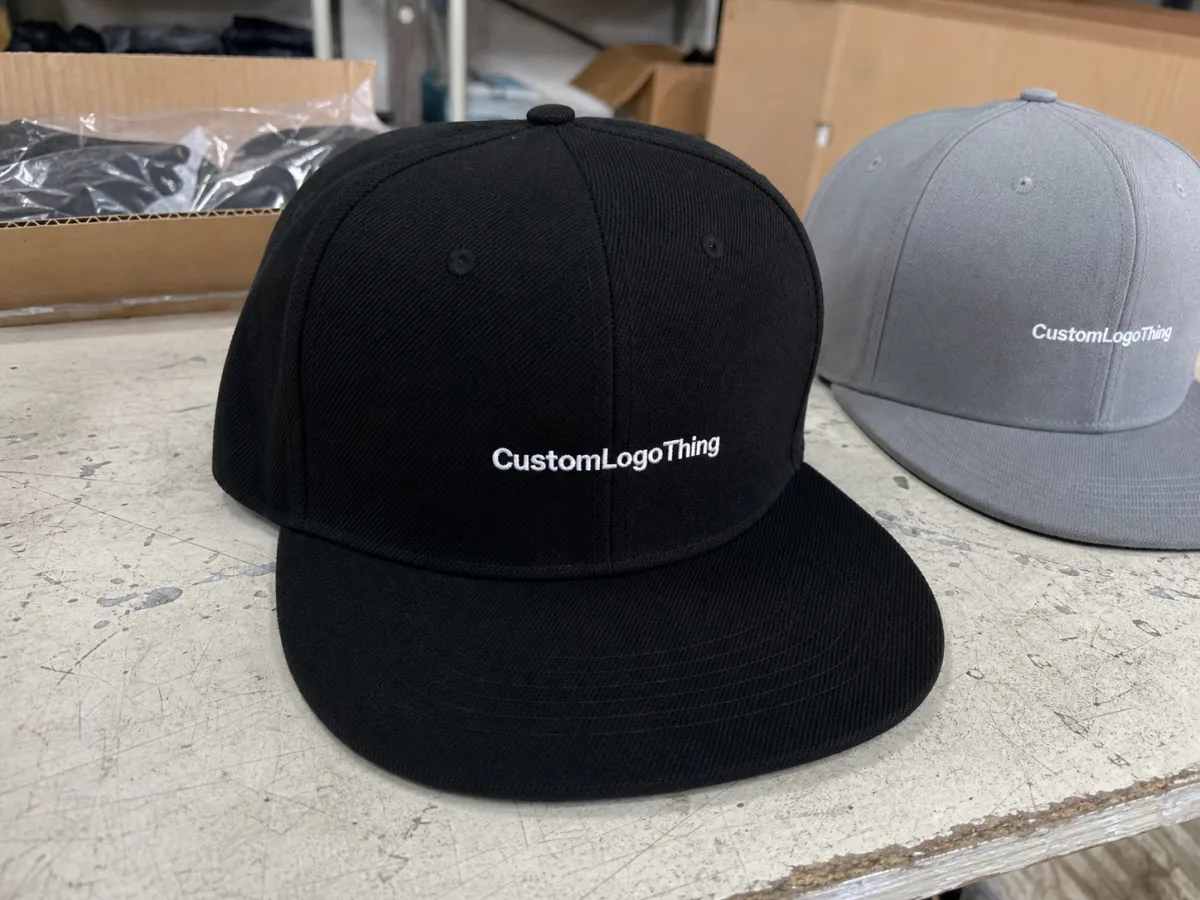
Flat Bill Snapbacks also change the visual outcome. The straight brim and structured front panel give logos a cleaner stage than a soft curved cap, especially for stacked text, geometric marks, or small artwork that needs to stay legible. That matters for photos, retail display, and staff wear.
For comparison shopping, ask suppliers to define the same spec in plain language: cap style, decoration method, thread or patch colors, packaging, and delivery timing. If a quote needs several follow-up emails before it makes sense, it is already costing time.
One practical shortcut: send the logo file, quantity, cap color, and deadline together. That will not guarantee the lowest price, but it reduces the back-and-forth that slows most custom orders.
Why flat bill snapbacks beat curved caps for gym merch
The silhouette does a lot of the work. A flat visor feels sharper than a curved cap, and that sharper profile fits athletic brands, studio merch, and streetwear-adjacent fitness labels better than a casual dad cap shape. On a hook or a checkout counter, the style reads more intentional.
Decoration is usually cleaner too. Embroidery sits more evenly on a structured front panel, and patch placement is simpler because the crown is not competing with a curved brim or a soft body. If the logo uses thin text, outlines, or negative space, the flat panel gives it a better chance of holding detail.
For fitness brands, the cap often has to work in three places at once: on the floor, in the gym, and in photos. A style that only looks good in one setting is not very useful. Flat Bill Snapbacks keep showing up in repeat orders because they are flexible enough for staff, trainers, and retail customers.
- Front-desk staff need a clean, consistent look without a full uniform.
- Coaches and trainers want branded headwear that still feels current.
- Event launches need hats that hold their shape under lights and cameras.
- Retail shelves favor products that keep the brim flat and the crown upright.
A cap that collapses in transit usually looks cheaper than it is. A cap that keeps its structure often sells better even when it costs a little more to make. Flat bills are not magic; they just make the logo easier to trust.
A cap can be low cost or repeatable. Most brands need repeatable. Low cost only looks clever until the reorder comes back wrong.
Materials, closures, and panel builds that hold up in training
Fabric choice affects comfort and pricing. Cotton twill gives a familiar hand feel and a more premium look, while polyester blends are easier to care for and often wear better in active settings. If the cap will live near sweat, sun, and repeated washing, performance fabrics make sense, but they can feel more technical than some brands want.
Most fitness buyers end up with a structured 6-panel snapback because it keeps the front logo area crisp. Buckram reinforcement helps the crown stay upright, and a firmer visor board keeps the bill flat through packing and shipping. A 5-panel build can work for a cleaner, more fashion-forward look, but it changes the profile enough that it belongs to a different product direction.
Closures matter too. Plastic snap closures are popular because they fit a wide range of heads and work well for mixed groups. Fabric straps or buckle closures can feel more refined, but they usually require a tighter fit spec. Stretch-fit caps are comfortable, but they are less flexible for teams and events. For gyms and studios, the snapback stays practical because it avoids fit problems.
Small construction details affect the final result more than many first-time buyers expect. Sweatband quality changes comfort during long wear. Eyelet placement changes breathability. The stiffness of the visor board determines whether the bill stays flat after packing. Undervisor color can also shift the mood of the cap, especially in photo-heavy branding.
Stitch density matters as well. A logo can look polished on screen and still sew poorly if the font is too thin or the artwork is too detailed for the cap body. In practice, simpler embroidery is easier to control than dense artwork that pushes stitch counts high. That does not make detailed logos impossible; it just raises the risk of distortion.
If sustainability has to appear in the order, packaging is the easiest place to start. FSC-certified paper inserts, recycled cartons, and simpler labeling can improve presentation without changing the cap body. If the order needs to arrive shelf-ready, packaging should be checked with transit in mind, not just photographed on a desk.
Cost, pricing, MOQ, and unit cost
This is where buyers often compare the wrong numbers. A cheap quote with no breakdown can hide setup, digitizing, packaging, or logo-placement costs. A slightly higher quote with everything spelled out may be the better deal. The only fair comparison is the same spec.
MOQ behavior is predictable. Smaller runs cost more per unit because setup is spread across fewer pieces. In many programs, 25 to 50 pieces is a workable starting point, but the better price usually appears at 100, 250, and 500 units. If the cap is a test item or a first launch, a small run can make sense. If the style is proven, the economics improve quickly as quantity rises.
Here is a practical reading of common add-ons.
| Decoration or build choice | Typical add-on cost per unit | What it changes |
|---|---|---|
| Flat embroidery | $1.20-$2.80 | Clean logo read, good for small text and simple marks |
| 3D puff embroidery | $1.50-$3.50 | More depth and a bolder profile, best for simple shapes |
| Woven or printed patch | $1.80-$4.50 | Better for detailed artwork or mixed-color logos |
| Individual polybag and size sticker | $0.20-$0.60 | Retail-ready presentation and easier sorting |
| Digitizing or setup | $25-$60 one time | Prepares artwork for embroidery or patch production |
Those ranges move with order size, logo complexity, and the number of thread colors. A one-color front mark on a standard structured snapback will usually be cheaper than a cap with front embroidery, side text, and a custom patch. Add more decoration locations and labor rises faster than the blank cap cost.
A useful pricing habit is to ask for tiered quotes at 50, 100, 250, and 500 units. That shows where the price drops happen. Sometimes the jump from 100 to 250 is small. Sometimes the break only appears at 500, which tells you the inventory risk is not worth taking yet. Either way, the buyer gets a better decision.
Sampling is another cost to weigh. A physical sample may add time and money, but it can save more than it costs if the logo is delicate or the fit matters. A screen mockup cannot show brim stiffness, crown depth, or how embroidery sits on the panel.
Production steps and turnaround timeline
The production flow should be straightforward: inquiry, spec review, quote, artwork check, digital proof, sample or approval, bulk production, and shipment. If one of those steps disappears, the risk usually shifts to the buyer.
Artwork quality has a direct effect on timing. A clean vector logo with clear placement notes and Pantone or PMS color references can save days of corrections. A low-resolution file with uncertain colors and no placement guidance does the opposite.
Decoration method changes the schedule too. Standard embroidery is usually faster than patch work, especially if the patch needs separate material approval or extra sampling. For simple custom runs, a realistic production window is often 12 to 18 business days after proof approval. More layered builds commonly need 15 to 22 business days. Rush options can exist, but they cost more and leave less room for revision.
Shipping time should never be confused with production time. Domestic ground can add a few business days. Expedited freight can move faster, but it raises cost and leaves less room if cartons need to be reworked. The safest timeline is the one with a cushion.
What a repeatable hat program has to get right
Repeatability is the real value. A good program keeps the panel shape consistent, holds the logo placement steady, and matches reordered caps closely enough that a customer cannot tell which batch came first. That matters for brands that launch in waves or restock after initial sell-through.
Flexibility matters too, but only to a point. Some brands need a small first order to test demand. Others already know the cap will move and want to go directly to a larger run. A workable production setup handles both without forcing a new artwork file or a fresh round of guesswork every time.
Quality control is where most promises are either confirmed or exposed. Stitch inspection keeps the logo clean. Centering checks keep the art from drifting off the panel. Thread matching protects brand color accuracy. Brim checks keep the bill flat, which sounds minor until half the shipment arrives bowed in the carton.
Studios and fitness brands usually need the cap to work in three places at once: on the floor, in the gym, and in photos. A style that only looks right in one setting is not a finished product. The better spec is simple enough to repeat, strong enough to hold shape, and easy to inspect without arguments over what “close enough” means.
A final practical point: reorder logic should be decided before the first shipment leaves. If the front panel, thread colors, and packaging are documented clearly, the next order is far less likely to drift.
Next steps to get a usable quote and avoid delays
The fastest way to get a reliable quote is to send a complete brief. Not a mood board. Not a rough idea. A complete brief. Missing quantity, decoration method, or target ship date usually turns the quote into a placeholder rather than a number you can plan around.
Send these five items first:
- Your logo file in vector format if possible.
- Cap color and any secondary color requirements.
- Decoration method, such as flat embroidery, 3D puff, or patch.
- Quantity target, plus alternate tiers if you want to compare pricing.
- Target ship date, with packaging or labeling needs if applicable.
Then confirm the details that usually create rework: logo placement, thread or patch colors, and the exact delivery window. If any of those are still open, the project is not ready for production. Ask for a line-by-line breakdown if the first quote only gives one number. That is the only fair way to compare suppliers on the same spec.
If you need to test demand, ask for pricing at 50, 100, 250, and 500 units. If the order needs to land retail-ready, ask about polybags, size stickers, and carton marking. If timing is tight, say so early, because rush production narrows the revision window and usually increases cost.
Use the contact page only after the spec is complete. That keeps the quote grounded in the actual order instead of a rough estimate that has to be rebuilt later.
What is the minimum order for fitness flat bill snapbacks?
Most custom runs start at a practical MOQ tier, often around 25 to 50 pieces, but the best unit cost usually appears at 100 pieces and higher. Ask for tiered pricing so you can see the real breakpoints.
Can I get a quote for mixed colors and mixed logo placements?
Yes, but each added colorway or decoration location can change both unit cost and setup time. A single core spec is easier to price and faster to approve.
What decoration looks best on fitness snapbacks with a flat bill?
Flat embroidery, 3D puff, and patch applications usually read well because the front panel stays visually clean. Choose the method around the logo itself: small text often needs flat embroidery, while bold marks can handle puff or patch work better.
How long does production take after proof approval?
Simple custom runs often need 12 to 18 business days after approval. More complex builds usually need 15 to 22 business days. Rush options may exist, but they usually cost more and leave less room for revisions.
Can I order samples before I place a bulk fitness flat bill snapbacks quote?
Yes, and samples are worth it if fit, brim shape, or logo placement matters more than a mockup can show. A sample adds time and cost, but it lowers the risk of approving the wrong build for a retail or team launch.