fitness pom pom beanies Bulk Order Planning gets easier once the hat stops being treated like a random seasonal accessory and starts being treated like inventory. That sounds obvious. Yet plenty of orders still get built around the wrong question, usually some version of, “Can you make it cheap?” Cheap is not the same as usable, and usable is the only thing that matters when the beanies are supposed to warm heads, carry a logo, and arrive on time.
For gyms, winter race teams, campus programs, fan merch tables, and wellness brands, the buying logic is pretty consistent. The beanie has to hold warmth, fit a lot of different heads, and keep the branding readable after it leaves the box. A pom pom adds motion and shelf appeal, but it also introduces extra choices in construction, packing, and decoration. Ignore those details and the order gets messy fast. Handle them early and the whole run gets much easier to manage.
Why fitness pom pom beanies work for winter team buys
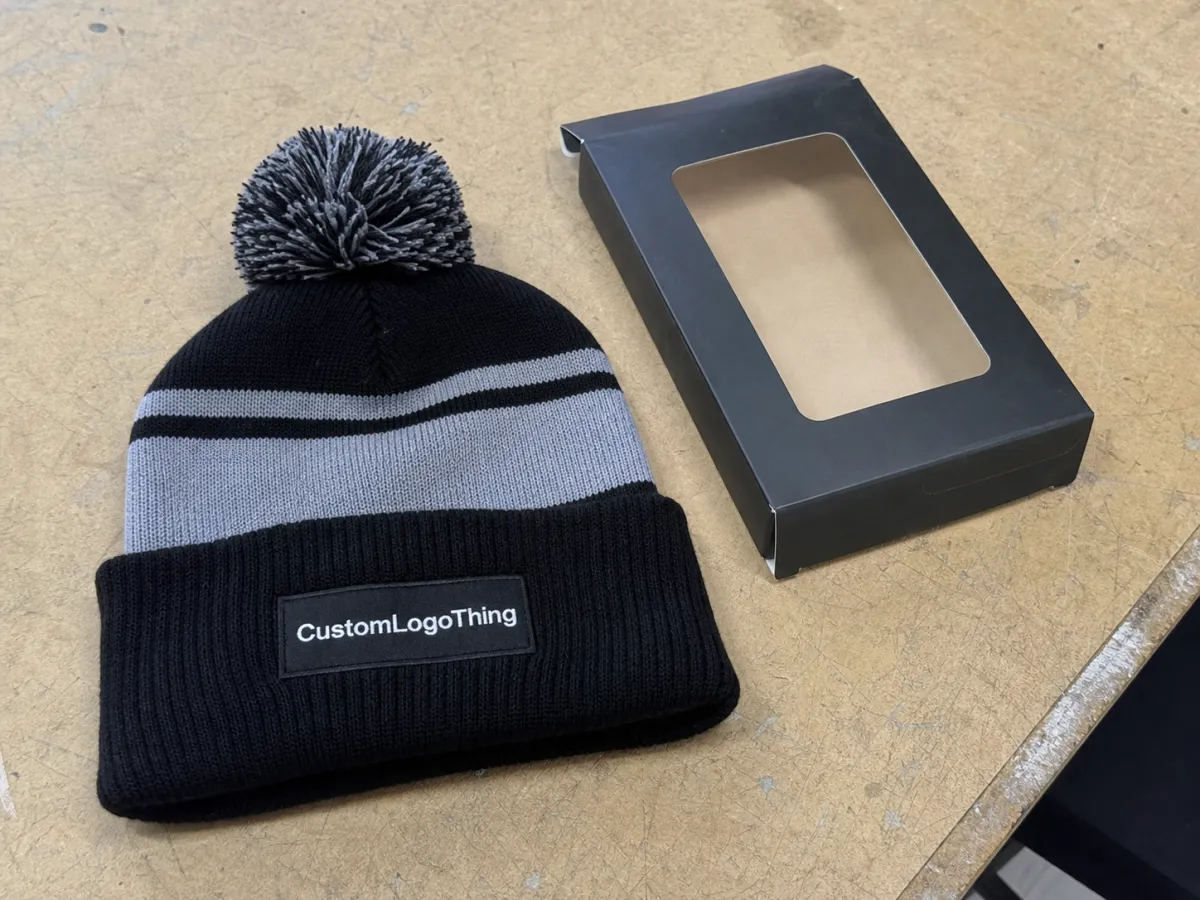
Bulk orders make sense here because the product does several jobs at once. A training staff needs a winter layer that looks coordinated. A race crew needs headwear that stands out in a crowd. A retail table needs something that reads clearly from across the room. The same beanie can cover all three, but only if the design choices match the actual use case.
The pom is not just decoration. It changes the silhouette, which matters more than people expect. A plain cuff beanie can disappear in a group photo. Add a pom and the hat becomes more visible on a rack, in a crowd, and on a moving person. That visibility helps in retail and event settings where the customer is not studying fabric swatches. They are looking quickly, usually while holding coffee, a stroller, or a race bib.
There is also a practical side. Bulk knit headwear tends to reward buyers who think in seasons instead of one-off events. Once the logo file is approved and the construction is settled, reorders are relatively straightforward. The trap is letting the first order get overcomplicated. Mixed colors, obscure pom materials, overly tiny logos, and fussy packaging can turn a normal job into a slow one.
The cheapest beanie is usually the most expensive order once decoration, packing, and rework show up.
That is why consistency matters as much as price. Matching headwear makes staff and volunteers look organized, and it makes retail displays look intentional instead of improvised. Winter merch works best when the product looks like it belongs together. No mystery there.
Pom pom beanie styles that fit training floors, sidelines, and retail racks
Style choice should start with the job, not the mood board. A cuffed beanie gives the cleanest branding zone and is usually the safest option if the logo has to be read from a distance. Rib-knit versions feel a little more structured and hold their shape better after repeated wear. Slouchier cuts lean more fashion-forward, but they reduce the flat area available for embroidery or a patch. That tradeoff is fine if the brand wants a relaxed look. It is not fine if the logo has to stay crisp.
For team gear, cuffed and rib-knit styles tend to be the least risky. They fit a wider range of heads, they give the decorator a stable front panel, and they are easier to approve from a proof. For retail, a slouch silhouette can work if the brand wants a softer, more casual feel. The key is to avoid choosing a style because it looks nice in a mockup and ignoring how it will actually sit on a person’s head in cold weather.
Pom construction deserves its own decision. Sewn-on yarn poms are the default for a reason: they are durable, easy to color match, and less likely to create wear issues in a bulk program. Faux-fur poms look more premium and photograph well, but they add cost and can push the product into a more fashion-led lane. Detachable poms are useful if washability or swap-out styling matters, but they also introduce a part that can be lost, detached, or packed incorrectly. For staff gear and event merchandise, simple usually wins.
Color strategy should stay practical. Single-color knits keep the branding zone clean and reduce the risk of clashes. Two-tone builds can reinforce club identity without getting loud. Contrast poms create visual pop, which helps for outdoor events and winter races where the hat needs to read quickly in a crowd. The strongest color plan is not the one with the most options. It is the one that still looks good when stacked, bagged, and worn by real people.
Fit is where a lot of orders quietly fail. A beanie should sit securely without squeezing the forehead, and it needs enough stretch to handle different hair volumes. If the cuff rides up, or the crown pulls tight over a ponytail or bun, people stop wearing it. That is a waste of decoration money, which is always annoying and never mysterious.
Specs that protect warmth, fit, and logo visibility
Material choice sets the baseline for the order. Acrylic is still the most common option because it balances warmth, stretch, and cost without making decoration difficult. Recycled acrylic is a strong middle ground for buyers who need a sustainability story but cannot justify premium wool pricing. Wool blends feel warmer and more elevated, although they usually bring higher minimums and a higher unit cost. For outdoor winter wear, the fiber content matters, but knit density matters too. A loose knit can feel cheaper even if the fiber content looks good on paper.
Buyers should decide early whether the order is adult one-size, youth sizing, or a fit that needs more room for hair volume. That sounds basic, but it affects cuff depth, stitch tension, and decoration placement. If the logo sits too low, it can disappear into the fold. If the cuff is too shallow, the branding zone shrinks. For fitness buyers, hair accommodation is not a side issue. People will notice if the beanie fights their ponytail.
Decoration should be chosen with the knit in mind. Embroidery is the cleanest option for a cuffed beanie when the logo is simple and the stitch count is sensible. Tiny text is a bad idea. It tends to fill in or blur against the knit texture. Woven patches keep more detail and often look more retail-ready. Woven labels work well for minimalist branding or side placements. Heat transfers are less common on knit headwear because they do not always handle stretch as well as stitched methods. None of that is glamorous. It is just what tends to hold up.
Logo placement needs a real proof, not a floating digital graphic. Ask for the logo at actual size against the knit texture, because scale on screen can lie. A mark that looks clean in a mockup may crowd the cuff in production. A centered placement can drift if the knit pattern is uneven or if the cuff folds differently from unit to unit. Small errors become obvious in bulk. That is how headwear works.
Quality control should be specific. Ask how stitch density is checked, how yarn tension is monitored, how the pom attachment is tested, and how the final logo position is confirmed across the run. Those are the checks that keep one lot from looking different from the next. On a shelf or in a team photo, even a few millimeters of drift shows.
Packaging matters more than most buyers want to admit. If the order is going to retail stores, event teams, or multiple warehouses, individual polybags, carton labeling, and count confirmation can save a lot of receiving time. If the brand needs a paper-sourcing reference, FSC is the standard most teams ask about for inserts or hang tags. If parcels are being shipped through rough handling lanes, it is worth asking whether the pack-out has been checked against an ISTA drop profile. Boxes do not care how careful the artwork was.
Fitness pom pom beanies bulk order planning: pricing, MOQ, and unit cost levers to compare
Pricing is a combination of fixed setup costs and variable production costs. The knit body is only part of it. Decoration, yarn count, pom style, packaging, and shipping all move the landed number. That is why fitness pom pom beanies Bulk Order Planning works best when buyers compare full builds instead of chasing a single unit price. A quote that looks great on the first line can fall apart once the real spec sheet is added.
The smarter request is to ask for two or three pricing tiers. One should reflect the current need. Another should show the better unit cost at a larger quantity. A third can reveal whether a small increase in volume meaningfully lowers the price. Often it does. Setup fees and packing charges spread better across 1,000 or 2,500 units than they do at 250 or 500. That gap can decide whether the program is a thin-margin promo or a workable retail buy.
| Build | Typical MOQ | Blank unit price at 500 pcs | Decorated unit price at 500 pcs | Best fit |
|---|---|---|---|---|
| Standard acrylic cuff | 100-250 | $2.60-$3.80 | $3.45-$5.20 | Staff gear, giveaways, event crews |
| Recycled acrylic cuff | 150-300 | $3.00-$4.50 | $3.95-$6.10 | Sustainability-led brands and retail |
| Wool-blend cuff | 200-500 | $4.50-$6.80 | $5.60-$8.40 | Premium retail and colder climates |
| Faux-fur pom fashion style | 150-500 | $3.30-$5.40 | $4.30-$7.20 | Higher visual impact and shelf appeal |
These ranges are broad on purpose. Region, season, labor capacity, and shipping lane all move the final number. So does decoration complexity. A simple one-color logo is not the same thing as a multi-color patch with a custom woven label and insert card. Buyers usually feel the difference after the quote arrives, which is not the ideal time to discover it.
Ask about the charges people forget to mention until they are inconvenient: digitizing, sampling, rush production, split shipments, extra color charges, custom tags, and individual bagging. Those items can be small on paper and annoying in aggregate. If the order is headed to multiple store locations or event sites, packaging and labeling can justify their cost because they reduce receiving labor. If the order is for a single handoff, some of that packaging may be overkill.
A useful rule: if the program is likely to reorder, price the next inventory step now. It is often cheaper to buy a little more on the first run than to place two small orders and pay setup twice. Strange how math keeps ruining the dream of the absolute lowest minimum.
The right MOQ is the one that makes setup, decoration, and packing work in your favor, not the smallest number a vendor will tolerate.
Production steps and lead time from proof to delivery
The production sequence is usually predictable: spec intake, artwork review, digital proof, sample approval if needed, production, quality control, and packing. The order only moves fast if approvals move fast. One delayed logo revision can stall the schedule. One unclear packaging instruction can do the same thing. There is no magic there, just paperwork and line time.
For planning purposes, stock-based builds with simple decoration often take around 12-18 business days after proof approval, before transit. Custom knit patterns, premium poms, or mixed-color orders can take longer, especially if a pre-production sample is required. Add shipping time on top, and add more if the delivery window is tied to a fixed event or a warehouse receiving appointment. The calendar usually feels generous until it does not.
Rush production is possible in some cases, but the shortcut only works when the base beanie is already available, the logo is simple, and the decoration method is easy to run. Custom yarn colors, premium faux-fur poms, or special packaging erase that speed very quickly. That is normal. It is also why buyers should work backward from the delivery date instead of forward from the quote date.
A pre-production sample is worth the delay when the order is large or the logo is sensitive. It gives a real check on yarn color, cuff depth, pom size, stitch clarity, and overall fit. A digital proof cannot tell you whether the cuff looks too shallow on the actual knit. A sample can. For cartons moving through parcel networks or multiple touchpoints, it is also sensible to ask how the packaging will survive transit. Broken boxes and crushed hats are still a production issue, even if they happen after production.
The cleanest schedule is simple: lock the specs, approve the proof, approve the sample if there is one, and build a little buffer into shipping. That buffer is not pessimism. It is basic competence.
How to choose a supplier that keeps every lot consistent
The difference between a quoting shop and a production partner shows up after the proof is signed. A serious supplier will talk about stitch count, yarn tolerance, color matching, carton labels, and fallback options before the order is released. A weak one talks mostly about the starting price. That distinction matters, because the starting price is the easiest number in the whole process.
Consistency is the real test in bulk headwear. The knit should match from lot to lot. The pom size should stay consistent. The logo should sit in the same place on every unit. If the cuff shifts or the yarn shade drifts, the order still ships, but the brand impact weakens. The product may technically be fine. It still looks sloppy. Customers notice that immediately, even if they do not know why.
Mixed programs raise the bar further. A gym may need staff gear, retail stock, and giveaway units from the same run. A race organizer may need inventory split across a warehouse, a venue, and sponsor tables. If cartons are mislabeled or quantities are off, the labor to sort it later becomes the hidden cost. That is usually the part nobody budgeted for, which makes it more irritating than the original problem.
Before placing the order, check for a few basic signals that the supplier actually understands bulk headwear:
- Artwork approval shows the final logo size, placement, and thread or patch style
- Sample notes identify the approved yarn, cuff structure, and pom material
- Color tolerances are described clearly, including what happens if a shade is unavailable
- Carton counts and labels match the ship-to plan, not just the purchase order
- Milestones are specific enough that a delayed proof or sample will not go unnoticed
Shipping support matters more than it looks. If cartons need to split across stores, venues, or regional teams, the supplier should be able to explain how they are marked and tracked. If they cannot, the buyer ends up being the traffic cop. Nobody asked for that job.
Standard ordering terms and proof expectations are usually outlined in the supplier’s wholesale documents and FAQ pages. The point is not to collect links. The point is to make sure the order rules are written down before the run starts.
Next steps to lock your order without slowing production
Good quote requests are boring in the best way. They include quantity, color, logo file, decoration method, target delivery date, shipping destination, and packaging needs. That is enough for most suppliers to price the job without guessing. Guessing is expensive. It also creates follow-up emails nobody wants.
Order the decisions in the right sequence. Pick the silhouette first. Then confirm the knit and pom style. Then approve the branding zone. Only after that should quantity and budget be finalized. If those steps get flipped, the order starts drifting toward whatever looks cheapest on paper instead of what will actually work in the field.
If the run is not fully fixed, ask for pricing on two scenarios: the minimum viable order and the more efficient inventory step. That comparison often shows whether it makes sense to buy only for the current event or hold a modest reserve for replacements, reorders, or store replenishment. For winter headwear, a small reserve is usually less painful than scrambling for another run later.
Before releasing the PO, run this checklist:
- Confirm the artwork file is usable for embroidery or patch production
- Decide whether mixed colors or mixed pom styles are allowed
- Choose whether each unit needs a polybag or retail-ready pack-out
- Verify whether a pre-production sample is required
- Check the delivery address, receiving hours, and carton labeling instructions
If the goal is fitness pom pom Beanies Bulk Order Planning for a team, event, or retail launch, the real win is simple: nail the spec before the production window starts to close. That keeps the order moving, keeps the inventory usable, and keeps the finished beanies from turning into an expensive sorting problem.
FAQ
What is the best MOQ for fitness pom pom beanies bulk orders?
The best MOQ is the one that fits the distribution plan, not the smallest one a supplier will quote. Setup and decoration costs spread more efficiently as quantity rises, so a slightly larger order can produce a better landed cost than two smaller runs. Ask whether the minimum changes by decoration method, number of colors, or pom style, because those variables often create separate production requirements.
How long does fitness pom pom beanies bulk order planning usually take?
Lead time depends more on approvals, sampling, and shipping than on the beanie itself. A simple stock-based order can often move in about 12-18 business days after proof approval, while custom knit or premium builds usually need more time. If the order supports a fixed event date, work backward and leave room for revisions, transit, and the occasional delay that always shows up at the worst moment.
Which decoration method works best on bulk pom pom beanies?
Embroidery is usually the cleanest and most durable choice for a cuffed beanie with a simple logo. Woven patches are better when the design needs finer detail or a more retail-ready finish. Labels work well for minimal branding. The best method depends on logo size, knit texture, and how much flat space the beanie style provides after it is worn.
Can I mix colors or styles in one bulk order?
Often yes, but mixed options can change pricing, minimums, and production speed. If the colors or pom styles share the same decoration setup, the order is easier to manage. If they require separate runs, the cost usually climbs. A limited mix can be useful for inventory flexibility, but too many variations make the job harder than it needs to be.
What should I include in a quote request for fitness pom pom beanies?
Include quantity, preferred colors, logo file, decoration method, target delivery date, shipping location, and packaging needs. If the order needs individual polybags, size stickers, or retail-ready cartons, say that up front. The more specific the brief, the less back-and-forth it takes to get a quote that actually matches the job.

