For merch teams that need one product to do a lot of quiet work, event merch Flat Bill Snapbacks bulk order runs make a strong case for themselves. The flat front gives logos a steadier field than a soft unstructured cap, and the squared silhouette reads well in photos, on a crowded registration table, and across the back row of an arena. That combination matters more than style arguments do. A cap either holds a mark cleanly or it doesn't.
The practical appeal is not subtle. One style means one artwork placement, one production path, and one set of packing instructions. That reduces the odds of getting a box of slightly different finishes, off-center logos, or color drift between batches. For a crew uniform, a sponsor handout, or a launch-day giveaway, predictability is the product. Fashion is secondary.
There is also a reason this format shows up so often in event purchasing: Flat Bill Snapbacks are simple to explain to finance, easy to warehouse, and less likely to trigger fit complaints than more specialized silhouettes. The one-size-adjustable snap closure does not solve every sizing problem, but it handles a wide range of heads with far less friction than fitted headwear. That alone can save time at the merch table.
Why event merch flat bill snapbacks bulk order works for large events
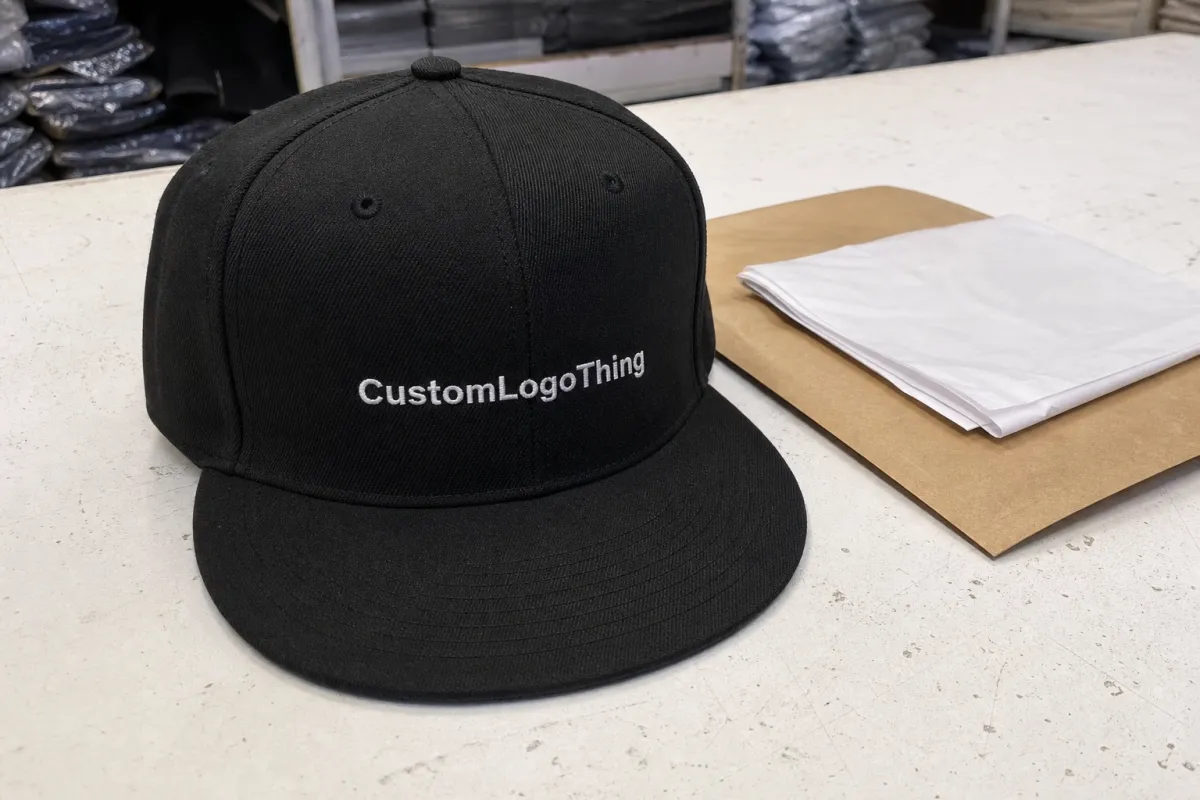
A flat bill snapback gives event merch a crisp front panel and a shape that still looks intentional after hours of wear. The geometry helps. A structured crown keeps the logo surface stable, while the flat visor preserves the lines that make text, sponsor marks, and simple emblems easier to read from a distance. Compared with a lower-profile cap, the front is less likely to collapse around the decoration.
That visual clarity matters in settings where the cap has to perform fast. Crew members wearing a logo cap for check-in, vendors behind a booth, staff working a festival gate, or volunteers moving through a conference floor do not need a cap that disappears into the outfit. They need one that signals role and brand immediately. The flat bill format does that without trying too hard.
Bulk ordering adds another layer of value. Once the spec is fixed, the production line can repeat the same decoration placement, stitch density, and packing method across every carton. That consistency lowers the odds of human error and makes the final count easier to trust. A buyer dealing with hundreds or thousands of units is not buying novelty. They are buying control.
There is a reason the same style keeps coming back in event merchandising: it survives practical use. A cap that looks good only in a mockup is not enough. The real test is whether the front panel stays clean after sewing or heat application, whether the brim holds shape in transit, and whether the decoration still reads clearly under mixed lighting. If the answer is yes, the cap earns its place in the program.
For large runs, the best orders are usually straightforward. They are not flashy. They are built around a stock base, a readable logo, and a delivery date that leaves enough room for proofing and freight. That is the core of a dependable event cap program.
Panel shape, brim structure, and decoration methods that hold up in wear
The small construction decisions carry more weight than most buyers expect. A structured six-panel crown gives the front a stable shape and typically supports embroidery or patches better than a lightly built cap. A higher crown creates a sharper streetwear profile; a mid-crown shape sits a little closer to the head and usually feels easier across mixed audiences. Neither is automatically better. The right choice depends on whether the cap needs to look fashion-forward or simply unified.
Fabric choice changes the result too. Cotton twill feels familiar and takes decoration well. Polyester or poly-cotton blends tend to hold color better under repeated wear and can be more forgiving in production. Some programs choose canvas-like textures for a rougher, more retail-looking finish. Others prefer smoother weaves so the artwork has less surface noise. The cap body should support the decoration, not fight it.
Embroidery remains the standard for a reason. It is durable, cost-efficient at moderate complexity, and easy to read on bold lettering. Woven patches are useful when the artwork includes thin lines, tiny type, or sharper detail than thread can handle cleanly. Rubber or PVC patches create a more dimensional look and can be a good fit for sponsor merchandise or activation pieces that need extra tactile presence. Printed labels or heat-applied graphics can work for full-color art, though they should be checked carefully for edge lift, cracking, or poor adhesion if the cap will be handled heavily.
Quality control should start with the decoration method and end with the cap's shape after packing. On embroidery runs, buyers should ask about stitch count, thread pull, and whether the backing is visible or trimmed cleanly. On patch orders, edge quality matters. A rough border or uneven lamination can make a cap feel cheaper than it is. On printed finishes, color saturation and registration are the first things to verify. Fine artwork that looks perfect on screen can blur quickly on a cap if the production method is not suited to it.
Brim construction also deserves attention. A hard insert gives the visor a cleaner line and helps the cap survive shipping without collapsing. A softer bill can feel more casual, but it often loses shape faster. For event merch, that tradeoff usually favors the firmer build. The cap needs to arrive ready to display, not need reshaping on arrival.
| Decoration method | Best for | Typical effect on price | Practical note |
|---|---|---|---|
| Embroidery | Bold text, simple logos, staff and crew branding | Low to moderate | Durable and efficient; works best with readable shapes |
| Woven patch | Fine detail, sharper line work, premium branding | Moderate | Good choice when thread would soften the artwork |
| Rubber patch | Dimensional look, sponsor merch, modern presentation | Moderate to higher | Stands out visually and photographs well |
| Printed label | Full-color graphics, tighter budgets, quick-turn programs | Low to moderate | Useful for complex art that would be expensive in thread |
Color selection affects perceived value more than many buyers expect. Black, navy, charcoal, and stone are easy bases because they carry most logos cleanly. A contrast undervisor, a rope detail, or matching accent stitching can lift the look without turning the cap into a costume piece. Those details are useful only if they support the design. Too many add-ons can crowd the front panel or make the cap feel busy in a bad way.
The smartest approach is usually restraint. A clean logo on the right cap can look more expensive than an overloaded cap with too many effects. Flat bill snapbacks reward editing. The silhouette already does some of the visual work.
Specs buyers should confirm before approving artwork
Most production problems start with incomplete specs, not with the decoration itself. Before approving artwork, the buyer should confirm crown height, panel count, closure style, visor shape, sweatband details, and whether the front panel has enough structure to carry the chosen decoration. If those basics are unclear, the proof can look fine and still fail in production because the cap body changes the way the art sits.
Artwork files deserve the same discipline. A vector file is still the cleanest starting point, especially for logos with small text, thin outlines, or multiple color breaks. The buyer should also confirm the exact decoration area, border widths for patches, minimum line thickness, and whether the logo needs to avoid a seam. Those are not cosmetic preferences. They are production limits.
Sample images help, but they do not replace measurements. A mockup can hide the fact that a logo sits too low, crosses a seam, or needs to be reduced to fit the decoration field. On a large run, even a small placement error becomes visible quickly. The most reliable approval process is the one that ties the design to actual dimensions instead of mood-board language.
Comfort belongs in the spec conversation too. Event staff may wear the cap for long shifts, not just for a photo. A snapback generally covers a broad size range, but crown depth still changes how the cap feels. Higher crowns create more headroom and a stronger profile. Lower crowns sit closer and can feel easier for a wide audience. If the cap is meant for mixed users, that distinction matters.
Material notes should not be skipped either. If the run is meant to survive outdoor use, ask about colorfastness and the likely effect of sweat or humidity on the finish. If the cap includes a patch, check whether the base fabric can handle the added weight without sagging. If the front panel is lightly structured, ask for a sample or at least a clear production photo before signing off.
The cleanest approvals usually come from one file set: spec sheet, artwork, target quantity, deadline, and ship-to details.
For buyers who need packaging or shipping standards, transit testing guidance from organizations such as ista.org can be useful. If printed inserts or labels are part of the order, certification guidance from fsc.org helps verify paper-based materials before production.
Pricing, MOQ, and what drives unit cost
Pricing is easiest to understand once the quote is broken into layers. The base cap, the decoration method, the number of decoration locations, setup fees, and freight all shape the final number. A buyer asking for a single price without quantity breaks is only seeing half the picture. Quantity changes the economics quickly. A run of 300 and a run of 1,000 are not the same job, even if the cap artwork never changes.
As a rough working range, a stock flat bill snapback with one-location embroidery may land around $4.50 to $8.50 per unit at moderate quantities, depending on the blank, stitch count, and color count. Patch decoration and premium finishes usually push the number higher, often into the $7 to $14 range, with more detailed builds costing more. Those figures are not a promise; they are a way to frame expectations before freight, rush charges, or custom packaging enter the conversation.
The MOQ usually depends on inventory, decoration setup, and the level of customization. If the cap is already in stock, the minimum can stay relatively manageable. If the order requires a custom patch, a specific thread match, or a less common body color, the minimum may rise because the production line has more setup to absorb. Buyers planning a smaller run should ask whether a stock cap and a simpler decoration method can keep the order within a practical threshold.
Freight can change the economics just as much as decoration. Shipping a cart of caps to one warehouse is very different from sending partial cartons to multiple event sites. If the event date is close, expedited freight can become a bigger line item than the decoration itself. That is not unusual. It just needs to be priced early enough that nobody is surprised later.
Mixed-color orders deserve separate treatment in the quote. A buyer may want black, navy, and stone in one event merch Flat Bill Snapbacks Bulk order, but splitting inventory across colors changes the purchasing and packing logic. The quote should spell out how each color is allocated, whether the decoration is consistent across shades, and whether the price changes if one color sells through faster than the others.
| Order factor | Lower-cost path | Higher-cost path |
|---|---|---|
| Decoration | Single-location embroidery | Multi-color patch or multiple placements |
| Base cap | Stock color with standard closure | Premium fabric, rare color, or special finish |
| Artwork | Bold text and simple shapes | Fine detail, gradients, or very small lettering |
| Shipping | One destination, standard transit | Split shipment, rush freight, or venue delivery |
Process and turnaround: from proof to packed delivery
The process should move in a clear sequence: quote, spec confirmation, artwork submission, proof review, approval, production, inspection, packing, shipment. If any step is fuzzy, the schedule tends to slide. The fastest orders are usually the ones where the cap spec is already known and the art file is ready in vector form. That removes most of the avoidable back-and-forth.
Turnaround depends on decoration type and quantity, but the range is easy to underestimate. A simple stock run can move in roughly 7 to 15 business days after proof approval, sometimes a bit faster if the line is open and the order is small. More detailed patch work, multi-location decoration, custom colors, or special packing can extend that window. Buyers should treat those variables as real schedule inputs, not minor details.
Proof approval is the point where time either gets saved or lost. Every revision creates a delay, and the delay compounds if the order also needs color matching, sponsor sign-off, or location-specific packing. If a team needs caps for a date that cannot move, it is better to lock the design early than to keep perfecting the proof while the calendar shrinks.
Quality control should be visible inside the process, not hidden at the end. A sound production run includes decoration alignment checks, stitch or print review, trim cleanup, count verification, and carton packing that protects the brim shape. If the order is shipping to multiple locations, carton labels and counts should be separated clearly. That sounds basic because it is basic. Basic is what prevents expensive mistakes.
Sample approval is worth the time when the artwork is detailed or the cap shape is unfamiliar. It can catch issues that a digital proof will miss, such as how a patch sits on a structured panel or whether thread density makes the front feel too stiff. Not every order needs a sample, but the bigger or more exacting the run, the more useful that step becomes.
Fast approvals and clean files protect the deadline more reliably than last-minute rush requests ever will.
For buyers working around a live event calendar, it helps to think in stages instead of hoping the clock behaves. A stock blank with a straightforward logo is one type of job. A larger order with patches, mixed colors, and split delivery is another. They should not be quoted as if they were the same thing.
Why repeat buyers stay with one flat bill snapback spec
Once a cap spec works, it tends to keep working. Repeat buyers value that because it reduces decision fatigue and protects the visual identity of the event program. The logo lands in the same spot, the crown height stays familiar, and the audience sees the same cap across multiple dates or seasons. That consistency matters more than novelty for most merch programs.
It also simplifies forecasting. If the team already knows which color moves best, which decoration method holds up after wear, and which style gets worn instead of left in the closet, the next order becomes easier to size. The buyer is not guessing from scratch. They are reading a pattern built from previous runs.
That pattern has financial value. A repeat spec lowers the number of variables in the quote, which can make pricing more stable and approvals faster. It can also reduce the risk of mismatch across different event dates. A cap that looked right in spring should still look right in fall if the spec is consistent.
The better programs usually shift their attention from “what’s new” to “what’s reliable.” That is not a boring move. It is a practical one. The same flat bill snapback, with the same front decoration and the same fit, can move through multiple shipments without forcing the brand to relearn the same lessons.
Next steps for a cleaner quote and faster approval
The strongest quote requests are specific. Quantity by color, preferred decoration method, target ship date, destination, and artwork file should all be in the first message if possible. That gives the supplier the information needed to price the job accurately instead of guessing at the missing pieces. Vague requests tend to produce vague answers, and that slows everything down.
Ask for pricing at realistic breakpoints. A comparison at 250, 500, and 1,000 units is often more useful than a single figure because the price curve can change quickly once setup costs are spread across more caps. If the order might shift from embroidery to a patch or printed label, ask for those numbers side by side. The difference can be larger than expected.
If delivery timing matters, confirm whether the cap can be shipped from stock or whether the decoration plan requires extra production time. Ask how mixed colors affect the schedule, whether partial shipments are allowed, and whether the packing method protects the visor shape during transit. Those are not small questions. They determine whether the order arrives ready for the event or arrives with a problem attached.
A good request package does not need to be long. It needs to be complete. That is the difference between a quote that can move and a quote that needs five follow-up emails before anyone can start. In a crowded merch calendar, clarity saves more time than urgency does.
What is the usual minimum for a bulk flat bill snapback order?
MOQ depends on the blank cap, the decoration method, and whether the style is already in stock. Embroidery on a stock cap often supports lower minimums than detailed patch work or fully custom builds. If the run is small, ask whether a simpler decoration method can keep the order within a practical minimum.
Which decoration method looks best on event snapbacks?
Embroidery is the most familiar and durable choice for bold text and simple logos. Woven patches are better for finer detail, and rubber or PVC patches add texture and a more dimensional look. Printed labels work best when the art has too much color complexity for thread to handle cleanly.
How long does turnaround usually take after proof approval?
Simple stock runs can sometimes ship within 7 to 15 business days after approval, though the exact timing depends on quantity, decoration method, and current production load. Patches, multiple decoration locations, custom packing, or special colors can add time. If the event date is fixed, build in enough margin for proof changes and freight.
Can I mix colors in one snapback bulk order?
Yes, many programs split quantity across multiple colors if inventory and decoration setup allow it. Mixed colors can affect pricing and lead time because the run has to be planned across more than one stock item. It helps to Request a Quote that breaks out each color so you can compare the total landed cost.
What files should I send to get a faster quote?
Send a vector logo whenever possible, plus target quantity, preferred cap color, decoration method, event date, and shipping destination. If you have brand color references or packaging requirements, include those too. The more complete the first request, the fewer proof revisions you usually need later.


