A cap can look light and breathable in a product shot and still turn clammy once someone starts moving. That gap is why a fitness Trucker Caps Material guide matters before a sample gets approved or a reorder is signed off. The front panel, mesh, sweatband, crown depth, and closure all change how the cap behaves on a real head during a real workout.
Buyers usually picture a structured front, a mesh back, and a fit that stays put through a jog, a lifting session, or a long event shift. Simple on paper, less simple in production. The wrong material stack can make a cap feel stiff, flimsy, sweaty, or oddly shallow even if the mockup looked excellent. For gym promotions, race giveaways, wellness brands, and team merch, those details affect comfort, print quality, lifespan, and how quickly the cap starts looking worn.
The useful way to read this topic is material first, logo second. Once the fabric and finishing choices are clear, it becomes easier to avoid mismatched samples, set realistic pricing, and order a cap that fits the job instead of just the mood board.
Why Mesh Caps Behave Differently in Active Wear
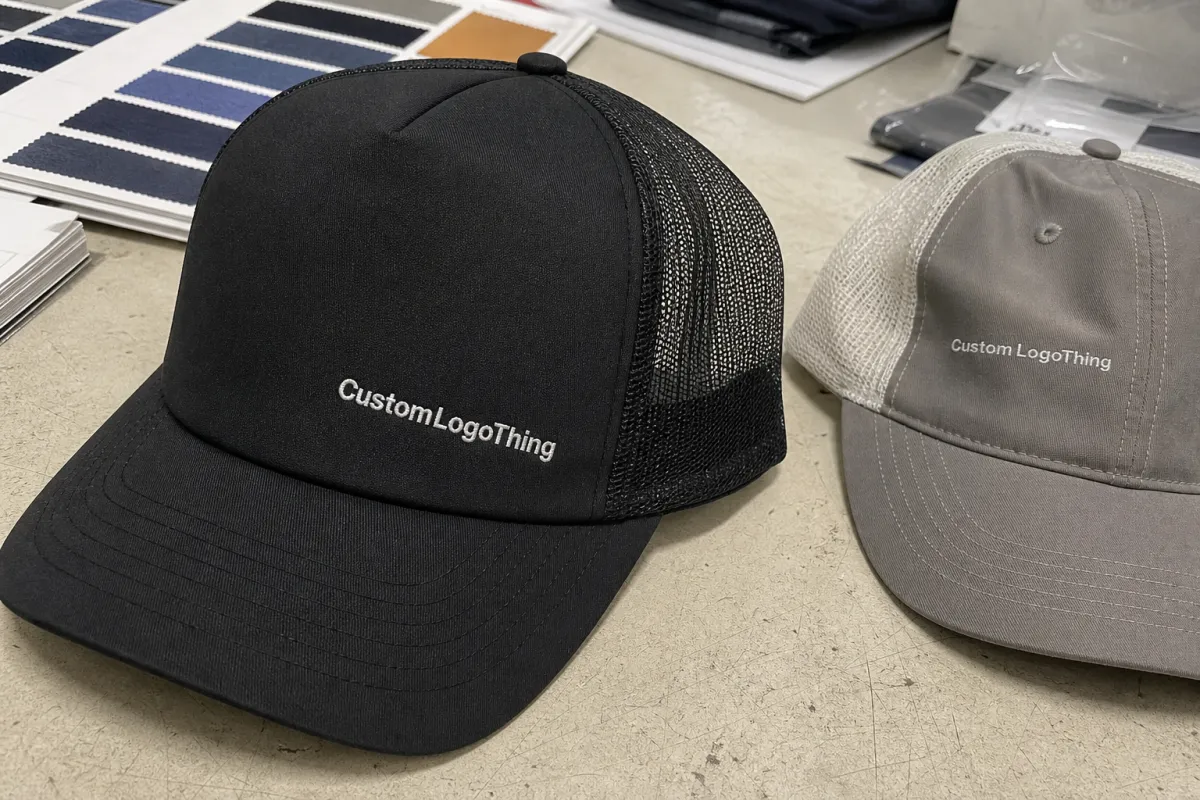
Fitness trucker caps sit in a narrow lane between casual headwear and lightweight sports gear. They borrow the familiar trucker silhouette, but the buyer usually expects more from them than a fashion accessory. Airflow is part of the brief, yet the cap still has a front panel, crown seams, a sweatband, and a brim, and each of those parts can hold heat or moisture in a different way.
The front panel does most of the visual work. If it is too soft, the cap collapses and the logo can look tired before the first wear. If it is too rigid, the cap can feel boxy and sit awkwardly on smaller heads. That balance matters more during movement because the crown shifts when the wearer looks down, bends forward, or tightens the snapback for a more secure fit. A cap that looks clean on a table can behave very differently after thirty minutes of activity.
Mesh also gets misunderstood. Buyers often ask for "more breathable mesh" as if openness alone solves comfort. It helps, but only to a point. Very open mesh improves airflow and can reduce heat buildup, yet it can snag more easily, show wear faster, and look less polished in retail settings. A denser mesh usually gives a better mix of durability, shape, and appearance, especially for programs that need the cap to survive repeated packing, travel, and daily use.
There is also the question of who is wearing it. A cap for a front desk team, a 5K race, and an outdoor coach are not the same order even if they share the same silhouette. The first may need mostly branding impact. The second needs comfort over a few hours. The third needs ventilation, a stable crown, and a sweatband that does not turn irritating after repeated wear.
That is the real value of a fitness Trucker Caps Material guide: it asks what the cap should do after the first impression is gone. If the answer is "stay comfortable, hold shape, and carry the logo cleanly," then the fabric, mesh gauge, and interior finishing deserve real scrutiny.
Fitness Trucker Caps Material Guide: How Fabric, Mesh, and Sweatband Choices Change Performance
The front panel fabric sets the tone for the entire cap. A structured polyester face with a firm backing keeps the crown crisp and gives embroidery a stable surface. Cotton twill feels softer and more familiar, which can be useful in lifestyle fitness lines, but it absorbs moisture differently and tends to lose that sharp, athletic look faster when the cap sees heavy sweat. Foam fronts are common in trucker styling because they hold a bold shape and provide a large branding area, yet thick foam can feel warmer and can limit decoration options.
Material weight matters as much as fiber content. A lighter build can feel airy in hand, but if it is too light, the front loses presence and the brim can seem flimsy in transit. A midweight front panel usually gives a better result for active use because it holds the logo without feeling heavy. On samples, I look for a face that springs back after light compression and does not wrinkle around stitching lines.
Mesh is not just "the breathable part." Yarn thickness, hole size, stretch, and stiffness all change how the cap behaves. A very open mesh lets air pass through quickly, but it can look more casual and can weaken the visual edge of a logo-heavy piece. A tighter mesh improves polish and often wears better over time. For fitness programs, the middle ground is usually best: enough openness to feel cooler, enough structure to keep the cap from collapsing.
The sweatband is where a lot of comfort decisions live. A basic polyester band may be fine for giveaways, but a brushed tricot or soft terry-style band feels better once the wearer starts sweating. The difference is easy to miss if you only inspect the cap for ten seconds. It becomes obvious after a workout, especially if the band is stitched too close to a rough seam or if the foam backing pushes against the forehead.
Closures and crown depth also deserve attention. A snapback is common because it is adjustable and inexpensive, but a shallow crown can ride high and feel unstable on movement. A deeper crown can sit better, though it may take up more room in packaging and create a different silhouette on smaller heads. Brim stiffness matters too. A brim that is too soft can warp in a box or bag; a brim that is too stiff may feel rigid and less sporty.
The sample can look perfect under showroom lighting and still miss the mark once sweat, motion, and a gym bag enter the picture.
From a buying standpoint, the material stack should match the use case. For casual promos, appearance and logo visibility may matter most. For runners, trainers, and outdoor crews, comfort and airflow move to the top. That difference sounds obvious, but it is often where ordering mistakes begin.
Decoration method should be part of the material decision, not an afterthought. Embroidery likes stable faces. Woven patches can handle small text better on soft fronts. Heat-applied graphics need a smooth enough surface to avoid puckering. If the decoration plan is not tied to the fabric choice, the finished cap can end up fighting itself.
Comparing Polyester, Cotton Twill, Foam, and Performance Blends
Polyester is usually the safest sport-focused choice. It is durable, color-consistent, and easy to maintain. It also holds shape well after repeated wear, which is useful when caps are being pulled on and off in busy environments. For embroidered logos, woven patches, and general activewear programs, polyester usually gives the most predictable result.
Cotton twill works better when the brief leans toward a softer hand and a more classic feel. It can look elevated in muted colors or retail collections that want a less overtly promotional look. The tradeoff is moisture behavior. Cotton can hold sweat differently than synthetic options, so it tends to fit casual wear or lifestyle merch better than high-output training use.
Foam-front truckers remain popular because they create a bold profile and a large, clean branding field. They can look strong on shelf and photograph well. The downside is heat. Foam adds structure, but structure comes with less airflow, and the cap can feel warmer during longer sessions. Foam also narrows decoration choices; very dense stitching or heavy artwork can distort the front.
Performance blends and recycled options sit between those extremes. A polyester blend with recycled fibers can feel lighter and more modern while supporting a sustainability brief. That said, "recycled" is not automatically premium. The actual hand feel, density, and finishing still matter. A weak blend can look responsible on the spec sheet and still feel underbuilt in person.
| Material build | Best use case | Strengths | Typical unit cost at 1,000 pcs |
|---|---|---|---|
| Polyester front + mesh back | Gym promos, race kits, team merch | Durable, color-stable, easy to decorate | $2.10-$3.40 |
| Cotton twill + mesh back | Lifestyle fitness retail, casual staff wear | Softer hand feel, classic appearance | $2.35-$3.70 |
| Foam front + mesh back | Bold giveaways, high-visibility branding | Strong shape retention, large print field | $2.60-$4.10 |
| Performance blend or recycled polyester | Premium activewear and sustainability-led brands | Lighter feel, modern finish, better retail presentation | $2.80-$4.60 |
Those figures are not fixed market prices. They move with order size, decoration complexity, raw material availability, and packaging requirements. A small run can sit well above those ranges because setup and sampling are spread over fewer pieces. A larger run drops the unit cost, but it usually needs tighter forecasting and more storage space.
On decoration, the safest rule is simple: the more structured and stable the face, the easier embroidery becomes. If the logo has thin lines or small type, a woven patch may read cleaner than direct stitching on a soft panel. Heat transfers can work too, but the fabric surface must accept them without curling or wrinkling. That is why the fabric and the artwork method need to be judged together.
Cost, Pricing, and Unit Cost Drivers for Custom Caps
Material selection has a direct effect on unit cost, but not always in the way buyers expect. Upgrading from a standard polyester face to a recycled performance blend, a denser mesh, or a softer sweatband usually adds cost in small increments. Those increments are easy to ignore on a sample quote and much harder to ignore across 1,000 or 5,000 units.
Decoration is often the bigger cost lever. A single embroidered logo is simpler than a cap with a patch, a side mark, and a back hit. Woven patches usually cost more than plain embroidery, but they can improve legibility on detailed artwork. Multiple placements also add setup and labor, so the cheapest-looking sample is not always the cheapest finished order.
Packaging pulls in costs that buyers underestimate. Folded packing, individual polybags, custom labels, hangtags, and retail inserts all affect the final number. A simple bulk ship in corrugated cardboard cartons with kraft paper inserts may be enough for event stock. A retail program may want FSC-certified paper stock, recycled paper inserts, or printed cards that align with a brand's sustainability claims. If those claims matter, ask for documentation rather than taking the label at face value.
Freight can shift the math as well. Caps are light, but they are bulky, so carton size matters. A loosely packed order may cost more to ship than buyers expect because the cube is larger than the weight suggests. That is one reason sample approval and packout confirmation should happen before production starts, not after the goods are finished.
As a working range, a basic custom cap order with straightforward decoration might land around $2.00 to $3.50 per unit at larger volumes. Premium fabrics, patches, multiple placements, and retail packaging can push that closer to $4.50 or beyond. Smaller runs often sit above those numbers. The useful question is not whether the quote is cheap; it is whether the build matches the actual use case.
If a supplier proposes biodegradable packaging, ask how the material is meant to be disposed of. If the answer is vague, the claim is not doing much work. The same goes for recycled content. Ask for the content percentage, the component it applies to, and whether the statement covers the cap body, the packaging, or both. The details matter more than the adjective.
Process and Lead Time: From Spec Sheet to Shipment
A clean order starts with a clear brief. The most useful information is usually the least glamorous: target quantity, intended use, preferred fabric, logo method, closure style, color count, and whether the cap should feel sporty, premium, or promotional. If those basics arrive upfront, the quote is tighter and the sample is more likely to match the buyer's expectation.
Sampling is not optional for activewear caps. Swatches only tell part of the story. A built sample shows crown depth, how the front panel breaks, whether the mesh flexes cleanly, and how the sweatband sits against the forehead. Those details are hard to judge from a flat photo. A blank cap can look fine and still wear badly once the decoration is added.
The usual production path is straightforward: material sourcing, cutting, panel assembly, decoration, finishing, inspection, and packout. Each step can add delay if the spec changes. A revised logo position can trigger another sample. A different closure can affect trimming. A fabric replacement can alter the hand feel and stretch the lead time while stock is secured.
For straightforward runs, production often takes about 12 to 18 business days after proof approval. More detailed decoration, specialty fabrics, or back-and-forth revisions can stretch that timeline. Sampling alone may take 5 to 10 business days depending on artwork readiness and response time. If the order has a hard event date, build a cushion. Fastest-case timelines are useful in sales conversations and less useful in real production.
Quality control should be written into the schedule, not assumed. I look for stitch consistency, logo placement, color matching, seam clean-up, brim shape, sweatband comfort, and closure function. On a run of hundreds or thousands of caps, a small defect rate is normal. The question is whether the supplier catches it before shipping or leaves the buyer to find it later.
One practical tip: keep the spec sheet boring. Boring is good. Clear dimensions, color callouts, logo size, fabric preference, and packaging instructions reduce mistakes. The fewer assumptions a production team has to make, the fewer corrections everyone has to chase later.
Step-by-Step Material Selection Checklist for Buyers
Start with the real use case, not the product photo.
- Define the wearer. Gym staff, race participants, retail shoppers, and brand ambassadors do not need the same build.
- Match the climate. Hot and humid locations usually call for lighter fabrics, more open mesh, and a sweatband that feels soft after repeated wear.
- Pick the front panel by branding need. If the logo must sit crisp and centered, choose a structured face with enough stability for embroidery or a patch.
- Check mesh density. Very open mesh gives stronger airflow, but a slightly denser mesh often lasts longer and presents better in photos and retail.
- Confirm decoration compatibility. Embroidery, woven patches, printed appliques, and heat transfers each behave differently on polyester, cotton twill, and foam.
- Test fit and crown depth. Ask for a sample on different head sizes if the cap will be worn all day or during movement.
- Review the inside details. Sweatband softness, seam finish, and closure quality matter more than buyers expect.
- Check packability. If the caps will ship long distances or sit in event bags, make sure the brim and crown recover after compression.
Here is the practical version of that checklist: if the cap is going into a sweaty training environment, prioritize ventilation and comfort over a thick front panel. If the cap is meant to sell at retail, spend a little more on fabric feel, cleaner stitching, and a better logo application. If the cap is a giveaway, keep the spec simple and put the money into solid structure instead of overbuilding the whole piece.
One useful rule: always approve the sample in the exact decoration method you plan to order. An undecorated cap can hide problems that show up immediately once a logo, patch, or transfer is added.
If the buyer is comparing two almost identical options, I usually look at the forehead line first. Does the sweatband sit flat? Does the crown feel balanced? Does the front panel keep a clean curve after handling? Those are small questions, but they separate a piece that gets worn from one that gets tossed into a drawer.
Common Mistakes, Expert Tips, and Next Steps Before Ordering
The biggest mistake is choosing by front-panel appearance alone. A sharp-looking cap can still feel heavy, sweaty, or flimsy when it is worn for training. The second mistake is ignoring mesh density and sweatband quality, because those two details often separate a cap people keep from a cap people leave in the car.
Another common miss is asking for decoration before confirming fabric behavior. That can lead to logos that pucker on a soft front, patches that sit awkwardly on foam, or stitching that crowds the seam line. It looks like a small issue on paper and a much larger issue when the goods arrive.
It also helps to be careful with claims. "Performance" is a broad label. A cap can be called performance-focused and still use a mediocre sweatband, a shallow crown, or a mesh that looks breathable but wears poorly. Ask what the claim actually refers to: the fiber, the construction, the finishing, or the decoration compatibility.
My best advice is to request swatches, a decorated sample, and a plain sample if the budget allows it. Compare them in daylight, under indoor light, and on different head sizes. If the cap is for a brand that cares about sustainability, ask for recycled content documentation and clear notes on packaging components. If packout matters, confirm whether the supplier uses corrugated cardboard master cartons, kraft paper wrap, or retail-ready inserts before the order is locked.
Ask the sample one simple question: would someone still wear this after a workout, or only before the camera starts?
For teams making a buying decision, the cleanest path is usually this: define the use case, narrow the fabric list to two or three options, Request a Quote with decoration and packout details, compare samples, then approve the version that balances breathability, structure, and cost. That process keeps the order grounded in how the cap will actually be used, not just how it looks in a mockup.
If a final shortcut helps, keep this in mind: the best cap is the one that fits the wearer, matches the decoration method, and survives the conditions it is meant to face.
What is the best material for fitness trucker caps in hot weather?
A lightweight polyester or performance blend usually works best because it dries faster and holds shape better during active use. Pair that with breathable mesh and a soft sweatband, since those details often matter more than the front fabric alone.
Are polyester or cotton twill better for fitness trucker caps material choices?
Polyester is usually the stronger choice for sport-focused wear because it is lighter, more consistent, and easier to maintain. Cotton twill can feel softer and more premium, but it may retain moisture more than a synthetic option.
How does mesh density affect fitness trucker caps comfort and durability?
A more open mesh improves airflow, but it may look less structured and can be more prone to snagging. A slightly denser mesh often gives a better balance of durability, shape, and everyday comfort.
What is a typical MOQ and price range for custom fitness trucker caps?
MOQ varies by supplier and decoration method, but smaller runs usually cost more per unit than larger orders. Pricing rises with upgraded fabrics, patches, multiple logo placements, and custom packaging, so it helps to quote the whole build rather than just the cap shell.
What should I send for a faster quote on fitness trucker caps?
Send the target quantity, preferred material, logo files, decoration method, color count, and the intended use case. If you already know the timeline and packaging needs, include those too so the quote is accurate the first time.
Once those details are set, the ordering process becomes less about guesswork and more about making a clean, confident decision that fits the job from day one.


