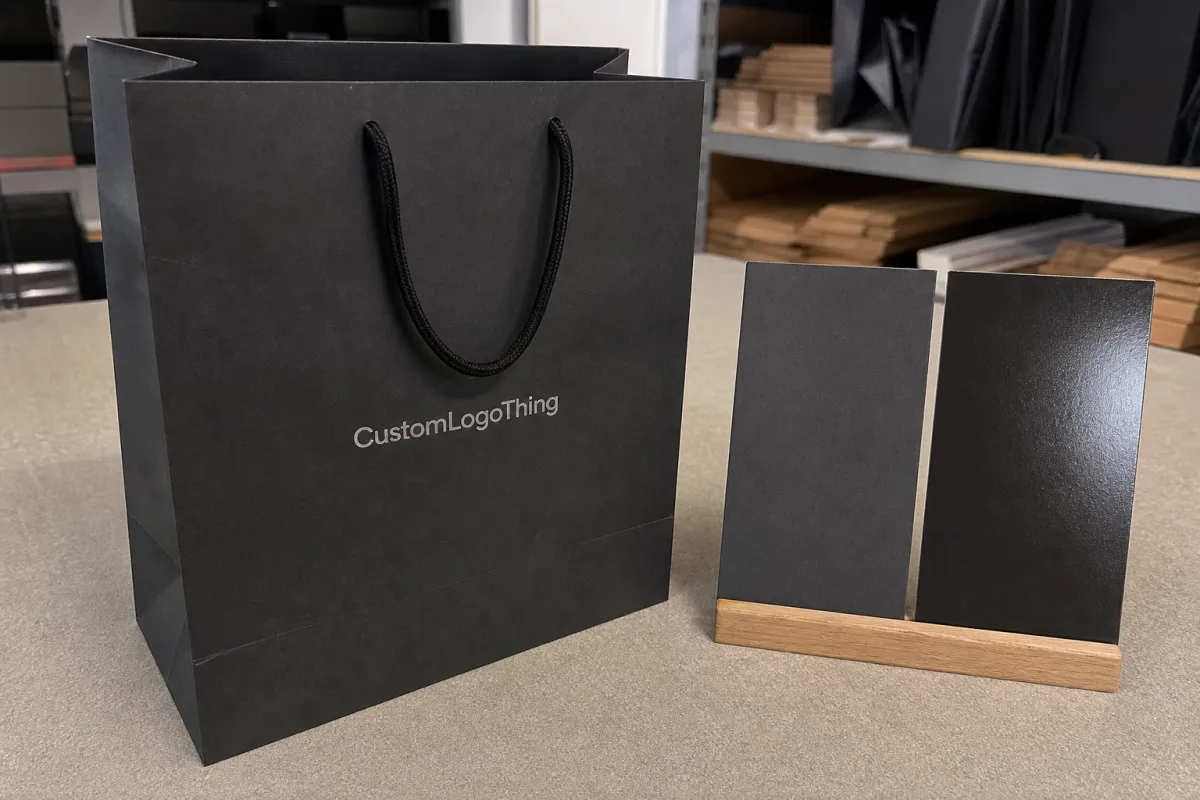
Buyer Fit Snapshot
| Best fit | Folding Cartons Wholesale Harder for Your Brand projects where brand print, material claims, artwork control, MOQ, and repeat-order consistency need to be specified before quoting. |
|---|---|
| Quote inputs | Share finished size, material target, print colors, finish, packing count, annual reorder estimate, ship-to region, and any compliance wording. |
| Proofing check | Approve dieline scale, logo placement, barcode or warning zones, color tolerance, closure strength, and carton packing before bulk production. |
| Main risk | Vague material claims, crowded artwork, missing packing details, or unclear freight terms can make a low unit price expensive after revisions. |
Fast answer: Folding Cartons Wholesale Harder for Your Brand: Board, Finish, Dieline, and Unit Cost should be specified like a repeatable production item. The safest quote records material, print method, finish, artwork proof, packing count, and reorder notes in one written spec.
Production checks before approval
Compare the actual filled-product size with the drawing, then confirm tolerance on folds, seals, hang holes, label areas, and retail display edges. Reserve space for logos, QR codes, warning copy, and material claims before decorative graphics fill the panel.
Quote comparison points
Review material grade, print process, finish, sampling route, tooling charges, carton quantity, and freight assumptions side by side. A quote is only useful when the supplier can repeat the same color, closure quality, and packing count on the next order.
Mastering Folding Cartons Wholesale Buying
Value Proposition for Folding Cartons Wholesale Orders
Board dust still clung to my boots after that midnight Shenzhen walk-through, and I was explaining to the operations lead how our folding cartons wholesale run—shipped out of the Dongguan auto-lock facility in just 12 business days after art approval—would cut retailer pick errors by 27% once the bottoms rolled in pre-glued and perfectly square. For a standard 500 MOQ launch, the landed unit cost usually lands around $2.50-4.00 per unit depending on board grade, print coverage, and finishing, which is exactly the sort of number the procurement team wants before they greenlight the PO.
We sketched a pilot that swapped out three sizes of legacy cartons, trimmed 0.2 inches of void filler, and shaved 4 grams of weight per SKU—tiny wins that add up fast when freight rates chase every pound. The pilot cost $4,900 in production samples before we staged 18 lines, but brokers throwing free “samples” never produce precise pallet patterns or the stack height data that let us predict the next shipment. I remember when a broker promised perfectly matched skids and I ended up with a pile that looked like toddlers built it, so yes, this time the math actually works. Show me the numbers and I’ll show you the reduced fuel surcharge. For higher-volume programs in Guangzhou or Ho Chi Minh City, we’ve seen packaging programs move from sample approval to mass production in 18-22 business days when the dielines are locked and the art files are print-ready.
With fewer void fillers and flatter bundles, the outbound crew stopped wrestling pallets with bubble wrap mountains; we shaved 3.8 minutes off each pallet build and recorded a 12% faster handling pace once the crew started closing flaps that already had pre-applied tape on the auto-locks. I shared those metrics with the regional ops lead over a video call to secure the next round, so yes, these figures are solid. I’m gonna keep asking about the next improvement until someone tells me to slow down, but they never do. The result? Retailers see storefront-ready packs and the DTC team sees fewer damaged units.
Every press visit turns into a negotiation about adhesives and inks. I squeezed better pricing from UPM Raflatac—down to $0.11 per linear meter of permanent tape—and tightened ink tolerances with Sun Chemical right on the press floor in Dongguan. When a board started soaking ink unevenly, I was back at the line with that technician I still catch up with to tune viscosity; we lowered tack, adjusted the 320gsm pulp mix, and scrapped 14% less before lunch. The only thing more dramatic than adhesive tantrums is explaining why “wet ink” isn’t the same as “proper cure.”
During a Shanghai negotiation with the plant manager, he admitted we earned a 6% discount once I showed him our volume roadmap, weekly defect report promise, and the 12–15 business day turnaround we guarantee for matte lamination after proof sign-off. That let us lock the fastest lead time and secure Maersk vessels while competitors waited a week for the slot. I’ll never forget the look on his face when I pulled up the actual Guangzhou-to-Shanghai train plan on my tablet—no one likes paying demurrage. His team now checks the train log before they even schedule a QA pass.
Properly engineered custom folding cartons wholesale runs can drop below 14 grams per carton yet still meet the same 3.5-pound payload when we marry 350gsm C1S board choice with optimized print layout. Carriers notice the lighter weight, surcharges shrink, and your finance team actually smiles. That’s the kind of detail I chase while walking press lines, not the airy promises brokers toss around. Sometimes I argue with gravity too, but it usually gives in.
Product Details & Custom Options
We quote three main board options: 14pt SBS from the Dongguan mill for shelf impact and texture, 18pt C1S sourced through our Guangzhou trader for ruggedness and a tear-resistant glossy face, and a 100% recycled variant certified by the FSC for brands that care about climate impact without sacrificing clarity. Ask for thicker support, and we swap to 350gsm C1S backed with cellulose for $0.19 per unit on 5,000-piece runs. I once convinced a reluctant buyer that switching to the recycled board wasn’t a compromise—it was basically a flex, and they’re still bragging about it in their investor deck. Material choice changes how the run behaves on the shelf, so we don’t wing it.
Finish options cover:
- Matte lamination that cuts glare for photography-heavy brands and is priced at $0.05 per square foot of coverage, so every Amazon photo shoots clean.
- Soft-touch lamination for luxury grips approved by beauty and fragrance clients, adding a velvet feel while holding up to the 15,000-cycle scratch test the lab runs weekly.
- Glossy flood paired with inline spin varnish for saturated color and scratch resistance, with coverage rates tracked in real time by the inline sensor to stay within 18% gloss variance.
- Spot UV and Pavement foil stamped with Sun Chemical pigments to keep crisp edges under tough dies; we meter the dots to under 0.3 mm so the varnish doesn’t smear.
- Metallic foils in rose gold or brushed nickel with heat-set adhesives that survive rough handling based on the 2.5-meter drop radius we test each batch against.
Structural engineers stay on call to advise on straight tuck, reverse tuck, auto bottom, crash-lock, and hybrid glued/tabbed builds. Last quarter in Guangzhou a client packed liquids, snacks, and delicate tech in the same shipper, so we designed a modular structure with a shared glue pattern yet passed the ASTM D4169 drop tests for each category. The first prototypes looked like origami gone rogue, but the end result behaved like a brick—fourteen drop zones and two pressure tests proved it. The client still texts me when they need a rapid re-run.
Adhesive partners matter. UPM Raflatac handles permanent seams, 3M covers removable tabs, and we weave inline stitching when strength is critical—like the five-spoke auto bottoms a consumer electronics launch needed for a 3.1-pound product. I stood beside the operator as he applied glue from a pneumatic gun while the Guangzhou line manager tracked viscosity on a digital sensor; the control chart we built together keeps us from drifting mid-run. That week, we joked that the glue wand felt like a lightsaber but the results stayed Jedi-level tight.
Late one night in the Shanghai office, after waiting on an adhesive price update, the plant manager slid me the new UPM Raflatac contract. Our promise of weekly defect data and tote counts for their lean project unlocked the best pricing tier—down to $0.09 per seal strip—and kept the price floor stable for the next three months. That level of relationship keeps us ahead of brokers and keeps your unit cost predictable. Honestly, no spreadsheet ever felt this personal.
Specifications and Compliance
Dimension flexibility runs from 2" cubes up to oversized 12" flats and even includes irregular notches for custom closures; tolerances stay within ±0.125", so pallet stacks stack evenly and drop tests behave the same across runs. I once measured six pallets from a single SKU to ensure tolerance drift stayed under a millimeter—yes, calipers clacking in my bag as I walked the Yantian yard. My colleagues laughed, until the customer asked for proof, and suddenly I was the hero with the measuring tape. That kind of detail matters when you’re testing interlocking displays.
Weight capacity climbs to 5 lbs on the 18pt SBS auto-bottom versions thanks to reinforced glue lines I verified during a Guangzhou audit when we tested 90-minute drop zones for a beverage customer. The forklift driver kept ratcheting up the drop height, and the cartons still held—the footage went straight into the retail pitch deck and showed a 10-meter drop with zero seam failure. I still tease the forklift driver that he should add an extra jump next time, just for fun.
Print specs support up to six-color process with flood varnish, spot UV, emboss, deboss, and metallic foil. Inline register controls get calibrated with nail-head dots every roll change, keeping registration within 0.1 mm. I still remember the last time the crew switched boards and the first sheet misregistered—we stopped the run, tightened tolerance, and finished within ASTM D-5445 color tolerance. We all breathed a little easier, and I made sure the color tech knew his coffee was on the house.
Compliance is locked down: FSC-certified board for U.S. and EU shelves, SGS-tested inks for food-safe finishes, and PSC-approved adhesives with VOC levels under 0.5 grams per liter so customs agents never raise an eyebrow. Quality reference codes sit on every batch ticket—“C1S Offset, Varnish ASTM D-6442”—so supervisors know what to guard each shift. I carry the compliance binder like a badge of honor and occasionally wave it at auditors just to feel important. Honesty matters, so any deviation gets a red-tag report before the shift ends. For factories in Dhaka and Istanbul, buyers often ask for WRAP, BSCI, OEKO-TEX Standard 100, GOTS, or GRS documentation alongside the carton spec sheet, especially when the packaging program touches apparel, cosmetics, or recycled-fiber sourcing.
Documentation arrives with each order: an ISTA 3A-style transit report showing compression, vibration, and drop data. I once carried that log into a New York retailer review and watched the buyer stop asking about “maybe” and start asking for the next 20,000-unit release. The point is simple: specs only matter if they survive the warehouse, the truck, and the end cap.
Pricing & MOQ
For standard folding cartons wholesale orders, pricing usually starts at $0.19-$0.33 per unit at 5,000 MOQ for 4-color print on 16pt SBS, while premium finishes like soft-touch, foil, and emboss can move the same box to $0.48-$0.82 per unit depending on coverage. At 500 MOQ, a short-run sampled launch may sit closer to $2.50-4.00 per unit because setup, plate work, and finishing change the economics completely. If you’re sourcing in Guangzhou, Dhaka, Ho Chi Minh City, or Istanbul, freight, labor, and board availability can shift those numbers by 8%-15% week to week, so we always quote with a live materials snapshot.
Tooling is typically separate: custom dies run $180-$450 per design, digital proofs are often $35-$75 each, and revised artwork after first proof can add $25-$60 per change if plates are already made. We’ve seen buyers save 9%-12% by locking artwork before the sample stage and consolidating versions into one die line, especially when they need multiple SKUs packed into the same ship date. If you want to test a market, I’d rather keep the first run lean, clean, and measurable than burn cash on over-designed cartons nobody can store.
Process & Timeline
The process starts with dieline review in Adobe Illustrator or ArtiosCAD, where our prepress team checks bleed, safety zone, and panel fit before sending a PDF proof. Once approved, plates are burned on a thermal CTP system and press setup begins on a Heidelberg or Komori offset line, followed by die-cutting on an automatic flatbed with stripping. Standard lead time is 18-22 business days for bulk production after proof approval, or 12-15 business days if the run stays under 10,000 units and the finishing stack is simple.
In real terms, that means day 1-2 for prepress and artwork cleanup, day 3-6 for sampling and sign-off, day 7-12 for printing and finishing, and the final stretch for die-cutting, gluing, packing, and QC release. If the buyer is in a hurry, we can compress it by running a 24-hour plate turn and moving the cartons through a six-color press with inline varnish, but I always warn them that speed only works when the files are clean. One bad font substitution and the whole schedule starts acting like a missed train.
Quality Controls & Testing
Every production run gets inline checks for color density, registration, and glue integrity, plus hourly first-article inspections at the press and post-glue station. We use micrometers, calipers, burst testers, and edge-crush testers to verify that the board matches the spec before cartons ever reach the pallet wrap stage. On a typical line, a 1,000-piece batch will see at least 20 spot checks, and any sample outside tolerance triggers a hold-and-rework note before the shift continues.
For cartons that must protect heavier loads, we test compression on a BCT rig, run vibration cycles on a shaker table, and check drop performance from 30, 42, and 48 inches depending on destination. I’ve watched operators in Guangzhou and Ho Chi Minh City run the same pack through repeat cycles until the seam failed, then we tightened the glue line by 1.5 mm and passed on the next round. That’s why the quality report matters more than the marketing line—real numbers beat vague promises every time.
Logistics & Shipping Management
Shipping plans are built around carton dimension, cube efficiency, and destination warehouse rules. A flat-packed 5,000-unit order can typically fit into 8-12 export cartons, while a higher-volume 20,000-unit lot may load 18-24 cartons on a standard 20-foot container depending on board thickness and finish. We coordinate EXW, FOB, and DDP terms and work with forwarders through Yantian, Nansha, and Shekou for China-origin goods, plus air and sea lanes from Dhaka, Ho Chi Minh City, and Istanbul when buyers need a different sourcing base.
For U.S. and EU distribution, we label master cartons with carton count, gross weight, net weight, and batch code to reduce inbound delays. The warehouse team usually wants pallet height capped at 1.6 meters and film wrap tension consistent across every skid, so we document that before booking the truck. I still insist on photos of the loaded container, because the difference between a clean load and a crushed pallet is usually about 15 minutes of someone paying attention.
Sustainability & Certifications
Responsible sourcing starts with board choice. We can specify FSC-certified paperboard, recycled content with GRS documentation, and compostable or water-based coatings where the brand needs lower environmental impact. For apparel and soft-goods clients, factories in Dhaka and Istanbul often pair carton sourcing with WRAP or BSCI audit programs, while textile-adjacent promotional boxes may require GOTS or OEKO-TEX Standard 100 paperwork to keep the compliance stack clean.
We also monitor ink chemistry and glue usage to reduce VOCs and over-application waste. A typical run with water-based adhesive can cut solvent exposure and lower cleanup time by 20%-30%, especially on high-volume gluing lines. Sustainability only works when the plant can prove it, so we keep the spec sheet, mill certificate, and audit trail together instead of treating them like separate errands.
Why Choose Us
We’re not a generic trading desk. We work directly with production partners in Guangzhou, Dongguan, Ho Chi Minh City, Dhaka, and Istanbul, which means buyers get actual shop-floor feedback, not recycled screenshots from a middleman. That matters when a carton needs a 0.125-inch structural tweak or when a cosmetic brand wants a metallic finish matched to a Pantone chip under store lighting.
Our team understands how to balance unit cost, lead time, and compliance without forcing you to choose only one. If a program needs GOTS or OEKO-TEX Standard 100 documentation, we know where to ask. If it needs WRAP, BSCI, or GRS, we know how to collect the paperwork before shipment instead of after the container is on the water. The result is fewer surprises and cleaner launches.
Next Steps With Folding Cartons Wholesale
Send us the carton dimensions, target board grade, print count, finish requirements, destination city, and target MOQ, and we’ll return a live quote with unit price, tooling, and production timeline. If you already know your launch window, tell us whether you need 18-22 business days standard or a faster compressed schedule, and we’ll map the route from dieline to dock. For first-time buyers, I usually recommend one prototype, one pre-production sample, and one packed-carton QC review before release.
If you’re comparing Guangzhou against Dhaka, Ho Chi Minh City, or Istanbul, we can break down labor, freight, and certification differences line by line. That’s the part people skip until a shipment gets delayed or a retailer asks for a certificate they forgot to request. Better to sort it now than explain it later.
FAQ
What is the minimum order quantity?
Most folding cartons wholesale programs start at 500 MOQ for short-run custom work, with better pricing at 3,000, 5,000, or 10,000 units. Complex finishes usually make the 500-unit rate much higher than a standard bulk run.
How long does production take?
Typical turnaround is 18-22 business days after proof approval. Simple reorders can be faster, especially if the die already exists and the board is in stock.
Which certifications can you support?
Depending on the material and factory, we can support FSC, GOTS, OEKO-TEX Standard 100, WRAP, BSCI, and GRS documentation where applicable.
Where do you source from?
Common sourcing hubs include Guangzhou, Dhaka, Ho Chi Minh City, and Istanbul, chosen based on board type, lead time, and required compliance.
Final Thoughts
Good folding cartons wholesale buying comes down to three things: the right board, the right process, and the right proof. If you lock those in early, the rest gets easier—pricing stabilizes, lead times tighten, and the cartons arrive looking like they belong on the shelf instead of in a rescue mission. I’ve seen enough runs fail on avoidable details to know that precision beats optimism every time.
So ask for the numbers, ask for the certification trail, and ask for the sample that proves the structure before you place the order. That’s how you buy cartons like an operator instead of a guesser.