Food folding cartons Bulk Order Pricing looks neat right up until the spec sheet starts arguing back. The first quote can feel excellent, even suspiciously excellent, and then the board grade changes, the coating changes, the size changes, and suddenly the number no longer belongs to the same job. I have watched that happen more times than I can count. A buyer thinks they are comparing three suppliers; in reality, they are comparing three different versions of the carton.
The cheap quote fails later for one simple reason: packaging is a system, not a single line item. Change the dieline by a hair and the sheet yield shifts. Change the finish and the press time shifts. Change the case pack and freight math shifts too. That is why food folding cartons bulk order projects reward discipline, not impulse. Lock the structure first, then ask for price. Otherwise the quote is kind of fiction wearing a spreadsheet.
The real price does not exist until the size, board, finish, and packing details are fixed.
Food Folding Cartons Bulk Order: Why the Cheap Quote Fails Later
Food folding cartons bulk order requests often begin with a deceptively simple question: "How much per unit?" That sounds efficient. It is not. A supplier can answer with a tidy figure, but without dimensions, board target, print coverage, and packing method, the quote is only pricing a guess. Then the buyer sends the measurements, the graphics expand, the window appears, and the original number falls apart.
The cost drivers are not mysterious. Board grade changes cost. Carton size changes cost. Ink coverage changes cost. Window tooling changes cost. Finish selection changes cost. A straight tuck carton on 18pt SBS with one color is not remotely the same food folding cartons bulk order as an auto-bottom carton with full-bleed graphics, a gloss aqueous coat, and a die-cut window. People compare those two side by side all the time, which is a little like comparing a hatchback to a delivery truck because both have wheels.
Even a small dimensional change can matter. A one-eighth-inch difference in depth may alter how the cartons imposition on press, which changes waste and unit cost. It can also affect how many cartons fit in a case or on a pallet. I have seen a tiny structural revision add a freight penalty that erased the savings from a lower board spec. That is why food folding cartons bulk order work needs the full picture before anyone starts chasing the lowest number.
Print coverage creates another place where estimates drift. A carton with a small logo and light copy may look simple, but once the design becomes a full-wrap block of color, the job absorbs more ink, more setup, and more prepress attention. Dry time and scuff resistance start to matter too, especially when cartons are stacked flat and handled hard before filling. Nobody notices those details on a mockup. They notice them when the cartons show up with rubbed corners.
The practical rule is blunt: send a real spec if you want a real quote. Size, board, print sides, finish, product weight, case pack, and destination all belong in the first request. Food folding cartons bulk order projects do not fail because cartons are complicated. They fail because the brief was vague and everyone pretended it was complete.
- Board grade can move price faster than most buyers expect.
- Size and nesting affect sheet yield, waste, and press efficiency.
- Finish complexity adds setup work and can slow throughput.
- Case pack shapes shipping efficiency and warehouse handling.
- Artwork coverage can push a simple carton into a higher print tier.
If you want a wider view of volume packaging terms, our Wholesale Programs page shows how tiered pricing usually behaves. If the proofing stage is what keeps snagging the order, the FAQ covers the questions that tend to stall approvals.
What Buyers Get From Custom Food Folding Cartons
Custom food folding cartons do several jobs at once, and that is why buyers keep coming back to them. They protect the product, present a retail face, print cleanly, and store flat before filling. That combination often beats heavier packaging formats on cost and space. A food folding cartons bulk order can support bakery items, frozen foods, snacks, deli products, dry goods, and multipacks without turning procurement into a spreadsheet crime scene.
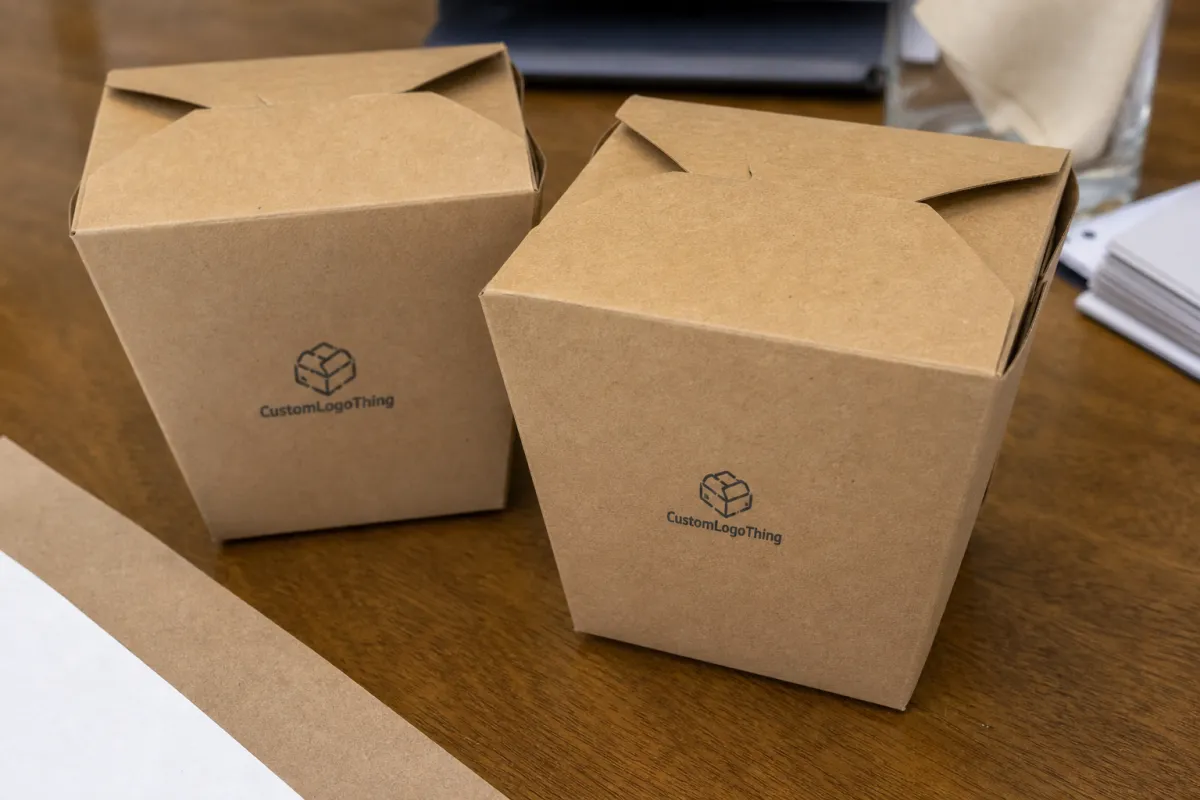
The carton styles that show up most often are pretty consistent. Straight tuck and reverse tuck work well for lightweight items and standard retail presentation. Auto-bottom and snap-lock make more sense when the product is heavier or the packing line needs a faster fold-and-fill routine. Sleeve formats fit multipacks and brands that want a simple outer shell with an insert, tray, or windowed inner pack. Food folding cartons bulk order decisions usually start here because the structure drives everything else.
Bakery items are a natural fit. Snack bars and confectionery follow close behind. Dry goods, tea, seasoning packs, cereal add-ons, frozen items, and prepared deli products all work well when the goal is retail presence without the weight of rigid packaging. A food folding cartons bulk order also works for club packs and shelf-ready displays where stackability matters. Flat shipment, fast filling, and a clean shelf face are hard to beat. That is the quiet reason folding cartons keep winning against bulkier options.
Coated board and uncoated board solve different problems. Coated stock gives sharper print, brighter color, and better surface protection. Uncoated or natural kraft-style stock creates a more earthy look, but it handles ink differently and usually shows moisture sooner. Oily, chilled, or frozen products need a separate conversation about grease resistance and moisture resistance. A window can improve shelf appeal, but it adds die-cut complexity and usually adds cost. No magic there, just tradeoffs.
Compared with corrugated or rigid packaging, folding cartons usually win on presentation and storage efficiency. Corrugated is stronger for shipping protection. Rigid packaging makes sense when premium hand feel matters more than flat-packing efficiency. Retail-facing products that are not getting crushed in transit often fit food folding cartons bulk order economics better than those alternatives. Buyers like the balance, and line operators usually do too, because these cartons stack cleanly and run quickly.
| Carton style | Best use | Cost signal | MOQ pressure | Notes |
|---|---|---|---|---|
| Straight tuck | Light retail foods, dry goods, samples | Lowest setup and print cost | Lower | Good for simple food folding cartons bulk order runs |
| Reverse tuck | General retail food items | Low to moderate | Lower | Common, easy to source, easy to fill |
| Auto-bottom | Heavier products, faster packing lines | Moderate | Medium | Assembly speed can justify the higher unit cost |
| Snap-lock | Bulkier products, display cartons | Moderate to higher | Medium | Better bottom strength than basic tuck styles |
| Sleeve or window style | Premium shelf appeal, multipacks | Higher | Medium to higher | Great on shelf, but the structure adds cost |
For transit testing and paperboard sourcing, buyers often point to ISTA and FSC. Those references do not replace a spec sheet, but they help align a food folding cartons bulk order with distribution realities and sustainability claims customers will ask about later.
Food Folding Cartons Bulk Order Specifications That Matter
This is the section worth keeping close. A food folding cartons bulk order needs a clean spec before any price becomes meaningful. Loose input creates loose output. That is not theory; it is the main reason jobs stall in prepress and procurement. The useful details are not hard to gather. They just need to be collected before everyone starts acting as if the carton is already approved.
Start with finished size. Give the outside dimensions, not a guess based on a carton you saw on a shelf. Add product weight and note whether the item is fragile, oily, chilled, or filled while hot. Then define the board caliper or stock target. Common food folding cartons bulk order jobs use paperboard in the 14pt to 24pt range, with 18pt and 24pt showing up often for retail cartons that need more body. Dry goods may be fine on lighter stock. Heavier or premium retail jobs may need more.
Closure style comes next. Straight tuck, reverse tuck, auto-bottom, snap-lock, or sleeve all affect dieline behavior and assembly time. Print sides matter just as much. One side, two sides, full wrap, inside print, and special mark placement all affect cost. Count the cartons per case and say whether you want flat-packed cartons or folded and bundled units. In a food folding cartons bulk order, those packing details affect freight and warehouse handling, which means they affect the budget.
Food-related requirements deserve their own line. Ask for grease resistance if the product is oily. Ask for moisture resistance if the cartons will face humidity or cold-chain storage. Ask for odor-neutral stock if the product is sensitive. If your market needs food-contact documentation, say that clearly. Some buyers need direct or indirect food contact support, while others only need packaging that sits outside the primary food barrier. Assuming the supplier will infer all of that is an expensive habit.
Artwork and finish should be written in plain language. CMYK or spot colors? Matte, gloss, or soft-touch? Foil, embossing, or debossing? Clear window or no window? A clear window can lift shelf appeal, but it adds tooling and often slows production. A soft-touch finish looks premium, yet it can increase unit cost and sometimes creates scuff risk when cartons are handled hard in transit. Food folding cartons Bulk Order Pricing shifts quickly once premium finishes enter the conversation.
Dieline tolerance is another item buyers often forget. Tight-fit cartons leave very little room for error, and a millimeter or two can matter. If the board warps or the fold sequence is off, the carton may not close correctly. That is why prepress needs the artwork file in the right format, with bleed, safe area, and accurate panel mapping. For food folding cartons bulk order work, a pretty render is not enough. The file has to fold properly.
Use this basic spec sheet format if you want faster quoting and fewer correction rounds:
- Finished carton size: length, width, depth, and any critical internal clearance.
- Product details: weight, pack count, fragility, grease risk, and storage condition.
- Board preference: SBS, CCNB, kraft, or a specific caliper range.
- Print plan: CMYK, spot colors, inside print, and coverage level.
- Finish plan: matte, gloss, aqueous, foil, emboss, window, or soft-touch.
- Case pack: cartons per case, flat pack or folded bundle, and pallet preference.
- Ship-to destination: postal code or port so freight is not guessed.
That format feels simple because it is simple. Most food folding cartons bulk order delays come from one missing line item. One buyer forgets print sides. Another forgets board preference. Someone approves a proof and then asks for a window. Each change burns time and money. A clean spec does not make the carton cheaper by magic. It just stops the quote from pretending.
Food Folding Cartons Bulk Order Pricing, MOQ, and Unit Cost
Food folding cartons Bulk Order Pricing follows quantity, board grade, carton size, print complexity, and finish choices. Carton geometry matters too, because a structure that nests efficiently on press generates less waste than a custom shape that fights the layout. Buyers often stare at unit price and ignore the rest. That is the wrong habit. Landed cost is the number that actually pays the bills.
Small food folding cartons bulk order runs can start at surprisingly low minimums when the structure is plain, the board is common, and the print is simple. Add windows, heavy coverage, special finishes, or a more complex lock and the minimum usually rises. There is no single MOQ that fits every carton. A simple reverse tuck with one color is not the same job as a premium sleeve with foil and a die-cut window. Pretending the two are equivalent helps no one.
Buyers can use the ranges below as planning guides rather than promises:
- Simple retail cartons: often 500-1,000 units for a first run if the design is standard and the print is basic.
- Standard branded cartons: often 2,500-5,000 units when the job includes full-color printing and a common board stock.
- Premium cartons: often 5,000 units or more if you want foil, embossing, windows, or a specialty coating.
That is why food folding cartons Bulk Order Quotes should be broken into sensible parts. Ask for sample cost, production cost, setup or tooling, and freight. Sample cost may be small or credited later, depending on supplier policy. Production cost covers the cartons. Setup covers plate, die, and press preparation. Freight sits apart from all of that, and on a bulky carton job it can matter more than people expect. A quote that hides freight is not better. It is just quieter.
The easiest savings usually come from standardizing the carton size, trimming the number of colors, choosing a common board stock, and selecting a finish that looks good without drifting into luxury territory. A matte aqueous coating can deliver a polished look without the price jump that comes with heavier specialty effects. If the brand does not need foil, do not buy foil for the mood board. That is how food folding cartons bulk order budgets get inflated for no practical reason.
Unit cost also changes with volume. Larger run counts often reduce the per-unit price more efficiently than any cosmetic tweak because setup costs spread across more cartons. That is why buyers sometimes save more by ordering one larger lot than by placing two smaller rush orders later. The catch is storage. If the warehouse can handle the cartons and shelf life gives you room, the better tier is usually the smarter move. If storage is tight, the math changes. It always does.
| Price bucket | Typical build | What raises cost | Buyer note |
|---|---|---|---|
| Lower | Basic tuck carton, one to two colors, common board | Extra colors, high coverage, custom size | Good starting point for a food folding cartons bulk order |
| Mid | Full-color retail carton with aqueous coating | Window, special die shape, premium board | Usually the best balance of appearance and cost |
| Higher | Foil, emboss, soft-touch, window, specialty board | Multiple finishes, complex structure, smaller quantity | Looks strong on shelf, but the invoice will show it |
There is a gap between quote price and landed price, and that gap matters. A food folding cartons bulk order may look affordable until freight, palletization, and warehouse handling are added. If the cartons arrive flat but require labor to bundle or fold, that labor belongs in the real cost picture. Good buyers compare total cost per packed unit, not just carton cost per thousand. That habit prevents arguments later.
A slightly higher unit cost can be worth it if it reduces damage, improves line speed, or avoids artwork revisions. That is not marketing language. It is what production tends to prove. The cheapest line item is not always the problem. Sometimes the carton that looked inexpensive ends up consuming time on the filling line, which is a much more expensive place to discover a mistake.
Food Folding Cartons Bulk Order Process and Timeline
A food folding cartons bulk order follows a familiar path, and the timeline stays sane only when the buyer answers questions quickly. The sequence usually runs inquiry, spec review, quote, proof, sample or approval sample, production, inspection, and shipping. That sounds like a lot because manufacturing is a lot. A carton is not a vending machine transaction.
Clear quotes often come back in 1-2 business days if the spec sheet is complete. A job that needs structural review, a custom dieline, or a second pricing option usually takes longer. Proofing often needs another 1-3 business days once artwork is final. A physical sample can add several more days depending on whether the request calls for a digital mockup, a structural sample, or a printed prototype. Standard food folding cartons bulk order production commonly runs 10-20 business days after approval, while special finishes and complex structures can stretch the window.
The delays that hurt most are familiar: missing dielines, artwork in the wrong format, late finish changes, size tweaks after approval, and sample revisions because the closure is too tight. Buyers rarely enjoy hearing that each delay has a source, but it does. Most of the time, the source is avoidable. If the goal is a faster food folding cartons bulk order, the strongest move is to deliver the complete spec up front and keep revisions under control.
Some changes can be rushed. Others cannot. A copy edit may be easy. A structural change is another matter. Switching from reverse tuck to auto-bottom changes folding behavior and can affect tooling. Adding a window introduces another process step. Changing from matte to soft-touch can alter drying and post-press handling. A reliable supplier should tell you what is practical and what is wishful thinking. If someone promises everything instantly, they are either guessing or overselling. Neither helps.
The schedule also needs room for inspection and shipping. Freight is not production, and buyers sometimes forget the distinction. If the cartons are traveling cross-country or moving by ocean freight, transit time should be planned separately. For fragile or high-value food folding cartons bulk order runs, asking about transit testing or case-pack validation is smart. That is where standards like ISTA matter. They do not make a carton prettier. They help keep cartons from arriving crushed.
Repeat orders should be set up before inventory starts running thin. A reorder point based on actual monthly consumption is better than a panic email sent with three days of stock left. If a program burns through 30,000 cartons a month, the reorder conversation should start while enough stock remains for production and freight to happen comfortably. Otherwise customer service ends up doing emergency math, and emergency math is expensive. Food folding cartons bulk order planning should not be driven by desperation.
- Fastest path: send finished size, board preference, artwork, quantity, and ship-to details in one message.
- Best proofing step: approve structure first, then color, then finish, instead of changing everything at once.
- Best reorder habit: keep a simple inventory trigger so the next lot starts before the last pallet disappears.
- Best timeline control: decide early whether the job needs windows, foil, or a premium coating.
Why Buyers Trust Us for Food Folding Cartons Bulk Order
Buyers trust a packaging supplier for one reason more than any other: fewer surprises. Not louder promises. Fewer surprises. A food folding cartons bulk order touches cost, shelf appeal, line speed, and distribution, so hiding behind vague language does everyone a disservice. When a supplier understands structure, print consistency, and food-packaging requirements, the buying process gets easier. When they do not, the buyer pays for the learning curve.
A serious supplier should communicate clearly when a spec changes, warn early when a board choice lifts cost, and push back when a finish is too expensive for the volume. Sample support matters too, especially when the structure is new or the fit is tight. Tolerance control matters because the cartons still have to fold correctly and avoid bulging corners. Those are not perks. They are the baseline for a food folding cartons bulk order that has to survive actual production.
I would rather hear a supplier say, "This carton will run better on a standard board and a matte aqueous finish," than watch them nod through an overdesigned spec that causes problems later. A weak quote is easy to write. A useful quote takes judgment. Buyers notice the difference quickly. If the supplier can compare budget, shelf impact, and delivery speed without burying the conversation in sales language, that is a good sign.
Structural practicality matters just as much as print quality. A carton can look strong on a screen and still fold badly, ship badly, or pack badly. That is why tolerance control matters, and why sample review matters, and why a food folding cartons bulk order should never be treated like a generic print job. A packaging buyer is not paying for paper alone. The buyer is paying for function, consistency, and a finished carton that does not create extra labor.
The best projects start with plain questions: What does the product weigh? How will it be filled? What shelf does it sit on? Does the carton need a window? Does it need a food-contact statement? Will it survive cold storage? Those questions are not formalities. They separate a carton that supports the product from a carton that only looks good in a mockup.
For buyers comparing multiple vendors, the clearest signal is how a supplier handles tradeoffs. A good partner will say where a higher price buys real value and where it does not. They will explain why a food folding cartons bulk order can get cheaper with a standard size, or more expensive because of a specialty finish. That kind of candor saves time. Fancy words do not build cartons. Clear decisions do.
Next Steps for a Food Folding Cartons Bulk Order
If you are ready to move, send the essentials in one packet: finished dimensions, product weight, artwork file, quantity, finish preference, board preference, and ship-to zip code or destination port. That is the fastest way to get a real food folding cartons bulk order quote instead of a placeholder. If you already have a dieline, include it. If not, provide the product measurements and a photo of the packed item so the carton can be built correctly.
Ask for at least two pricing options. One should be the cost-conscious build. The other should be the upgraded version so you can compare unit cost against shelf impact and line speed. That comparison matters because some changes are worth the money and some are not. A food folding cartons bulk order can often be improved with a simpler board choice, a smaller print palette, or a coating that still looks clean under retail lighting.
Request a digital proof before production. If the structure is new, ask for a physical sample as well. That step helps with cartons that use windows, tight folds, food-contact-sensitive applications, or pack-outs that depend on line speed. Samples catch the annoying issues early: wrong panel order, too-tight tuck flaps, poor fit, or artwork sitting too close to a fold. Fixing a sample costs little. Fixing a full run costs much more.
Reorder planning matters as much as the first order. Set a target stock level. Note storage conditions. Decide the point at which the next food folding cartons bulk order should be triggered. If the carton supports a product with a short production cycle, start sooner than feels necessary. Waiting until the last pallet disappears hands the schedule to someone else, and that usually ends in rush freight charges.
On a practical level, strong buyers ask for a spec check, a sample, and a landed-cost comparison before they commit. That keeps the project honest. It also keeps board, print, and finish aligned with the product instead of the sales pitch. A food folding cartons bulk order is not complicated once the details are set. It becomes complicated when the details are missing. Send the specs, the artwork, and the quantity, and ask for a fast quote that matches the real carton, not the fantasy version.
What is the minimum quantity for a food folding cartons bulk order?
MOQ depends on carton size, board choice, print coverage, and finishing. Simple runs with standard tuck styles can start lower than premium retail cartons, while complex structures, special coatings, or heavy artwork usually need a higher minimum. Ask for tiered pricing so you can see where the next cost break begins before you overbuy or underbuy. That is the sane way to handle food folding cartons bulk order pricing.
How can I lower the unit cost on food folding cartons bulk order pricing?
Use a standard size if it fits the product, because custom dimensions often reduce press efficiency and raise waste. Limit the number of colors and finishes; every extra effect looks nice until it reaches the invoice. Order into a better quantity tier when storage allows, because higher volume usually lowers Unit Cost Faster than any other single change in a food folding cartons bulk order.
Can I request a sample before placing a food folding cartons bulk order?
Yes. Start with a digital proof, then request a physical sample if the structure, coating, or food-contact details matter. A sample helps catch sizing, folding, and artwork issues before full production starts, which is cheaper than fixing a whole run. Some suppliers credit sample fees against a larger order, so ask upfront instead of assuming it will happen automatically on a food folding cartons bulk order.
What files do you need to quote food folding cartons bulk order jobs?
Send the finished size or dieline, artwork file, quantity, board preference, finish choice, and delivery destination. If you do not have a dieline, provide product measurements and a photo of the packed item so the box can be built correctly. The more complete the spec sheet, the faster the quote and the fewer surprises later on a food folding cartons bulk order.
How long does a food folding cartons bulk order usually take?
Simple quotes are often returned in 1-2 business days, while proofing and sample approval depend on how quickly artwork and corrections are finalized. Production commonly takes 10-20 business days after approval, but special finishes or complex structures can stretch that window. Shipping time is separate from production time, so buyers should plan for both instead of pretending freight is instant on a food folding cartons bulk order.
The practical takeaway is straightforward: send the finished size, artwork, quantity, board preference, and shipping destination together, then ask for a landed-cost quote and a sample before approval. That is the fastest way to price the real carton, catch fit problems early, and avoid paying twice for the same mistake on a food folding cartons bulk order.