Most buyers start with the same request: give me the lowest price. That instinct is understandable, and often wrong. A proper trucker caps Unit Cost Breakdown shows why a low headline number can hide setup charges, decoration labor, packaging, freight, and rework. By the time those pieces are added back in, the cheapest quote on paper is often the most expensive order in practice.
The better approach is to separate the cap body from the rest of the order. A blank trucker cap is only one part of the bill. Artwork prep, stitch programming, patch tooling, carton packing, and shipping all move the landed price. If you want to compare suppliers fairly, you need the full stack, not a single line item with the important pieces missing.
Why the cheapest trucker cap quote usually costs more
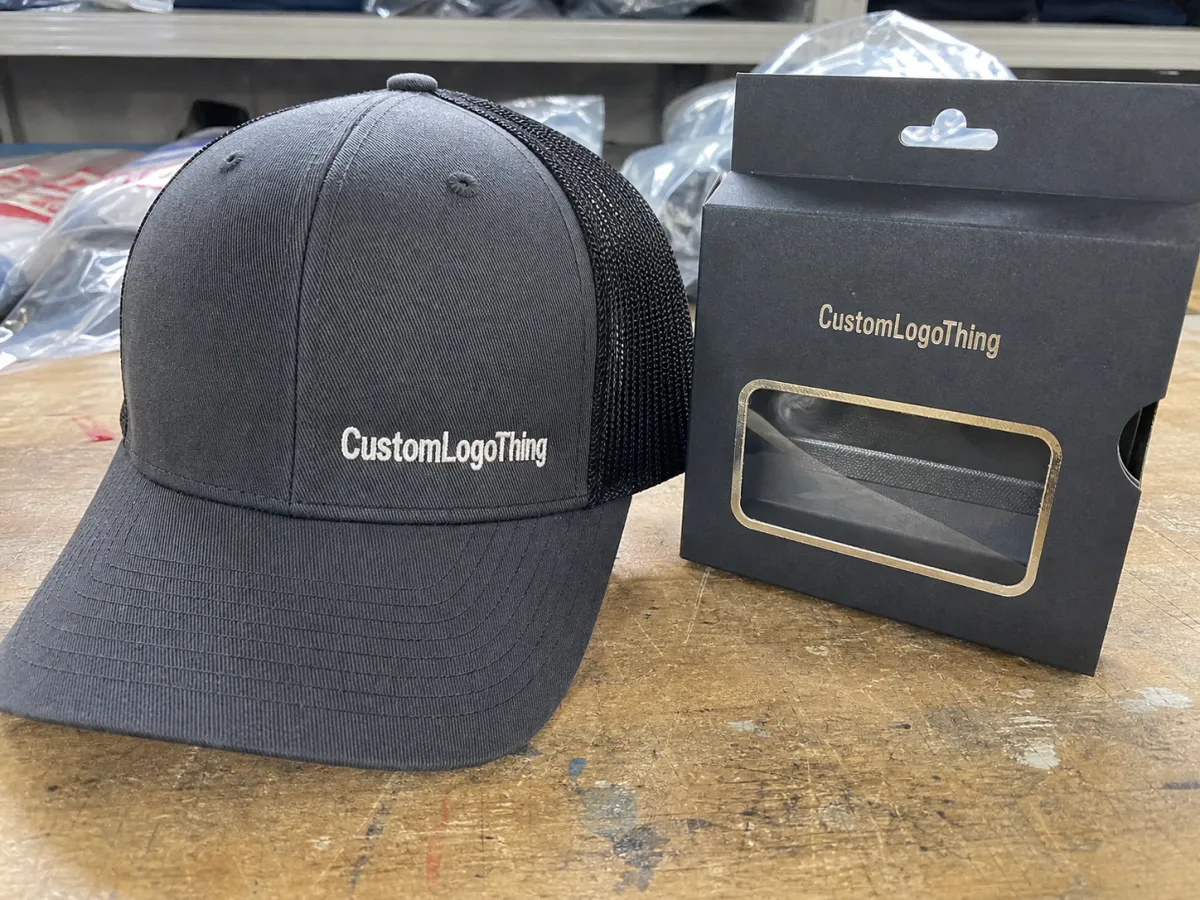
Two quotes can look close and still describe very different products. One supplier may show a low cap price and bury the setup in an art fee. Another may quote a slightly higher blank but include one decoration method, basic packing, and freight handling. Same category. Very different economics.
That gap matters more on smaller orders. A 100-piece run carries nearly the same art prep, machine setup, and proofing work as a 500-piece run. The fixed costs do not shrink just because the order is modest. So the cost per piece rises quickly, especially when the logo has fine detail or the cap uses multiple colors. The minimum order quantity, or MOQ, becomes part of the price whether buyers like it or not.
There is also the revision problem. A logo file that is not production-ready can create extra digitizing, stitch cleanup, or a second proof round. That is not a design issue alone; it is a cost issue. Cheap quote, expensive corrections. The pattern is common because the invisible work behind a quote is easy to ignore until someone has to do it.
The real target is not the lowest unit price. It is the lowest landed cost for the quality level the cap actually needs to meet. A giveaway cap, a retail cap, and a staff uniform cap are not the same buying problem. A useful trucker caps Unit Cost Breakdown should help buyers match budget to purpose, not just chase a number that looks tidy in an email.
What you are actually buying in a trucker cap run
A trucker cap is more than a front panel with a logo. Buyers are paying for the cap body, the mesh back, the visor shape, the closure, the sweatband, and the way the decoration sits on the crown. Each detail changes feel, fit, durability, and labor. Skip those details and you end up comparing different products as if they were interchangeable. They are not.
The front panel often sets the perception of quality. Foam front caps usually suit promotional runs and retro looks, while cotton twill fronts tend to feel more substantial and hold decoration in a cleaner way. A structured crown keeps the profile sharper. An unstructured crown looks softer, but the logo may not read as clearly across a distance. That difference matters if the cap is meant to work as walking advertising.
Closure choice changes both usability and price. Snapback closures are standard because they fit a wide range of heads and are easy to adjust. Hook-and-loop closures can be slightly cheaper in some builds, though they rarely feel as durable. Metal hardware can improve perception but adds cost and sometimes slows production. The lowest cost option is not always the best fit for the market.
Decoration method is the biggest visual decision and one of the main cost drivers. Embroidery is direct and durable, but stitch count affects labor. Woven patches can capture more detail. PVC patches create a more dimensional look and usually sit in a different price bracket. Heat-applied graphics may work for short runs or simple art, but they are not the strongest choice for every order, especially if the caps will see heavy wear or frequent washing.
Before asking for a quote, lock the essentials: front panel type, crown structure, closure, logo size, placement, and packaging level. Otherwise one supplier is quoting a premium build while another is quoting a stripped-down sample cap, and the numbers will never line up.
Specs that shift the quote before the logo is added
Some price differences appear before decoration starts. Panel count, crown structure, and visor shape change how much fabric is used and how many sewing steps are required. A five-panel front does not behave exactly like a six-panel build. A flat visor is not priced the same way as a pre-curved bill, because the finishing work and shaping are different.
Mesh density is another quiet cost driver. Fine mesh, thicker mesh, and higher-density back panels all affect materials and labor. Foam thickness does the same thing. Even the closure hardware can move the quote. Cheap plastic snaps are not equivalent to reinforced ones, and the difference usually shows up once the caps are handled, packed, and worn.
Color planning matters because stock components are easier to source than custom-dyed parts or mixed lots. One standard colorway is simpler for production and easier for quality control. Three panel colors, two patch colors, and multiple logo placements add coordination time and increase the risk of inconsistency. That is not a theory. It is where production schedules start slipping.
Decoration specs need the same discipline. A 12,000-stitch logo is not the same as a 4,000-stitch logo. A 2-inch patch does not behave like a 3.5-inch patch. Center-front placement usually requires a different setup than side or back decoration. Every one of those choices touches labor time, and some touch tooling fees too.
Packaging is easy to underestimate. Individual polybags, hangtags, barcode labels, insert cards, and retail cartons all raise landed cost. They also change the way the order is handled through the warehouse. For transit expectations, references such as ISTA are useful when a buyer wants packaging that survives shipping without crushed crowns or bent brims. If the order includes paper inserts or hangtags, FSC documentation can matter for procurement teams that need traceable paper sourcing.
That is why a serious trucker caps Unit Cost Breakdown includes the boring pieces. The boring pieces are what wreck budgets.
Trucker caps unit cost breakdown: pricing, MOQ, and savings
Most custom trucker cap quotes can be broken into the same buckets: blank cap cost, decoration setup, labor, packaging, freight, and sample or testing charges if the order needs them. Some orders also need art cleanup, digitizing, or special handling for mixed sizes or multiple colorways. If a quote leaves out any of those items, it is not a full quote. It is a teaser.
Typical bulk pricing for the blank cap body often falls around $1.20-$2.80 per piece, depending on build quality and quantity. Decoration can add $0.35-$1.50 for basic embroidery, more if the stitch count is high or the patch is complex. Packaging might add $0.08-$0.35. Freight can add another $0.12-$0.45 per cap, sometimes more if the shipment is split, expedited, or routed through multiple destinations. The final number is a stack, not a single line.
| Order quantity | Typical unit cost | What usually improves | What still hurts price |
|---|---|---|---|
| 100-199 | $4.50-$7.50 | Simple one-location decoration | Setup charges, proofing, freight |
| 300-499 | $3.20-$5.20 | Better spread of fixed costs | Extra artwork revisions, mixed colors |
| 500-999 | $2.60-$4.20 | Better bulk pricing and lower setup impact | Complex patches, premium packaging |
| 1,000+ | $2.10-$3.80 | Lowest cost per piece on stable specs | Multiple decoration locations, rush production |
The table above is not a promise. It is a realistic working range. The actual number shifts with blank quality, decoration method, and shipping mode. A 100-piece run can cost almost twice as much per unit as a 500-piece run because the setup is nearly the same. The machine does not care that the order is small. It still needs artwork prep, thread matching, patch tooling, and approval time.
The cleanest savings usually come from simplifying the job. One artwork version. One decoration method. One cap color. One packaging spec. Fewer moving parts mean fewer chances for error and fewer passes through the shop. That is not exciting, but it lowers the cost without reducing quality.
Ask for landed pricing at three quantities, not one. A quote for only 100 pieces hides the break point. A better quote shows 100, 300, and 500 units so you can see where fixed costs start to flatten and where inventory risk becomes too heavy.
That inventory risk is the other side of the bargain. Ordering 1,000 caps can look smart until 400 sit in storage. Low unit cost is not a victory if the excess stock turns into cash tied up on a shelf. A useful trucker caps Unit Cost Breakdown should help buyers choose a quantity that fits actual demand, not just a spreadsheet fantasy.
Process, proofs, and turnaround: how the order moves
The order flow should be predictable. It usually starts with specs intake, then artwork review, then mockup, then sample or pre-production proof, production, inspection, and shipment. If a step is skipped, the risk does not disappear. It moves to the buyer.
Turnaround depends on how ready the artwork is and how complex the decoration is. When the logo file is clean and the cap spec is final, the order moves faster. When the artwork needs cleanup or the placement keeps changing, the schedule stretches. Standard production for Custom Trucker Caps is often around 12-18 business days after proof approval. More complex runs can take longer. Rush work can be faster, but it usually costs more and leaves less room for decoration options.
A proof should show logo size, placement, thread or print colors, cap color, closure type, and packaging details. If the order uses patches, the proof should also show border width, patch shape, and any edge treatment. The stitch count should be called out for embroidered work. Vague approvals create expensive surprises later. They also create arguments that no one wants to have after production starts.
Sampling is worth the extra step when the decoration method is new, the logo has fine detail, or the order is heading into retail. One sample is cheaper than fixing 500 flawed units after the run has already started. That is basic procurement math.
Quality control should happen at several points, not just at the end. A serious cap run checks logo placement, stitch density, crown symmetry, mesh tension, snap closure function, and carton count before shipment. For retail-ready orders, buyers may also want barcode accuracy, label placement, and carton compression checks. The more the order depends on a consistent finish, the more these small checks matter.
Freight can still change the final landed price even when production is on budget. Ground shipping is predictable. Air freight and split shipments are not. If the cap order has a hard delivery date, build a buffer into the timeline instead of assuming everything will land perfectly. Sewing machines do not care about a launch meeting.
Clear approvals keep costs from creeping upward in the middle of the job. Every extra revision adds time. Time adds labor. Labor adds money. The chain is simple, and it is usually the cheapest place to save if the buyer is disciplined enough to lock the spec early.
Why buyers get cleaner trucker cap pricing
Buyers get cleaner pricing when the quote is itemized and the specs are settled before production begins. That means blank cap cost, decoration method, setup charges, packaging, freight, and any extra handling appear in the same view. A vague per-cap number is easy to send and hard to trust.
Spec clarity also reduces waste. When cap details are defined early, the shop is not guessing at logo placement, patch size, or stitch count. Fewer guesses mean fewer corrections, and fewer corrections mean steadier repeat pricing. Procurement teams care about that because repeatability is often more valuable than shaving a few cents off a first order.
Consistency matters in the finished cap too. Buyers notice crown shape, centered decoration, and whether the caps in a box actually match one another. A good production run keeps the profile stable from piece to piece. That is what makes the order look intentional instead of improvised.
There is a cost to too many handoffs. Each time artwork, sampling, and production approval bounce through another layer of review, the odds of miscommunication go up. A cleaner workflow shortens the path from proof to shipment and keeps the quoted unit cost from being chipped away by rework.
That is the practical value of a trucker caps unit cost breakdown. It gives the buyer control over the tradeoffs. You can choose a premium patch, trim the packaging, or increase quantity to lower cost per piece. You can also decide not to chase a price that only looks lower because half the order was hidden in the fine print.
Next steps to quote the right quantity without waste
Start with the basics: quantity, cap style, decoration method, logo file, target delivery date, and packaging needs. If those six pieces are missing, the quote will be loose. A loose quote is how buyers end up comparing different products and calling it price shopping.
Ask for at least three quantity tiers. A 100-piece quote alone tells you very little. A 300-piece and 500-piece quote show where the fixed costs begin to flatten and where the savings actually appear. That is the point where a buyer can make a useful decision instead of a hopeful one.
Compare landed cost, not just factory price. Freight and packaging can erase a small unit discount faster than many buyers expect. A cap that looks cheaper by twenty cents can finish higher once it lands in the warehouse.
If the decoration is new or the logo has fine detail, request a sample or at least a detailed proof before approval. That step can prevent patch misalignment, poor stitch density, or color drift from hitting the full order. The cost of a proof is modest. The cost of fixing an entire run is not.
My practical rule is simple: lock the specs, confirm the MOQ, review the timeline, and read the final trucker caps unit cost breakdown before approving the order. If the numbers make sense at the quantity you actually need, the order is ready. If they do not, change the build before the first cap is cut.
That keeps the budget aligned with the actual job instead of with a quote that only looked attractive in an inbox.
What drives the trucker caps unit cost breakdown the most?
The main drivers are cap construction, decoration method, order quantity, and whether packaging is simple or retail-ready. On smaller orders, setup and sampling can matter as much as the cap body itself. Freight and revision costs also move the final landed price more than most buyers expect.
How many trucker caps do I need for a better price per unit?
Pricing usually improves once fixed setup costs are spread across a larger run. The exact break point depends on the decoration method, but many buyers see a noticeable drop moving from low hundreds to mid-hundreds. Asking for three quantity tiers makes the difference visible.
Is embroidery or a patch cheaper on trucker caps?
Simple embroidery can be cheaper for small logos, but patch pricing may win when the design is detailed or when the buyer wants a premium look. The answer depends on stitch count, patch size, and setup fees. The only fair comparison is to quote both at the same quantity.
What is a typical MOQ for custom trucker caps?
MOQ varies by build and decoration, but lower minimums usually raise the unit price. A supplier should state the minimum run clearly and explain what is included in that price. If the MOQ feels too high, a simpler spec may reduce it.
How long does a custom trucker cap order usually take?
Timeline depends on proof approval, decoration method, and order size. Standard production is often faster when artwork is final and the spec sheet is complete. Rush options exist, but they usually trade off with higher cost or fewer decoration choices.

